The fields of the Western Front still give up their dead. A century after the guns fell silent, farmers in the Somme regularly turn up bones and rusted equipment. Construction crews in Flanders hit buried trenches with human remains. The numbers are staggering: of the 9.7 million military deaths in WWI, roughly 30% have no known grave. For the Commonwealth alone, that’s about 300,000 soldiers. In Germany, the Volksbund estimates 1.2 million are still missing on the Western Front.
Finding these soldiers is a painstaking, often emotional work that blends history, archaeology, and cutting-edge science. It involves metal detectors sweeping former battlefields, ground-penetrating radar scanning for disturbed earth, and DNA matching against living relatives. It’s a race against time, as development and erosion threaten what remains. And it’s a duty that many believe is never truly finished.
The Scale of the Loss
The nature of WWI made death anonymous. Trench warfare meant soldiers died in no-man’s land, in collapsed dugouts, or were buried by shellfire. Artillery was the great killer, and it often obliterated bodies or left them under tons of earth. Field burials were hasty, with wooden crosses that rotted or were destroyed by later shelling. Post-war recovery teams, often German POWs, searched the battlefields between 1919 and 1939, but the task was overwhelming. By the time they stopped, hundreds of thousands of bodies remained undiscovered.
France alone accounts for an estimated 700,000+ missing soldiers from all nations. Memorials like the Menin Gate in Ypres, with its 54,000 names, and the Thiepval Memorial on the Somme, with 72,000, stand as somber roll calls of the missing. But these names are not just historical records—they represent families who never knew what happened to their loved ones.
How the Search Works Today
The search for lost soldiers is a methodical process that combines old records with new technology. It starts with historical research. Maps from the war—trench maps, aerial photos, and post-war surveys—are overlaid onto modern satellite imagery. This helps pinpoint likely burial sites, such as old trench lines, shell holes, or documented field graves.
Once a site is identified, teams use metal detectors to sweep the ground. The presence of military equipment—rifles, ammunition, personal gear—can indicate a body nearby. Ground-penetrating radar (GPR) and LiDAR can reveal disturbed soil or hidden cavities without digging. But the only way to be sure is to excavate.
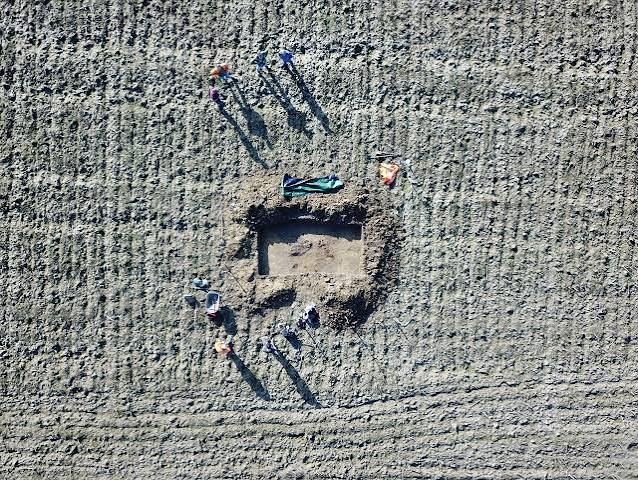
Excavations happen in two ways: planned archaeological digs and unplanned discoveries. Planned digs are often driven by research, like the 2009–2010 excavation at Pheasant Wood in Fromelles, where 250 Australian soldiers were recovered from a mass grave. Unplanned discoveries are more common: a farmer plowing a field, a construction crew laying a pipeline, or a riverbank eroding after heavy rain. In France, any human remains found are treated as war dead, and the government must be notified. Excavation then follows, often with archaeologists and military experts.
The Science of Identification
Once remains are recovered, the hard work of identification begins. Forensic anthropologists examine the bones to estimate age, height, and any signs of injury—such as a healed fracture or a bullet wound. Dental records, if available, can provide a match. Clothing and equipment, like buttons, insignia, or dog tags, offer direct clues. In 2024, a soldier from the 1916 Battle of the Somme was identified using a rare regimental badge and DNA matching.
DNA analysis has been the game-changer. Since the 1990s, labs like the Armed Forces DNA Identification Laboratory (AFDIL) in the US have used mitochondrial DNA (maternal line) and Y-chromosome (paternal line) to match remains with living descendants. This requires collecting DNA samples from potential relatives, which can be a delicate process. But it has led to remarkable identifications, such as the 2018 discovery of US soldiers from the “Lost Battalion” in the Argonne Forest, who were identified through DNA.
The process is not always successful. Some bodies are too fragmented, or the DNA is too degraded. In those cases, soldiers are buried as “unknown” under a headstone that reads “Known Unto God.” The CWGC maintains over 1.7 million graves and memorials across 150 countries, and many of those are for unknown soldiers.
The Organizations and the Law
The work is carried out by a mix of official bodies and volunteer groups. The Commonwealth War Graves Commission (CWGC) is the primary body for British Empire casualties. The German War Graves Commission (Volksbund) does the same for German soldiers. The American Battle Monuments Commission (ABMC) oversees US graves and memorials. The French Ministry of Defense manages French military graves and recovery.
In addition, non-profits and volunteer groups like The Diggers in the UK and La Route des Châteaux in France conduct searches and advocate for recovery. They often work with local authorities and landowners.
Legal frameworks govern this work. In France, excavation requires government authorization, and any remains found must be treated with respect. The 2005 Fromelles Agreement between the UK, Australia, and France set protocols for excavation and reburial after the mass grave at Pheasant Wood was discovered. Internationally, the 1919 Treaty of Versailles mandated the return of remains and the establishment of cemeteries. The 2006 “Human Remains in Archaeology” guidelines, while UK-based, have influenced practice worldwide.
Why It Still Matters
The centenary commemorations of 2014–2018 brought renewed public interest. But the search continues for a more personal reason: families still want answers. For many, a grave—even a known one—brings closure. For others, it’s about historical duty and respect for the dead.
There are also practical reasons. Development and agriculture are constantly disturbing the ground. Every year, construction projects uncover mass graves, as happened in 2023 at Beaucourt-sur-l’Ancre on the Somme, where 30+ British and German soldiers were found. Erosion along riverbanks and coasts also exposes remains. The work is urgent.
Each discovery is a story. In 2021, the remains of 13 Australian soldiers from Fromelles were identified and reburied with full military honors. Their families, some of whom had waited over a century, finally had a place to mourn. This is the heartbeat of the work: it turns a name on a memorial into a real person, honored and remembered.
The search for WWI’s lost soldiers is a testament to human perseverance and compassion. It’s a task that may never be fully complete, but each identification brings a measure of peace to families and ensures that the sacrifice of those soldiers is not forgotten. As technology advances and new discoveries are made, the promise is kept: no soldier left behind, even a century later.
Summary
- Approximately 1 million WWI soldiers remain unidentified or missing, including 300,000 from the Commonwealth and 1.2 million Germans.
- Soldiers are found through metal detection, ground-penetrating radar, historical map analysis, and unplanned discoveries during construction or farming.
- Identification uses forensic anthropology, artifacts, and DNA matching with living descendants.
- Key organizations include the CWGC, Volksbund, ABMC, and French Ministry of Defense, operating under legal frameworks like the Fromelles Agreement.
- Recent discoveries, such as the 2023 mass grave at Beaucourt-sur-l’Ancre, highlight the ongoing need for recovery.
FAQ
Q: How many WWI soldiers are still missing?
A: Approximately 1 million soldiers from all nations remain unidentified or missing, with about 300,000 from the Commonwealth and 1.2 million Germans.
Q: How are soldiers’ remains discovered today?
A: They are found through systematic metal detection surveys, excavation during construction or farming, and remote sensing like ground-penetrating radar and LiDAR.
Q: What methods are used to identify remains?
A: Identification combines forensic anthropology (age, height, injuries), dental records, artifacts and insignia, and DNA analysis matching with living descendants.
Q: What happens when remains are found on private land?
A: In France, any human remains are treated as war dead, and the government must be notified. Excavation follows with proper authorization and archaeological oversight.
Q: Why are soldiers still being found so long after the war?
A: Causes include agricultural plowing, construction and infrastructure projects, erosion, and deliberate searches driven by technology and centenary interest.