Imagine marching 18 miles in five hours while carrying 50 pounds of gear, then spending the afternoon swinging a sword twice the weight of the real thing. That was a typical day for a Roman legionary. Their training wasn’t about looks—it was about building functional strength that could win an empire.
Modern gym culture often chases hypertrophy and isolation exercises, but the Romans trained for task-specific performance: marching, fighting, digging, and throwing. Their methods, documented by writers like Vegetius and Galen, still hold lessons for anyone who wants to get genuinely strong.
The Daily Grind: Marching as a Strength Builder
Roman soldiers trained twice daily, and the foundation was the march. The standard was 20 Roman miles (about 18.4 modern miles) in five hours, with a pack weighing 40 to 60 pounds. That pack—the sarcina—held armor, weapons, rations, and tools. On campaign, they could be forced to cover 30 or more miles in a day.
This wasn’t just cardio. Marching with heavy weight builds leg and back strength, endurance, and mental toughness. It’s the ultimate loaded carry, a movement that modern strength coaches praise for its carryover to real-world strength.
Progressive Overload: The Roman Secret
The Romans understood progressive overload centuries before gyms existed. Weapons practice used wooden swords (rudis) and wicker shields that were deliberately twice the weight of combat gear. This forced soldiers to develop speed and precision that felt effortless when they switched to real weapons.
They also practiced throwing the pilum (a heavy javelin) at wooden posts (palus). This drill built explosive power in the shoulders, arms, and core—essential for a weapon that was designed to pierce shields and armor.
The Role of Manual Labor: Building Camps, Building Strength
Roman soldiers didn’t just fight; they built their own camps. Digging trenches, constructing palisades, and laying roads were daily tasks. This was 4 to 6 hours of heavy labor that functioned as functional strength training. When you dig a ditch for hours, you develop grip strength, core stability, and muscular endurance that no machine can replicate.
Even artillerymen (ballistarii) developed specialized upper-body strength from loading torsion weapons like catapults and scorpions, which required significant force to operate.
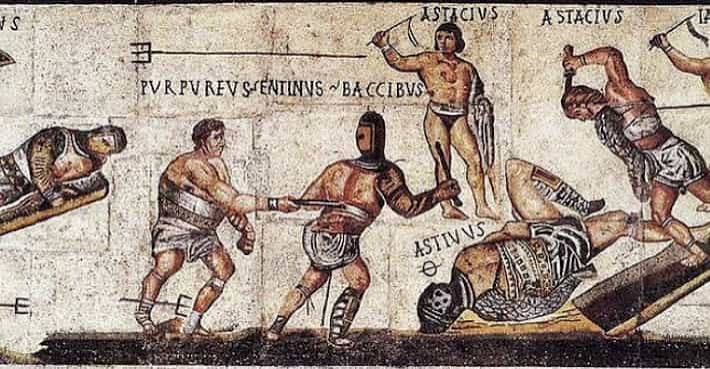
Gladiators: The Celebrity Athletes
Gladiators trained in specialized schools (ludi) with a regimen focused on combat skills: swordplay, net-and-trident work, and shield drills. Their training emphasized explosive power, endurance, and pain tolerance. They were fed a high-protein, high-carb diet of barley, beans, and dried fruit—earning them the nickname “barley men” (hordearii).
Archaeological evidence from gladiator bones shows asymmetric muscle attachments, with the right arm much stronger than the left in many. This confirms the heavy, repetitive unilateral training from wielding weapons. These athletes were also cared for by physicians like Galen, who prescribed specific exercises for recovery and health.
Exercises You Can Steal from the Romans
Vegetius and Galen documented specific exercises that you can still do today:
- Rope climbing: Builds grip and pulling strength.
- Wrestling: Develops core stability, balance, and full-body strength.
- Halteres (ancient dumbbells): These crescent-shaped or cylindrical weights (5–10 kg) were used for jumping and arm exercises. Try weighted jumps or overhead presses with a dumbbell for a similar effect.
- Carrying heavy loads: Whether it’s a sandbag, a kettlebell, or a backpack, loaded carries mimic the Roman march and build real-world strength.
Recovery: The Roman Baths
Romans believed in balancing exercise with recovery. The thermae (public baths) were central to this: hot baths, cold plunges, massage, and oiling with strigil scraping. This might sound spa-like, but it was a serious recovery protocol that reduced muscle soreness and promoted healing.
Modern athletes use ice baths and massage similarly. The Romans were ahead of their time in prioritizing recovery as part of training.
What We Can Learn Today
The Roman approach to strength was pragmatic. They trained for the task at hand, not for aesthetics. They used progressive overload, functional movements, and smart recovery. You can apply these principles by:
- Prioritizing compound movements: marches (loaded carries), presses, pulls, and squats.
- Using progressive overload: gradually increase weight or reps, just like the Romans did with heavier training weapons.
- Including manual labor or functional work: carry heavy objects, dig, or chop wood.
- Don’t neglect recovery: sleep, nutrition, and active recovery are as important as the workout.
Roman soldiers built real strength because their training was specific, progressive, and functional. They didn’t have gyms, but they had a mission: to dominate the battlefield. Their methods—loaded marches, weighted weapons, manual labor, and smart recovery—can still help you build strength that translates to real life. The next time you’re doing a loaded carry, remember: you’re walking in the footsteps of legionaries who conquered the ancient world.
Summary
- Roman soldiers marched 18+ miles daily with 40-60 pound packs, building unmatched endurance and strength.
- They used progressive overload with wooden swords and wicker shields twice the weight of real equipment.
- Gladiators trained sport-specifically, developing asymmetric strength from repetitive combat drills.
- Manual labor (digging, building) was a core part of training, providing functional strength.
- Recovery methods like the Roman baths and massage were integral to their training system.
FAQ
Q: Did Roman soldiers lift weights?
A: Not in the modern sense. They used halteres (stone or lead dumbbells) for jumping and arm exercises, but most strength came from marching with heavy packs, weapons drills, and manual labor.
Q: What was the Roman march like?
A: The standard was 20 Roman miles (about 18.4 modern miles) in 5 hours, carrying a 40-60 pound pack. On occasion, they did faster marches of 24 miles in 5 hours, or forced marches of 30+ miles in a day.
Q: How did gladiators train?
A: Gladiators trained in specialized schools (ludi) with weapons drills, endurance work, and a high-protein diet. They used heavier training weapons to build speed and power, much like modern athletes use overspeed training.
Q: Why did the Romans train with wooden swords?
A: Wooden swords (rudis) and wicker shields were twice the weight of real weapons. This overloaded muscles during practice, making real weapons feel lighter and faster in combat.
Q: Can I apply Roman training methods today?
A: Yes. Focus on loaded carries (like marching with a pack), functional movements (like digging or lifting odd objects), and progressive overload. Don’t forget recovery—Roman baths were the original ice bath.