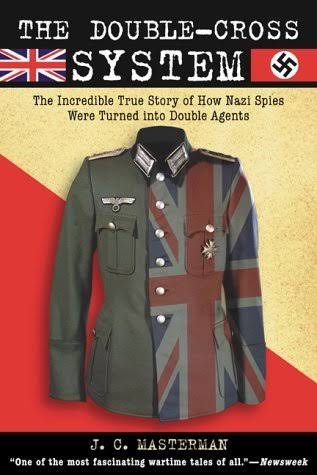
In the spring of 1944, as the Allies prepared for the invasion of Normandy, a Spanish double agent code-named Garbo sat in a London safe house, crafting a message that would help decide the fate of Europe. For years, he had been feeding the German Abwehr a stream of carefully fabricated intelligence from a network of fictitious sub-agents a network that existed only in his imagination. Now, on the eve of D-Day, his lies would convince Hitler that the real invasion was coming at Pas-de-Calais, not Normandy. The Germans trusted him so completely that they awarded him the Iron Cross. The British, for their part, gave him an MBE.
Garbo was just one of dozens of Nazi agents who, after being captured or turning themselves in, became unwilling or sometimes willing allies of MI5. The Double-Cross System, as it was called (the Roman numeral XX, a pun on ‘double cross’), was a counter-espionage operation that flipped nearly every German spy sent to Britain during World War II. Of the roughly 115 to 120 agents dispatched by the Abwehr, all were captured or surrendered. None operated freely for any significant time. Instead, MI5 used them to feed false intelligence back to Germany, shaping the enemy’s strategic decisions and ultimately saving thousands of Allied lives.
The Birth of a Deception
Before the war, MI5 was a small, underfunded organization focused on domestic subversion Soviet espionage and Irish republicanism not on running double agents. It had little experience with such operations, and the idea of turning enemy spies into assets was untested. But the early war years forced a change.
The turning point came in 1939 with a Welsh electrical engineer named Arthur Owens, code-named ‘Snow.’ Owens, a German agent, walked into MI5 and offered his services. He became the first major double agent, and his case proved that a captured or volunteer agent could be used to feed false information back to the Abwehr. Snow’s success led to a more systematic approach.
In January 1941, the Twenty Committee was formally established to coordinate the growing number of double agents. Chaired by Sir John Masterman, a historian and MI5 officer, the committee met weekly. Its members included representatives from MI5, MI6, the armed services, and the Home Defence Executive. The committee’s name Twenty, or XX was a Roman numeral pun on ‘double cross.’ Its goal: to ensure that every double agent’s messages to Germany were carefully crafted to deceive the enemy, not inform them.
The Agents: A Rogue’s Gallery
The Double-Cross System relied on a colorful cast of characters, each with their own reasons for betraying their German handlers.
Garbo (Juan Pujol García) was a Spanish double agent who invented an entire network of fictitious sub-agents. His misinformation helped convince the Germans that the D-Day landings at Normandy were a diversion. He was awarded both the Iron Cross (by Germany) and an MBE (by Britain).
Zigzag (Eddie Chapman) was a British criminal and safecracker who volunteered to work for Germany, then turned himself in to MI5 upon returning to Britain. He was used to feed false intelligence about bombing damage, convincing the Germans that their V-1 and V-2 attacks were causing more destruction than they actually were.
Tate (Wulf Schmidt) was a Danish agent who was captured and doubled. He maintained a consistent radio link with Germany for years, sending a steady stream of false reports that helped convince the Germans that British morale was low and that the country was on the brink of collapse.
Mutt and Jeff (John Moe and Tor Glad) were two Norwegian agents who were doubled and used to convince Germany that Britain was preparing for an invasion of Norway part of Operation Fortitude North, the northern half of the D-Day deception.
Tricycle (Duško Popov) was a Serbian playboy and lawyer who, while working as a double agent, alerted the FBI to German interest in Pearl Harbor. His warning was largely ignored, but his work for the British was invaluable.
The Indispensable Partner: Bletchley Park
The Double-Cross System could not have worked without the intelligence gleaned from Bletchley Park’s decryption of German Enigma traffic. Ultra, as it was called, allowed British intelligence to read Abwehr radio messages and verify what the Germans believed. This meant MI5 could confirm that their double agents were trusted, and calibrate the false information accordingly. Without Ultra, the Double-Cross System would have been flying blind.
For example, when Garbo sent a message to Germany, the British could read the Abwehr’s response and see whether they bought his story. If they hesitated, MI5 could adjust the next message to reinforce their trust. This feedback loop made the deception nearly perfect.
The Greatest Deception: Operation Fortitude
The Double-Cross System’s crowning achievement was Operation Fortitude, the deception that preceded D-Day. The Allies needed to convince the Germans that the invasion would come at Pas-de-Calais, the closest point to England, rather than at Normandy. To do this, they created a fictional army—the First U.S. Army Group (FUSAG)—under General George S. Patton.
Double agents, including Garbo, reported on the supposed movements of FUSAG, building a picture of an invasion force poised to strike at Calais. Garbo’s network of fictitious agents sent detailed reports—complete with sightings of troops, vehicles, and equipment—that the Germans found entirely credible. They even reported that the Normandy landings were a diversion, designed to draw forces away from the real invasion.
Hitler fell for it. He kept German forces in the Pas-de-Calais region for weeks after the Normandy landings, convinced that the main attack was still coming. This delay gave the Allies a crucial advantage in establishing their beachhead and breaking out into France.
The Legal and Moral Grey Zone
The Double-Cross System operated in a legal grey area. Under the laws of war, captured enemy agents were liable to execution. By doubling them, MI5 spared their lives in exchange for cooperation. But not all agents cooperated. Some refused and were executed. Others were deemed too dangerous to keep alive, even after they had provided useful information. The British public was never told about the system during the war.
The morality of using captured spies was debated at the time, but the results were undeniable. The system saved countless lives by reducing the effectiveness of German intelligence and enabling the success of D-Day.
A Legacy of Success
The Double-Cross System is widely regarded as one of the most successful deception operations in military history. It shaped German strategic assessments, misled them about Allied intentions, and contributed significantly to the Allied victory. The agents themselves, many of whom were criminals, traitors, or opportunists, became unlikely heroes of a war that demanded extraordinary measures.
The Double-Cross System was a testament to the power of deception in warfare. By turning the enemy’s own spies against them, British intelligence not only neutralized the threat of German espionage but also used it as a weapon to win the war. The story of Garbo, Zigzag, Tate, and the others is a reminder that in war, truth is the first casualty—but sometimes, a well-crafted lie can save a nation.
Summary
- The Double-Cross System (XX System) was a British counter-espionage operation that flipped captured German agents into double agents, feeding false intelligence to the Abwehr.
- Of the 115-120 German agents sent to Britain during WWII, all were captured or surrendered; about 40-50 were doubled.
- Key agents included Garbo (Juan Pujol García), Zigzag (Eddie Chapman), Tate (Wulf Schmidt), Mutt and Jeff (Norwegian agents), and Tricycle (Duško Popov).
- The Twenty Committee, chaired by Sir John Masterman, coordinated the operation, with crucial support from Bletchley Park’s Ultra decrypts.
- The system played a central role in Operation Fortitude, convincing Hitler that D-Day would come at Pas-de-Calais, not Normandy, and aiding the Allied victory.
FAQ
Q: What was the Double-Cross System?
A: The Double-Cross System (XX System) was a British intelligence operation during World War II that identified, captured, and ‘turned’ German agents in Britain, using them to feed false information back to Nazi Germany’s intelligence services.
Q: How many German agents were doubled?
A: Of the roughly 115-120 German agents sent to Britain, all were captured or turned themselves in. Approximately 40-50 were used for deception; the rest were executed or imprisoned.
Q: Who was Garbo?
A: Garbo was Juan Pujol García, a Spanish double agent who invented a fictitious network of sub-agents. His misinformation helped convince the Germans that the D-Day landings at Normandy were a diversion. He was awarded both the Iron Cross and an MBE.
Q: How did Bletchley Park help the Double-Cross System?
A: Bletchley Park’s decryption of German Enigma traffic (Ultra) allowed MI5 to read Abwehr messages, verify that their double agents were trusted, and calibrate false information accordingly.
Q: What was Operation Fortitude?
A: Operation Fortitude was the D-Day deception that convinced the Germans that the Allied invasion would land at Pas-de-Calais, not Normandy, using a fictional army (FUSAG) under General Patton. The Double-Cross System was central to this deception.