In 2023, a patient with high-risk melanoma received an experimental vaccine made specifically for their tumor. The vaccine, mRNA-4157, was designed to prompt their immune system to recognize mutations unique to their cancer. Combined with an existing immunotherapy drug, it cut the risk of recurrence or death by 44% in a clinical trial. This is not a distant promise it’s happening now.
Personalized mRNA cancer vaccines are a form of active immunotherapy. Unlike preventive vaccines for infectious diseases, these are therapeutic: they treat people who already have cancer. Each vaccine is manufactured for a single patient, based on the genetic makeup of their tumor. This article explains the science, the latest clinical results, and the challenges that remain.
How Personalized mRNA Vaccines Are Made
The process starts with a tumor biopsy. The sample is sent for whole-exome or whole-genome sequencing to map the cancer’s DNA. Bioinformatics algorithms then identify mutations that produce neoantigens abnormal peptides that are not present in normal tissue and are likely to trigger an immune response. From these, researchers select 10 to 20 of the most immunogenic candidates.
Next, mRNA is synthesized to encode these neoantigens. The mRNA is often wrapped in lipid nanoparticles (LNPs) the same delivery technology used in COVID-19 vaccines. When injected, usually into a muscle, dendritic cells take up the mRNA and translate it into neoantigen proteins. These proteins are displayed on the cell surface, where they train T cells to recognize and attack any cancer cell presenting the same neoantigens.
The entire process takes 4 to 8 weeks from biopsy to injection. That turnaround is a major logistical hurdle, especially for aggressive cancers where every week counts. Industry efforts are focused on shrinking that window to around 4 weeks.
Why This Approach Is Different
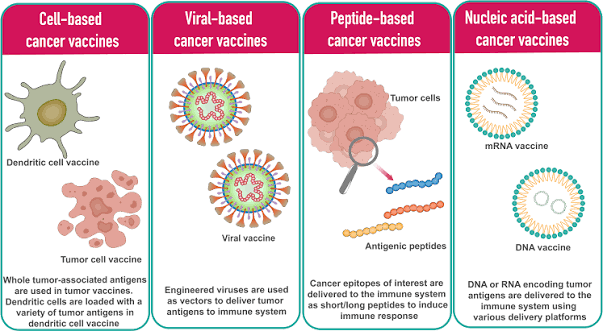
Early cancer vaccines, such as peptide-based or dendritic cell vaccines like Sipuleucel-T for prostate cancer, had limited success. The mRNA platform changed the game for several reasons. First, mRNA can be produced quickly and scaled up a lesson reinforced by the COVID-19 pandemic. Second, modified nucleosides improve mRNA stability and reduce unwanted inflammatory responses. Third, lipid nanoparticle delivery efficiently gets mRNA into cells.
But the real breakthrough is the ability to target neoantigens. Next-generation sequencing and improved bioinformatics have made it possible to identify patient-specific mutations quickly and affordably. This convergence of technologies sequencing, AI-driven prediction, mRNA synthesis, and LNP delivery is why personalized cancer vaccines are now a realistic prospect.
The scientific rationale is solid. Tumors accumulate mutations, and some produce neoantigens that the immune system should recognize as foreign. But tumors evade immunity through various mechanisms, such as upregulating checkpoint proteins or suppressing the microenvironment. Checkpoint inhibitors like PD-1 blockers have proven that the immune system can fight cancer, yet many tumors remain ‘cold’ invisible to T cells. Vaccines aim to make those tumors ‘hot’ by expanding and diversifying tumor-specific T-cell clones.
Clinical Status: Where We Are in 2025
As of early 2025, no personalized mRNA cancer vaccine has received full FDA approval. The most advanced candidates are in Phase 2 and Phase 3 trials.
Melanoma: The Front-Runner
Moderna and Merck’s mRNA-4157 (also known as V940) is the furthest along. In the Phase 2b KEYNOTE-942 trial, 157 patients with resected high-risk melanoma received either the vaccine plus pembrolizumab (an anti-PD-1 antibody) or pembrolizumab alone. After 2.5 years, recurrence-free survival was about 74.9% in the vaccine group versus 55.6% in the control group. That translates to a 44% reduction in the risk of recurrence or death. The therapy has received Breakthrough Therapy Designation from the FDA, and a Phase 3 trial is underway.
Pancreatic Cancer: Encouraging Early Data
BioNTech and Genentech are testing a personalized vaccine called autogene cevumeran (BNT122) in pancreatic ductal adenocarcinoma (PDAC). In a Phase 1 trial with 16 patients, the 8 who mounted a T-cell response to the vaccine had significantly longer recurrence-free survival — median not reached versus 13.4 months for non-responders. PDAC is notoriously difficult to treat, so even these small numbers are notable. Phase 2 trials are ongoing for pancreatic and colorectal cancers.
Other Players
CureVac, Gritstone Bio, and Transgene are also developing personalized mRNA vaccines, as are academic centers like Dana-Farber and Memorial Sloan Kettering. Each has its own approach to neoantigen selection and delivery.
The Promise and the Practical Hurdles
For patients with high-risk resected cancers — melanoma, pancreatic, colorectal — the vaccine offers hope of preventing recurrence, which is a major unmet need. But getting there requires surgery or biopsy, a waiting period of weeks, and multiple doses. Side effects can include fatigue, injection-site reactions, and flu-like symptoms, though these are generally manageable.
Cost and access are significant concerns. Personalized manufacturing is expensive, and insurance coverage is uncertain. Manufacturing capacity is limited, which could restrict availability to specialized centers.
Looking Ahead
The trajectory is clear: personalized mRNA vaccines are likely to become part of standard care for certain cancers, particularly in combination with checkpoint inhibitors. The next few years will be telling. The data from Phase 3 trials will determine whether these vaccines deliver on their early promise. For now, the science is compelling, but the practical challenges remain substantial.
Personalized mRNA cancer vaccines represent a genuine shift in how we think about treating cancer — moving from a one-size-fits-all approach to a therapy designed for a single patient’s tumor. The clinical results, especially in melanoma, are encouraging, but the field is still in its early stages. Manufacturing speed, cost, and access will determine how quickly these vaccines reach routine care. As trials progress, the hope is that more patients will benefit from a treatment that is truly personal.
Summary
- Personalized mRNA cancer vaccines are therapeutic vaccines that train the immune system to attack a patient’s specific tumor.
- The process involves sequencing the tumor, identifying neoantigens, and manufacturing mRNA that encodes them, typically delivered via lipid nanoparticles.
- The most advanced candidate, mRNA-4157 (Moderna/Merck), reduced recurrence risk by 44% in a Phase 2b melanoma trial and is now in Phase 3.
- BioNTech’s autogene cevumeran showed delayed recurrence in pancreatic cancer patients who mounted a T-cell response.
- Key challenges include a 4–8 week manufacturing timeline, high cost, and limited access.
FAQ
Q: Are personalized mRNA cancer vaccines the same as COVID-19 vaccines?
A: They use similar mRNA and lipid nanoparticle technology, but they are therapeutic, not preventive. They are designed for people who already have cancer and are customized to each patient’s tumor.
Q: How long does it take to make a personalized vaccine?
A: Currently, it takes about 4 to 8 weeks from biopsy to injection. Efforts are underway to reduce this to about 4 weeks.
Q: What cancers are being studied in clinical trials?
A: The most advanced trials are for melanoma, pancreatic cancer, and colorectal cancer. Other solid tumors are also being investigated.
Q: What are the side effects?
A: Common side effects include fatigue, injection-site reactions, and flu-like symptoms, which are usually mild to moderate.
Q: When will these vaccines be available to the public?
A: No vaccine has received full FDA approval yet. Phase 3 trials are ongoing, and if results are positive, approval could come within a few years, but that’s not guaranteed.