The violin is a masterpiece of design a wooden box with four strings that can mimic the human voice, weep with sorrow, or dance with joy. It is the undisputed king of the orchestra, the centerpiece of chamber music, and the instrument most likely to make a listener cry. But how did this iconic instrument come to be? Its story begins not in a grand concert hall, but in the hands of medieval minstrels and troubadours, and it takes a surprising detour through the Islamic world. The violin’s journey from a humble fiddle to the pinnacle of Western music is a tale of innovation, cultural exchange, and a few brilliant craftsmen in a small Italian town.
From the Vielle to the Violin: A Medieval Starting Point
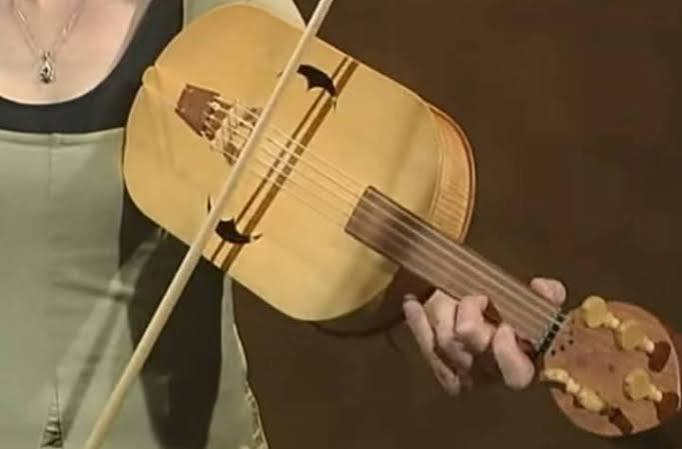
In the 11th century, if you heard music at a European court, it was likely played on a vielle, a versatile bowed instrument that was the most popular of its time. The vielle was a workhorse: it could play melody and harmony (thanks to drone strings), accompany songs, and get people dancing. Troubadours and minstrels carried it across the continent. It had five strings and a flat bridge, and it was held against the chest or shoulder. But the vielle was not a standardized instrument—body shapes varied from oval to figure-eight, and it was often built for portability rather than power.
Meanwhile, a different bowed instrument was making its way into Europe: the rebec. With a pear-shaped body carved from a single piece of wood, the rebec was a descendant of the Arab rabab, which had traveled through the Iberian Peninsula and Sicily during the medieval period. The rebec was known for its piercing, nasal tone, and it was played on the arm like the violin would later be. It was a folk instrument, but also found its way into art music. The very bow used to play it likely originated in Central Asia, where the horsehead fiddle (morin khuur) tradition still survives today. From there, the bow spread via the Silk Road to the Islamic world and then to Europe.
The Missing Link: The Lira da Braccio
By the 15th century, Renaissance Italy was buzzing with a rediscovery of classical culture. Poets and humanists wanted to emulate Orpheus, the mythical musician who could charm beasts with his lyre. They found their instrument in the lira da braccio—literally “arm lyre.” This instrument had seven strings (four melody strings over the fingerboard, plus two or three drone strings) and a body shape remarkably close to the modern violin. It was played on the shoulder, and its flat bridge allowed for chords, making it perfect for accompanying one’s own singing.
The lira da braccio is considered the most direct ancestor of the violin in terms of playing position and body shape, but it still lacked the violin’s defining features: f-holes, a curved bridge, and four strings tuned in fifths. These innovations emerged in the early 16th century, as luthiers in northern Italy began experimenting with ways to make the instrument louder, more agile, and more expressive.
The Violin Is Born: Brescia and Cremona
The cities of Brescia and Cremona in northern Italy became the crucible of violin making. The earliest documented violins are attributed to Andrea Amati of Cremona, with surviving examples from the 1540s. The earliest known dated violin, the “Charles IX,” was made for the French court around 1560. Amati’s instruments set the standard: four strings tuned in fifths (G–D–A–E), f-holes (which allow the top plate to vibrate more freely than the C-holes of earlier instruments), a curved bridge for bowing individual strings, and no frets—a radical departure from the viol family.
But why did the violin succeed where its relatives failed? The answer lies in its construction. Unlike the viola da gamba (the aristocrat’s instrument, with six strings, frets, and a flat back), the violin had a convex back, a shorter and thicker neck, and a sound post and bass bar inside the body. These internal components are critical to the violin’s powerful, focused tone. The sound post—a small wooden dowel—transfers vibrations from the top plate to the back, while the bass bar strengthens the top and distributes tension. These weren’t invented in Cremona, but they were refined there, and they gave the violin a volume and projection that could fill a hall.
The Golden Age of Cremona: Amati, Stradivari, and Guarneri
Andrea Amati’s sons and grandson continued the family tradition, but it was his grandson Nicolò Amati (1596–1684) who would shape the future of violin making. Nicolò taught two apprentices who would become legends: Antonio Stradivari (c. 1644–1737) and Andrea Guarneri (c. 1626–1698). Stradivari went on to produce around 1,100 instruments over his career, of which about 650 survive. His “Golden Period” (c. 1700–1725) is considered the apex of the craft. Stradivari’s violins are prized for their tonal balance, clarity, and projection—qualities that have never been fully replicated.
The Guarneri family, meanwhile, produced Bartolomeo Giuseppe Guarneri (1698–1744), known as “del Gesù” for the cross he inscribed on his labels. His instruments have a darker, more powerful tone, and they were favored by the great virtuoso Niccolò Paganini, whose 1742 “Il Cannone” Guarneri remains one of the most famous violins in history.
Why the Violin Won
The violin family—violin, viola, cello, and double bass—eventually outcompeted the viol family for a simple reason: it was louder. As music moved from intimate courts to larger halls and orchestras, the violin’s ability to project was a decisive advantage. Its lack of frets allowed for expressive techniques like vibrato and glissando, which became essential to the Romantic style. And its agility made it a favorite of composers from Vivaldi to Beethoven to Paganini.
The viola da gamba, with its sweet but quiet tone, retreated to the drawing rooms of aristocrats and eventually became a historical curiosity. The violin, meanwhile, became the king of instruments—not because it was the most complex or the most ancient, but because it was the most adaptable. It can whisper or shout, sing or speak, and it does so with a voice that feels almost human.
A Legacy Carved in Wood
Today, the violin remains a marvel of engineering and artistry. Each one is a unique creation, made from spruce and maple, shaped by hand, and tuned by ear. The instruments of Stradivari and Guarneri are still played by the world’s greatest musicians, and they command prices in the millions. But the violin’s true origin is humble: it descends from the vielle of medieval minstrels, the rebec of Arab traders, and the lira da braccio of Renaissance poets. It is a testament to how cultural exchange and a few clever innovations can transform a simple fiddle into an eternal masterpiece.
The violin’s journey from a medieval fiddle to the king of instruments is a story of evolution—not just of wood and string, but of cultures and ideas. It was born in the workshops of northern Italy, but it owes its existence to a thousand years of musical experimentation across Europe, Asia, and the Middle East. Every time a violinist draws a bow across the strings, they are playing an instrument that carries the echoes of troubadours, court poets, and Arab musicians. The violin may be a product of its time, but its allure is timeless.
Summary
- The violin emerged in early 16th-century northern Italy, with the earliest documented instruments by Andrea Amati of Cremona.
- Its ancestors include the medieval vielle, the Arab-derived rebec, and the Renaissance lira da braccio.
- Key innovations—four strings tuned in fifths, f-holes, a curved bridge, and no frets—set it apart from the viol family.
- The Amati, Stradivari, and Guarneri families in Cremona perfected the instrument during the 16th–18th centuries.
- The violin won out over the viol due to its louder volume, greater agility, and expressive potential.
FAQ
Q: What is the earliest known violin?
A: The earliest known dated violin is the “Charles IX,” made by Andrea Amati around 1560–1570 for the French court. Surviving instruments from the 1540s are also attributed to Amati.
Q: How did the violin get its name?
A: The word “violin” comes from the Italian violino, meaning “small viola.” The term viola itself traces back to the medieval Latin vitula, which possibly derives from vitulari, meaning “to rejoice” or “to sing.”
Q: Why did the violin replace the viol?
A: The violin family was louder and more agile than the viol family. The violin’s lack of frets allowed for expressive techniques like vibrato, and its construction gave it greater projection, making it better suited for larger halls and orchestras.
Q: What is the sound post, and why is it important?
A: The sound post is a small wooden dowel inside the violin’s body that transfers vibrations from the top plate to the back. It is crucial for the instrument’s tone and projection.
Q: Are Stradivarius violins really better than modern ones?
A: Many musicians and experts believe Stradivarius violins have superior tonal qualities, but scientific studies have been inconclusive. In blind tests, players often cannot distinguish between a Stradivarius and a high-quality modern violin, though the mystique remains.