Tag: Marcus Rashford

  • Manchester United’s Rashford Dilemma and City’s Gakpo Pursuit: A January Window Crossroads


    The January transfer window is notoriously unpredictable, but this year’s edition carries an unusual weight. With the World Cup compressing the season and Financial Fair Play tightening its grip, clubs are being forced into difficult decisions. At the center of this storm are two of the Premier League’s biggest names: Manchester United, contemplating the sale of homegrown star Marcus Rashford, and Manchester City, circling PSV’s Cody Gakpo with intent.

    These aren’t just routine transfer rumors. They represent a clash between financial pragmatism and sporting ambition. United, facing contract uncertainty and FFP constraints, must decide whether to cash in on a player who embodies their academy ethos. City, with a squad already packed with attacking talent, see Gakpo as a long-term piece for Pep Guardiola’s evolving system. The next ten days could reshape the trajectory of both clubs.

    The Rashford Conundrum: Selling a Homegrown Star

    Marcus Rashford’s story at Manchester United is one of pure romance—a local lad who rose through the ranks to score over 120 goals for the club. But romance doesn’t balance books. With his contract expiring in June 2024 (plus an option for another year), United face a critical decision: sell now, sell in the summer, or risk losing him for a reduced fee or nothing.

    The club’s openness to offers isn’t a fire sale. Reports indicate they’d only part ways for a significant fee, but the very willingness to listen marks a shift. Under Erik ten Hag, Rashford has shown flashes of his old self, scoring in the run-up to the World Cup. Yet his consistency remains a question, and his wage demands for a new deal are reportedly steep. For a club navigating FFP after years of heavy spending, selling an academy product yields pure profit—money that could be reinvested elsewhere.

    But this isn’t just about finances. The Glazer family’s exploration of a sale adds another layer of uncertainty. Would new owners want to keep their star academy graduate? Or would they prefer a clean slate? Ten Hag, pragmatist that he is, might see Rashford as a valuable asset, but he’s also rebuilding a squad in his image. If the right offer comes in—say, from a European giant—United could be tempted.

    Fan reaction is another wildcard. Rashford is a beloved figure, and selling him could be seen as prioritizing money over ambition—a narrative the club can ill afford. Yet the reality of modern football is that even the most iconic players become expendable when the books demand it.

    Gakpo’s Rise and City’s Calculated Interest

    Cody Gakpo’s trajectory has been meteoric. At 23, he’s already captained PSV and dominated the Eredivisie, with over 20 goal involvements this season. His World Cup performances—three goals in the group stage—cemented his status as one of Europe’s most exciting young forwards. It’s no surprise City are circling.

    But City’s interest is far from impulsive. Their attacking depth is the envy of Europe: Haaland, Foden, Grealish, Mahrez, Alvarez, Silva. So why Gakpo? The answer lies in long-term planning. Riyad Mahrez is 31, and City are known for buying young talent early and developing them under Guardiola. Gakpo fits that mold perfectly—a left-sided forward who can also play centrally, offering tactical flexibility.

    PSV’s valuation of €50-60 million is steep but not prohibitive for City. However, they won’t have a clear run. Liverpool, Arsenal, and Real Madrid are all rumored to be monitoring the situation. Competition could drive the price up, but City have the financial muscle to outbid most suitors.

    For PSV, the dilemma is acute. They’re in a title race and the Europa League; selling their star mid-season could derail their campaign. Yet a €50m+ fee would be transformative for a club that operates as a selling entity relative to the Premier League. Gakpo himself has expressed a desire to play in a top league—this may be his moment.

    The Tightrope of the January Window

    January deals are inherently tricky. Clubs are reluctant to lose key players mid-season, and replacements are hard to find. The compressed calendar—thanks to the World Cup—makes squad planning even more complex. But for United and City, the timing is driven by necessity.

    United’s FFP constraints are well-documented. They’ve overspent in recent years, and selling Rashford now would provide a significant boost to their transfer kitty. For City, the pursuit of Gakpo is about future-proofing. Guardiola’s system relies on versatile attackers, and Gakpo could be the next piece in a squad built for sustained success.

    The next eight to ten days will be telling. Will United pull the trigger on a Rashford sale? Will City formalize their interest in Gakpo? The answers will ripple beyond these two clubs, shaping the balance of power in the Premier League for years to come.

    The January transfer window is often a sideshow, but this year it’s a stage for two clubs at crossroads. United’s decision on Rashford is a test of their financial strategy versus their sporting identity. City’s pursuit of Gakpo signals a commitment to continuous evolution. Both moves carry weight—not just for the clubs involved, but for the entire league. As the deadline looms, every rumor, every bid, and every silence will be scrutinized. The only certainty is that the next ten days will reshape the landscape.

    Summary

    • Manchester United are open to selling Marcus Rashford, with contract uncertainty and FFP pressures driving the decision.
    • Manchester City are eyeing PSV’s Cody Gakpo as a long-term attacking investment, with PSV valuing him at €50-60 million.
    • The January window closes on January 31, leaving little time for deals.
    • Rashford’s contract runs until 2024, making this summer a critical decision point.
    • Gakpo’s World Cup performances and PSV form have made him a hot commodity, with multiple Premier League clubs interested.

    FAQ

    Q: Why would Manchester United sell Marcus Rashford?
    A: United face contract uncertainty (Rashford’s deal expires in 2024) and Financial Fair Play constraints. Selling an academy product would yield pure profit, helping them comply with FFP and fund other transfers.

    Q: What makes Cody Gakpo attractive to Manchester City?
    A: Gakpo is a young, versatile forward who can play on the left or centrally. His form for PSV and the Netherlands has been outstanding, and City see him as a long-term replacement for aging stars like Riyad Mahrez.

    Q: How much would Cody Gakpo cost?
    A: PSV are reportedly valuing Gakpo at around €50-60 million. City have the financial resources to meet this, but competition from other clubs could drive the price higher.

    Q: Could Marcus Rashford actually leave in January?
    A: It’s possible but not guaranteed. United are willing to listen to offers, but they’re not looking for a fire sale. A significant fee would be required, and no formal bids have been made public yet.

    Q: What impact would these transfers have on the Premier League?
    A: If Rashford leaves United, it would be a major shift for a club already in transition. Gakpo joining City would strengthen an already formidable squad, potentially widening the gap between City and their rivals.
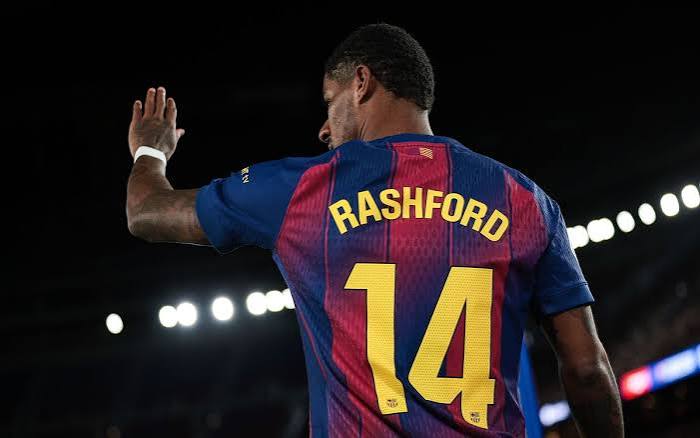
  • Keep Rashford: Why Selling After Barcelona Would Be Man Utd’s Biggest Mistake This Summer

    Keep Rashford: Why Selling After Barcelona Would Be Man Utd’s Biggest Mistake This Summer

    The summer transfer window is a time of high drama and high stakes, and for Manchester United, the 2025 edition is shaping up to be a defining one. With the club navigating the treacherous waters of Profit and Sustainability Rules (PSR) and a new manager’s first full season on the horizon, the rumor mill has been churning with one name above all: Marcus Rashford. Reports from The Athletic, Sky Sports, and Mundo Deportivo suggest that Barcelona, a club perennially linked with marquee signings, is circling the United No. 10. And United, desperate for funds, might just be tempted to listen.

    But selling Rashford would be a catastrophic mistake, one that could set the club back years. This isn’t just about a player’s form or a balance sheet; it’s about identity, about the soul of a club that has lost its way. Rashford is not just any player—he’s an academy graduate, a local lad who has bled for the badge since 2016. To sell him now, especially to a Barcelona side that can barely register its own players, would be to admit that United has become a selling club, a shadow of its former self. The stakes are enormous, and the decision made this summer will reverberate for a decade.

    The Financial Trap: Why PSR Is Pushing United to Sell

    Let’s be clear about the bind United finds itself in. The club posted losses of £113.2m for 2023-24, pushing its three-year total dangerously close to the Premier League’s £105m limit. The ‘sell-to-buy’ model is no longer a choice; it’s a necessity. And here’s the rub: selling an academy graduate like Rashford would be recorded as 100% pure profit on the books, a massive boost to the PSR calculation. It’s the kind of accounting magic that makes bean counters salivate.

    But this is a short-term fix with long-term consequences. Yes, United needs to raise funds, but it can do so by selling fringe players, trimming the wage bill, and being smarter in the market. The club has already made two signings this summer, and more are expected, but the core of the squad should be preserved. Rashford’s sale might bring in £60-80m, but what does it say about ambition? What message does it send to the fans, to the other players, to the world? That United is now a club that sells its best assets to balance the books? That’s not the United way.

    Barcelona’s Financial Reality: A Deal That Makes No Sense for United

    Now, let’s talk about Barcelona. The Catalan giants are in a financial mess of their own. La Liga’s spending cap for them was slashed from €650m in 2019-20 to just €204m for 2024-25. They’ve had to activate ‘economic levers’—selling off future assets—just to register players. They struggled to register Dani Olmo in January 2025. And yet, they’re being linked with Rashford, a player who would command a significant fee and wages.

    Barcelona’s interest is real, but their ability to pay is dubious. They would likely demand a loan with an obligation to buy, or a heavily structured deal, to manage their cash flow. For United, this would mean delaying the financial benefit, taking on risk, and potentially getting less than market value. It’s a deal that makes no sense for United, unless they’re desperate. And desperation is never a good negotiating position.

    Rashford’s Revival Under Amorim: A Sign of Things to Come

    Let’s not forget the football. Rashford had a poor 2023-24 season, no doubt. Eight goals in 43 appearances, off-field issues, a loss of form. But under Ruben Amorim, who took over in November 2024, there have been signs of a revival. Amorim’s 3-4-3 system has required Rashford to adapt, but he’s shown improved pressing and a return to double-digit goal contributions. He’s not back to his 2022-23 peak, when he scored 30 goals and was named in the PFA Team of the Year, but the trajectory is upward.

    Selling him now would be selling low. His value is depressed after two inconsistent seasons. If he has a strong 2025-26 under Amorim, his value could skyrocket. United would be wise to hold onto him, let him rebuild his form, and then reassess. The club has a history of selling players too early—look at the likes of Jaap Stam, David Beckham, or more recently, Romelu Lukaku. The regret is always palpable.

    The Identity Factor: Rashford Is More Than a Player

    Rashford is not just a footballer; he’s a symbol. He came through the academy, he’s a local lad, he’s been at the club since he was a kid. He’s the kind of player that fans identify with, the kind that embodies the club’s values. Selling him to Barcelona, a club that has its own financial troubles, would be a betrayal of that identity. It would say that United is no longer a club that nurtures talent, but a business that trades in it.

    Moreover, Rashford’s off-field work—his campaign against child food poverty, his advocacy for social causes—has made him a beloved figure beyond football. He’s a role model, a leader. To lose him would be to lose a part of the club’s soul. And in an era where clubs are increasingly faceless corporate entities, that soul is more important than ever.

    The Counter-Argument: Why Some Say Sell

    Of course, there are those who argue for selling. They point to his inconsistency, his high wages (£325k per week), and the tactical fit. Amorim’s system might not suit Rashford’s preferred left-wing role, and he’s been played as a striker or right-sided forward with mixed results. They argue that United needs to rebuild, and that means moving on from underperforming stars.

    But this is a false dichotomy. United can rebuild without selling Rashford. They can sell other players, they can be smarter in the market, they can develop young talent. The idea that Rashford is a liability is short-sighted. He’s 27, in his prime, and has shown he can be world-class. The problem isn’t Rashford; it’s the club’s inability to build a coherent squad around him. Selling him would be an admission of failure, not a step forward.

    The Verdict: Keep Him, Build Around Him

    The decision this summer is a test of United’s ambition. Selling Rashford to Barcelona would be the biggest mistake this summer, a move that would weaken the squad, undermine the manager, and alienate the fans. Instead, United should keep him, build around him, and give Amorim the tools to succeed. The financial pressure is real, but it can be managed without sacrificing the club’s best assets. United is not a selling club. It never has been, and it never should be.

    Manchester United stands at a crossroads. The easy path is to sell Rashford, to balance the books, to appease the accountants. But the right path is to keep him, to show faith in a player who has given so much to the club, and to build a team that can challenge for titles again. Selling Rashford to Barcelona would be a mistake that United would regret for years. The club must hold firm, keep its star, and trust in the process. The future depends on it.

    Summary

    • Selling Rashford would provide a PSR boost (100% profit) but would be a short-term fix with long-term consequences.
    • Barcelona’s financial instability means any deal would likely be a loan or heavily structured, offering little immediate benefit to United.
    • Rashford has shown signs of revival under Amorim, and selling now would mean selling low.
    • Rashford is a symbol of the club’s identity; selling him would undermine United’s values and alienate fans.
    • United can manage its finances without selling its best players; the club must show ambition, not desperation.

    FAQ

    Q: Why is Manchester United considering selling Marcus Rashford?
    A: United is under pressure to comply with the Premier League’s Profit and Sustainability Rules (PSR) after posting significant losses. Selling Rashford, an academy graduate, would be recorded as pure profit, providing a major boost to their financial position.

    Q: Can Barcelona afford to sign Rashford?
    A: Barcelona is in financial distress, with a reduced spending cap and struggles to register players. They would likely need to structure a deal as a loan with an obligation to buy, which offers limited immediate benefit to United.

    Q: Has Rashford’s form been good enough to justify keeping him?
    A: Rashford had a poor 2023-24 season but has shown improvement under Ruben Amorim, with a return to double-digit goal contributions. His 2022-23 peak, where he scored 30 goals, shows his potential.

    Q: What would selling Rashford mean for Manchester United’s identity?
    A: Rashford is an academy graduate and a symbol of the club’s values. Selling him would signal that United is a selling club, undermining its identity and alienating fans.

    Q: What should Manchester United do instead?
    A: United should keep Rashford, build around him, and manage its finances by selling fringe players and being smarter in the market. Selling the club’s best assets is not the solution.