In the summer of 1945, as the world waited for news from the Trinity test in the New Mexico desert, a young physicist named Joan Hinton stood among the observers, her heart pounding. She had helped build the “Water Boiler” reactor at Los Alamos, a small but critical experiment that validated the physics behind the bomb. Yet when the official histories were written, her name—like those of thousands of other women would be reduced to a footnote, if mentioned at all.
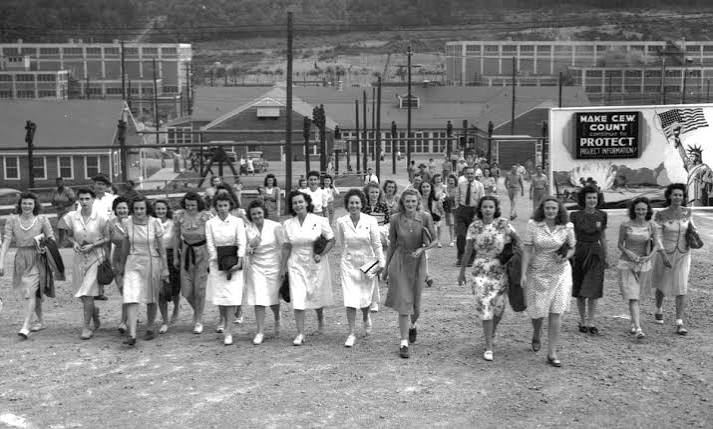
Hinton’s story is not unique. The Manhattan Project employed over 130,000 people, and women made up a significant portion of that workforce—estimates range from 40,000 to 60,000. They worked as physicists, chemists, mathematicians, and engineers, but also as “computers” (human calculators), technicians, nurses, and factory workers. They operated massive machines, calculated complex decay rates, and monitored radiation exposure, often without knowing the ultimate purpose of their labor.
Their contributions were not peripheral; they were essential. Yet the narrative of the Atomic Age has been dominated by male figures like Oppenheimer and Fermi. This article uncovers the roles of these unsung women, exploring the scientific triumphs, the social barriers they faced, and the ethical questions that haunted some of them long after the mushroom clouds faded.
The Scientific Foundation: Lise Meitner and the Physics of Fission
Before the Manhattan Project could begin, someone had to explain how a uranium atom could split. That someone was Lise Meitner, an Austrian-Swedish physicist who, in 1938, co-authored the theoretical paper that described nuclear fission. Working with her nephew Otto Frisch, Meitner calculated the energy release from a splitting uranium nucleus, coining the term “fission.” Her work was built on experiments by Otto Hahn and Fritz Strassmann in Berlin, but it was Meitner who provided the physical explanation.
Meitner was not employed by the Manhattan Project—she had fled Nazi Germany and was living in Sweden—but her discovery was the foundation upon which the bomb was built. Despite her pivotal role, the 1944 Nobel Prize in Chemistry was awarded solely to Hahn, a slight that historians have long attributed to her gender and exile. When she later visited the United States, she refused an invitation to work on the project, stating, “I will have nothing to do with a bomb.”
The Experimentalists: Chien-Shiung Wu and Leona Woods Marshall
At Columbia University, a Chinese-American physicist named Chien-Shiung Wu was tackling one of the hardest problems in the project: uranium enrichment. Wu, already an expert in beta decay, was recruited to work on gaseous diffusion, a process to separate the fissionable U-235 isotope from the more common U-238. Her meticulous experiments helped resolve bottlenecks that threatened the project’s timeline.
Wu’s later work on the “Wu experiment,” which disproved the law of conservation of parity, earned her international acclaim, but she was overlooked for the Nobel Prize—a decision many attribute to gender and racial bias. During the Manhattan Project, however, her contributions were strictly practical, and she was known for her precision and dedication.
Meanwhile, at the University of Chicago, a 23-year-old physicist named Leona Woods was the youngest person—male or female—working on the construction of Chicago Pile-1, the world’s first nuclear reactor. As the only woman on the team, she helped assemble the graphite blocks and uranium fuel, and she monitored the reactor’s controls during its first criticality on December 2, 1942. Woods later moved to Hanford, Washington, where she worked on the plutonium production reactors, ensuring they operated safely and efficiently.
The Theorists and Calculators: Katharine Way and Maria Goeppert Mayer
Not all contributions came from hands-on experimentation. Katharine Way, a physicist at the University of Chicago, developed the “Way-Wigner” formula, an approximation for how fission products decay over time. This formula was crucial for understanding the radioactive fallout from a bomb and for designing the reactors that produced plutonium. Way’s work was so reliable that her “Table of Nuclear Data” remained a standard reference for decades.
Maria Goeppert Mayer, though she would win a Nobel Prize later for the nuclear shell model, contributed to the Manhattan Project as a theoretical physicist working on isotope separation. Mayer, who had struggled to find paid academic positions due to her gender, was hired as a part-time researcher at Columbia. Her calculations on the optical properties of uranium compounds helped improve the enrichment process.
The Gatekeepers and the Everyday Workers
Beyond the scientists, thousands of women served in roles that were less glamorous but equally vital. Dorothy McKibbin was the public face of Los Alamos. She ran the Santa Fe office that processed every incoming scientist and worker, issuing security clearances and arranging housing. Her warmth and discretion earned her the trust of the project’s leadership, and she became a confidante to many, including J. Robert Oppenheimer.
At Oak Ridge, Tennessee, young women from rural areas were recruited to operate the massive calutron machines that separated uranium isotopes. They sat for hours at control panels, adjusting knobs and reading gauges, unaware that they were producing fuel for an atomic bomb. Many of them signed secrecy oaths, and their families were told they were working on a “secret war effort.” The work was tedious and demanded intense concentration; mistakes could ruin entire batches of enriched uranium.
Other women served as health physicists, measuring radiation exposure levels. They were on the front lines of safety, often working with inadequate protective gear and insufficient knowledge of the dangers. Nurses and medical staff treated workers for radiation burns and other ailments, though they were not told the cause.
The Trinity Test and Its Aftermath
On July 16, 1945, the first atomic bomb was detonated at Trinity site. Among the observers were a handful of women, including Joan Hinton and Elizabeth “Diz” Graves. Graves, a physicist who had worked on instrumentation for the test, was one of the few women allowed to witness the blast. She later worked on the hydrogen bomb, but she also advocated for the peaceful use of nuclear energy.
Hinton, however, was profoundly affected by the test. She had joined the project out of scientific curiosity, but the sight of the mushroom cloud—and the subsequent bombings of Hiroshima and Nagasaki—filled her with horror. She later moved to China, where she became a pacifist and a supporter of Mao’s revolution, rejecting her past entirely.
The Legacy of Erasure
Why were these women forgotten? Partly because of the strict compartmentalization of the project—many women did not know the full picture of what they were working on, and their specific tasks were not deemed worthy of mention in official reports. But also because of a systemic bias that viewed women’s work as “support,” even when it was intellectually demanding.
Take the “computers”—women who performed complex mathematical calculations by hand. At Los Alamos, a team of women, including many with degrees in mathematics, calculated ballistics trajectories and nuclear cross-sections. Their work was essential, yet they were classified as “junior” staff and paid less than men doing the same work. When the war ended, most were laid off, and their contributions were omitted from post-war histories.
Even the scientists who achieved recognition later—like Wu and Goeppert Mayer—faced institutional discrimination. Wu was never offered a full professorship at Columbia until 1958, and Goeppert Mayer worked for years without pay, holding volunteer positions at the University of Chicago. The Manhattan Project, in many ways, was a microcosm of the gendered inequalities that pervaded mid-20th-century science.
The Women Who Said No
Not all women who were invited to join the project accepted. Lise Meitner, as mentioned, refused. Another scientist, the physicist and future Nobel laureate Maria Goeppert Mayer, initially hesitated to work on the bomb, but she was persuaded by the fear that Nazi Germany might develop one first. Many women, like their male counterparts, were motivated by the urgency of war, but some later expressed regret.
Katharine Way, who had worked on the decay formula, became a vocal advocate for nuclear disarmament after the war. She founded the Federation of American Scientists and lobbied for civilian control of atomic energy. Her story illustrates the complex moral landscape that women—and men—navigated after the bombs fell.
The women of the Manhattan Project were not passive observers of history; they were active participants in one of the most consequential scientific endeavors of the 20th century. From Lise Meitner’s theoretical insights to Leona Woods’s hands-on reactor work, from Katharine Way’s decay formulas to the anonymous “computers” who crunched numbers in windowless rooms, their contributions were indispensable. Yet their stories have been largely untold, obscured by a narrative that celebrated male genius while ignoring the collective effort that made the bomb possible. By bringing these women into the light, we not only correct the historical record but also honor the labor of the thousands of women who worked in obscurity, shaping the Atomic Age without ever receiving its full credit.
Summary
- Women made up a significant portion of the Manhattan Project workforce, estimated at 40,000 to 60,000, working in scientific, technical, and support roles.
- Lise Meitner’s theoretical explanation of nuclear fission was foundational, though she was denied the Nobel Prize and refused to work on the bomb.
- Chien-Shiung Wu and Leona Woods Marshall made key experimental contributions to isotope separation and reactor design, respectively.
- Katharine Way’s decay formula and Maria Goeppert Mayer’s isotope calculations were crucial to the project’s success.
- Thousands of women worked as “computers,” technicians, and factory workers, often without knowing the purpose of their labor, and were later erased from official histories.
FAQ
Q: Did any women work on the Manhattan Project as scientists?\nA: Yes, several women scientists played critical roles, including Chien-Shiung Wu, Leona Woods Marshall, Katharine Way, Joan Hinton, and Elizabeth Graves. They worked alongside male scientists on reactor design, isotope separation, and weapons physics.\n\nQ: Why were the women’s contributions largely forgotten?\nA: The project’s strict secrecy meant that many workers did not know the overall goal, and official histories focused on a few male leaders. Additionally, gender bias in science and society led to women’s work being undervalued and often omitted from post-war accounts.\n\nQ: Did women know they were building an atomic bomb?\nA: Most women at Oak Ridge and Hanford did not know the purpose of their work until the Hiroshima bombing was announced. Only a small number of scientists had full knowledge of the project’s goal.\n\nQ: What were “computers” in the Manhattan Project?\nA: “Computers” were human calculators, usually women, who performed complex mathematical calculations by hand. Their work was essential for designing the bomb and predicting its effects, though it was considered tedious and low-status.\n\nQ: Were any women involved in the Trinity test?\nA: Yes, a few women, such as Elizabeth “Diz” Graves, were present at the Trinity test site, working on instrumentation and observing the detonation. Joan Hinton was also present, and the experience profoundly affected her, leading her to become a pacifist.