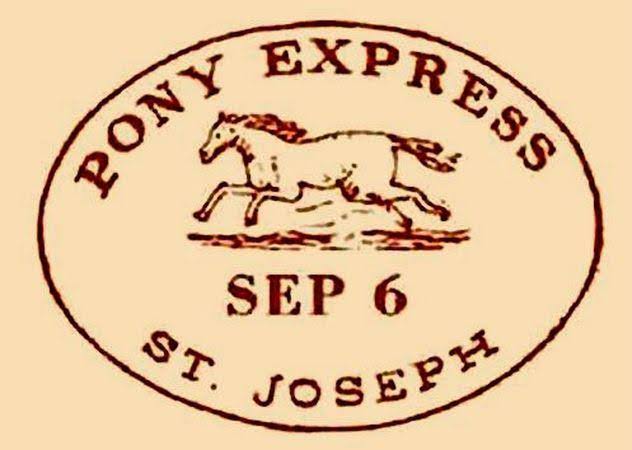
In 1860, the fastest way to send a message from the East Coast to California took about three weeks by stagecoach. Then three businessmen launched a service that promised to cut that time by more than half, using a relay of horses and young riders across 1,966 miles of prairie, desert, and mountain. The Pony Express operated for only 18 months, lost a fortune, and was made obsolete by the telegraph. Yet its brief existence left a lasting mark on the American West.
This is the story of how a short-lived mail service became a legend—and why its impact went far beyond the letters it carried.
A Gamble on Speed
In the late 1850s, California was booming. The Gold Rush had drawn hundreds of thousands of people westward, and they wanted news from home. But the Overland Mail Company’s southern stagecoach route took 25 days or more to deliver mail from the East. The political crisis of 1860 made the situation urgent: with Southern states threatening to secede, leaders in Washington worried that California might drift away from the Union. Faster communication could help hold the nation together.
William H. Russell, Alexander Majors, and William B. Waddell—partners in a freighting firm—saw an opportunity. They proposed a mail service along a central route that would cut delivery time to 10 days. It was a bold, expensive idea, and they funded it themselves, hoping to win a lucrative government contract. The Pony Express was, in some ways, a high-stakes publicity stunt.
The first riders left St. Joseph, Missouri, and Sacramento, California, on April 3, 1860. Ten days later, the westbound mail arrived in Sacramento. The eastbound mail reached St. Joseph in just over 11 days. The service was a sensation. But it was also a financial disaster from the start.
The Pony Express was a financial failure and a technological anachronism almost from the moment it began. But in its 18 months of operation, it proved that the West could be connected to the East faster than anyone thought possible. It kept California informed and loyal during a critical moment in American history, and it inspired a sense of possibility that outlasted its operation. The riders and horses are gone, but the legend endures—a reminder that sometimes the most impactful ventures are the briefest.
Summary
- The Pony Express operated for only 18 months, from April 1860 to October 1861, but cut mail delivery time between the coasts from weeks to about 10 days.
- It was a money-losing venture by Russell, Majors & Waddell, who hoped to win a government mail contract that never came.
- The service used a relay system with about 157 stations and 400–500 horses, with riders changing mounts every 10–15 miles.
- The fastest run carried Lincoln’s inaugural address in March 1861, covering the route in about 7 days and 17 hours.
- The completion of the transcontinental telegraph made the Pony Express obsolete, and it shut down two days later, but its legacy shaped the West’s image and communication.
FAQ
Q: How long did the Pony Express operate?
A: The Pony Express operated for about 18 months, from April 3, 1860, to October 26, 1861.
Q: How fast was the Pony Express?
A: The average delivery time was about 10 days in summer and 12–14 days in winter. The fastest run was approximately 7 days and 17 hours, carrying Lincoln’s inaugural address.
Q: How much did it cost to send a letter?
A: Initially $5 per half-ounce (about $150–$180 today), later reduced to $1 per half-ounce.
Q: Who were some famous riders?
A: William “Buffalo Bill” Cody rode as a teenager, and Robert “Pony Bob” Haslam made a famous 380-mile continuous round trip after his relief rider was killed.
Q: Why did the Pony Express end?
A: The transcontinental telegraph was completed on October 24, 1861, making the Pony Express obsolete. The last run was two days later.