Imagine a creature that lives for over 500 years, or one that shows no signs of aging even as centuries pass. This isn’t science fiction it’s the reality for a handful of species on Earth. Scientists call this phenomenon ‘negligible senescence,’ and it challenges our basic understanding of aging.
Aging, or senescence, is the gradual decline in function that most organisms experience after reaching maturity. But a few exceptional animals like the Greenland shark, the ocean quahog clam, and the tiny hydra seem to bypass this process entirely. They don’t age in the conventional sense, though they’re not immortal; they can still die from predators, disease, or accidents. The question is: how do they do it, and what can we learn from them?
What Is Negligible Senescence?
The term “negligible senescence” was popularized by biologist Caleb Finch in his 1990 book Longevity, Senescence, and the Genome. It refers to species that show no observable increase in mortality rate or decline in reproductive capacity with age after reaching sexual maturity. In other words, a 200-year-old bowhead whale is just as likely to die in a given year as a 50-year-old one, and its ability to reproduce remains intact.
This doesn’t mean these animals live forever. They can still be killed by predators, diseases, accidents, or environmental changes. What they lack is the biological clock that causes most organisms to gradually deteriorate. For humans, aging is a one-way street: our cells accumulate damage, our DNA repair slows down, and our risk of disease rises each year. For animals with negligible senescence, that street seems to level out—they reach a plateau of health that they maintain for decades or even centuries.
The Usual Suspects: Animals That Don’t Age
Several species have been identified as displaying negligible senescence, each with its own unique adaptations.
Greenland Shark: The 400-Year-Old Fish
The Greenland shark is the longest-lived vertebrate known, with an estimated lifespan of 250 to 500 years. These sharks don’t reach sexual maturity until they’re about 150 years old, a testament to their slow, steady pace of life. They live in the cold, dark depths of the North Atlantic, where their slow metabolism and the chilly waters likely contribute to their extreme longevity.
Bowhead Whale: The Arctic Centenarian
Bowhead whales can live over 200 years, making them the only whale species known to surpass the two-century mark. They’re also remarkably resistant to cancer, despite having many more cells than humans. Researchers have identified unique genetic adaptations in bowhead whales that enhance DNA repair and suppress tumors, offering clues for human cancer research.
Ocean Quahog Clam: Ming the Clam
The ocean quahog clam is a burrowing shellfish that can live for 400 to 500 years. The most famous specimen, nicknamed “Ming,” was 507 years old when it was accidentally killed during research in 2006 (scientists had to break its shell to determine its age). These clams have extremely low metabolic rates and produce protective proteins that combat oxidative stress.
Aldabra Giant Tortoise: Slow and Steady
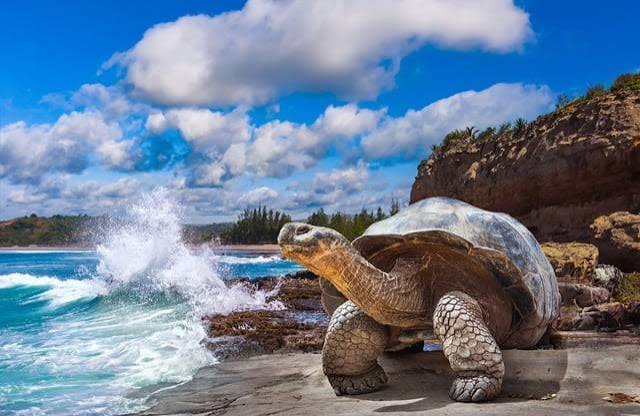
Aldabra giant tortoises, native to the Aldabra Atoll in the Indian Ocean, can live for 150 to 200 years or more. Unlike many animals, their mortality rate doesn’t increase with age; even elderly tortoises remain active and capable of reproduction. Their slow metabolism and efficient DNA repair systems play a role.
Naked Mole-Rat: The Cancer-Resistant Rodent
The naked mole-rat is a small, hairless rodent that lives up to 37 years—an extraordinary feat for a creature its size (mice live 3-4 years). They maintain fertility throughout their lives and show no signs of age-related decline. One key mechanism is their production of high-molecular-weight hyaluronan, a substance that inhibits cell overgrowth and prevents cancer.
Hydra and Planarians: The Potentially Immortal
Hydra are tiny, freshwater animals with a remarkable ability: they can regenerate their entire body from just a few cells. Their stem cells continuously divide, replacing old cells and effectively resetting the aging clock. Planarian flatworms have similar regenerative powers, fueled by high telomerase activity that maintains the protective caps on their chromosomes.
Lobsters: Indeterminate Growth
Lobsters grow throughout their lives, a trait called indeterminate growth. They produce telomerase, an enzyme that rebuilds telomeres, so their cells don’t suffer the shortening that leads to aging in other animals. While they’re often called “biologically immortal,” this is debated—lobsters can die from molting complications, disease, or predation.
The Mechanisms: How Do They Do It?
Scientists have identified several key mechanisms that allow these animals to escape the aging process.
Telomere Maintenance
Telomeres are protective caps at the ends of chromosomes that shorten each time a cell divides. When they get too short, cells stop dividing, contributing to aging. Most animals, including humans, have limited telomerase activity, so our telomeres slowly erode. But many negligible senescence species maintain or regenerate their telomeres throughout life, keeping their cells young.
Enhanced DNA Repair
DNA damage accumulates as we age, leading to mutations and cellular dysfunction. Species like the naked mole-rat have highly efficient DNA repair pathways that fix damage quickly and accurately, preventing the buildup of errors.
Proteostasis: Keeping Proteins in Check
Proteins are the workhorses of cells, but they can become damaged or misfolded over time, forming toxic clumps. Cells normally clear out these damaged proteins, but this process, called proteostasis, declines with age. Negligible senescence species maintain robust proteostasis, ensuring that cellular “garbage” doesn’t accumulate.
Cancer Suppression
Cancer is a disease of aging—the longer we live, the more opportunities for cells to mutate and grow uncontrollably. Animals like the bowhead whale and naked mole-rat have evolved powerful anti-cancer mechanisms. For example, naked mole-rats produce a unique form of hyaluronan that prevents cells from overcrowding, while bowhead whales have duplicated genes related to DNA repair and tumor suppression.
Low Metabolic Rate and Oxidative Stress Management
Many negligible senescence species are cold-blooded or have slow metabolisms, which reduces the production of harmful free radicals—reactive molecules that damage cells. By managing oxidative stress, they avoid the cellular wear-and-tear that accelerates aging in other animals.
Regenerative Capacity
Hydra and planarians take a different approach: they continuously regenerate their tissues, effectively creating new bodies from old parts. This constant renewal means their cells never accumulate enough damage to trigger aging.
Why Did These Animals Escape Aging?
The evolutionary theory of aging, developed by biologists like Peter Medawar and George Williams in the mid-20th century, explains why most organisms age. The force of natural selection declines with age: genes that harm you after you’ve reproduced have less pressure to be eliminated. This leads to two processes: mutation accumulation (harmful late-acting mutations build up) and antagonistic pleiotropy (genes that help early reproduction but hurt later in life, like those that cause cancer).
Negligible senescence challenges this theory’s assumption that aging is inevitable. If a species has very low extrinsic mortality—that is, few predators, safe habitats, or other protections—natural selection can continue to act at older ages. In that case, it pays to invest in maintenance and repair, because individuals that stay healthy longer will produce more offspring over their extended lifetimes.
This “live slow, die old” strategy is seen in many long-lived species: they mature late, have few offspring, and invest heavily in each one (a K-selected life history). The Greenland shark, for instance, doesn’t reproduce until 150 years old, a strategy that only works in a stable, low-mortality environment. In contrast, mice and shrews face high predation risk; for them, it’s better to reproduce quickly and die young than to spend energy on repair that might be wasted if they’re eaten.
The “Immortality” Myth and the Trade-Off
Popular media often calls these animals “immortal,” but that’s misleading. They can still die from accidents, disease, or predation. The hydra comes closest to biological immortality, but even it can be killed. Negligible senescence means no aging, not no death.
There’s also a trade-off. Negligible senescence species typically reproduce slowly and late. Would humans want that? Probably not—we value our ability to reproduce early and often. But understanding the mechanisms of these animals could lead to therapies that delay aging, prevent cancer, or improve DNA repair, without requiring us to give up our reproductive strategies.
What Can We Learn?
Research on negligible senescence is still in its early stages, but it holds promise. By studying the bowhead whale’s anti-cancer genes, scientists hope to develop new cancer treatments for humans. The naked mole-rat’s cancer resistance has already inspired studies on the role of hyaluronan in tumor suppression. And the telomere-maintaining mechanisms of hydra and planarians could inform regenerative medicine.
These animals show that aging is not an immutable law of biology. It’s a consequence of evolutionary trade-offs—one that can be modified. While we may never achieve the longevity of a Greenland shark, studying these creatures brings us closer to understanding the aging process and, perhaps, to extending healthy human life.
Negligible senescence is nature’s reminder that aging is not inevitable. The Greenland shark, the ocean quahog clam, and the tiny hydra have found ways to maintain their bodies for centuries, offering a living blueprint for slowing the aging process. By studying these remarkable animals, we can uncover the genetic and biochemical secrets that might one day help us live longer, healthier lives—without expecting to become immortal.
Summary
- Negligible senescence means no observable aging after maturity, but it’s not immortality—animals still die from other causes.
- Key species include the Greenland shark (250-500 years), bowhead whale (200+ years), ocean quahog clam (400-500 years), and hydra (potentially immortal).
- Mechanisms include telomere maintenance, enhanced DNA repair, protein quality control, cancer suppression, low metabolic rates, and regeneration.
- Evolutionary explanation: Low extrinsic mortality selects for maintenance and repair, leading to a “live slow, die old” strategy.
- Research on these animals could lead to breakthroughs in cancer treatment and regenerative medicine for humans.
FAQ
Q: Are animals with negligible senescence truly immortal?
A: No—they still die from predators, disease, accidents, or environmental stress. Negligible senescence means they don’t age, but they’re not invincible.
Q: Why don’t humans have negligible senescence?
A: Humans have relatively high extrinsic mortality throughout our evolutionary history, so natural selection favored reproduction over maintenance. We age because our genes haven’t been optimized for centuries-long lifespans.
Q: What is the longest-lived animal ever discovered?
A: The ocean quahog clam, with one specimen (Ming) living 507 years. Some Greenland sharks are estimated to be over 400 years old.
Q: Can studying these animals help humans live longer?
A: Yes—understanding their DNA repair mechanisms, cancer resistance, and telomere maintenance could lead to therapies that delay aging or prevent age-related diseases in humans.
Q: Do all long-lived animals have negligible senescence?
A: No—some animals, like elephants, live long but still show signs of aging. Negligible senescence is a specific lack of aging, not just a long lifespan.