Tag: League of Nations

  • The League of Nations: A Promise Broken by Its Own Members

    The League of Nations: A Promise Broken by Its Own Members

    On a crisp January morning in 1920, delegates from 42 nations gathered in Geneva, Switzerland, to inaugurate the world’s first permanent peacekeeping body. The League of Nations was born out of the ashes of World War I, a war that had killed over 16 million people and left Europe in ruins. Its founding covenant, embedded in the Treaty of Versailles, was a bold promise: never again would the world descend into such catastrophic conflict. The League would resolve disputes, disarm aggressors, and protect the weak.

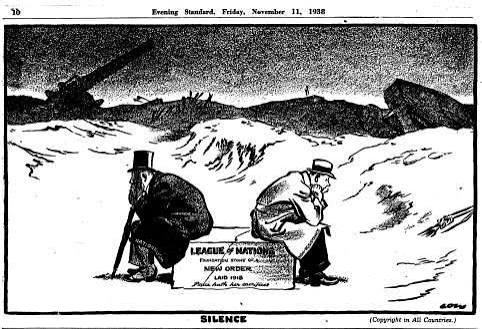
    But within two decades, that promise lay in tatters. The League failed to stop Japanese aggression in Manchuria, Italian conquest of Ethiopia, and German remilitarization of the Rhineland. By 1939, it was a powerless bystander to the outbreak of World War II. The story of the League is not just a chronicle of institutional weakness; it is a cautionary tale about the limits of international cooperation when great powers refuse to lead.

    Birth of an Ideal

    The League’s intellectual roots stretched back to philosopher Immanuel Kant’s 1795 essay Perpetual Peace and the Concert of Europe that followed Napoleon’s defeat. But it was World War I that turned these ideas into a political reality. As the war dragged on, President Woodrow Wilson championed the cause, and in January 1918, his Fourteen Points called for a ‘general association of nations’ to guarantee political independence and territorial integrity. The British League of Nations Union and South African statesman Jan Smuts added their weight, and by the Paris Peace Conference in 1919, the Covenant was drafted in weeks.

    The structure was ambitious. The Assembly gave every member an equal vote. The Council had permanent seats for Britain, France, Italy, and Japan, plus rotating non-permanent members. The Secretariat, led by Sir Eric Drummond, provided day-to-day administration. The Permanent Court of International Justice opened in The Hague in 1922. The International Labour Organization, a semi-autonomous agency, aimed to improve working conditions globally.

    Yet the Covenant’s heart was collective security, outlined in Articles 10–16. Members pledged to respect each other’s territorial integrity and to respond to aggression with economic sanctions or military force. It was a revolutionary concept: aggression against one would be met by all.

    The Fatal Absence

    From the start, the League was crippled by the absence of its most powerful champion. The U.S. Senate, led by Henry Cabot Lodge, refused to ratify the Treaty of Versailles in 1919 and 1920. Lodge and his allies feared that Article X would drag America into foreign wars without congressional approval. President Wilson campaigned futilely for ratification, but the Senate voted no. The United States never joined.

    Without American participation, the League lacked military and economic heft. Britain and France, war-weary and financially strained, were reluctant to enforce sanctions against major powers. The League’s only real strength was moral suasion, and that proved insufficient against determined aggressors.

    Successes That Foreshadowed the UN

    Despite its eventual collapse, the League did achieve tangible successes, especially in the 1920s. It resolved the Åland Islands dispute between Finland and Sweden in 1921, peacefully settling a territorial conflict. In 1926, it mediated the Mosul question between Turkey and Iraq, and in 1934, it handled the Leticia dispute between Colombia and Peru.

    The League also pioneered humanitarian work. Fridtjof Nansen, a Norwegian explorer and diplomat, devised a passport system for stateless refugees in 1922, helping hundreds of thousands of displaced people. The League’s Health Organization fought epidemics like typhus and malaria, laying groundwork for the World Health Organization. It addressed drug trafficking, white slavery, and child labor, and it oversaw a mandates system to administer former German and Ottoman territories—though critics later dismissed this as colonialism in disguise.

    These successes, however, were local and administrative. They did not touch the core issue of great-power aggression.

    Cracks in the Edifice

    The 1930s brought the Great Depression, which fueled nationalism and militarism. The League’s first major test came in 1931, when Japan invaded Manchuria. China appealed to the League, which dispatched the Lytton Commission. The commission condemned Japan’s aggression, but no sanctions followed. Japan simply withdrew from the League in 1933. The message was clear: the League would not act against a major power.

    The second blow came in 1935, when Italy invaded Ethiopia. The League imposed partial sanctions, but oil was excluded—a fatal omission. Meanwhile, British and French foreign ministers secretly negotiated the Hoare-Laval Pact, which would have given Italy two-thirds of Ethiopia. The plan leaked, causing outrage, but the damage was done. Ethiopia was annexed, and the League’s credibility collapsed.

    Germany, now under Hitler, remilitarized the Rhineland in 1936, violating the Treaty of Versailles. The League took no action. The Spanish Civil War from 1936 to 1939 saw the Non-Intervention Committee fail to stop foreign intervention. When Germany annexed Austria in 1938 and the Sudetenland later that year, the League was bypassed entirely. By the time Germany invaded Poland in 1939, the League was effectively defunct.

    The Final Curtain

    The League held its last assembly on April 18, 1946, and formally dissolved the next day. Its assets and functions were transferred to the United Nations, founded in October 1945. The League’s legacy is ambiguous. It failed at its primary mission, yet it established the model for the UN and other international bodies. Its successes in health, labor, and refugee work were seeds that grew into specialized agencies.

    But the League’s failure offers a stark lesson: international institutions are only as strong as their member states’ willingness to act. The absence of the United States, the hesitancy of Britain and France, and the rise of totalitarian regimes combined to doom the experiment. As the UN faces its own challenges, the League’s story remains a warning that peace is not guaranteed by treaties alone—it requires constant vigilance and commitment.

    The League of Nations was not a failure of ideals but a failure of execution. It was a promise made by the world’s leaders to prevent another war, and it was broken not by its institutions but by the nations that created it. Its memory serves as a reminder that peace is a fragile achievement, requiring the active participation of the powerful. The League’s ghost still haunts Geneva, urging us to learn from its mistakes.

    Summary

    • The League of Nations was founded on January 10, 1920, as part of the Treaty of Versailles, with 42 original members.
    • It had both successes (e.g., Åland Islands, refugee work) and failures (Manchuria, Ethiopia).
    • The failure of the U.S. to join is considered a fatal flaw, weakening the League’s power.
    • The League dissolved on April 18-19, 1946, and its assets were transferred to the United Nations.
    • Its legacy includes establishing the model for the UN and specialized agencies like the ILO and WHO.

    FAQ

    Q: Why did the League of Nations fail?
    A: The League failed due to a combination of factors: the absence of the United States, the reluctance of Britain and France to enforce sanctions, the rise of aggressive totalitarian regimes, and the League’s lack of military enforcement power.

    Q: What were the League’s main successes?
    A: The League successfully resolved several territorial disputes, including the Åland Islands and Mosul. It also pioneered refugee assistance, health programs, and labor standards, which later influenced the UN.

    Q: How did the United States’ failure to join affect the League?
    A: The U.S. refusal to join deprived the League of its most powerful member, reducing its credibility and military and economic influence, making it harder to enforce collective security.

    Q: What happened at the last assembly of the League?
    A: The League’s last assembly was held on April 18, 1946, where it formally dissolved itself, and its functions and assets were transferred to the newly created United Nations.

    Q: What is the League’s legacy today?
    A: The League’s legacy is twofold: it is a cautionary tale of international failure, but it also established the framework for the UN and specialized agencies like the ILO and WHO, and its humanitarian work continues to inspire.
  • Lines on a Map: How the Mandate System Redrew the Middle East

    Lines on a Map: How the Mandate System Redrew the Middle East

    In 1916, two men one British, one French sat down with a map of the Middle East and drew a series of straight lines across it. They were not cartographers, but diplomats: Sir Mark Sykes and François Georges-Picot. Their agreement, signed in secret, carved up the Ottoman Empire’s Arab provinces into zones of control for their respective countries. At the time, the lines were hypothetical. Within a few years, they would become the borders of nations that still exist today.

    The mandate system, established under the League of Nations after World War I, was the legal vehicle that turned those lines into reality. It was a framework that promised to guide ‘provisionally independent’ peoples toward self-governance, yet in practice, it maintained European imperial control for decades. The consequences of that system—the borders drawn, the promises broken, the populations displaced—continue to shape the politics, conflicts, and identities of the modern Middle East.

    The Collapse of an Empire

    The Ottoman Empire had ruled the Arab provinces for four centuries. But its defeat in World War I left it in ruins, and its territories were suddenly up for grabs. The Allies, particularly Britain and France, had their own designs on the region. The Sykes-Picot Agreement of 1916 was the first step: it divided the Arab provinces into British and French spheres of influence. But the agreement was secret, and it contradicted other promises made during the war.

    The British had also promised the Arabs independence. In the McMahon-Hussein Correspondence (1915–1916), Britain’s High Commissioner in Egypt, Sir Henry McMahon, wrote to Hussein bin Ali, the Sharif of Mecca, offering to support an independent Arab state in exchange for an Arab revolt against the Ottomans. The Arabs, led by Hussein’s son Faisal, launched the Arab Revolt in 1916, fighting alongside British forces. But the British had made a third promise: the Balfour Declaration of 1917, which stated that Britain viewed ‘with favour the establishment in Palestine of a national home for the Jewish people.’

    These three promises—to the Arabs, to the French, and to the Zionists—were mutually incompatible. The mandate system was created, in part, to resolve this contradiction, but it did so by prioritizing European interests over local aspirations.

    The ‘Sacred Trust of Civilization’

    Article 22 of the Covenant of the League of Nations, drafted in 1919, established the mandate system. It was a paternalistic framework: certain territories, it said, were ‘inhabited by peoples not yet able to stand by themselves under the strenuous conditions of the modern world.’ These peoples should be entrusted to ‘advanced nations’ who would act as ‘a sacred trust of civilization.’

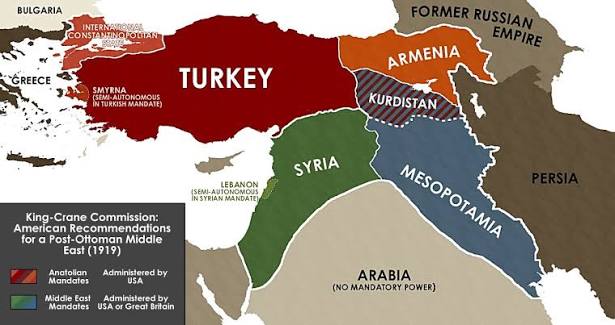
    The mandates were divided into three classes based on their ‘stage of development.’ The Class A mandates, which included the former Ottoman provinces, were considered ‘provisionally independent’ but still in need of ‘administrative guidance’ until they could ‘stand alone.’ Britain received the mandates for Iraq, Palestine, and Transjordan; France received Syria and Lebanon.

    The language was noble, but the practice was imperial. The mandates gave Britain and France control over the foreign relations, defense, and internal administration of these territories. They could shape borders, install rulers, and manage resources as they saw fit, with only the League of Nations—which was dominated by the same powers—to answer to.

    Drawing the Lines

    One of the most enduring legacies of the mandate system is the borders it created. British and French officials drew these lines with little regard for the ethnic, tribal, or religious demographics of the region. In some cases, they used straight lines that cut across communities, dividing families and trade routes. In others, they grouped together groups that had little in common, or separated those who had lived together for centuries.

    Take Iraq, for example. The British combined three former Ottoman provinces—Basra, Baghdad, and Mosul—into a single state. These provinces had distinct populations: the Shia Arab majority in the south, the Sunni Arab minority in the center, and the Kurds in the north. The British placed Faisal, the Hashemite prince from the Hejaz, on the throne, despite his having no prior connection to Iraq. The result was a fragile state that faced constant internal tensions.

    Similarly, the French divided their mandate into Syria and Lebanon, with Lebanon created as a separate entity to give the Maronite Christian community a political advantage. The borders of Lebanon were drawn to include areas that were predominantly Muslim, setting the stage for sectarian conflict that continues to this day.

    Palestine was arguably the most fraught case. The mandate incorporated the Balfour Declaration, making Britain responsible for facilitating Jewish immigration while also protecting the rights of the existing Arab population. This dual obligation was impossible to fulfill, and the mandate period was marked by escalating violence between Jewish and Arab communities.

    The Betrayal of Promises

    For Arab nationalists, the mandate system was a betrayal. They had fought alongside the British in World War I, expecting independence in return. Instead, they found themselves under new colonial masters. The 1920 Iraqi revolt was a direct response to this betrayal, with Iraqis rising up against British occupation. The British suppressed the revolt with brutal force, using aerial bombardment against villages.

    The Great Syrian Revolt of 1925–1927 was similarly violent. Syrian nationalists, led by Sultan al-Atrash, fought against French rule. The French responded with heavy-handed tactics, including the bombardment of Damascus. The revolt was eventually crushed, but it demonstrated the depth of opposition to the mandate system.

    In Palestine, the conflict took on a different character. Jewish immigration, driven by the Balfour Declaration and the rise of European anti-Semitism, increased steadily throughout the 1920s and 1930s. The Arab population, who made up the vast majority, saw this as a threat to their existence. The 1936–1939 Arab Revolt was a major uprising against both British rule and Jewish immigration, and it was met with brutal repression by the British.

    The mandates were supposed to be temporary, leading to eventual independence. But the path to independence was uneven. Iraq became formally independent in 1932, although British influence remained strong. Syria and Lebanon achieved independence in 1946, after French withdrawal. Transjordan became independent in 1946, and was renamed Jordan in 1949.

    Palestine proved the most intractable. The British, unable to manage the growing conflict between Jews and Arabs, announced in 1947 that they would withdraw. The United Nations proposed a partition plan, which was accepted by the Jewish leadership but rejected by the Arab states and Palestinian Arabs. In 1948, the British mandate ended, and the State of Israel was declared. The ensuing war led to the displacement of hundreds of thousands of Palestinian Arabs, an event known as the Nakba, or ‘catastrophe.’

    A Legacy of Fragility

    The mandate system ended, but its legacy endures. The borders it created have been largely maintained, despite the fact that they were drawn with little understanding of local realities. These borders have been a source of conflict, as groups that were separated or combined now contest their identities within artificial states.

    The mandate system also established a pattern of external intervention in the region. Britain and France may have left, but their strategic interests—particularly in oil—led to continued involvement. The Cold War brought new powers into the region, but the post-mandate states remained fragile, subject to coups, revolutions, and foreign interference.

    In the post-colonial critique, the mandate system is seen as a legal fiction that legitimized imperialism. The ‘sacred trust of civilization’ was a cover for economic exploitation and strategic manipulation. The promises of self-determination were empty, as the mandatory powers were never genuinely committed to preparing these territories for independence. They were more interested in maintaining control over resources and trade routes.

    The result is a Middle East defined by the lines on a map—lines that were drawn by outsiders, with little regard for the people who lived within them. The mandate system was an experiment in international governance, but it was also a colonial project that continues to shape the region’s politics and conflicts today.

    The Human Cost

    The human cost of the mandate system is immeasurable. The borders it created have been the source of countless wars, uprisings, and displacements. The Palestinian refugee crisis, which began in 1948, remains unresolved. The sectarian tensions in Syria and Iraq, which have fueled civil wars and the rise of extremist groups, can be traced back to the arbitrary divisions of the mandate period.

    The mandate system also left a legacy of political instability. The states it created were often artificial, formed without a sense of shared national identity. This has made them vulnerable to fragmentation and external interference. From the 1958 Iraqi revolution to the 2011 Syrian uprising, the post-mandate states have struggled to achieve stability and legitimacy.

    For the peoples of the Middle East, the mandate system was a promise that was never kept. It promised freedom, but delivered colonial rule. It promised self-determination, but delivered foreign control. Its legacy is a region still grappling with the consequences of decisions made a century ago by diplomats who saw the Middle East as a blank slate on which to draw their own ambitions.

    The mandate system remade the Middle East, but it did so without the consent of the people who lived there. The borders, governments, and conflicts that define the region today are the product of decisions made in European capitals, not in the cities and villages of the Arab world. As the region continues to struggle with these legacies, it is worth remembering that the lines on the map are not natural boundaries, but the hard-won—or lost—consequences of an imperial past that is not yet over.

    Summary

    • The mandate system was established under Article 22 of the League of Nations Covenant to administer former Ottoman territories, with Class A mandates covering Iraq, Palestine, Transjordan, Syria, and Lebanon.
    • The borders drawn by British and French officials often ignored ethnic, tribal, and religious demographics, creating artificial states that remain fragile today.
    • Conflicting wartime promises (McMahon-Hussein, Sykes-Picot, Balfour Declaration) created a ‘triple promise’ problem that the mandate system failed to resolve.
    • Arab nationalists saw the mandates as a betrayal and a continuation of colonialism, leading to major revolts in Iraq, Syria, and Palestine.
    • The mandate period ended with independence for Iraq, Syria, Lebanon, and Transjordan, but Palestine’s mandate ended in 1948 with the creation of Israel and the Palestinian Nakba.

    FAQ

    Q: What was the mandate system?
    A: The mandate system was a legal framework under the League of Nations that assigned administration of former Ottoman and German territories to Allied powers, with the stated goal of preparing them for independence.

    Q: Why were the borders of the Middle East drawn so arbitrarily?
    A: British and French officials drew borders with limited knowledge of local demographics, often using straight lines for strategic convenience, which led to the creation of states that did not reflect ethnic or sectarian realities.

    Q: How did the mandate system affect the Palestinian-Israeli conflict?
    A: The Palestine mandate incorporated the Balfour Declaration, which supported Jewish immigration while protecting Arab rights. This dual obligation proved impossible to fulfill, leading to escalating violence and the conflict that continues today.

    Q: Did any mandates lead to successful independence?
    A: Iraq, Syria, Lebanon, and Transjordan gained independence between 1932 and 1946, but they retained significant foreign influence and have faced ongoing instability.

    Q: What is the legacy of the mandate system?
    A: The mandate system’s legacy includes artificial borders, sectarian tensions, and a pattern of external intervention, all of which contribute to the region’s ongoing conflicts.

  • The 14 Points: How a President’s Dream of Peace Became a Century of Consequences

    The 14 Points: How a President’s Dream of Peace Became a Century of Consequences

    On a cold January evening in 1918, Woodrow Wilson stood before a joint session of Congress and unveiled a vision that would redefine the world’s understanding of peace. The 14 Points were not a treaty or a list of demands, but a moral blueprint—a declaration that the slaughter of millions must end not with vengeance, but with justice. Wilson’s words echoed beyond the chamber, reaching the trenches of the Western Front and the chancelleries of Europe, promising a new order where open diplomacy, self-determination, and a league of nations would banish the shadows of secret alliances and imperial greed.

    Yet the dream that captivated the world would crumble within a year, betrayed by the very leaders who sat at the peace table—and by the American Senate that rejected its own president’s triumph. The 14 Points were never fully realized, but their legacy is not failure. It is a story of how ideals, however compromised, can reshape the course of history, for better and for worse.

    A Speech That Shook the World

    Wilson’s address on January 8, 1918, was a masterstroke of timing. Russia had just exited the war, leaving the Allies to face the full might of the Central Powers alone. The American president, who had entered the war only nine months earlier, needed to give the conflict a purpose beyond territorial conquest. He needed to offer the German and Austrian publics a reason to turn against their own leaders.

    The speech was the product of months of intense intellectual labor. Wilson had assembled a team of about 150 scholars—geographers, historians, economists—known as The Inquiry. They pored over maps, ethnic distributions, and economic data, producing voluminous reports that Wilson distilled into a single, soaring vision. The result was a document of remarkable clarity: open covenants, freedom of the seas, free trade, disarmament, and a league of nations to guarantee the peace.

    Each point was a direct repudiation of the old world order. Point 1, banning secret treaties, struck at the heart of the diplomatic culture that had dragged Europe into war. Point 14, the League of Nations, was the keystone—a permanent institution to enforce the new rules. Wilson was not merely proposing a peace; he was proposing a revolution in international affairs.

    The Paris Chessboard

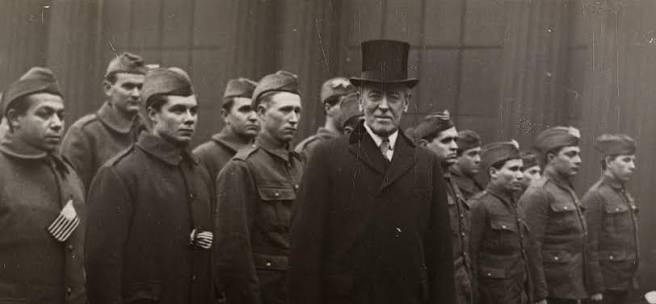
    When Wilson sailed for France in December 1918, he became the first sitting American president to travel to Europe. He was greeted by crowds of ecstatic Parisians, who saw him as a savior. But the euphoria did not last.

    At the Paris Peace Conference, Wilson faced three formidable opponents. Georges Clemenceau of France, known as ‘The Tiger,’ cared little for ideals; he had seen his country invaded twice in a generation and demanded security. David Lloyd George of Britain was determined to preserve the British Empire and naval supremacy. Vittorio Orlando of Italy sought territorial gains for his young nation.

    The Big Four negotiated in secret, a direct violation of Point 1. Clemenceau pushed for the Rhineland to be detached from Germany, while Lloyd George insisted on a punitive naval blockade. Wilson fought for his principles, but he was forced to make compromises. Germany was saddled with a ‘war guilt’ clause and crushing reparations. The Treaty of Versailles, signed on June 28, 1919, incorporated only some of the 14 Points—and even those were often watered down.

    The German Betrayal

    Perhaps the most tragic consequence of the Versailles Treaty was its impact on Germany. Germany had agreed to the armistice in November 1918 on the explicit understanding that the peace would be based on the 14 Points. When the treaty was unveiled, the Germans were stunned. The territorial losses, the war guilt clause, the astronomical reparations—none of it matched Wilson’s promised ‘peace without victory.’

    The sense of betrayal was not just diplomatic; it was visceral. German nationalists, including a young Adolf Hitler, would use this ‘stab in the back’ myth to undermine the Weimar Republic. The treaty’s harshness did not create Nazism, but it provided the fuel for the fire. Wilson’s dream of a just peace had become, in the eyes of many Germans, a tool of Allied vengeance.

    The League That Never Was

    The League of Nations was created in 1920, with its headquarters in Geneva. Wilson had staked his presidency on it, but he faced an insurmountable obstacle at home: the U.S. Senate. Isolationists, led by Henry Cabot Lodge, opposed the League’s Article X, which committed members to protect each other’s territorial integrity. Wilson refused to compromise, and the Senate refused to ratify the Treaty of Versailles. The United States never joined the League.

    Without American participation, the League was crippled from birth. It had no enforcement mechanism, no standing army, and no great-power unity. It failed to prevent the Italian invasion of Ethiopia, the Japanese annexation of Manchuria, or the rise of Hitler. By 1939, the League was a hollow shell, and the world was at war again.

    The Colonial Blind Spot

    Wilson’s vision of self-determination was revolutionary, but it had a glaring flaw: it applied only to Europeans. Point 5 called for an ‘impartial adjustment of colonial claims,’ with equal weight given to the interests of colonial peoples. But in practice, the victors simply divided up the German and Ottoman empires under the mandate system. The peoples of Africa, the Middle East, and Asia were given no say in their own futures.

    The League’s mandate system was a fig leaf for continued imperial control. ‘Self-determination’ was a promise for the Balkans and the Austro-Hungarian Empire, but not for the subjects of British, French, or Belgian empires. Wilson’s idealism, which had inspired anticolonial movements worldwide, ultimately reinforced the very structures it claimed to reform.

    A Legacy That Endures

    Despite its failures, the 14 Points did not vanish. The League of Nations, however flawed, established the template for the United Nations. The principle of self-determination reshaped the world map, leading to the independence of dozens of nations in the decades after World War II. The idea of open diplomacy, free trade, and international law became the bedrock of the postwar order.

    Wilson received the 1919 Nobel Peace Prize, but he died in 1924 a broken man, convinced his life’s work had failed. He could not foresee that his ideas would outlive him. The 14 Points were a profound moral statement—a recognition that peace cannot be built on revenge, that nations must be governed by law, and that the world’s peoples have a right to shape their own destinies.

    As we look at the wars and conflicts of the 21st century, the questions Wilson raised remain urgent. Can international institutions truly guarantee peace? Can self-determination be reconciled with territorial integrity? The 14 Points were a dream, but dreams have consequences. They may not be realized, but they set the course.

    Woodrow Wilson’s 14 Points remain a touchstone of internationalist thought, a reminder that peace is not merely the absence of war but a positive vision of justice. The dream failed in its time, but it planted seeds that would grow into the architecture of the modern world. Whether we look at the United Nations, the European Union, or the ongoing struggles for self-determination, Wilson’s shadow looms large. His dream was imperfect, and its consequences were often tragic, but it gave the world a new language of hope—one that we still speak today.

    Summary

    • The 14 Points were delivered on January 8, 1918, as a blueprint for a just peace, with significant input from The Inquiry, a team of ~150 experts.
    • Only some points were incorporated into the Treaty of Versailles, which was far harsher than Wilson promised, fueling German resentment and the ‘stab in the back’ myth.
    • The League of Nations was created but the U.S. Senate refused to join, leaving it without great-power support and doomed to fail.
    • Wilson’s self-determination was applied selectively, ignoring the colonial peoples of Africa and Asia, and the mandate system merely legitimized imperial control.
    • Despite its failures, the 14 Points inspired the UN and modern international institutions, and remain a powerful symbol of the pursuit of peace.

    FAQ

    Q: What were the main goals of the 14 Points?
    A: The 14 Points aimed to establish a framework for a just and lasting peace after World War I, including open diplomacy, freedom of the seas, free trade, disarmament, self-determination for European peoples, and the creation of a League of Nations to guarantee peace.

    Q: Why did the U.S. not join the League of Nations?
    A: The U.S. Senate refused to ratify the Treaty of Versailles, partly because of objections to Article X, which required members to protect each other’s territorial integrity. This was a victory for isolationist sentiment led by Senator Henry Cabot Lodge.

    Q: How did Germany react to the Treaty of Versailles?
    A: Germany felt betrayed because it had agreed to the armistice on the assumption that peace would be based on the 14 Points. The treaty’s harsh terms—war guilt, reparations, territorial losses—created a deep sense of injustice that nationalist leaders later exploited.

    Q: Did the 14 Points apply to colonial peoples?
    A: No, despite Point 5 calling for impartial adjustment of colonial claims, the mandate system simply transferred control, and self-determination was applied only to European nations, not to people in Asia, Africa, or the Middle East.

    Q: What is the lasting legacy of the 14 Points?
    A: The 14 Points influenced the creation of the United Nations and other international institutions, and the principle of self-determination reshaped global politics. They remain a symbol of the ideal that peace can be built on justice rather than vengeance, even if that ideal is never fully achieved.