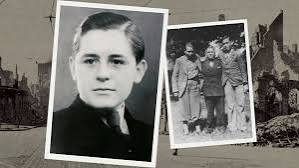
In the winter of 1943, as the Sixth Army froze and starved at Stalingrad, a small group of students in Munich began to print leaflets. They called themselves the White Rose. Their weapons were not guns or explosives, but words typed, mimeographed, and slipped into mailboxes and phone booths across the city.
Their first leaflet opened with a blunt accusation: ‘The German people slumber on in a dull, stupid sleep and encourage the fascist criminals.’ That sentence was a death warrant for its authors. Within months, the core members would be executed by guillotine, but their words would outlive them, dropped by Allied planes over a Germany they had tried to awaken.
The Students Who Saw Too Much
Hans Scholl was 24 when he helped found the White Rose. He had served as a medic on the Eastern Front, where he witnessed the brutal treatment of Jews and prisoners of war. The experience shattered whatever illusions he had about the Nazi regime. His sister Sophie, 21, joined later, initially out of loyalty to her brother, but she quickly became as committed as he was. Christoph Probst, a 23-year-old medical student, completed the inner circle.
They were not professional revolutionaries. They were students at the University of Munich, raised in a middle-class family, and deeply influenced by Christian morality and German idealism. Their professor, Kurt Huber, taught philosophy and provided intellectual grounding, drawing on Aristotle and Augustine to argue that tyranny must be resisted on moral grounds.
The group’s name, White Rose, may have come from a novel by B. Traven, but it also evoked purity and resistance. They chose a symbol, not a battle cry.
Six Leaflets, One Message
Between June 1942 and February 1943, the White Rose produced six leaflets. Each was a call to passive resistance, sabotage of the war effort, and moral awakening. They were not asking for a coup or an assassination. They were asking Germans to think for themselves.
The first four leaflets, distributed in Munich and other cities, were followed by a fifth, titled “Appeal to the Germans,” in January 1943. The sixth and final leaflet was printed in a run of approximately 6,000 to 9,000 copies. It was smuggled abroad through Helmuth von Moltke’s contacts and later dropped by Allied planes over Germany in 1943—a testament to the reach of their words, if not their immediate impact.
The leaflets were not sophisticated political tracts. They were moral arguments, rooted in the belief that every individual had a duty to resist evil. They condemned the mass murder of Jews, the suppression of free speech, and the blind obedience that allowed the regime to continue.
The Moment of Capture
On February 18, 1943, Hans and Sophie Scholl carried a suitcase full of the sixth leaflet to the University of Munich. They left stacks in the hallways and on windowsills. A janitor saw them and reported them to the Gestapo.
They were arrested within hours. In interrogation, Sophie was defiant. She reportedly told her interrogators that what she did, she did for Germany. The trial was swift. On February 22, 1943, Hans Scholl, Sophie Scholl, and Christoph Probst were found guilty of high treason and sentenced to death. They were executed by guillotine the same day at Stadelheim Prison.
Their deaths did not end the movement. A second wave of arrests followed, leading to the execution of Willi Graf, Alexander Schmorell, and Kurt Huber later in 1943. Dozens more were imprisoned or sent to concentration camps.
The Symbolic Impact
The White Rose did not shorten the war by a single day. They did not save a single life directly. Their audience was limited to educated Germans who could access and understand the leaflets. Some historians argue they were ineffective as a resistance movement, lacking any plan for overthrowing the regime.
But their impact was not operational. It was symbolic. They showed that “another Germany” existed—a Germany of conscience, not just complicity. The sixth leaflet, dropped by Allied planes, became a piece of propaganda that proved to the world that not all Germans supported Hitler.
Sophie Scholl’s role is particularly significant. In a narrative dominated by men, she stands out as a young woman who defied the regime with equal courage. Her defiance during interrogation challenged the stereotype of women as passive bystanders in Nazi Germany.
The Moral Legacy
What remains today is not the strategy, but the moral clarity. The White Rose leaflet’s message—that ordinary people must resist evil, even at the cost of their lives—continues to resonate. Their Christian faith, both Protestant and Catholic, framed Nazism as a false religion demanding absolute loyalty. Kurt Huber’s final words before execution were: “In a few minutes you will stand before a higher judge.”
The White Rose was a small group, but their words were big. They did not win, but they refused to be silent. That refusal, captured in six leaflets, remains a powerful example of conscience in the face of tyranny.
The White Rose movement ended with the thud of a guillotine blade on February 22, 1943. But their leaflets, scattered across Munich and later dropped from Allied planes, carried a message that outlived the Third Reich. They were ordinary students who decided that silence was complicity. Their story is not a military victory but a moral one—a reminder that even the smallest voices can speak truth to power.
Summary
- The White Rose was a non-violent resistance group at the University of Munich, led by Hans and Sophie Scholl, Christoph Probst, and supported by Professor Kurt Huber.
- They produced six leaflets between June 1942 and February 1943, calling for passive resistance and moral awakening.
- The core members were caught distributing the sixth leaflet on February 18, 1943, and executed by guillotine on February 22, 1943.
- The leaflets were later dropped by Allied planes, symbolizing that “another Germany” existed.
- Their impact was symbolic rather than operational, but their moral clarity endures.
FAQ
Q: Who were the core members of the White Rose?
A: The inner circle consisted of Hans Scholl (24), Sophie Scholl (21), and Christoph Probst (23). Key associates included Professor Kurt Huber, Alexander Schmorell, Willi Graf, and Jürgen Wittenstein.
Q: What did the White Rose leaflets call for?
A: They called for passive resistance, sabotage of the war effort, and a moral awakening of the German people. They were not a call for violent overthrow, but a plea for conscience.
Q: How were the leaflets distributed?
A: They were mailed to addresses across Germany and Austria, left in phone booths, trains, and public spaces, and placed in the University of Munich hallways.
Q: What happened to the group after the Scholls were caught?
A: A second wave of arrests led to the execution of Willi Graf, Alexander Schmorell, and Kurt Huber in 1943. Dozens more were imprisoned or sent to concentration camps.
Q: Was the White Rose effective?
A: They did not directly hasten the end of the war, but their leaflets were dropped by Allied planes as proof that “another Germany” existed, and their moral example has inspired generations.