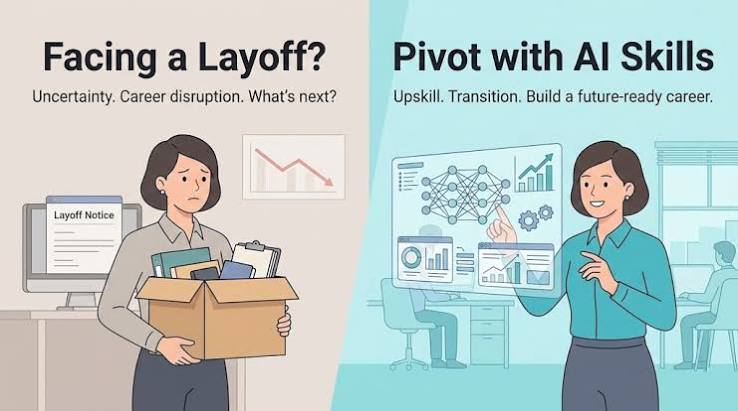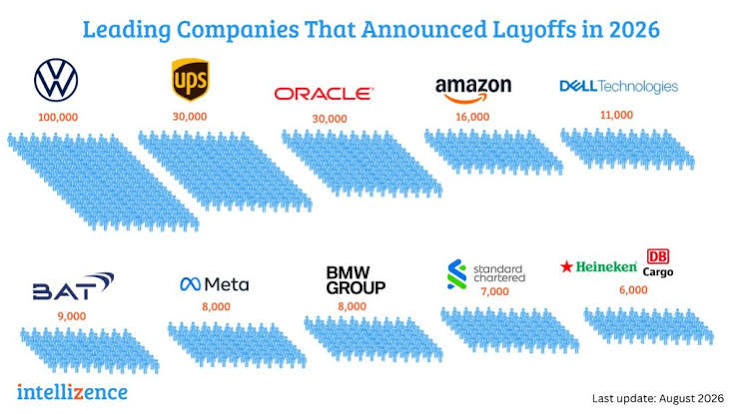
Layoffs in tech, media, and finance have become a grim routine. In 2025 alone, major tech companies cut over 150,000 jobs, and the trend shows no sign of reversing. If you’re a white-collar professional staring down a severance package, the news can feel apocalyptic. But the broader labor market isn’t collapsing it’s rotating. While some sectors are shedding jobs, others are scrambling to fill positions they can’t staff fast enough.
The reason is structural. The Federal Reserve’s interest rate hikes, which began in 2022, made ‘growth at all costs’ unprofitable. Companies that over-hired during the zero-interest-rate era are now downsizing to survive. Meanwhile, three industries healthcare, clean energy, and government/defense are experiencing labor shortages driven by long-term trends like aging demographics, policy funding, and geopolitical instability. These aren’t speculative bubbles; they’re foundational shifts. For workers willing to pivot, the job market isn’t just survivable—it’s full of opportunity.
The Layoff Landscape: A Sectoral Shift, Not a Freefall
The current wave of layoffs is often called the ‘white-collar recession.’ It’s concentrated in industries that over-expanded when money was cheap: software/SaaS, media, and fintech. For example, between 2022 and 2024, tech companies like Meta, Amazon, and Google collectively laid off over 200,000 workers. Media companies, including Disney and Warner Bros. Discovery, cut thousands of jobs as streaming profits failed to materialize. Fintech startups, once the darlings of venture capital, have also contracted sharply.
But look at the bigger picture: the U.S. unemployment rate remains under 4%, and job openings in many sectors exceed the number of unemployed workers. The problem isn’t a lack of jobs—it’s a mismatch between the skills and locations of displaced workers and the industries that are hiring. The ‘Great Reshuffle’ has become the ‘Great Rotation.’
The Three Industries Hiring Now
1. Healthcare & Life Sciences: The Recession-Proof Giant
Healthcare is the most durable hiring engine in the U.S. economy. The Bureau of Labor Statistics projects that healthcare occupations will add more jobs than any other sector over the next decade—nearly 1.8 million positions annually. The key drivers are demographic: the oldest Baby Boomers are now in their late 70s, requiring more medical care, and the shift to value-based care emphasizes preventive services.
The demand isn’t just for doctors and nurses. Behind every clinician is a support system of medical billers, coders, health informatics specialists, and clinical research associates. For example, the healthcare IT field is growing at 15% annually, far outpacing the average for all occupations. Hospitals and health systems are also investing heavily in data analytics to improve patient outcomes and operational efficiency.
What this means for job seekers: If you’re a project manager from tech, your skills are transferable to managing healthcare implementations. A former marketing manager can pivot to patient experience or health communications. The key is to learn the regulatory language (HIPAA, Medicare) and understand the patient-care mission.
2. Energy & Utilities: The Clean Tech Boom
The Inflation Reduction Act (IRA), passed in 2022, is pouring billions into clean energy projects. But the bottleneck isn’t capital—it’s people. The U.S. Department of Energy estimates that the country needs to double its electrical grid capacity by 2035 to meet clean energy goals. That requires engineers, technicians, and project managers to design and build solar farms, wind turbines, and battery storage facilities.
Skilled trades are in particularly high demand. Solar installer is one of the fastest-growing occupations in the country, with a projected growth rate of 22% from 2022 to 2032. Wind turbine technicians are close behind at 21%. These roles often require only a two-year technical degree or certification, making them accessible to workers without a four-year college education.
Even white-collar roles are expanding. Grid analysts, energy efficiency specialists, and supply chain managers are all needed to manage the complex logistics of a modernized grid. The work is often located in regions like Texas, the Southeast, and the Midwest—areas that have seen tech layoffs but are now experiencing an energy hiring boom.
What this means for job seekers: If you have experience in project management, logistics, or engineering, the energy sector offers a chance to apply those skills to a mission-driven industry. The pay is competitive, and the work is stable because it’s backed by federal policy.
3. Government & Defense: The Security Pivot
Geopolitical tensions in Ukraine, the Middle East, and the South China Sea have driven defense spending to record levels. In 2024, the U.S. defense budget exceeded $800 billion, and it continues to grow. But the government and its contractors are struggling to hire enough qualified workers, particularly in cybersecurity and engineering.
The shift to ‘Zero Trust’ architecture in federal IT has created a surge in demand for cybersecurity analysts. The federal government alone needs to fill over 40,000 cybersecurity positions. Defense contractors like Lockheed Martin, Raytheon, and Northrop Grumman are hiring thousands of engineers and program analysts to work on next-generation systems.
What sets this sector apart is its emphasis on security clearances. Roles that require clearance offer job security that’s unmatched in the private sector—you become a scarce asset. The downside is that many of these jobs are located in the D.C. metro area or near military bases, and remote work is limited.
What this means for job seekers: If you have experience in IT, engineering, or supply chain, consider roles with government agencies or contractors. Even if you lack a clearance, many companies will sponsor one for qualified candidates. The hiring process is slower, but the long-term stability is worth it.
How to Pivot: Practical Steps for Laid-Off Workers
The challenge for most job seekers isn’t a lack of opportunities—it’s translating their experience into a new industry’s language. A former tech recruiter may have excellent communication and organizational skills, but they need to prove they understand healthcare staffing. A product manager from a SaaS company must convince an energy firm they can manage complex projects with physical infrastructure.
Here are concrete steps to make the transition:
- Identify transferable skills: Make a list of your core competencies—project management, data analysis, stakeholder communication—and map them to job descriptions in your target industry.
- Get certified: For healthcare, consider a certificate in medical billing or health informatics from a community college or online platform. For energy, look into OSHA safety certifications or project management credentials. For government, cybersecurity certifications like Security+ are almost mandatory.
- Network deliberately: Attend industry-specific events, join LinkedIn groups, and reach out to people who’ve made the pivot. Informational interviews are more effective than spamming applications.
- Tailor your resume: Use keywords from the job description. If you’re moving from tech to healthcare, emphasize your experience with data management and compliance, not just your coding skills.
The Role of AI: Which Jobs Are Safe?
It’s tempting to think any job is AI-proof, but that’s not the case. The three industries above are hiring for roles that require human judgment, physical presence, or security clearance—none of which can be fully automated. A nurse can’t be replaced by ChatGPT, a wind turbine technician must be on-site, and a cybersecurity analyst needs to interpret threats in real-time.
However, AI is changing how these jobs are done. In healthcare, AI is streamlining administrative tasks, so workers who can use AI tools will be more efficient. In energy, AI is optimizing grid management, so workers who understand AI systems will have an edge. In defense, AI is creating new roles in autonomous systems and data analysis.
Regional Disparities: Location Matters Again
Remote work is shrinking, and where you live is becoming a factor in your job search. Tech layoffs are hitting San Francisco and Seattle, while hiring booms are concentrated in other regions. For healthcare, major hubs include Nashville, Charlotte, and Boston. For energy, the Gulf Coast and the Midwest are hotspots. For government and defense, the D.C. metro area is the epicenter, but opportunities exist near military bases across the country.
If you’re unwilling to relocate, focus on remote-friendly roles within these industries. Healthcare IT, for example, often allows remote work. Energy companies are increasingly hiring remote project managers. Government jobs are slower to offer remote work, but some agencies have adopted hybrid models.
The Bottom Line: A Skills-Based Market
The 2026 job market is not about what you know—it’s about whether your skills match the industries that are growing. The days of a generic business degree guaranteeing a career are over. Instead, workers need to be agile, willing to learn new industries, and open to relocation. The good news is that the three sectors described above are not just hiring; they’re desperate for talent. For those willing to pivot, the future is bright.
The layoff crisis is real, but it’s not the whole story. While tech, media, and finance are contracting, healthcare, clean energy, and government/defense are expanding at a record pace. The key is to see the shift not as a rejection of your skills but as a redirection. By focusing on transferable abilities, gaining relevant certifications, and targeting the right regions, you can turn a layoff into a career pivot. The job market is not shrinking—it’s moving. Your job is to move with it.
Summary
- Layoffs are concentrated in white-collar sectors like tech, media, and finance, driven by the end of cheap money and over-hiring during the pandemic.
- Healthcare is hiring across the board, from nurses to IT specialists, fueled by aging demographics and value-based care.
- Clean energy and utilities are booming due to IRA funding and grid modernization, with high demand for skilled trades and engineers.
- Government and defense are expanding due to geopolitical tensions, creating opportunities in cybersecurity, engineering, and supply chain.
- Pivoting requires reskilling and relocation: identify transferable skills, get certifications, and be willing to move to regions like the Southeast or D.C. metro.
FAQ
Q: Is the 2026 job market really as bad as layoffs suggest?nA: No. Layoffs are high in certain sectors, but the overall unemployment rate remains low. The market is experiencing a sectoral shift, not a collapse. While tech and media are shedding jobs, healthcare, energy, and government are hiring aggressively.nnQ: What if I don’t have a technical background? Can I still get a job in these industries?nA: Yes. Many roles in these sectors don’t require a technical degree. For example, healthcare needs project managers, administrators, and communication specialists. Energy needs supply chain coordinators and HR professionals. Focus on your transferable skills and consider short-term certifications to boost your resume.nnQ: Are these jobs remote-friendly?nA: It depends on the role. Healthcare IT, energy project management, and some cybersecurity positions offer remote or hybrid work. However, many roles, especially in energy and defense, require on-site presence due to physical infrastructure or security clearance requirements. Be prepared to relocate if needed.nnQ: How long does it take to pivot to a new industry?nA: The timeline varies. With focused effort, you can gain a relevant certification (e.g., medical billing, OSHA, Security+) in 3-6 months. Networking and resume tailoring can accelerate the process. On average, expect 6-12 months to successfully transition.nnQ: Will AI make these jobs obsolete?nA: Not in the near term. Jobs in healthcare, energy, and defense require human judgment, physical presence, or security clearance. AI will change how these jobs are performed, making workers who embrace AI tools more valuable, but it won’t eliminate the need for human workers in these fields.