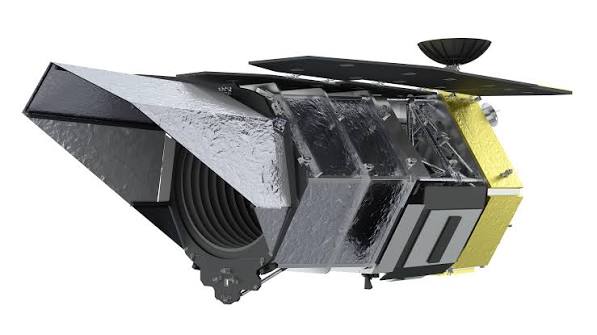
On the morning of August 30, 2025, NASA plans to launch its next major space observatory, the Nancy Grace Roman Space Telescope, from Kennedy Space Center in Florida. The launch window opens at 7:26 a.m. EDT, and the mission will ride a SpaceX Falcon Heavy rocket from Launch Complex 39A. This is a big deal not just because it’s another telescope heading to space, but because Roman is designed to see the universe in a way no telescope has before.
Named after Dr. Nancy Grace Roman, NASA’s first chief of astronomy often called the ‘Mother of Hubble’ for her role in making the Hubble Space Telescope a reality Roman will tackle some of the biggest questions in cosmology: What is dark energy? How do galaxies form? Are there planets like Earth out there? To answer these, it will take a giant survey of the sky in infrared light, mapping billions of galaxies and probing the very fabric of the cosmos.
NASA has set a comprehensive coverage plan for the launch, including media briefings, live broadcasts, and post-launch press conferences. Whether you’re a space enthusiast, a student, or just curious about the universe, here’s what you need to know about this mission and how to follow its journey.
The Mission That Almost Didn’t Happen
Roman’s path to the launch pad has been long and winding. Originally proposed as the Wide Field Infrared Survey Telescope (WFIRST) in the 2010s, it faced budget cuts and cancellation threats multiple times. But the scientific community rallied, and in 2020, NASA renamed it after Dr. Roman, cementing its legacy. The telescope is now scheduled for launch no earlier than (NET) August 30, 2025, after several delays due to technical issues, the COVID-19 pandemic, and supply chain challenges.
This isn’t just another telescope. Roman’s primary mirror is 2.4 meters across—the same size as Hubble’s—but it’s designed for a completely different job. While Hubble and JWST look at small patches of sky in incredible detail, Roman will sweep across vast swaths of the cosmos, capturing images 100 times larger than Hubble’s infrared view in a single shot. Think of it as the difference between a telephoto lens and a wide-angle lens on a camera. Both are powerful, but they serve different purposes.
A Wide Field of View for Big Questions
So what will Roman do with that wide field of view? Its main goals are to investigate dark energy, dark matter, and exoplanets. Dark energy is the mysterious force that’s causing the universe’s expansion to accelerate. It makes up about 68% of the universe, but we don’t know what it is. Roman will map the distribution of galaxies and measure how light from distant objects is bent by gravity—a technique called weak gravitational lensing—to see how dark energy has shaped cosmic structure over time.
Dark matter, on the other hand, is invisible stuff that makes up about 27% of the universe. It doesn’t emit light, but it gravitationally affects visible matter. By observing how galaxies cluster and how light is distorted by dark matter’s gravity, Roman will create detailed maps that help us understand its distribution and evolution.
For exoplanets, Roman will use two methods. First, microlensing: when a star passes in front of a more distant star, its gravity can magnify the background star’s light, and any planets around the foreground star will cause a brief blip in that brightening. This method can find planets that are too far from their star or too faint to be seen directly. Second, its Coronagraph Instrument (CGI) will block out a star’s light to directly image giant planets orbiting nearby stars—a technological feat that could pave the way for future missions to image Earth-like worlds.
A Complementary Eye to Webb
Roman is often compared to the James Webb Space Telescope (JWST), but they’re not rivals—they’re partners. JWST is a deep-space explorer that peers into the early universe, seeing faint galaxies in great detail. Roman is a surveyor that covers huge areas of sky quickly, finding targets that JWST can then study in depth. Together, they’ll provide a more complete picture of the cosmos. Roman will be stationed at the Sun-Earth L2 Lagrange point, about 1.5 million kilometers from Earth, same as JWST, but it will survey the sky in a wide, sweeping pattern.
This synergy means Roman’s data will be a treasure trove for astronomers worldwide. It will produce petabytes of data—so much that citizen science projects may be involved in analyzing it. The mission is managed by NASA’s Goddard Space Flight Center, with contributions from industry partners like Ball Aerospace, Harris Corporation, and SpaceX, which provides the launch. There may also be international collaborations, but the core focus is on delivering a dataset that the entire scientific community can use.
Watch the Launch Live
NASA has announced a full slate of prelaunch and launch activities. You can expect a prelaunch news conference, where mission managers will discuss the launch readiness and any last-minute adjustments. Then, on launch day, live coverage will begin early in the morning, well before the 7:26 a.m. EDT window. The broadcast will include commentary from NASA experts, views of the rocket on the pad, and the breathtaking moment of liftoff.
One of the most exciting parts of a Falcon Heavy launch is the return of the side boosters. After launch, they’ll separate and fly back to Cape Canaveral, performing synchronized vertical landings. It’s a spectacle you won’t want to miss, and NASA’s coverage will likely show it from multiple angles.
After the launch, there will be a post-launch press conference to confirm the spacecraft’s health and orbit. The timeline for these events will be detailed on NASA’s website and social media channels. If you’re in Florida, you might even be able to watch from a nearby beach or park, but check local advisories for the best viewing spots.
What Could Go Wrong? Understanding ‘No Earlier Than’
It’s important to remember that “no earlier than” means the date can slip. Weather is a common factor—lightning, high winds, or thick clouds can delay a launch. Technical issues with the rocket or spacecraft could also cause a scrub. If a delay happens, NASA will announce a new target date, and the coverage schedule will adjust accordingly. So don’t set your alarm too firmly until you’ve checked the latest updates on launch day.
Another common misconception is confusing Roman with Hubble or JWST. Roman isn’t a replacement for either. It’s a different tool for a different job. And while Roman will help us understand dark energy, it won’t “find” dark energy in the sense of isolating it. Instead, it will measure its effects on the universe’s expansion and structure, providing the best constraints yet on what dark energy might be.
The Legacy of Nancy Grace Roman
Dr. Nancy Grace Roman was instrumental in the development of the Hubble Space Telescope. She championed the idea of a space-based observatory at a time when it seemed impossible, and she fought for the funding and support to make it happen. Naming this telescope after her is a fitting tribute to a woman who opened our eyes to the universe. Her legacy lives on in the mission’s goal to see the cosmos in a new light.
As launch day approaches, the excitement is building. Whether you’re a scientist eagerly awaiting the data, a student inspired by the possibilities, or just someone who loves a good rocket launch, the Roman Space Telescope promises to deliver. It’s a new chapter in our exploration of the universe, and it’s launching from Florida’s Space Coast.
The Roman Space Telescope is set to launch on August 30, 2025, from Kennedy Space Center, and NASA’s coverage will bring the excitement to you no matter where you are. This mission will transform our understanding of dark energy, dark matter, and exoplanets, and it will do so by looking at the sky in a way we’ve never done before. Keep an eye on NASA’s updates as the date approaches, and get ready to witness history in the making.
Summary
- NASA’s Roman Space Telescope, named after the ‘Mother of Hubble,’ will launch on a SpaceX Falcon Heavy from Florida’s Kennedy Space Center on August 30, 2025, at 7:26 a.m. EDT.
- The telescope has a 2.4-meter mirror and a wide field of view, enabling it to survey the sky 100 times faster than Hubble in infrared light.
- Its primary goals are to study dark energy, dark matter, and exoplanets, using techniques like weak gravitational lensing and microlensing.
- Roman will complement the James Webb Space Telescope, working together to provide a broader and deeper understanding of the cosmos.
- NASA will provide extensive launch coverage, including prelaunch briefings, live launch commentary, and post-launch press conferences, with the rocket’s side boosters landing back on Earth as a visual highlight.
FAQ
Q: What is the Nancy Grace Roman Space Telescope?
A: It is a next-generation space observatory that will survey the universe in infrared light to study dark energy, dark matter, and exoplanets. It’s named after Dr. Nancy Grace Roman, a key figure in the development of the Hubble Space Telescope.
Q: How does Roman differ from Hubble and Webb?
A: Roman has a much wider field of view than Hubble, allowing it to survey large areas of sky quickly. Webb is designed for deep, detailed observations of small patches. Roman will complement both by finding targets for them to study in detail.
Q: When exactly will the launch happen?
A: The launch is targeted for no earlier than August 30, 2025, at 7:26 a.m. EDT. However, ‘NET’ means the date could change due to weather or technical issues, so always check NASA’s latest updates.
Q: How can I watch the launch?
A: NASA will provide live coverage on its website and social media channels, starting early in the morning on launch day. You can also watch from public viewing areas near Kennedy Space Center if you’re in Florida.
Q: Will Roman help find Earth-like planets?
A: Roman will use microlensing to find exoplanets, including some that are far from their stars. Its Coronagraph will directly image giant planets. While it won’t find Earth-like planets directly, it will provide data that helps identify promising targets for future missions.