Tag: Latin America

  • Why Decapitating Cartels and Guerrillas Fails: Geography, Not Kingpins, Drives Latin America’s Violence

    Why Decapitating Cartels and Guerrillas Fails: Geography, Not Kingpins, Drives Latin America’s Violence

    In 1993, Colombian police shot and killed Pablo Escobar on a Medellín rooftop. In 2016, Mexican marines captured Joaquín “El Chapo” Guzmán. In 2011, the Colombian military killed FARC leader Alfonso Cano. Each time, officials celebrated a blow against organized crime. Each time, the violence didn’t stop it mutated.

    For decades, the so-called kingpin strategy has dominated counter-narcotics and counterinsurgency policy in Latin America. The logic is simple: remove the leader, and the organization collapses. But a growing body of research suggests this approach is fundamentally flawed. Violence in the region is less about who leads a criminal group and more about where the group operates. Geography rugged terrain, remote borders, coca fields, and absent state authority creates conditions that make violence inevitable, regardless of the names on the group’s letterhead.

    The Kingpin Strategy: A Brief History

    The kingpin approach took shape during the U.S. War on Drugs in the 1970s and 1980s, formalized in the 1989 Andean Initiative and later the 2008 Mérida Initiative for Mexico. It was also applied to guerrilla groups, such as the targeted killing of ELN commanders in Colombia. The strategy borrowed from counterterrorism and organized crime literature, assuming that criminal hierarchies are centralized and that leaders are irreplaceable.

    But this assumption conflicts with network theory, which shows that criminal organizations are often resilient and redundant. When a leader falls, a network’s nodes reorganize. The structure persists, even if the faces change.

    What the Evidence Says: The Hydra Effect

    Empirical studies consistently show that leadership removal leads to fragmentation into smaller, more violent groups. The phenomenon is so common it has a name: the hydra effect. Cut off one head, and two grow back.

    Post-Escobar Medellín offers a stark example. Between 1993 and the mid-2000s, the collapse of the Medellín Cartel fueled a wave of smaller gangs, paramilitary groups, and drug trafficking organizations that fought over Escobar’s former territory. Homicide rates in the city spiked, and the violence outlasted anything Escobar himself had orchestrated.

    More recently, the capture of El Chapo Guzmán in 2016 triggered a bloody power struggle within the Sinaloa Cartel. His sons squared off against a rival faction led by Ismael “El Mayo” Zambada, resulting in thousands of deaths across northern Mexico. The cartel didn’t disappear — it fractured, and the infighting proved deadlier than the group’s operations under a single leader.

    In Colombia, the 2016 peace agreement with the FARC was supposed to end the conflict. But dissident factions that refused to demobilize quickly filled abandoned territories. They are now more numerous and more fragmented than the original FARC, and they continue to control same strategic zones.

    The pattern is clear: decapitation doesn’t reduce violence in the medium term. It often increases it.

    The Geographic Turn: Why Place Matters More Than the Group

    A new wave of research — using satellite imagery, geocoded conflict data, and municipal-level crime statistics — is shifting the focus from organizations to landscapes. Studies published in journals like Journal of Conflict Resolution and Crime Science find that violence correlates more strongly with geographic “opportunity structures” than with cartel presence.

    These structures include altitude, forest cover, river access, proximity to international borders, road networks, and the presence of coca cultivation zones. Even if you eliminate a cartel, the geography remains. New groups emerge to exploit the same opportunities.

    Consider Colombia’s “coca belt” — regions like Putumayo and Caquetá. These areas have rugged terrain, dense forest, and weak state presence. Poverty is high, and alternative livelihoods are scarce. Violence persists there not because of a particular group’s leadership, but because the environment is structurally conducive to illicit economies. The same holds for Peru’s VRAEM valley and Bolivia’s Chapare region.

    Borderlands are another natural hotspot. The Colombia–Venezuela border, the Mexico–Guatemala frontier, and the Paraguay–Brazil tri-border area are “lawless corridors” where rivers, mountains, and forest facilitate smuggling and provide refuge. Targeting a group in one spot often just displaces the violence a few kilometers away.

    The Role of State Absence

    Geography alone doesn’t cause violence. It interacts with state capacity. In areas where the state is absent or weak, illicit groups flourish. Roads, schools, health clinics, and police presence alter the calculus for criminal actors.

    Scholars like Benjamin Lessing and Gustavo Duncan argue that violence is tied to state absence and geographically anchored illicit economies. Coca, opium, gold mining, and timber extraction are rooted in specific territories. These economies are geographically anchored, and they can’t be relocated by killing a leader.

    This explains why military operations in remote regions often fail to achieve lasting peace. They may clear a group from an area, but unless the state establishes a permanent presence and offers economic alternatives, the territory remains vulnerable to reoccupation.

    Policy Implications: From Manhunts to Territorial Governance

    The research suggests a fundamental shift is needed: from “manhunt” strategies to territorial governance. Instead of focusing solely on catching or killing leaders, governments should invest in high-risk geographic zones — improving infrastructure, strengthening state institutions, and providing economic alternatives.

    This doesn’t mean abandoning the fight against crime. But it means recognizing that violence is a spatial problem, not just a leadership problem. The U.S. and Latin American governments need to think about borders, terrain, and rural development as counter-narcotics tools.

    Critiques and Caveats

    Some critics warn against geographic determinism — the idea that geography alone dictates outcomes. They argue that human agency, political decisions, and corruption also matter. Geography is a constraint, not a cause. It shapes the options available to criminals and states, but it doesn’t guarantee violence.

    Others note that the kingpin strategy can achieve short-term tactical victories. A capture may disrupt operations temporarily, and it’s politically popular. But these gains are often fleeting, and the costs — increased fragmentation, higher homicide rates, and community distrust — can outweigh the benefits.

    What Communities Say

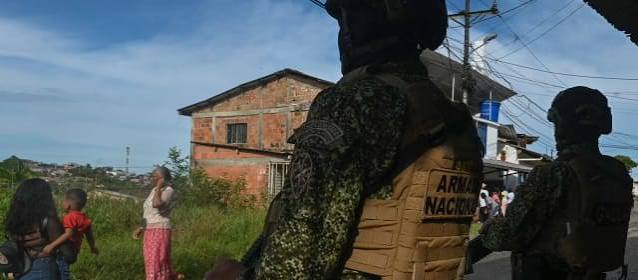
    Local communities, often caught between military operations and cartel presence, have their own perspective. They argue that violence persists because of state neglect and lack of economic opportunities, not just because of who is in charge. In many areas, residents would welcome any group — or no group — if it meant they could live without fear and earn a living.

    Their voices are often missing from policy debates centered on manhunts and body counts. But they highlight a crucial point: sustainable peace requires addressing the underlying conditions that make violence possible.

    The kingpin strategy has failed to deliver lasting peace in Latin America. The evidence points to a different path: focusing on the geographic and structural factors that make violence possible. By investing in state presence, infrastructure, and economic alternatives in high-risk zones, governments can address the root causes of violence — not just its most visible symptoms.

    Summary

    • Removing cartel and guerrilla leaders often fragments groups, leading to more violence, not less.
    • Geographic factors — terrain, borders, coca fields, state absence — are stronger predictors of violence than group leadership.
    • The “hydra effect” describes how leadership removal spawns multiple, more violent successor groups.
    • Policy should shift from manhunts to territorial governance: improving infrastructure, state presence, and economic alternatives in high-risk zones.
    • Geography is a constraint, but it interacts with state capacity and human agency.

    FAQ

    Q: What is the kingpin strategy?
    A: It’s a policy of targeting top leaders of criminal organizations — cartel bosses or guerrilla commanders — with the goal of weakening or dismantling the group.

    Q: Why does the kingpin strategy fail?
    A: Research shows that removing leaders often causes groups to fragment into smaller, more violent factions that fight for territory, leading to short-term spikes in violence rather than lasting peace.

    Q: How does geography influence violence?
    A: Geographic features like rugged terrain, dense forest, river access, and proximity to borders create “opportunity structures” that facilitate illicit economies and make certain areas prone to violence, regardless of which group operates there.

    Q: What is the alternative to the kingpin strategy?
    A: The alternative is territorial governance — investing in state presence, infrastructure, and economic alternatives in high-risk geographic zones to address the root causes of violence.

    Q: Does geography determine violence?
    A: No. Geography is a constraint that interacts with state capacity and human agency. It shapes opportunities, but it doesn’t guarantee violence.

  • Mexico City vs. Bogotá: Which Latin American Capital Has the Stronger Cultural Claim?

    Mexico City vs. Bogota | Which is a Better Place to Live? - Our Experience Living in Both

    Two colossal cities anchor Latin America’s cultural landscape: Mexico City, the sprawling former Aztec capital, and Bogotá, the high-altitude Andean hub. Both claim the title of ‘cultural king’ of the region, and both have the museums, festivals, and gastronomy to back it up. But their cultural personalities couldn’t be more different.

    Mexico City leans on centuries of institutional might and global recognition, while Bogotá has transformed itself into a scrappy, creative powerhouse over the past two decades. Which one deserves the crown? Let’s break down the evidence.

    The Weight of History

    Mexico City is built on layers of civilization. The Aztec capital of Tenochtitlán, founded in 1325, was leveled by Spanish conquistadors in 1521 and rebuilt as the capital of New Spain. For 300 years, it was the political and cultural center of the Americas—a status cemented by institutions like the National Autonomous University of Mexico (UNAM), founded in 1551, decades before Harvard.

    That deep history gives CDMX an unmatched institutional density: over 150 museums, second only to London worldwide. The National Museum of Anthropology alone houses the Aztec Sun Stone and other treasures from Mesoamerica’s great empires. The Palacio de Bellas Artes, with its Art Deco facade and Rivera murals, is a shrine to early 20th-century muralism.

    Bogotá’s colonial history is shorter and less grand. Founded in 1538, it was a secondary capital within the Viceroyalty of New Granada. But what it lacked in imperial splendor, it made up for in intellectual ambition. In the 19th century, Bogotá earned the nickname “Athens of South America” for its literary and academic circles. That tradition continued into the 20th century, producing the continent’s only Nobel laureate in literature, Gabriel García Márquez, whose fictional Macondo often evokes Colombia’s Caribbean coast, but whose life was deeply tied to Bogotá.

    The Museum Showdown: Gold vs. Anthropology

    When comparing institutions, the Gold Museum (Museo del Oro) in Bogotá is a knockout punch. It holds the world’s largest collection of pre-Hispanic gold artifacts—over 34,000 pieces, many from the Muisca people who once inhabited the Bogotá savanna. The museum’s famous “Golden Raft” (Balsa Muisca) is a centerpiece, depicting the El Dorado ceremony that fueled European myths.

    Mexico City counters with depth and variety. Beyond the Anthropology Museum, there’s the Frida Kahlo Museum (Casa Azul), the Templo Mayor ruins in the historic center, and the Soumaya Museum’s private collection. The sheer number of options means you could visit a different museum every day for months and still not see everything.

    Bogotá’s 60+ museums are fewer but no less distinctive. The Botero Museum, housed in a colonial-era mansion, features Fernando Botero’s signature rotund figures alongside works by Picasso and Monet. The National Museum of Colombia, housed in a former prison, offers a comprehensive narrative of the country’s history. While Bogotá lacks a UNESCO World Heritage site within city limits (the salt cathedral of Zipaquirá is a short trip away), its cultural offerings are uniquely Colombian.

    Gastronomy: Tacos vs. Ajiaco

    In 2019, UNESCO named Mexico City a Creative City of Gastronomy, a nod to its street food culture and world-class fine dining. The tacos al pastor from a corner stand, the tlacoyos at a market stall, the mole at a family-run fonda—CDMX is a paradise for the hungry traveler. At the high end, restaurants like Pujol and Quintonil consistently rank among the world’s best, serving innovative takes on ancient ingredients like huitlacoche and chapulines.

    Bogotá’s food scene is younger but on the rise. The city’s signature dish, ajiaco, is a hearty chicken and potato soup with capers and avocado, perfect for the chilly Andean climate. Bandeja paisa, though more associated with Medellín, is also popular. The real buzz is in the new wave of chefs. Restaurants like Leo and El Chato are putting Colombian ingredients—Amazonian fruits, Pacific coast seafood, Andean tubers—on the global map. The food is less codified than Mexico’s, but that’s part of its charm: it’s a cuisine in the making, full of experimentation.

    Street Art: Bogotá’s Edge

    Bogotá has a distinct advantage in one urban cultural form: street art. Graffiti is legal in designated zones, and the city’s “Distrito Graffiti” program has turned entire neighborhoods into open-air galleries. Artists like Toxicomano and DJ Lu have gained international fame, and the annual “Graffiti Tour” draws visitors who want to see the political and poetic murals that cover La Candelaria and other districts.

    Mexico City has a rich muralist history—Rivera, Orozco, Siqueiros—but its contemporary street art scene is more fragmented. You’ll find impressive works in neighborhoods like Roma and Centro, but it lacks the cohesive, city-supported identity that Bogotá has built. If you want to see art in the streets, Bogotá wins by a mile.

    Music and Nightlife: Different Vibes

    Mexico City’s nightlife is legendary. Condesa and Roma are packed with bars, clubs, and live music venues. The electronic music scene is massive, with festivals like EDC Mexico drawing tens of thousands. Salsa and cumbia clubs keep the traditional sounds alive, while indie rock bands from the city have a strong following across Latin America.

    Bogotá’s nightlife is more intimate. Salsa is the lifeblood of the city—the ‘Zona Rosa’ is filled with salsa clubs where locals dance with abandon. Rock en español has a strong tradition, with bands like Aterciopelados emerging from the city’s alternative scene in the 1990s. The electronic scene is smaller but growing, with venues like Baum and Video Club attracting international DJs.

    The Economic and Political Backdrop

    Both cities are their countries’ economic engines. Mexico City’s GDP is larger than many entire countries, and it’s a magnet for global finance, media, and tech. Bogotá, while smaller, is Colombia’s economic center and has seen a tech startup boom in recent years. The post-2016 peace agreement has boosted Bogotá’s international profile, making it a safer and more attractive destination for tourists and investors alike.

    Politically, both cities lean left. Mexico City has been a progressive stronghold since 1997, when it elected its first leftist mayor, Cuauhtémoc Cárdenas. More recently, Claudia Sheinbaum, a former CDMX mayor, became Mexico’s first female president. Bogotá has also had left-leaning mayors, including the philosopher-mathematician Antanas Mockus, who used unconventional tactics like mimes to improve traffic safety, and Gustavo Petro, now Colombia’s president. Both cities are centers of progressive movements for LGBTQ+ rights and feminist activism.

    The Verdict: Different Kinds of Cultural Kings

    If you measure culture by institutional depth, historical weight, and global recognition, Mexico City is the clear winner. It’s a top-tier global city, on par with Paris or London, with a cultural footprint that has been growing for 500 years.

    If you measure culture by dynamism, urban edge, and the ability to reinvent itself, Bogotá is the more exciting story. Its cultural explosion over the past two decades—literary, artistic, culinary—has been remarkable, and it’s a city that wears its creativity on its sleeve, literally in the form of street art.

    Ultimately, the “cultural king” of Latin America isn’t a single title. Mexico City is the region’s cultural heavyweight, a city of immense depth and tradition. Bogotá is its scrappy challenger, a city that has turned its turbulent past into a vibrant present. Both are essential stops for anyone who wants to understand Latin America’s soul.

    The choice between Mexico City and Bogotá isn’t about declaring a single winner. It’s about appreciating two different expressions of Latin American culture. Mexico City offers a deep, layered, and globally influential cultural landscape. Bogotá offers a raw, resilient, and rapidly evolving scene that punches above its weight. Whichever you prefer, both cities prove that Latin America’s cultural richness has many capitals.

    Summary

    • Mexico City has over 150 museums, second only to London, and is a UNESCO Creative City of Gastronomy.
    • Bogotá has fewer museums but the world’s largest gold collection and a legal street art scene that’s a major tourist draw.
    • Gastronomy is a draw in both: CDMX is known for street food and top-tier fine dining; Bogotá is gaining international attention for its new-wave chefs.
    • Music and nightlife differ: CDMX has a massive electronic and indie scene; Bogotá is salsa-centric with a growing electronic presence.
    • Both cities are economic and political engines, with left-leaning governments and progressive social movements.

    FAQ

    Q: Which city has more museums?
    A: Mexico City has over 150 museums, second only to London. Bogotá has over 60, but its Gold Museum is a standout.

    Q: Is street art legal in Bogotá?
    A: Yes, graffiti is legal in designated zones, and the city has a ‘Distrito Graffiti’ initiative that supports it.

    Q: Which city is higher above sea level?
    A: Bogotá is higher, at about 2,640 meters (8,660 ft), compared to Mexico City’s 2,240 meters (7,350 ft).

    Q: What are the must-try foods in each city?
    A: In Mexico City, try tacos al pastor, tlacoyos, and mole. In Bogotá, try ajiaco, bandeja paisa, and any dish from the new-wave restaurants like Leo or El Chato.

    Q: Which city has a UNESCO World Heritage site?
    A: Mexico City has several, including the historic center, Xochimilco, and UNAM’s campus. Bogotá itself has none, but the nearby Salt Cathedral of Zipaquirá is a popular cultural site.