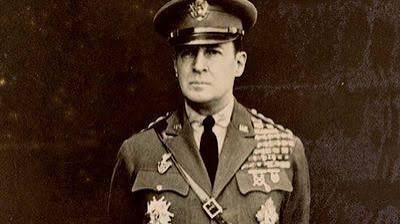
Douglas MacArthur was a study in contradictions: a brilliant strategist who suffered early defeats, a lifelong soldier who clashed with presidents, and a general who governed Japan like a modern-day shogun. From the beaches of the Philippines to the decks of the USS Missouri, his decisions reshaped the Pacific and left a legacy that still sparks debate.
Few military figures have held such sweeping power or provoked such strong reactions. He was the youngest brigadier general in World War I, the architect of Japan’s post-war transformation, and the commander who dared to challenge the President of the United States. His story is not just one of battles won and lost, but of a man who believed he was destined for greatness.
A Legacy Forged in the Philippines
Douglas MacArthur was born into a military family his father, Arthur MacArthur Jr., was a Medal of Honor recipient and a Civil War hero. Growing up on frontier army posts, young Douglas absorbed a sense of duty and destiny. He entered West Point and graduated first in his class in 1903, an early sign of the exceptional career to come.
His first posting was to the Philippines, a country that would become central to his life. He served there as a young officer, later as military advisor, and finally as commander during World War II. The Philippines was where he made his famous promise “I shall return” and where he fulfilled it in 1944, wading ashore at Leyte to liberate the islands.
The Pacific Strategy: Island Hopping and Bold Risks
During World War II, MacArthur led the Allied forces in the Southwest Pacific. His strategy of “island hopping” bypassing heavily fortified Japanese positions and capturing key islands was controversial but effective. It saved lives and accelerated the Allied advance toward Japan.
His most daring move came in Korea, not during World War II. In September 1950, with UN forces pinned in the Pusan Perimeter, MacArthur launched a bold amphibious landing at Inchon, far behind enemy lines. The operation was a stunning success, turning the tide of the war and showcasing MacArthur’s ability to take calculated risks that others deemed impossible.
Rebuilding Japan: From Warlord to Reformer
After Japan’s surrender in 1945, MacArthur was appointed Supreme Commander for the Allied Powers (SCAP). For nearly six years, he ruled Japan with near-absolute authority, overseeing a transformation that remains unprecedented in history. He introduced a new constitution that renounced war (Article 9), granted women the right to vote, implemented land reforms, and supported labor rights. He also presided over the Tokyo War Crimes Tribunal.
His rule was not without controversy. He censored media, retained Emperor Hirohito to maintain stability, and was criticized for his imperial style. Yet, his reforms laid the foundation for Japan’s post-war economic miracle and its emergence as a peaceful, democratic nation.
Clash with Truman: The Firing That Shook America
The Korean War brought MacArthur into direct conflict with President Harry Truman. MacArthur, commanding UN forces, wanted to expand the war into China, even suggesting the use of nuclear weapons. Truman, committed to a limited war and the principle of civilian control over the military, saw MacArthur’s insubordination as a direct challenge to the Constitution.
On April 11, 1951, Truman fired MacArthur. The decision was politically explosive—polls showed most Americans supported the general. MacArthur returned home to a hero’s welcome, but the episode reaffirmed a fundamental principle: the military serves the civilian government, not the other way around.
The Man and the Myth
MacArthur was a complex figure, both admired and criticized. He was a brilliant tactician and a visionary leader, but also arrogant and politically ambitious. He sought the Republican presidential nomination in 1948 and 1952, both times unsuccessfully.
His legacy is a mixed one. He is remembered as a liberator in the Philippines and a reformer in Japan, but also as a commander who was unprepared for the initial Japanese attacks in 1941 and who overreached in Korea. Yet, his impact on the Pacific is undeniable. He shaped the region’s post-war order and left a mark that persists today.
Douglas MacArthur was a man of his time—a product of America’s rise to global power and the Cold War’s complexities. His life was marked by extraordinary achievements and significant controversies, but his influence on the Pacific and on the role of the military in American society remains undeniable. Whether hailed as a hero or criticized as a loose cannon, MacArthur’s story is essential to understanding the 20th century.
Summary
- Early Life and Career: Graduated first in his class at West Point, served in World War I, and became the youngest brigadier general in the U.S. Army.
- World War II: Led the defense of the Philippines, the island-hopping campaign, and accepted Japan’s surrender in 1945.
- Occupation of Japan: As SCAP, he oversaw sweeping reforms that transformed Japan into a peaceful democracy.
- Korean War: Masterminded the Inchon landing, but was fired by Truman for insubordination over expanding the war.
- Legacy: A brilliant but controversial figure, remembered for his military genius and his assertion of civilian control over the military.
FAQ
Q: Why is Douglas MacArthur famous?
A: He was a five-star general known for his leadership in the Pacific during World War II, the occupation of Japan, and the Korean War. He is also famous for being fired by President Truman.
Q: What did MacArthur do in Japan?
A: As Supreme Commander for the Allied Powers, he oversaw Japan’s post-war reconstruction, including a new constitution, land reform, women’s suffrage, and economic recovery.
Q: What was the Inchon landing?
A: It was a bold amphibious invasion in September 1950 during the Korean War, which successfully turned the tide against North Korean forces.
Q: Why did Truman fire MacArthur?
A: MacArthur publicly disagreed with Truman’s limited-war strategy and advocated for expanding the war into China. Truman fired him for insubordination and to uphold civilian control of the military.
Q: Did MacArthur receive the Medal of Honor?
A: Yes, he received the Medal of Honor for his defense of the Philippines in 1942.