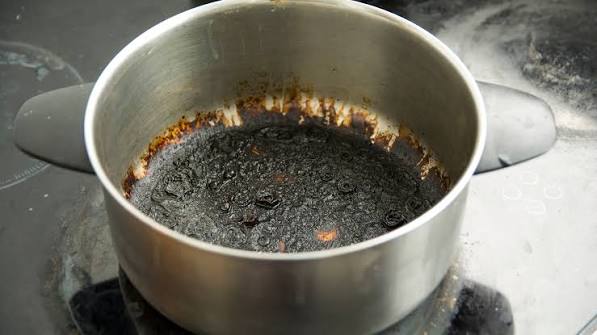
We’ve all been there: you step away for ‘just a minute,’ and suddenly your favorite pan has a stubborn black crust that laughs at regular dish soap. Before you reach for steel wool and elbow grease, know this: cleaning a burnt pan is a science, not a battle. The right method depends on what your pan is made of, and using the wrong technique can do more damage than the burn itself.
This guide breaks down the three ways to remove burnt-on food—dissolving, abrading, and steaming—and tells you exactly which approach works for stainless steel, non-stick, cast iron, and more. You’ll learn why baking soda is a superstar, why vinegar isn’t magic, and how to avoid common mistakes that ruin pans.
Why Burnt Food Sticks So Stubbornly
When food burns, its sugars and proteins undergo pyrolysis—thermal decomposition above 300–400°F. This creates a carbonized layer that is hydrophobic (water-repelling) and tightly bonded to the pan’s surface. That’s why a simple soak in cold water often fails: water can’t penetrate the crust. To remove it, you need to either dissolve the carbon, physically abrade it away, or use heat and steam to rehydrate and loosen it.
The Universal Method: Simmer with Baking Soda
For most pans, the safest and most effective first step is a simmering baking soda bath. Here’s how:
- Fill the pan with warm water and add a few drops of dish soap.
- Stir in a generous amount of baking soda (about 1/4 cup for a standard pan).
- Bring to a simmer for 10–15 minutes.
- Use a wooden or silicone spatula to scrape away the loosened debris.
- For stubborn spots, make a paste of baking soda and water and scrub gently.
This method works because baking soda is a mild alkali that helps break down carbonized fats, and the simmering heat and steam rehydrate the crust, making it easier to lift.
The Vinegar + Baking Soda Myth
You’ve probably seen the viral trick of adding vinegar to baking soda for a fizzy reaction. While it does create carbon dioxide bubbles that provide some physical agitation, the reaction is mostly visual. The bubbles are too weak to dissolve burnt carbon. However, combining vinegar with a simmering baking soda bath can help—the acid helps break down some mineral deposits, and the fizzing adds a bit of extra lift. But don’t expect magic; it’s the simmering and scrubbing that do the heavy lifting.
Pan-by-Pan Guide: What Works and What Ruins
Stainless Steel
Stainless steel is non-reactive and can handle acids and abrasives. Your best friends are:
- Bar Keepers Friend (contains oxalic acid) – make a paste, scrub gently, and rinse.
- Baking soda paste – works well for lighter burns.
- Scrub in the direction of the grain to avoid scratching.
Avoid: Chlorine bleach (can pit the surface) and steel wool (leaves scratches).
Non-Stick Pans
Non-stick coatings (PTFE or ceramic) are soft and easily scratched. High heat can also degrade them. So:
- Use a baking soda paste with a soft sponge.
- Boiling water with a little baking soda is safe, but keep the heat low.
- Consider a specialized non-stick cleaner.
Avoid: Metal scrubbers, harsh abrasives, and high heat.
Cast Iron
Cast iron is porous and reactive, and it relies on a polymerized oil seasoning that soap and acids can strip. Instead:
- Scrub with coarse salt and a little oil – the salt acts as an abrasive without damaging the seasoning.
- Use a chainmail scrubber for tough spots.
- If you do use water, dry immediately and re-season with a thin layer of oil.
Avoid: Soap, long soaks, and acidic cleaners.
Enameled Cast Iron (e.g., Le Creuset)
Enamel is glass-like and can chip. Use:
- Baking soda paste or a gentle abrasive like Bar Keepers Friend.
- A soft sponge or nylon scrubber.
Avoid: Metal tools and harsh scouring pads.
Aluminum
Aluminum is soft and reactive. Strong alkalis (like oven cleaner) and harsh abrasives can pit it. Use:
- Mild dish soap and a soft cloth.
- Baking soda or a cream cleaner for stubborn spots.
Avoid: Steel wool, oven cleaner, and acidic cleaners that can discolor.
The ‘No-Scrub’ Minimalist Approach
If you’re patient, you can avoid scrubbing altogether. Fill the pan with warm water and a drop of dish soap, and let it soak for 30 minutes to overnight. This rehydrates the burnt food, and most of it will wipe away with a sponge. This is the safest method for all pan types, especially non-stick and cast iron.
The ‘Chemical’ Approach: When to Use Acids and Bases
For extreme burns, you might need stronger chemicals:
- Acids like vinegar, lemon juice, or oxalic acid (Bar Keepers Friend) dissolve carbon and mineral deposits. Use on stainless steel and enamel, but not on reactive metals like aluminum or unseasoned cast iron.
- Bases like baking soda or oven cleaner (for stainless steel only) break down grease. Oven cleaner is very harsh—use only as a last resort and never on aluminum or non-stick.
The ‘Mechanical’ Approach: Abrasives and Tools
Sometimes you need to physically scrape. Choose your abrasive based on the pan:
- Steel wool – for stainless steel only.
- Chainmail scrubber – for cast iron.
- Nylon scrubber – for non-stick and enamel.
- Salt – a natural abrasive that works on cast iron and stainless steel.
The ‘Dryer Sheet’ and ‘Dishwasher Tablet’ Hacks
Two popular internet hacks:
- Dryer sheet: Place a dryer sheet in the pan with warm water and soak for an hour. The fabric softener contains surfactants that break down grease. Results are anecdotal, and some experts question food safety, so use with caution.
- Dishwasher tablet: Crumble a tablet into the pan with hot water and soak overnight. Tablets contain enzymes and surfactants that work well, but they can be too harsh for aluminum or non-stick finishes.
Prevention: The Chef’s Secret
The best way to clean a burnt pan is to avoid burning it in the first place. Chefs emphasize:
- Heat control: Use medium heat for most cooking; let the pan preheat gradually.
- Use enough fat: Oil or butter creates a barrier between food and pan.
- Deglaze early: If food starts to stick, add a liquid (wine, broth, water) and scrape up the browned bits before they burn.
Eco-Friendly Alternatives
If you prefer to avoid commercial cleaners, you can rely on baking soda, vinegar, salt, and elbow grease. These are effective for most situations and are safe for the environment.
Conclusion
Cleaning a burnt pan doesn’t have to be a chore or a gamble. By understanding the material of your pan and the three mechanisms of cleaning—dissolving, abrading, and steaming—you can choose the right method with confidence. Start with the gentlest approach (soaking or simmering with baking soda), and escalate only if needed. And remember: prevention is always easier than restoration. Happy cooking, and may your pans stay clean!
Summary
- Understand your pan: Different materials (stainless steel, non-stick, cast iron, etc.) require different cleaning methods to avoid damage.
- Start gentle: Soak or simmer with baking soda and dish soap before resorting to harsh chemicals or abrasives.
- Vinegar + baking soda is not magic: The fizz is mostly physical, not chemical; simmering does the real work.
- Match the tool to the material: Use Bar Keepers Friend for stainless steel, salt for cast iron, and soft sponges for non-stick.
- Prevent burns: Control heat, use enough fat, and deglaze early to avoid burnt-on food in the first place.
FAQ
Q: Can I use steel wool on a non-stick pan?
A: No. Steel wool will scratch and ruin the non-stick coating. Use a soft sponge or nylon scrubber with baking soda paste.
Q: Is it safe to use soap on cast iron?
A: Generally, no. Soap strips the seasoning. Use coarse salt and oil to scrub, then rinse with water and dry immediately. Re-season if needed.
Q: Does the vinegar and baking soda trick actually work?
A: It helps a little due to the fizzing action, but the real cleaning comes from simmering and scrubbing. Don’t rely on it alone.
Q: How long should I soak a burnt pan?
A: For most pans, 30 minutes to overnight. The longer you soak, the less scrubbing you’ll need. Just make sure the pan material can handle prolonged water exposure (avoid soaking cast iron for long periods).
Q: Can I use oven cleaner on any pan?
A: No. Oven cleaner is extremely harsh and should only be used on stainless steel as a last resort. It will damage aluminum, non-stick, and cast iron.