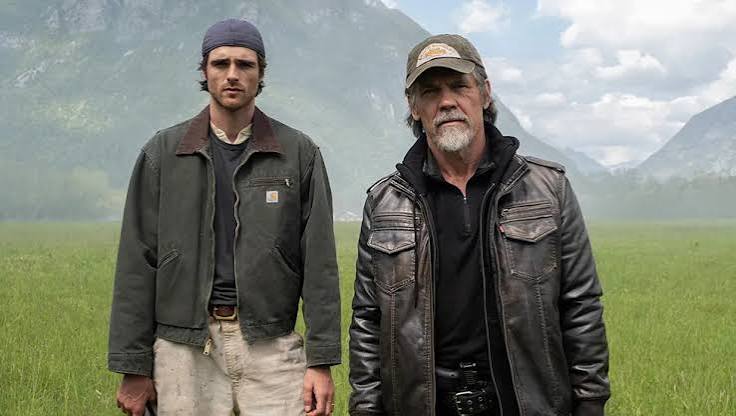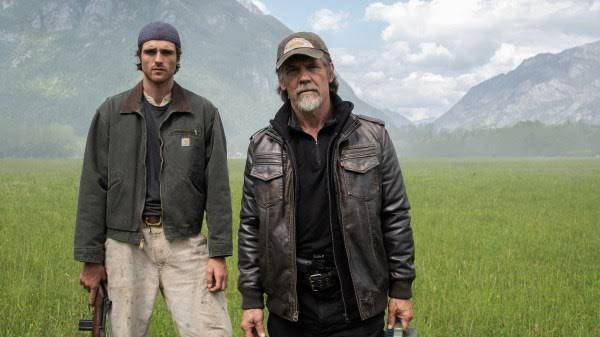
Ridley Scott, at 94, has built a career on spectacle: alien chases, Roman colosseums, and Martian potatoes. But his latest, The Dog Stars, trades the bombast for something far more fragile. Based on Peter Heller’s 2012 novel, this post-apocalyptic drama follows Hig (Jacob Elordi), a pilot who survives a superflu that wiped out 99% of humanity, living in an airport hangar with a gun-toting survivalist named Bangley (Josh Brolin).
What emerges is a “subdued but pleasingly soulful” dystopian Western, as the review headline puts it. Scott’s restraint is the story: instead of action set-pieces, we get long silences, a dog’s loyal gaze, and the hum of a Cessna’s engine. It’s a film that asks whether tenderness can survive when everything else has burned away.
The 94-Year-Old Director Who Slowed Down
Scott’s late-career output has been anything but quiet: Napoleon’s battlefield carnage, Gladiator II’s arena bloodshed. So The Dog Stars marks a deliberate pivot. The director, known for saying he prefers “fast” filmmaking, here lets scenes breathe. The pacing mirrors Hig’s daily routine: wake, check the perimeter, fly, scavenge, return.
This is closer to Clint Eastwood’s late-period restraint than Scott’s own Blade Runner dystopia. That 1982 noir was dense with neon and rain; The Dog Stars is all dusty Colorado daylight and empty skies. The quiet is the point — a world stripped of noise, both literal and metaphorical.
From Page to Screen: The Adaptation Challenge
Heller’s novel is written in a fragmented, stream-of-consciousness style, with Hig’s thoughts jumping like a wounded bird. The film had to translate that interiority into visual storytelling. The solution? Let Elordi’s face do the work. His Hig is a man of few words, but his eyes carry the grief of losing everyone he loved — a wife, a father, a world.
The novel’s lyrical nature writing — Heller was a fly fisherman and adventure writer — becomes the film’s visual poetry. Scott’s cameras linger on the Rockies, on a river, on Jasper the dog’s panting tongue. The landscape isn’t a backdrop; it’s a character. The film keeps the novel’s core: a mysterious radio transmission from a woman (Margaret Qualley) that sends Hig west, toward hope or madness.
Elordi and Qualley: Chemistry in the Ruins
Jacob Elordi, fresh from Saltburn and Priscilla, fits Hig’s brooding template, but he adds a vulnerability that prevents the character from becoming a cliché. His Hig is a pilot who’d rather flee than fight, a man who reads poetry aloud to his dog. The casting works because Elordi makes stillness feel active.
Margaret Qualley, coming off the body-horror of The Substance, brings a grounded physicality to her role. Without spoiling the plot, she isn’t just the “radio voice” — she has agency, a past, and a reason to be suspicious of Hig’s kindness. Their scenes together are tense, tender, and refreshingly unforced.
Josh Brolin, a Scott regular since American Gangster, plays Bangley as a pragmatic survivalist — not a villain, but a mirror of what Hig could become if he stopped feeling. The film’s central tension isn’t between man and nature, but between Hig’s tenderness and Bangley’s hardness. It’s a debate about what’s worth saving in a broken world.
The Dystopian Western: A Genre With a Pulse
“Dystopian Western” might sound like a contradiction — the West is about open horizons, dystopia about closed ones. But the genre has roots: The Book of Eli, The Road, even Mad Max: Fury Road. The Dog Stars fits by giving Hig a moral code and a frontier to cross. His Cessna replaces the horse; the empty highways replace the dusty trails.
Yet Scott’s film avoids the grimness of The Road and the pyrotechnics of Fury Road. It’s closer to Station Eleven — an apocalypse story about art, memory, and human connection. The film’s soulful core is a Frank O’Hara poem, referenced in the title, about enjoying a Coke with someone you love. That’s the stakes: not survival, but the preservation of small joys.
Why This Story Matters Now
Heller wrote the novel in 2012, but the pandemic gave it new resonance. The film, made in a post-COVID world, doesn’t shy from that. Hig’s grief is our collective grief; his search for a voice on the radio mirrors our own longing for connection after isolation. Scott, a director often accused of being cold, here delivers something unexpectedly warm.
It helps that the supporting cast — Guy Pearce, Allison Janney, Benedict Wong — adds gravitas in small but crucial roles. They appear as fragments of the old world, reminders of what was lost. Their presence elevates the film beyond a two-hander.
A Risk That Pays Off
At 94, Scott could have coasted on spectacle. Instead, he took a risk on a quiet, literary adaptation with a young leading man and a dog. The result is a film that feels like a late-career statement: that even in the twilight, there’s room for gentleness. The Dog Stars won’t satisfy viewers expecting Gladiator-scale action. But for those willing to sit with silence, it offers something rarer: hope.
Ridley Scott’s The Dog Stars is a subdued, soulful entry in his filmography — a dystopian Western that trades explosions for empathy. With strong performances from Elordi and Qualley, and a script that honors Heller’s lyrical source, it’s a reminder that even the end of the world can’t kill poetry.
Summary
- Ridley Scott at 94 directs a restrained, character-driven post-apocalyptic drama, a departure from his usual spectacle.
- Adaptation: Peter Heller’s fragmented novel is translated into visual storytelling via Elordi’s expressive performance and Scott’s landscape shots.
- Cast: Jacob Elordi and Margaret Qualley bring tenderness to a grim setting; Josh Brolin anchors the survivalist counterpoint.
- Genre: Blends dystopian and Western tropes, but with a soulful, hopeful tone reminiscent of Station Eleven.
- Resonance: Post-pandemic audiences will find echoes of collective grief and the search for connection.
FAQ
Q: Is The Dog Stars based on a book?
A: Yes, it’s adapted from Peter Heller’s 2012 novel of the same name, a New York Times bestseller.
Q: What is the film’s tone compared to other Ridley Scott movies?
A: It’s subdued and introspective, more like The Martian’s survival focus than Gladiator’s action, with a soulful, tender core.
Q: Who stars in the film?
A: Jacob Elordi plays Hig, Margaret Qualley plays the mysterious woman, and Josh Brolin plays Bangley. Supporting cast includes Guy Pearce, Allison Janney, and Benedict Wong.
Q: What does the title mean?
A: It references a Frank O’Hara poem about joy and companionship, and the Dog Star (Sirius) as a symbol of hope.
Q: Is the film suitable for fans of action apocalypses?
A: No — it’s a slow, character-driven drama. Expect emotional stakes rather than explosive set-pieces.