Tag: John Galliano

  • Met Gala 2025: Date Change Rumors Amid John Galliano Backlash Explained


    The Met Gala, fashion’s biggest night, is facing an unusual dilemma: a reported date change. Organizers are said to be considering moving the 2025 event from its traditional first Monday in May, with speculation swirling that backlash against co-chair John Galliano is the driving force. But is the story that simple? Here’s what we know.

    The Met Gala’s Sacred Date

    For two decades, the Met Gala has taken place on the first Monday of May. It’s a date that anchors the fashion calendar, with celebrities, designers, and insiders planning their schedules around it. The 2025 gala is currently set for May 5, but reports from Page Six and other outlets suggest that date might shift.

    Why? The official line is still murky. Some sources hint at a scheduling conflict with the Cannes Film Festival, which overlaps with the traditional date. Others point to a more contentious reason: the backlash over John Galliano’s role as co-chair.

    Galliano’s Controversial Past

    John Galliano, the British designer now at Maison Margiela, was announced as a co-chair for the 2025 gala, alongside the exhibition “Superfine: Tailoring Black Style.” But his past has made headlines for all the wrong reasons.

    In 2011, a video surfaced of Galliano making antisemitic and racist remarks in a Paris café. He was fired from Dior and his own label, convicted in France for public insults, and effectively exiled from the industry. After years of rehabilitation, including public apologies and work with Jewish community leaders, he returned as creative director of Maison Margiela in 2014. His recent couture shows have been critically acclaimed, but for many, the wounds haven’t healed.

    The Backlash and the Date Change

    Galliano’s appointment as co-chair reignited a fierce debate about redemption and accountability. Critics argue that giving him one of fashion’s highest honors sends a harmful message, especially amid rising global antisemitism. Supporters counter that he has paid his dues and deserves a second chance.

    Amid this firestorm, the reported date change could be a strategic move to manage the fallout. By shifting the gala, organizers might hope to distance the event from the controversy or buy time to address it. But skeptics note that changing such a high-profile date is logistically daunting—venue bookings, celebrity schedules, and security are all locked in months ahead.

    Institutional Panic or Practical Concern?

    The date change rumor has sparked speculation about what’s really driving the decision. Is Anna Wintour, who chairs the event, worried about sponsors pulling out or celebrities refusing to attend? Could this be a trial balloon to gauge public reaction before making a final call?

    Alternatively, the Cannes Film Festival explanation holds water. The festival often runs from mid-May, and a clash could siphon off A-list talent. But the timing of the leak—right in the middle of the Galliano controversy—suggests more than a simple scheduling wrinkle.

    What Happens Next?

    The Met Gala’s organizers have not officially commented on the date change. Until they do, the rumor mill will keep churning. What’s clear is that the 2025 gala has already become a flashpoint for larger questions about who gets a platform in fashion, and at what cost.

    Whether the date moves or not, the controversy around Galliano isn’t going away. It’s a test case for how the industry handles past misconduct—and whether redemption is truly possible in the public eye.

    The reported date change for the 2025 Met Gala may be a practical scheduling decision, but its timing has turned it into a referendum on John Galliano’s legacy. As the fashion world waits for an official announcement, the debate over accountability and second chances will only intensify.

    Summary

    • The 2025 Met Gala is reportedly considering a date change from its traditional first Monday in May.
    • The shift is speculated to be linked to backlash against co-chair John Galliano, though scheduling conflicts with Cannes are also cited.
    • Galliano’s 2011 antisemitic remarks led to his firing from Dior, but he has since returned to fashion at Maison Margiela.
    • The controversy highlights tensions between redemption and accountability in the industry.
    • Organizers have not officially confirmed any date change, leaving the situation fluid.

    FAQ

    Q: Why is the Met Gala date being changed?
    A: Reports suggest organizers are considering moving it from May 5, 2025, due to backlash over John Galliano’s role as co-chair, though some cite a conflict with the Cannes Film Festival.

    Q: What did John Galliano do?
    A: In 2011, he was filmed making antisemitic and racist remarks in a Paris café. He was fired from Dior and convicted in France for public insults.

    Q: Has Galliano made a comeback?
    A: Yes, he returned as creative director of Maison Margiela in 2014 and has been praised for recent work, but his past continues to spark controversy.

    Q: What is the 2025 Met Gala theme?
    A: The Costume Institute exhibition is titled “Superfine: Tailoring Black Style,” exploring Black dandyism and tailoring.

    Q: Has the Met Gala changed its date before?
    A: The first Monday in May has been the standard since 2005, with rare exceptions, so a change would be unusual.
  • John Galliano to Take Spotlight at Met Gala and Costume Institute Exhibition 16 Years After Antisemitic Rant

    John Galliano to Take Spotlight at Met Gala and Costume Institute Exhibition 16 Years After Antisemitic Rant

    In a move that has sent ripples through the fashion world, the Metropolitan Museum of Art’s Costume Institute has announced a solo exhibition dedicated to John Galliano, set to open in spring 2027. The announcement marks a stunning turn in the career of a designer who was once the industry’s golden boy, only to be cast out in disgrace after a viral antisemitic rant in 2011. Now, 16 years later, Galliano is being honored with one of fashion’s highest accolades—a retrospective at the Met, alongside a role as honorary chair of the Met Gala.

    This decision reignites a complex debate about art, accountability, and redemption. How does a museum reconcile celebrating the work of a man who made hateful statements? And what does this say about the fashion industry’s capacity for forgiveness? As the announcement unfolds, it forces us to confront uncomfortable questions about who gets a second chance, and under what conditions.

    The Announcement: A Historic Honor

    The Costume Institute’s spring 2027 exhibition, titled “John Galliano: Horizons,” will be a full-scale retrospective of Galliano’s career, from his early days at Central Saint Martins to his current role as creative director of Maison Margiela. This makes Galliano only the third living designer to receive a solo exhibition at the Costume Institute, following Yves Saint Laurent in 1983 and Cristóbal Balenciaga in 2011 (though Balenciaga had passed away by then, so the living-designer distinction applies specifically to Saint Laurent and Galliano).

    Galliano will also serve as an honorary chair or co-chair of the 2027 Met Gala, the star-studded fundraiser that opens the exhibition. The announcement comes exactly 16 years after the incident that nearly ended his career, marking a dramatic arc from pariah to celebrated figure.

    The 2011 Incident: A Fall from Grace

    In February 2011, a video surfaced showing Galliano making antisemitic and racist remarks in a Paris café. In the footage, he can be heard saying, “I love Hitler” and telling a woman that her “forefathers would have been gassed.” The video went viral, and the backlash was immediate. Galliano was fired from Christian Dior, where he had been creative director since 1996, and from his own label, which was owned by LVMH. He was later convicted in a French court and fined €6,000 for “public insults based on origin, religious affiliation, race or ethnicity.”

    In subsequent interviews, Galliano attributed his behavior to a cocktail of addiction and mental health struggles, describing himself as suffering from “triple PTSD” and dependence on alcohol and prescription drugs. He expressed deep remorse, but the damage was done. For years, he remained in exile, a cautionary tale of how quickly a career can unravel.

    The Road to Rehabilitation

    Galliano’s comeback was not accidental. It was carefully orchestrated, with Anna Wintour, Vogue’s editor-in-chief and longtime chair of the Met Gala, playing a pivotal role as a mentor. Wintour was instrumental in helping Galliano rebuild his life and career, eventually leading to his appointment as creative director of Maison Margiela in 2014.

    At Margiela, Galliano has been celebrated for his avant-garde “Artisanal” couture collections, which have earned critical acclaim and a new generation of fans. His work there has been described as some of the most innovative in fashion, blending his signature theatricality with a more refined, conceptual approach. This creative resurgence has been key to his rehabilitation, demonstrating that his talent was not diminished by his personal failings.

    The Art vs. Artist Debate

    The Met’s decision to honor Galliano is not without controversy. Critics, particularly from Jewish community organizations and antisemitism watchdogs, argue that this honor is premature and inappropriate. They point to the rising tide of global antisemitism and question whether Galliano has done enough public atonement beyond private apologies. The ADL and Holocaust survivors’ groups may view this as a troubling signal that hateful statements can be forgiven if the perpetrator is talented enough.

    On the other hand, supporters argue that Galliano’s story is one of redemption. They contend that he has paid his debt to society, undergone rehabilitation, and produced work of genuine artistic merit. The exhibition, they say, is a testament to the power of second chances and the belief that people can change.

    Museums have long grappled with how to handle problematic artists. From Picasso’s misogyny to Wagner’s antisemitism, institutions have had to decide whether to separate the art from the artist. The Met’s curatorial approach to Galliano’s 2011 incident will be closely scrutinized. Will the exhibition address it head-on, or will it focus purely on the work? The framing will send a powerful message about accountability and the limits of forgiveness.

    The Cultural Commentary: Cancel Culture and Second Chances

    The announcement has also become a flashpoint in the broader culture wars. For some, it’s a victory against “cancel culture,” proof that a person can be rehabilitated and return to the highest echelons of their field. For others, it’s a reminder that the fashion industry is willing to overlook egregious behavior when it suits its interests.

    Anna Wintour’s role in Galliano’s comeback raises questions about who gets a second chance and who doesn’t. Why did Galliano receive this path to redemption, while others, particularly those without powerful allies, remain marginalized? The power dynamics at play are uncomfortable to confront, but they are central to understanding this story.

    The Exhibition Itself: What to Expect

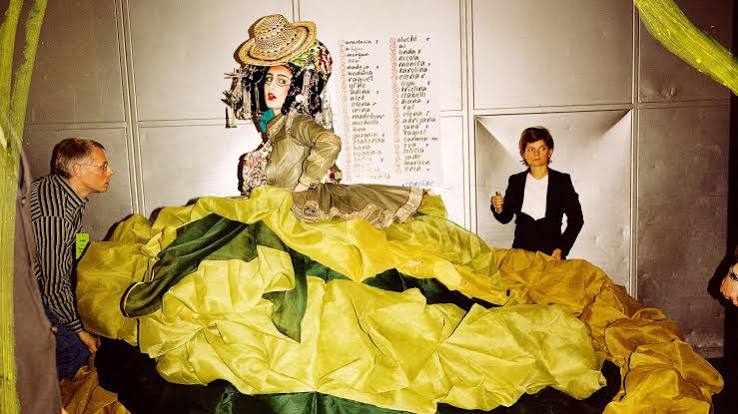
    While details of the exhibition are still under wraps, “John Galliano: Horizons” is expected to showcase the breadth of Galliano’s career, from his early collections at his eponymous label to his groundbreaking work at Dior and his current tenure at Margiela. The exhibition will likely feature his most iconic designs, known for their historical references, theatrical flair, and meticulous craftsmanship.

    Galliano’s designs are undeniably museum-worthy. His ability to transport audiences to different eras and worlds, from the French Revolution to the court of Marie Antoinette, has made him one of the most influential designers of his generation. The exhibition will be a celebration of that legacy, but it will also be a test of whether the fashion world can separate the art from the artist.

    The Broader Implications

    The Met’s decision to honor Galliano is a significant moment in the ongoing conversation about art, morality, and redemption. It raises questions that have no easy answers: Can a person truly atone for hateful words? Should artistic genius excuse personal failings? And what message does this send to victims of antisemitism and other forms of hatred?

    As the 2027 exhibition approaches, these debates will only intensify. The Met has made its choice, but the public will ultimately decide whether Galliano’s rehabilitation is genuine or merely a convenient narrative for an industry eager to reclaim one of its brightest stars.

    John Galliano’s return to the Met’s spotlight is a story of talent, fall, and attempted redemption. It is a testament to the fashion industry’s capacity for forgiveness, but also a reminder of the deep wounds that hateful words can inflict. As the exhibition takes shape, it will force us to confront our own beliefs about who deserves a second chance and what it truly means to atone. Whether Galliano’s legacy will be defined by his art or his past remains to be seen, but one thing is certain: the conversation is far from over.

    Summary

    • The Met’s Costume Institute will honor John Galliano with a solo exhibition in spring 2027, making him only the third living designer to receive this honor.
    • Galliano will also serve as honorary chair of the 2027 Met Gala, marking his return to the fashion spotlight 16 years after his antisemitic rant.
    • The announcement has sparked debate about art vs. artist, redemption, and the role of powerful figures like Anna Wintour in orchestrating comebacks.
    • Galliano’s post-2011 work at Maison Margiela has been critically acclaimed, but critics question whether he has done enough to atone for his past statements.
    • The exhibition’s framing and the public’s reaction will shape the legacy of one of fashion’s most controversial figures.

    FAQ

    Q: Why is John Galliano being honored by the Met 16 years after his antisemitic rant?
    A: The Met’s decision reflects a belief in Galliano’s artistic merit and his rehabilitation since the 2011 incident. Supporters argue that his post-2011 work at Maison Margiela demonstrates growth and that he deserves a second chance. Critics, however, question whether the honor is premature given the severity of his statements.

    Q: Is Galliano returning to Dior?
    A: No, Galliano remains the creative director of Maison Margiela, a role he has held since 2014. The Met exhibition is a retrospective of his entire career, not a return to his former position at Dior.

    Q: What was the 2011 incident?
    A: In February 2011, a video surfaced showing Galliano making antisemitic and racist remarks in a Paris café, including statements like “I love Hitler.” He was fired from Dior and his own label, convicted in French court, and fined €6,000.

    Q: How has Galliano’s career evolved since then?
    A: After a period of exile, Galliano was appointed creative director of Maison Margiela in 2014, where he has been praised for his innovative “Artisanal” couture collections. His work there has been widely celebrated, helping to rebuild his reputation.

    Q: What does the exhibition mean for the art vs. artist debate?
    A: The exhibition raises questions about whether museums should separate an artist’s work from their personal failings. The Met’s decision to honor Galliano suggests a belief in redemption, but critics argue it may send a troubling message about accountability for hateful speech.