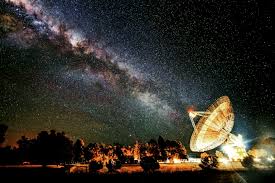
In 1967, a 24-year-old graduate student named Jocelyn Bell Burnell noticed something odd in the data from a radio telescope she had helped build. It was a faint, repeating signal—a pulse that arrived every 1.337 seconds. At first, she and her supervisor joked it might be signals from an alien civilization, nicknaming it ‘Little Green Men 1.’ But as Bell Burnell continued her meticulous analysis, she realized the signal was natural: the rhythmic beacon of a rapidly spinning neutron star, an object that had been theorized but never observed.
That discovery, made with a telescope that spanned 4.5 acres and used 2,048 antennas connected by 120 miles of cable, opened a new window onto the universe. It confirmed the existence of neutron stars, provided a new tool for testing Einstein’s theories, and sparked a revolution in astronomy that continues today. Yet the story of pulsars is also a story about who gets credit for scientific breakthroughs—and the quiet, often invisible labor that makes them possible.
A Signal in the Scruff
In the 1960s, radio astronomy was a young field. After World War II, scientists repurposed radar technology to listen to the cosmos, opening a new window on the universe. Cambridge was a leading center, and Bell Burnell was part of a team building a telescope designed to detect the shimmer of distant quasars—the newly discovered, incredibly bright objects at the edges of the universe.
The Interplanetary Scintillation Array was massive. It covered an area the size of 57 tennis courts and was made of a forest of poles and wires. Bell Burnell helped construct it over two years, learning to solder and climb the scaffolding. Then came the painstaking work: the telescope produced 96 feet of chart paper every day, and it was Bell Burnell’s job to analyze it by eye, looking for the telltale blips of quasars.
She was one of several women doing this kind of ‘routine’ analysis—work that was considered low-status but was essential. In August 1967, she noticed something unusual: a ‘bit of scruff’ on the paper, a signal that didn’t look like a quasar. It was a series of pulses, each 1.337 seconds apart, repeating with a regularity that was almost eerie. She brought it to her supervisor, Antony Hewish, and together they ruled out earthly interference. The signal was coming from beyond our solar system.
The regularity was so precise that they briefly considered an artificial source—hence the nickname ‘Little Green Men.’ But when Bell Burnell found a second such signal in a different part of the sky, the alien hypothesis collapsed. No single civilization could occupy two locations and send identical signals. The pulses had to be natural.
What Pulsars Are
The explanation came quickly. Neutron stars, the collapsed cores of massive stars that exploded as supernovae, had been predicted in the 1930s but were considered unobservable curiosities—’theoretical toys.’ A neutron star is incredibly dense: a teaspoon of its material would weigh about a billion tons on Earth. It also spins rapidly and has a powerful magnetic field, which focuses radiation into beams that sweep across space like a lighthouse. When a beam points at Earth, we see a pulse.
Bell Burnell had discovered the first pulsar—a rotating neutron star. The discovery turned theory into reality and gave astronomers a new way to study matter under extreme conditions. Today, we know of thousands of pulsars, and they are used as cosmic clocks, testing the predictions of general relativity with extraordinary precision. In 1974, the discovery of a binary pulsar system provided indirect evidence for gravitational waves, and in 2016, the LIGO collaboration directly detected gravitational waves from colliding black holes—research that builds on the legacy of pulsar astronomy.
The Nobel Controversy
In 1974, the Nobel Prize in Physics was awarded to Antony Hewish and Martin Ryle for the discovery of pulsars. Bell Burnell, who had identified the first pulsar and found three more, was excluded. The decision has been widely criticized as an example of gender bias and the erasure of graduate student contributions.
Bell Burnell herself has been gracious about the snub. ‘I was a student,’ she has said. ‘Supervisors get the glory.’ But she has also acknowledged the systemic issues the exclusion represents. In 2018, she was awarded the Special Breakthrough Prize in Fundamental Physics, worth $3 million. She donated the entire amount to fund scholarships for women and underrepresented groups in physics, turning a moment of recognition into an opportunity to change the field.
Her story highlights a broader pattern in science: the invisible labor of women and junior researchers who do the painstaking work of analysis and discovery but are often left off the podium. From the Harvard ‘computers’ like Henrietta Swan Leavitt, who cataloged stars, to the women of the Interplanetary Scintillation Array, this work has been essential to scientific progress, even when it went unrecognized.
Jocelyn Bell Burnell’s discovery of pulsars was a quiet revolution. It wasn’t a dramatic moment in a laboratory, but a patient observation of ‘scruff’ on a chart. Yet that observation changed our understanding of the universe, confirmed the existence of neutron stars, and opened new avenues for testing fundamental physics. It also reminds us that scientific breakthroughs depend on the careful attention and hard work of people who may not always get the credit—and that acknowledging that labor is essential to doing science right.
Summary
- In 1967, Jocelyn Bell Burnell discovered the first pulsar—a rapidly spinning neutron star emitting regular radio pulses—while analyzing chart paper from a radio telescope she helped build.
- The discovery confirmed the existence of neutron stars, which had been theorized but never observed, and opened a new field of astronomy.
- The Nobel Prize for the discovery went to her supervisor, Antony Hewish, excluding Bell Burnell; a decision widely criticized for gender bias.
- Bell Burnell later donated her $3 million Breakthrough Prize to support underrepresented groups in physics.
- Pulsars are now used as cosmic clocks to test general relativity and detect gravitational waves.
FAQ
Q: What is a pulsar?
A: A pulsar is a rapidly rotating, highly magnetized neutron star that emits beams of radio waves. As it spins, the beams sweep across space like a lighthouse, producing regular pulses of radiation that we can detect on Earth.
Q: Why was the ‘Little Green Men’ nickname used?
A: The extreme regularity of the pulses was so unusual that Bell Burnell and her supervisor briefly considered an extraterrestrial origin. When a second pulsar was found in a different part of the sky, the alien hypothesis was ruled out.
Q: Why didn’t Jocelyn Bell Burnell receive the Nobel Prize?
A: The 1974 Nobel Prize was awarded to her supervisor Antony Hewish and Martin Ryle. Bell Burnell was excluded, a decision widely criticized as reflecting gender bias and the erasure of graduate student work. She has downplayed the snub, but has also advocated for change.
Q: How are pulsars used in modern astronomy?
A: Pulsars act as extremely precise cosmic clocks. They are used to test general relativity, detect gravitational waves through pulsar timing arrays, and study the properties of matter at nuclear densities.
Q: What is the Interplanetary Scintillation Array?
A: It was a radio telescope at Cambridge University, built in the 1960s, consisting of 2,048 dipole antennas spread over 4.5 acres. It was used to study quasars and led to the discovery of pulsars.