Tag: Italian cuisine

  • The Improvised Salad That Conquered the World: Caesar Cardini’s Tijuana Accident

    Caesar Salad was never meant to become a world-famous dish. It was born from a kitchen running low on ingredients during one of the busiest holidays of the year. What began as

    On a sweltering July 4th weekend in 1924, Caesar Cardini faced a crisis. His Tijuana restaurant was packed with American tourists escaping Prohibition, but his kitchen was nearly bare. Instead of turning away hungry customers, he threw together romaine lettuce, garlic, croutons, Parmesan, and a coddled egg – and created a dish that would become a global icon.

    Today, the Caesar salad is a staple on menus from roadside diners to Michelin-starred restaurants. But its origin story is a tale of scarcity, showmanship, and a dash of marketing genius – rooted in the unlikely setting of a border town fueled by alcohol and Hollywood glamour.

    A Star Is Born in Tijuana

    In the 1920s, Tijuana was a playground for Americans seeking what Prohibition had banned: alcohol, gambling, and nightlife. Hollywood celebrities, politicians, and thrill-seekers flocked across the border, and Caesar Cardini’s restaurant, Caesar’s Place, was a prime destination. The Italian-born restaurateur had trained in European kitchens, but his clientele was decidedly American.

    On that busy holiday weekend, Cardini’s kitchen was running low on supplies. Rather than close his doors, he improvised. He had romaine lettuce, garlic, olive oil, bread for croutons, Parmesan cheese, eggs, Worcestershire sauce, and limes – a motley collection that might have seemed more suited to a pantry than a menu. But Cardini had a flair for the dramatic. He assembled the salad tableside, cracking the egg into the wooden bowl, grating the cheese with flourish, and grinding pepper with theatrical precision. The performance was as much a part of the dish as the ingredients themselves.

    The Salad That Wasn’t Supposed to Happen

    The original Caesar salad was a product of frugality, not luxury. The ingredients were cheap and shelf-stable – perfect for a kitchen caught off guard. The coddled egg, briefly boiled to a soft consistency, was a common restaurant trick to create a creamy emulsion without the risk of raw eggs. The garlic, olive oil, and Parmesan reflected Cardini’s Northern Italian roots, not French haute cuisine as some later assumed.

    Initially, the dish was called the “Aviator’s Salad” – a nod to the aviation craze of the era – but it was soon renamed after its creator. The salad’s popularity spread quickly among Tijuana’s glamorous clientele, and by the 1930s, it had crossed the border into the United States. The tableside preparation became a hallmark of upscale dining, turning a simple salad into a theatrical event.

    From Tijuana to Supermarket Shelves

    The salad’s global conquest owes much to Caesar Cardini’s daughter, Rosa. In the 1940s, she moved to Los Angeles and began bottling the dressing, trademarking it as “Cardini’s.” This commercial version brought the Caesar salad into American kitchens, transforming it from a restaurant novelty into a household staple. Today, Cardini’s brand is owned by Kraft Heinz, but the recipe remains a testament to a moment of improvisation.

    Meanwhile, Caesar’s Restaurant in Tijuana still operates, serving the original salad tableside. For food historians, it’s a pilgrimage site – a tangible link to the dish’s humble origins.

    The Legend, the Myth, and the Marketing

    But how much of the origin story is true? Some food historians, like Janet Clarkson and Andrew F. Smith, note that the details are unverifiable. The exact date – July 4, 1924 – is based on family lore, and some accounts place it later. The “accidental” creation may have been a deliberate, staged marketing stunt, designed to generate buzz. After all, Cardini was a savvy restaurateur, and a dramatic backstory is good for business.

    Regardless of its accuracy, the story of the improvising chef has become part of the salad’s appeal. It frames the dish as a happy accident, a triumph of creativity over constraint. This narrative has proven remarkably durable, even as the salad’s Mexican origins are often overlooked.

    The Borderlands Fusion Debate

    While Cardini was Italian, the salad was born on Mexican soil, using local limes instead of lemons. Some food writers argue that this makes it an early example of borderlands fusion cuisine – a blend of Italian technique, Mexican ingredients, and American tastes. Yet mainstream food history often erases this Mexican connection, attributing the salad to French or continental cuisine. This erasure has sparked a debate about culinary appropriation, with some Mexican writers insisting that Tijuana deserves credit as the birthplace.

    A Salad of Contradictions

    The Caesar salad is also a study in contradictions. It’s simultaneously a “healthy” bowl of greens and a calorie-dense indulgence, loaded with dressing, cheese, and croutons. This dual identity has helped it endure – it can be a diet staple or a decadent splurge, depending on how it’s made.

    From its birth in a Tijuana kitchen to its global ubiquity, the Caesar salad is a reminder that the best dishes often come from unexpected places. It’s a story of scarcity turned into spectacle, and a border town that gave the world a culinary icon.

    The Caesar salad’s journey from a Tijuana kitchen to global fame is a story of improvisation, showmanship, and cultural exchange. It reminds us that great food often arises from humble beginnings – and that a little theatrical flair never hurts.

    Summary

    • Caesar Cardini created the Caesar salad in Tijuana in 1924, improvising with limited ingredients on a busy holiday weekend.
    • The salad was originally called the “Aviator’s Salad” and was renamed after its creator.
    • Rosa Cardini commercialized the dressing in the 1940s, spreading its popularity across the U.S.
    • The tableside preparation ritual became a symbol of mid-century fine dining.
    • The salad’s Mexican origins are often overlooked, sparking debates about culinary appropriation.

    FAQ

    Q: Who invented the Caesar salad?
    A: Caesar Cardini, an Italian-born restaurateur, created it in Tijuana, Mexico, on July 4, 1924 (some sources say 1926 or 1927).

    Q: Why was the Caesar salad created?
    A: According to the popular story, Cardini ran out of standard ingredients during a busy holiday weekend and improvised with what he had.

    Q: What’s in a traditional Caesar salad?
    A: The classic recipe includes romaine lettuce, croutons, Parmesan cheese, a coddled egg, Worcestershire sauce, garlic, olive oil, black pepper, and lime or lemon juice.

    Q: Is the original restaurant still open?
    A: Yes, Caesar’s Restaurant in Tijuana still operates and serves the original salad tableside.

    Q: Why is the salad called “Caesar”?
    A: It was named after its creator, Caesar Cardini, though it was briefly known as the “Aviator’s Salad.”
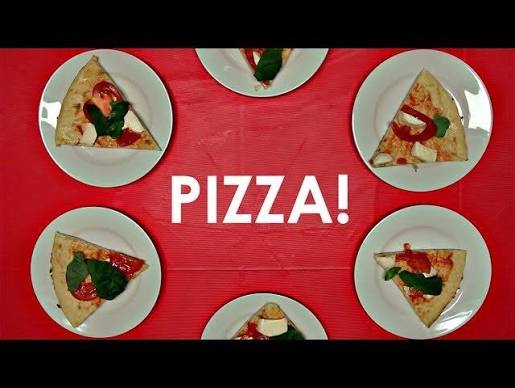
  • The Evolution of Pizza: From Naples Street Food to Global Icon

    The Evolution of Pizza: From Naples Street Food to Global Icon

    In the 18th century, the streets of Naples were crowded, noisy, and hungry. The city’s working poor, known as the lazzaroni, had little time and even less money for cooking. Their salvation came in the form of a simple flatbread, topped with lard, garlic, and salt, sold by street vendors from wooden boxes. This humble food—pizza—was cheap, filling, and eaten with hands. It was the ultimate street food for a city on the edge.

    Two centuries later, pizza is a global phenomenon. The market is worth over $145 billion, with more than 80,000 pizzerias in the U.S. alone. It has been adapted, industrialized, and even granted UNESCO heritage status. How did a poor person’s snack become one of the world’s most beloved foods? The answer lies in migration, innovation, and a constant tug-of-war between tradition and reinvention.

    The Birth of Pizza in Naples

    Pizza’s story begins in the 16th century when tomatoes arrived in Europe from the Americas. Europeans were suspicious of the new fruit—many thought it was poisonous. But the resourceful poor of Naples, who scavenged for any edible scraps, were quicker to embrace it. By the late 18th century, tomatoes had found their way onto flatbreads, creating the earliest versions of what we now recognize as pizza.

    The first documented pizzeria, Antica Pizzeria Port’Alba, opened in Naples in the 1830s. It served pizza to the masses, who appreciated its simplicity and affordability. The real turning point came in 1889, when pizzaiolo Raffaele Esposito of Pizzeria Brandi created a pizza topped with tomatoes, mozzarella, and basil to honor Queen Margherita of Savoy. The colors mirrored the Italian flag, and the pizza was named after the queen. Historians debate whether this story is fact or embellishment, but it doesn’t matter: the Margherita pizza became a symbol of Italian identity, and its popularity soared.

    Pizza Crosses the Atlantic

    In the late 19th century, Italian immigrants brought pizza to the United States. They settled in cities like New York, Chicago, and Boston, where pizza remained an ethnic curiosity confined to Italian neighborhoods. In 1905, Gennaro Lombardi opened Lombardi’s in New York City, widely considered the first licensed pizzeria in the U.S. For decades, pizza was a niche food, known only to immigrants and their descendants.

    World War II changed everything. American soldiers serving in Italy tasted pizza and returned home craving it. The post-war economic boom, combined with the rise of suburbs, created a demand for quick, affordable meals. Pizza fit the bill perfectly. By the 1950s and 1960s, national chains like Pizza Hut (founded in 1958) and Domino’s (founded in 1960) industrialized pizza, making it cheap, fast, and ubiquitous. Frozen pizza, introduced in the 1950s, brought pizza into American homes.

    The American Reinventions

    As pizza spread across the U.S., it morphed into distinctly American forms. In 1943, Ike Sewell and Ric Riccardo created deep-dish pizza at Pizzeria Uno in Chicago—a pie with a thick, buttery crust, chunky tomato sauce, and loads of cheese. New York-style pizza, with its thin, foldable slices, became a staple of the East Coast. Detroit-style pizza, with its rectangular, crispy-edged crust, emerged from the Motor City. These regional variations were not just adaptations; they were new traditions in their own right.

    The industrialization of pizza also led to a standardization of ingredients and methods. Chains optimized for speed and consistency, often at the expense of flavor. By the 1980s, pizza was everywhere, but it had strayed far from its Neapolitan roots.

    The Artisanal Revival

    In response to this homogenization, a “neo-Neapolitan” movement emerged in the 1980s and 1990s. Chefs like Anthony Mangieri in New York and Chris Bianco in Phoenix began to treat pizza as a craft, not just a commodity. They imported Italian ingredients—San Marzano tomatoes, buffalo mozzarella, and 00 flour—and used wood-fired ovens to achieve the perfect char. The movement gained institutional backing in 1984 with the founding of the Associazione Verace Pizza Napoletana (AVPN), which set strict standards for authentic Neapolitan pizza. In 2017, UNESCO recognized the “Art of Neapolitan ‘Pizzaiuolo’” as an Intangible Cultural Heritage of Humanity.

    This artisanal revival has gone global. From Tokyo to São Paulo, pizzaiolos are embracing the Neapolitan ethos of simplicity and quality. At the same time, chefs like Dan Richer and Franco Pepe are pushing boundaries, experimenting with innovative toppings and techniques. The result is a vibrant, diverse pizza landscape that honors both tradition and innovation.

    The Global Tapestry of Pizza

    As pizza spread worldwide, it adapted to local tastes, creating a rich tapestry of regional variations. In Japan, you’ll find pizza topped with mayonnaise and corn. In India, it might be topped with paneer tikka. In Brazil, green peas and ketchup are common. Sweden offers a banana-curry pizza that would make a Neapolitan purist shudder. These adaptations are often dismissed as aberrations, but they are evidence of pizza’s remarkable plasticity—a testament to its ability to become a local favorite wherever it goes.

    The global statistics are staggering. The U.S. consumes about 3 billion pizzas per year, which translates to roughly 350 slices per second. Italy, the birthplace of pizza, has about 70,000 pizzerias. The global pizza market is projected to reach $200 billion by 2030. Pizza is no longer just a food; it’s a cultural phenomenon.

    From its humble beginnings as a street food for the poor in Naples to its current status as a global icon, pizza has undergone a remarkable evolution. It has been shaped by migration, industrialization, and the relentless creativity of chefs and home cooks alike. Yet, despite its many transformations, pizza remains deeply connected to its roots—a simple flatbread with toppings, meant to be shared and enjoyed. Whether you prefer a classic Margherita or a deep-dish Chicago pie, you’re part of a story that spans centuries and continents.

    Summary

    • Pizza originated in 18th-century Naples as a cheap, portable street food for the working poor.
    • The Margherita pizza, created in 1889, became a symbol of Italian identity.
    • Italian immigrants brought pizza to the U.S., where it became mainstream after WWII.
    • American adaptations include deep-dish, New York-style, and Detroit-style pizzas.
    • An artisanal revival since the 1980s has emphasized traditional Neapolitan methods and ingredients.
    • Pizza has adapted globally, with local variations like Japanese mayo-corn and Swedish banana-curry.

    FAQ

    Q: When was pizza invented?
    A: Pizza as we know it emerged in Naples, Italy, in the 18th century. The first documented pizzeria, Antica Pizzeria Port’Alba, opened in the 1830s.

    Q: Is the story of the Margherita pizza true?
    A: The story of Raffaele Esposito creating the Margherita pizza for Queen Margherita in 1889 is widely told, but some historians dispute its accuracy. Regardless, it remains a popular part of pizza lore.

    Q: Why is pizza so popular in the United States?
    A: Pizza became popular in the U.S. after WWII, when returning soldiers who had tasted it in Italy craved it. The rise of chains and frozen pizza made it accessible to everyone.

    Q: What is the difference between Neapolitan and New York-style pizza?
    A: Neapolitan pizza has a thin, soft crust, is cooked in a wood-fired oven, and uses simple toppings like San Marzano tomatoes and buffalo mozzarella. New York-style pizza has a thicker, crispier crust that can be folded and is often sold by the slice.

    Q: What does UNESCO recognition mean for pizza?
    A: In 2017, UNESCO recognized the “Art of Neapolitan ‘Pizzaiuolo’” as an Intangible Cultural Heritage of Humanity, highlighting the cultural significance of the craft of making Neapolitan pizza.