Tag: ISS

  • Two Rookie Astronauts Just Completed a Critical Spacewalk Here’s What It Means

    Two Rookie Astronauts Just Completed a Critical Spacewalk Here’s What It Means

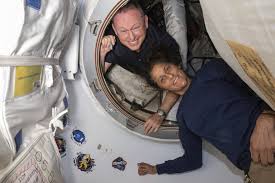
    On August 18, 2026, two astronauts floated outside the International Space Station (ISS) for 6 hours and 23 minutes. Their goal: to finish installing a high-speed communications system component. What makes this spacewalk unusual isn’t just the hardware—it’s the people. Anil Menon (NASA) and Sophie Adenot (ESA) are both on their first spaceflight, and this was their first spacewalk. For decades, such complex EVAs were reserved for seasoned astronauts. Now, a new generation is taking the lead.

    The Spacewalk: What Happened

    At 400 kilometers above Earth, Menon and Adenot worked in the vacuum of space, tethered to the ISS. Menon wore the suit with a red stripe on the legs—the designation for EV1, the lead spacewalker. Adenot, as EV2, wore the unstriped suit. Their task: finishing the installation of a high-speed communications antenna or data relay system. The word “finishing” is key—this wasn’t a first step. Previous spacewalks or robotic arms had already positioned the hardware, and this EVA was the final assembly and connection.

    Spacewalks are physically demanding. The suits are pressurized at 4.3 psi, making every movement work against the suit’s stiffness. Astronauts train for hours in NASA’s Neutral Buoyancy Laboratory, a giant pool that simulates microgravity. But no amount of training fully prepares you for the reality of looking down at Earth from the void.

    Why High-Speed Communications Matter

    The ISS has used radio frequency (RF) systems for decades, but they’re limited. Laser communications—like the kind Menon and Adenot installed—can transmit data at rates 10 to 100 times faster. That means more science data can be sent back to Earth, from high-resolution Earth imaging to biomedical experiments. This upgrade isn’t just for the ISS; it’s a testbed for Artemis missions to the Moon and future Mars expeditions, where high-bandwidth links will be essential.

    This EVA is part of a broader trend: the ISS is aging, but it’s also being upgraded. Over 250 spacewalks have been conducted since 1998, and most early ones were for assembly. Now, they’re mostly maintenance and upgrades—a sign of the station’s maturity.

    Who Are These Astronauts?

    Anil Menon is a physician and former SpaceX medical director. He was selected in NASA’s 2021 astronaut class, part of the “Artemis Generation.” Sophie Adenot is a French helicopter test pilot and engineer, selected by ESA in 2022. Both bring unique skills: Menon’s medical background is crucial for long-duration missions, while Adenot’s test pilot experience means she’s used to high-stakes, precise operations.

    The fact that both are rookies is significant. In the past, a complex EVA would be led by veterans. Now, with a new generation and commercial partners, the training and trust in these astronauts is such that they can handle it. This also reflects a shift toward international cooperation—ESA and NASA working side-by-side on critical tasks.

    The Challenges of a First Spacewalk

    A first spacewalk is a mental and physical challenge. The suit is your own personal spacecraft—you’re isolated, with only your training and your crewmate. The “overview effect,” the profound cognitive shift astronauts often experience seeing Earth from space, can be overwhelming. But Menon and Adenot executed the installation flawlessly, a testament to their preparation and the support teams on the ground.

    For Menon, the journey from medicine to spaceflight is inspiring. For Adenot, from flying fighter jets to floating in space. Their presence on this EVA opens doors for diverse STEM careers, showing that there’s no single path to becoming an astronaut.

    What’s Next?

    This spacewalk is a stepping stone. Both astronauts may fly to the Moon or Gateway in future missions. The high-speed communications they installed will enable more data-intensive science and validate technologies for Artemis. As the ISS transitions to commercial space stations in the late 2020s, the experience gained from this EVA will be invaluable.

    In the meantime, Menon and Adenot will continue their Expedition 75 duties aboard the ISS. But for 6 hours and 23 minutes on that August morning, they were the face of a new era in human spaceflight.

    The August 18, 2026 spacewalk wasn’t just about cables and antennas—it was about the future. Two first-time astronauts proved that the next generation is ready to take on the most demanding tasks in space. The high-speed links they installed will pay dividends for years to come, and their example will inspire countless others to reach for the stars.

    Summary

    • Anil Menon (NASA) and Sophie Adenot (ESA) completed a 6h 23m spacewalk on August 18, 2026, to finish installing a high-speed communications component on the ISS.
    • Both astronauts are on their first spaceflight and first EVA, marking a generational shift in spacewalk assignments.
    • The upgrade enhances data transmission rates, benefiting science and future Artemis missions.
    • Menon wore the EV1 red-striped suit, leading the EVA; Adenot served as EV2.
    • This EVA reflects the ISS’s transition from assembly to maintenance and upgrade missions.

    FAQ

    Q: What is a spacewalk?
    A: A spacewalk, or extravehicular activity (EVA), is when an astronaut leaves the spacecraft to perform tasks outside, wearing a specialized suit for protection.

    Q: Why is high-speed communications important for the ISS?
    A: Higher data rates allow more scientific data to be transmitted to Earth, enabling more complex experiments and real-time video, which is crucial for future deep-space missions.

    Q: What does the red stripe on the spacesuit mean?
    A: In NASA’s EMU suits, the red stripe identifies the lead spacewalker (EV1), who is responsible for the overall EVA. The other astronaut (EV2) wears a suit without a stripe.

    Q: How do astronauts train for a spacewalk?
    A: They train extensively in the Neutral Buoyancy Laboratory (a large pool) and using virtual reality to simulate the microgravity environment, practicing every step until it’s second nature.

    Q: What’s next for these astronauts?
    A: Both are expected to continue their Expedition 75 mission and may be considered for future lunar or Gateway missions, building on this experience.
  • The $20 Million Ticket: Dennis Tito’s Journey to the ISS and the Birth of Space Tourism

    The $20 Million Ticket: Dennis Tito’s Journey to the ISS and the Birth of Space Tourism

    On April 28, 2001, a 60-year-old former NASA engineer named Dennis Tito climbed into a Russian Soyuz rocket and blasted off for the International Space Station. He wasn’t a professional astronaut. He was a tourist the first paying passenger in space history. The flight lasted just under eight days, cost him $20 million, and nearly sparked an international incident.

    Tito’s journey was more than a rich man’s joyride. It was the moment the space industry cracked open a door that had been locked to all but a select few. His flight proved that private citizens could not only survive in orbit but thrive there, and it set the stage for today’s commercial space boom. But the road to that launch pad was paved with bureaucratic battles, technical challenges, and a clash between two spacefaring nations.

    From JPL to Wall Street: The Unlikely Path to Orbit

    Dennis Tito’s route to space began in the 1960s, when he worked as an aerospace engineer at NASA’s Jet Propulsion Laboratory. He calculated trajectories for Mariner spacecraft, missions designed to explore the inner solar system. It was a dream job for a young engineer, but Tito had bigger ambitions: he wanted to fly. He applied to be an astronaut, but was rejected—first for being too young, then, years later, for being too old.

    So Tito took a different path. In 1972, he founded Wilshire Associates, a financial analytics firm that grew into a multimillion-dollar enterprise. By the late 1990s, he had the money to buy what the astronaut selection board wouldn’t give him: a seat on a rocket.

    The timing was fortunate. Russia’s space program, once the pride of the Soviet Union, was struggling. The post-Soviet economic collapse had slashed budgets, and the Russian space agency needed cash. Selling seats on Soyuz capsules to private citizens became a survival strategy. Enter Space Adventures, a U.S. company founded in 1998 to broker exactly this kind of deal. They put Tito and the Russians together, and a $20 million contract was signed.

    NASA’s Opposition and the Diplomatic Firestorm

    You might think NASA would have welcomed Tito, a former employee with genuine engineering chops. Instead, the agency fought him tooth and nail. NASA Administrator Daniel Goldin publicly called the idea of a tourist on the ISS “not appropriate.” The official concerns were safety and distraction: a civilian might get in the way, cause an accident, or become a liability on a station that was still under construction.

    But there was also an element of institutional pride. NASA had spent decades cultivating the image of astronauts as elite professionals. Allowing a wealthy civilian to buy his way into that club seemed to cheapen the achievement. The dispute escalated into a diplomatic crisis, with NASA threatening to withhold cooperation on ISS assembly unless Russia backed down.

    The Russians didn’t budge. They had a contract, and they needed the money. Eventually, a compromise was hammered out in April 2001, just weeks before launch. Tito would fly, but under strict conditions: he would not enter U.S.-built modules without supervision, he would pay for his own food and life support, and he would sign a liability waiver. Tito later described the NASA opposition as “bureaucratic nonsense,” noting the irony that he had once worked for the agency.

    Training for the Trip of a Lifetime

    Before he could board the Soyuz, Tito had to prove he could handle the physical and mental demands of spaceflight. He spent about 900 hours in training at Star City, Russia, the cosmonaut training facility outside Moscow. That included centrifuge runs to simulate the crushing G-forces of launch, parabolic flights that produced brief moments of weightlessness, and survival training in case the capsule landed off-course in a remote area.

    At 60, Tito was older than most first-time flyers, but his engineering background gave him an edge. He understood the spacecraft’s systems on a deep level and asked detailed technical questions that impressed his crewmates. Commander Talgat Musabayev and Flight Engineer Yuri Baturin, both veteran cosmonauts, found him to be more than just a passenger—he was a competent addition to the crew.

    The training wasn’t just about physical readiness. Tito had to prepare for the psychological challenge of being confined in a small capsule with two other people for days, then living on a space station with a multinational crew. He also had to accept the real risk of death. A Soyuz launch had a roughly 1-in-50 chance of ending in disaster in those days, and Tito was risking his life for a dream.

    The Flight Itself: A Week in Orbit

    On April 28, 2001, Tito launched from Baikonur Cosmodrome in Kazakhstan aboard Soyuz TM-32. The rocket performed flawlessly, and two days later, the capsule docked with the ISS. Tito spent the next five days and nineteen hours aboard the station, orbiting Earth 128 times.

    He didn’t just float around taking pictures. Tito conducted amateur radio contacts with schoolchildren, answering questions about life in space. He also performed some simple experiments, though his main role was that of an observer. He later reported no significant physical problems, though the return to gravity was jarring. “Coming back was like being hit by a truck,” he said.

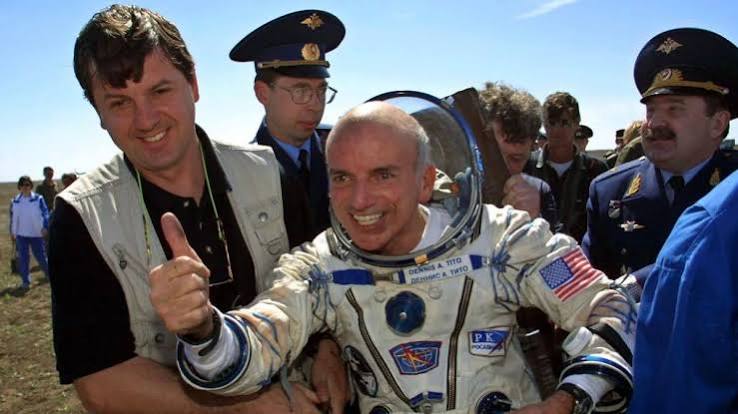
    When he landed on May 6, 2001, in the Kazakh steppe, Tito had accomplished what no private citizen had done before. He had bought a ticket to space and come back to tell the tale.

    The Legacy: From One Tourist to a New Industry

    Tito’s flight was dismissed by some as a billionaire’s stunt, but its impact has been profound. It demonstrated that a private citizen, with adequate training, could safely fly to orbit. That proof opened the floodgates for commercial spaceflight.

    In the two decades since, Space Adventures has sent six more tourists to the ISS, including software developer Charles Simonyi, who went twice. The price has gone up—Axiom Space’s 2022 private missions reportedly cost about $55 million per seat—but the basic model remains the same: buy a seat, train, fly.

    More broadly, Tito’s flight helped normalize the idea of private space travel. It was a precursor to SpaceX’s Inspiration4 mission, which sent four civilians on a multi-day orbit in 2021, and to the suborbital joyrides offered by Blue Origin and Virgin Galactic. Without Tito’s willingness to pay $20 million and endure the training, those companies might have found it harder to convince investors that there was a market for such experiences.

    The Debate That Won’t Go Away

    Tito’s flight also ignited a debate that has only grown louder: Is it right for the wealthy to buy their way into space? At the time, critics argued that space should be reserved for trained professionals and that spending money on tourism was a misuse of resources that could go to science or exploration. Supporters countered that Tito’s flight was a step toward democratizing access to space, and that commercial money would ultimately make spaceflight cheaper and more accessible.

    That debate has intensified in recent years, as billionaires like Richard Branson, Jeff Bezos, and Elon Musk have made space tourism a reality. The ethical questions remain unresolved, but Tito’s own view is clear. He sees his flight as a stepping stone, not a stunt. “I’m not the last tourist,” he said. “I’m the first.”

    Dennis Tito’s $20 million ticket was a gamble—on himself, on Russia’s space program, and on the idea that ordinary people might one day follow him. He bet that the door to space would open wider, and he was right. Today, that door is barely ajar, but it’s no longer locked. Tito’s journey from rejected astronaut applicant to paying passenger is a reminder that sometimes the path to a dream isn’t a straight line; it’s a leap of faith, backed by a lot of money and a willingness to fight for it.

    Summary

    • Dennis Tito became the first paying space tourist on April 28, 2001, flying to the ISS aboard a Russian Soyuz for about $20 million.
    • He trained for 900 hours at Star City, Russia, despite being 60 years old, and impressed his crewmates with his engineering expertise.
    • NASA fiercely opposed the flight, leading to a diplomatic standoff; a compromise allowed Tito to fly with restrictions.
    • Tito spent nearly 6 days on the ISS, orbiting Earth 128 times, and conducted amateur radio contacts with children.
    • His flight proved the viability of private space travel and laid the groundwork for today’s commercial space industry, including Axiom and SpaceX missions.

    FAQ

    Q: How much did Dennis Tito pay for his spaceflight?
    A: Approximately $20 million, paid to the Russian space agency through a deal brokered by Space Adventures.

    Q: How long was Dennis Tito in space?
    A: The total mission lasted about 7 days, 22 hours, and 4 minutes, with Tito spending 5 days and 19 hours aboard the ISS.

    Q: Why did NASA oppose Tito’s flight?
    A: NASA argued that a tourist would be a distraction and safety risk on the ISS, but the opposition also reflected institutional pride and a desire to keep spaceflight professional.

    Q: What did Tito do during his time on the ISS?
    A: He conducted amateur radio contacts with schoolchildren, performed simple experiments, and occupied a general observer role.

    Q: How did Tito’s flight influence space tourism?
    A: It proved that private citizens could train and fly safely, encouraging the growth of commercial spaceflight and paving the way for later missions like Inspiration4 and Axiom’s private trips.