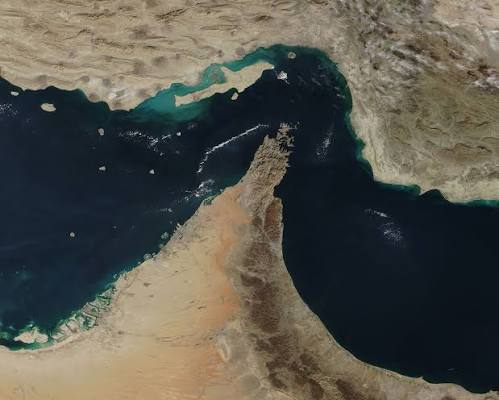
In the summer of 1941, British and Soviet troops rolled into Iran, forcing Reza Shah to abdicate his throne. The invasion was swift, almost bloodless, but its consequences echoed for decades. It secured the supply lines that would help the Soviet Union survive the Nazi onslaught, yet it also planted seeds of resentment that bloomed into the 1953 coup and a lasting Iranian distrust of the West.
World War II is often remembered through the beaches of Normandy or the jungles of the Pacific. But in the Middle East, the war was a violent tide that reshaped the coastline of history. It toppled empires, created new nations, and set the stage for conflicts that still rage today. The war’s legacy in this region is not a footnote; it is the foundation of the modern Middle East.
The Crossroads of the World
Long before the first shot of WWII, the Middle East was already a prize. Its oil fields fueled the navies and air forces of the great powers. The Suez Canal was the jugular of the British Empire, a shortcut to India and the Far East. And its geography made it a natural crossroads for armies and ideologies.
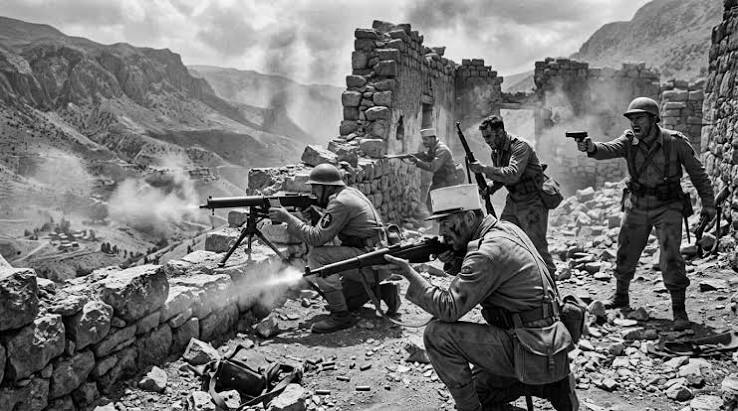
When war erupted in 1939, the region became a theater of operations. The North African Campaign (1940–1943) saw British and Commonwealth forces push back the Italians and Germans in a back-and-forth struggle across Libya and Egypt. To the east, the Anglo-Soviet invasion of Iran in 1941 was a preemptive strike to secure oil and open the Persian Corridor a route that would deliver over 4 million tons of Lend-Lease aid to the Soviet Union. Meanwhile, in the Levant, British and Free French forces ousted Vichy French control from Syria and Lebanon, a campaign that would set those territories on the path to independence in 1943–1946.
These campaigns were not abstract chess moves. They brought hundreds of thousands of Allied troops into the region, along with their equipment, their ideas, and their promises. The war disrupted local economies, caused famines in Iran and the Levant, and accelerated urbanization as people flocked to cities for work and safety. It also expanded oil production dramatically, cementing the region’s global importance.
The Promise of Self-Determination
In August 1941, Franklin Roosevelt and Winston Churchill issued the Atlantic Charter, a declaration of principles for the post-war world. It affirmed the right of all peoples to choose their own government. For Arab nationalists, these words were a beacon. They had lived under British and French mandates since the collapse of the Ottoman Empire, and they saw the war as a chance to claim their freedom.
Churchill later insisted that the charter applied only to Europe, not to the British Empire. But the damage was done. The idea of self-determination had taken root. The war had armed and trained a generation of local officers and elites, many of whom would lead independence movements. When the war ended, Britain and France were economically and militarily exhausted, unable to maintain their colonial grip. The result was a wave of decolonization: Syria and Lebanon gained full independence in 1946, Jordan followed suit, and the British withdrew from Palestine in 1948, leaving behind a volatile situation.
The Arab League, founded in Cairo in 1945, was a visible sign of this new era. It was a platform for pan-Arab coordination, but it also exposed the divisions that would come to define the region.
The Holocaust and the Creation of Israel
The Holocaust was the darkest shadow of WWII, and its legacy in the Middle East is profound. The systematic murder of six million Jews created an international moral imperative for a Jewish homeland. The Balfour Declaration of 1917, which had promised British support for a Jewish national home in Palestine, now seemed like a debt that had to be paid.
But Palestine was not empty. It was home to a growing Arab population that had its own national aspirations. The war had intensified Jewish immigration and the Zionist project, and the horrors of the Holocaust made the establishment of a Jewish state a matter of existential urgency for many survivors. In 1947, the United Nations voted to partition Palestine into separate Jewish and Arab states. The Arabs rejected the plan; the Jews accepted it. In 1948, Israel declared independence, and the first Arab-Israeli war began.
The creation of Israel is often seen as a direct consequence of WWII and the Holocaust. But the roots of the conflict go deeper, to the Balfour Declaration and decades of Zionist settlement. WWII did not create the conflict; it accelerated and intensified it, making a resolution tragically more difficult.
A New World Order
When the guns fell silent in 1945, the Middle East was no longer the backyard of Britain and France. The United States, emerging from the war as a superpower, began to fill the vacuum. The onset of the Cold War turned the region into a chessboard for U.S.–Soviet rivalry. Superpowers backed different regimes, fueled arms races, and manipulated coups. The Baghdad Pact, Nasser’s alignment with the USSR, and the 1953 CIA-backed coup in Iran were all moves in this larger game.
For Iran, the legacy of WWII was particularly bitter. The 1941 invasion had been a violation of sovereignty, but it also modernized the country’s infrastructure and state institutions. The war’s aftermath set the stage for the nationalization of the oil industry under Mossadegh and his subsequent overthrow, a coup that deeply shaped Iran’s distrust of Western powers. That distrust persists today.
For Arab nationalists, WWII was a time when the hypocrisy of the colonial powers was laid bare. They fought for freedom in Europe while denying it in the Middle East. The creation of Israel was seen as a Western imposition, a way to assuage guilt over the Holocaust at the expense of the Palestinians. This perspective continues to fuel regional conflicts.
The Artificial Borders
The war accelerated the creation of new nation-states, but the borders were often arbitrary, drawn by colonial powers with little regard for ethnic or sectarian realities. Syria, Lebanon, Jordan, and Israel were all carved out of the former Ottoman territories, and many of these borders remain contested today. The Kurdish people, for example, found themselves divided among several countries, a source of ongoing tension. The creation of Israel, in particular, reshaped the map in ways that continue to provoke conflict.
The War’s Long Shadow
World War II is not a distant memory in the Middle East; it is a living history. The strategic importance of the region, the promises of self-determination, the trauma of the Holocaust, the rise of the United States, and the artificial borders—all of these are wartime legacies that still influence modern conflicts. The Arab-Israeli conflict, the Iranian distrust of the West, the instability in Syria and Iraq, and the proxy wars of the 21st century all have roots in the upheaval of 1939–1945.
To understand the Middle East today, one must look back to the war that remade it. The guns have long since fallen silent, but the echoes of that conflict are still heard in every ceasefire, every protest, and every diplomatic standoff.
World War II reshaped the Middle East in ways that still reverberate. It destroyed empires, created nations, and set the stage for a Cold War that turned the region into a battlefield of ideologies. The promises of self-determination were left unfulfilled, the trauma of the Holocaust led to a new state and a new conflict, and the strategic importance of oil made the region a pawn in global power struggles. The legacy of WWII is not merely historical; it is the foundation of modern Middle Eastern politics and conflict.
Summary
- WWII was a critical theater in the Middle East due to oil, the Suez Canal, and the Persian Corridor, which delivered over 4 million tons of aid to the USSR.
- The war weakened Britain and France, accelerating decolonization and the creation of new states like Syria, Lebanon, and Jordan.
- The Holocaust intensified international support for a Jewish homeland, leading to the 1947 UN Partition Plan and the 1948 Arab-Israeli War.
- The rise of the U.S. and the Cold War turned the Middle East into a proxy battleground, with superpowers supporting rival regimes.
- The artificial borders drawn during and after WWII continue to fuel ethnic and sectarian conflicts today.
FAQ
Q: Did WWII cause the Arab-Israeli conflict?
A: No. The conflict predates WWII, rooted in the Balfour Declaration and Zionist settlement. WWII and the Holocaust intensified and accelerated it, but did not create it.
Q: Was the Middle East a minor theater in WWII?
A: No. It was strategically vital for oil, logistics, and the defeat of the Axis. The Persian Corridor alone delivered over 4 million tons of supplies to the Soviet Union.
Q: How did WWII affect Iran?
A: The 1941 Anglo-Soviet invasion forced Reza Shah to abdicate, but it also modernized infrastructure. The war’s aftermath set the stage for the 1953 CIA-backed coup, shaping long-term Iranian distrust of the West.
Q: What role did the Atlantic Charter play?
A: Its promise of self-determination was cited by Arab nationalists, even though Churchill later said it didn’t apply to the British Empire. It fueled decolonization movements.
Q: How are artificial borders a legacy of WWII?
A: The war accelerated the creation of states like Syria, Lebanon, Jordan, and Israel, often with arbitrary borders that ignore ethnic and sectarian realities, leading to enduring conflicts.