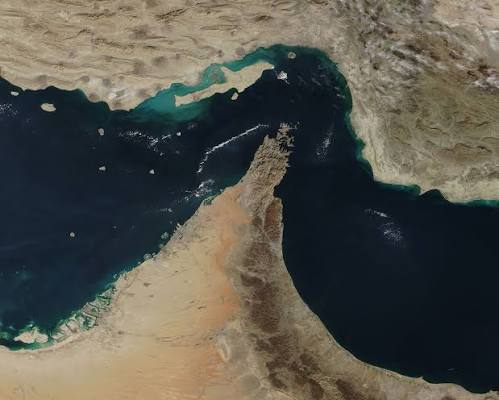
For decades, Saudi Arabia and the UAE have built pipelines to bypass the Strait of Hormuz, the world’s most critical oil chokepoint. These routes were their insurance policy against Iranian threats to close the strait. But that insurance is now failing: the Houthi attacks on Red Sea shipping have turned the very exit points of these pipelines into a new front line. The result is a widening maritime crisis that threatens to ensnare Gulf oil exports in a conflict they never signed up for.
The Chokepoint Insurance That Isn’t
The Strait of Hormuz is a narrow waterway through which roughly 20 million barrels of oil pass daily—about 20% of global consumption. For decades, Iran has threatened to close it, and Gulf states have responded with a classic hedge: build pipelines that bypass the strait entirely. Saudi Arabia’s East-West Pipeline, or Petroline, can move up to 5 million barrels per day to the Red Sea port of Yanbu. The UAE’s Habshan–Fujairah pipeline, which came online in 2012, carries up to 1.8 million barrels per day to the Gulf of Oman, outside Hormuz. These pipelines were designed as insurance policies, not full replacements, but they provided a critical buffer.
That buffer now has a hole in it. The Red Sea route—through the Bab el-Mandeb Strait and Suez Canal—is the natural westward outlet for the Saudi and UAE bypass volumes. But since late 2023, Houthi forces in Yemen have launched drone and missile attacks on commercial shipping in the Red Sea, forcing major carriers to reroute around the Cape of Good Hope, adding 10 to 14 days to voyages and spiking insurance premiums. The Houthis have targeted vessels linked to Israel, the U.S., and the U.K., and have expanded their attacks to include U.S. Navy assets. The U.S.-led Operation Prosperity Guardian and subsequent strikes have not restored safe transit.
The New Houthi Front: A Second Chokepoint Under Fire
The Houthi attacks have effectively created a second chokepoint crisis. While Hormuz is the eastern gate, Bab el-Mandeb is the western gate, and both are now under threat. Iran, which has supplied the Houthis with advanced anti-ship missiles, cruise missiles, and uncrewed surface vessels, appears to be pursuing a strategy of asymmetric escalation. Rather than closing Hormuz outright—which would invite overwhelming retaliation and alienate China—Iran is weaponizing chokepoints incrementally. It harasses shipping in the Gulf, seizes tankers, and arms proxies to attack Red Sea traffic. This means Gulf states face a nightmare scenario: their Hormuz bypass pipelines now lead directly into a war zone.
For Saudi Arabia and the UAE, this is a strategic bind. They have sought de-escalation with Iran—Saudi Arabia and Iran restored diplomatic relations in March 2023, brokered by China—while also cooperating with U.S. security frameworks. But the Houthi attacks threaten their Red Sea ports, including Yanbu and Jeddah, and the UAE’s westward exports via the Red Sea are also affected. Their oil exports are becoming collateral damage in a conflict they did not initiate. The pipelines that were supposed to be their insurance are now a liability.
The Widening Shipping Risk
The impact on global shipping is already severe. Major lines like Maersk, Hapag-Lloyd, MSC, and CMA CGM have diverted via the Cape of Good Hope, adding significant time and cost. War-risk insurance premiums for Red Sea transits have risen from about 0.1% of hull value to as high as 1.0% in some cases. But the risk is not just to oil tankers. Container ships, bulk carriers, and other vessels are also being targeted. The Houthis have stated they will continue attacks until a ceasefire in Gaza, and they have threatened to target vessels heading to Israeli ports, as well as U.S. and U.K. vessels in retaliation for strikes.
This is not just a regional problem. The Red Sea route handles about 12% of global trade, including not just oil but also consumer goods, food, and manufactured products. The rerouting is causing delays and cost increases that ripple through global supply chains. And if the Houthi attacks expand to include the Gulf of Oman or the Arabian Sea, the UAE’s Fujairah port—the very outlet of its bypass pipeline—could come under threat. That would close the loop on the Gulf’s workaround strategy.
The Iran Factor: A Deliberate Strategy
Iran’s role is central. It has been engaged in a shadow war with Israel and the U.S., including direct missile and drone exchanges in April 2024 and again in 2025. It has used its naval forces and the Islamic Revolutionary Guard Corps to seize commercial tankers in the Gulf and Strait of Hormuz, such as the Advantage Sweet in April 2023 and the St Nikolas in January 2024. By arming the Houthis with advanced weapons and targeting intelligence, Iran can threaten both entrances to the Arabian Peninsula’s maritime lifelines simultaneously. This is a deliberate strategy of asymmetric escalation, designed to raise the cost of any conflict without triggering a full-scale war.
For the Gulf states, the challenge is to protect their exports without being drawn into a wider conflict. They are walking a tightrope, trying to maintain diplomatic ties with Iran while also relying on U.S. security guarantees. But the Houthi attacks show that the threat is not just from state actors; non-state proxies can also disrupt global trade. The Gulf’s workaround was designed for a world where the only chokepoint was Hormuz. Now, the Red Sea is equally dangerous, and the insurance policy is no longer sufficient.
The Gulf states’ pipelines were a smart hedge against a single chokepoint, but they now face a two-front maritime threat. The Houthi attacks on Red Sea shipping have turned the exit points of those pipelines into a war zone, and Iran’s support for the Houthis means the risk is likely to persist. The result is a widening shipping crisis that threatens not just Gulf oil exports but global trade. The insurance policy has failed, and the Gulf states—and the world—must now find a new way to navigate these dangerous waters.
Summary
- The Strait of Hormuz handles ~20 million barrels of oil per day, and Gulf states built bypass pipelines (Saudi’s Petroline, UAE’s ADCOP) to reduce reliance on it.
- These bypass routes exit into the Red Sea and Gulf of Oman, but the Red Sea is now under attack by Houthi forces, making the workaround hazardous.
- Iran is arming the Houthis with advanced weapons, creating a two-front threat: Hormuz in the east and Bab el-Mandeb in the west.
- Shipping lines are rerouting around the Cape of Good Hope, adding 10-14 days and spiking insurance premiums.
- The Gulf states are caught in a bind, trying to de-escalate with Iran while relying on U.S. security, but their oil exports are becoming collateral damage.
FAQ
Q: What is the Strait of Hormuz, and why is it important?
A: The Strait of Hormuz is a narrow waterway between the Persian Gulf and the Gulf of Oman, through which about 20 million barrels of oil pass daily—roughly 20% of global consumption. It is the world’s most critical oil chokepoint.
Q: How do Saudi Arabia and the UAE bypass Hormuz?
A: Saudi Arabia uses the East-West Pipeline (Petroline) to move up to 5 million barrels per day to the Red Sea port of Yanbu. The UAE uses the Habshan–Fujairah pipeline (ADCOP) to move up to 1.8 million barrels per day to the Gulf of Oman port of Fujairah.
Q: Why are Houthi attacks a threat to these bypass routes?
A: The bypass routes exit into the Red Sea and the Gulf of Oman. The Houthis have been attacking shipping in the Red Sea since late 2023, making it hazardous for tankers to transit through the Bab el-Mandeb Strait, which is the only way to reach Western markets from Yanbu.
Q: What is Iran’s role in the Houthi attacks?
A: Iran has supplied the Houthis with advanced anti-ship ballistic missiles, cruise missiles, and uncrewed surface vessels, as well as targeting intelligence. This allows Iran to threaten both Hormuz and Bab el-Mandeb simultaneously, without closing Hormuz outright.
Q: What are the broader impacts of the shipping disruptions?
A: Major shipping lines have diverted around the Cape of Good Hope, adding 10-14 days to voyages and raising costs. Insurance premiums for Red Sea transits have spiked, and the disruptions affect not just oil but also container ships and other cargo, impacting global supply chains.