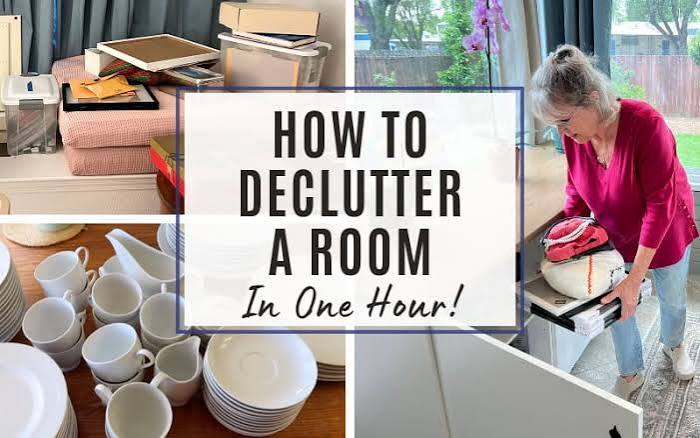
You’ve got a room that’s out of control. Maybe it’s the guest bedroom that became a dumping ground, or the home office where piles of paper have taken over. The thought of tackling it feels overwhelming, so you close the door and pretend it doesn’t exist. But what if you could make a visible difference in just one hour?
The key isn’t endless tidying sessions or a complete personality overhaul. It’s a set of simple, actionable rules—each designed to short-circuit the hesitation and emotional attachment that keep clutter alive. These 11 rules, drawn from professional organizers and behavioral psychology, give you a systematic framework to work through any space quickly. They’re not about achieving Pinterest-perfect perfection; they’re about creating a room that feels lighter, more functional, and easier to maintain.
Below, we’ll break down each rule, explain why it works (backed by research), and show you how to combine them for maximum impact in 60 minutes or less.
1. The 20/20 Rule: Let Go of Cheap & Replaceable
This rule, popularized by The Minimalists, is a quick filter for indecision. If an item costs less than $20 and can be replaced in under 20 minutes, let it go. Why? Because the cost and effort of replacement are so low that keeping it isn’t worth the mental energy. That extra phone charger you’ve never used? Let it go. The novelty mug from a conference? Let it go.
Why it works: It gives you a concrete, objective criterion that bypasses emotional reasoning. You don’t have to decide if you “might need it someday”—you just apply a simple math test.
2. The Four-Box Method: Sort, Don’t Think
Grab four boxes or bags and label them: Keep, Donate, Trash, Relocate. Every item you touch goes into one of these. No “maybe” pile, no second-guessing. This forces you to make a decision for each item, immediately.
Why it works: The physical act of sorting creates momentum. You’re not deciding what to do with an item; you’re just categorizing it. The “Relocate” box is a safety valve for things that belong elsewhere in the house—you’ll deal with them later, but they’re out of sight now.
3. The One-Touch Rule: Handle It Once, Decide Immediately
When you pick up an item, you must decide what to do with it right then. No putting it down to “think about it.” This prevents the classic clutter spiral where you move a pile from the chair to the bed to the floor, never actually processing it.
Why it works: It eliminates the ‘maybe’ pile, which is where clutter goes to die. Each item gets a definitive destination, and you avoid the decision fatigue of revisiting the same items multiple times.
4. The 5-Second Rule: Override Hesitation
Mel Robbins’ 5-Second Rule is about jumping into action before your brain talks you out of it. When you hesitate over an item, count down from five and make a decision. This isn’t about being reckless; it’s about bypassing the overthinking that leads to keeping things you don’t need.
Why it works: The countdown interrupts your hesitation loop. It’s a simple trick to push you past the moment of indecision, which is where clutter thrives.
5. The OHIO Rule: Only Handle It Once
A close cousin to the One-Touch Rule, OHIO stands for “Only Handle It Once.” But it goes a step further: you must complete the action, not just decide. If it’s a bill, put it in the “to pay” pile immediately. If it’s a book, put it on the bookshelf or in the donate box. Don’t just touch it and put it down.
Why it works: This rule prevents the common trap of “I’ll deal with it later,” which leads to piles of half-processed items. It forces you to finish the task, creating a sense of completion that fuels motivation.
6. The 80/20 Rule: Use the Pareto Principle
The Pareto Principle states that we use 20% of our belongings 80% of the time. So, if you haven’t used an item in the last 90 days, it’s likely in that 80% you don’t need. This rule is especially useful for clothes, kitchen gadgets, and tools.
Why it works: It gives a clear, time-based criterion for keeping or letting go. If you haven’t used it in three months (excluding seasonal items), you probably never will. It’s a more objective version of “Do I need this?”
7. The “Does It Spark Joy?” Test: Emotional Clarity
Marie Kondo’s signature question—”Does this spark joy?”—isn’t about being fluffy. It forces you to connect with how an item makes you feel. If it doesn’t bring you happiness or serve a clear purpose, it’s a candidate for removal.
Why it works: This test taps into your emotions, which are often the real reason we keep things. It’s slower than objective rules, but it’s invaluable for sentimental items. For a 1-hour session, use it as a tiebreaker for items you’re on the fence about.
8. The 10-Minute Timer Method: Work in Sprints
Set a timer for 10 minutes and work intensely. When it rings, reassess: take a quick break, stretch, or switch to a different area. This prevents burnout and keeps your energy up.
Why it works: Time-boxing (the same principle behind the 1-hour constraint) reduces the overwhelm of a big task. Ten-minute sprints are manageable, and the frequent breaks give you a sense of progress as you check off each sprint.
9. The “One In, One Out” Rule: Maintain Equilibrium
As you declutter, adopt the habit: for every new item you bring into the room, one old item must leave. This is a maintenance rule, but it’s important to establish it during the session so you don’t end up right back where you started.
Why it works: It sets a clear boundary for the future. You’re not just decluttering once; you’re creating a sustainable system that prevents future accumulation.
10. The “Maybe Box” Rule: Postpone, Don’t Obsess
For items you’re still unsure about, seal them in a box, write the date six months in the future, and set it aside. If you haven’t opened the box by that date, donate it without opening.
Why it works: This gives you permission to let go without the anxiety of a permanent decision. It’s a practical compromise between keeping everything and throwing everything out. The six-month deadline forces you to confront your attachment later, when you’ll likely have forgotten about the items.
11. The “Empty Surface” Rule: Visual Progress First
Start by clearing all flat surfaces—tables, counters, desks, floors. Put everything into piles or boxes (using the Four-Box Method). This creates immediate visual progress, which is a huge motivator. A clear surface feels like a win, and that feeling propels you forward.
Why it works: Visual clutter is what we perceive as “mess.” Clearing surfaces is the fastest way to make a room feel transformed. It also gives you a clean workspace to sort through the rest of the room.
How to Combine These Rules in 60 Minutes
Here’s a practical sequence to maximize your hour:
- Start with the Empty Surface Rule (0-10 min): Clear all flat surfaces. Put everything into a central pile or into the Four Boxes.
- Work in 10-minute sprints (10-50 min): Use the Timer Method. For each sprint, pick a zone (e.g., one counter, one shelf). Sort items using the Four-Box Method and the One-Touch Rule. Apply the 20/20 Rule for cheap items, the 80/20 Rule for things you haven’t used in 90 days, and the “Spark Joy” test for sentimental items. Use the 5-Second Rule when you hesitate.
- Handle the “Maybe” items (50-55 min): Place all uncertain items into the “Maybe Box.” Seal it and date it.
- Final sweep (55-60 min): Take out the trash, put the donate box in your car, and relocate items to their proper rooms. Enjoy your transformed space.
The Science Behind Why This Works
These rules aren’t just arbitrary tips—they’re grounded in psychology. Princeton University’s Neuroscience Institute found that physical clutter competes for your attention, reducing focus and increasing stress. So clearing clutter isn’t just aesthetic; it’s a cognitive boost.
Decision fatigue is another factor. Every choice you make depletes your willpower. By using rules, you reduce the number of decisions you have to make, preserving your mental energy for the task at hand.
Loss aversion—the tendency to overvalue what we own—is why we cling to things. Rules like the 20/20 and the 90-Day Rule override this bias by providing objective criteria that don’t rely on how you feel about the item.
A Note on Realistic Expectations
A room that’s been accumulating clutter for years might not be fully done in an hour. That’s okay. The goal is transformation, not perfection. Even a visible dent—a clear table, a floor you can walk on—is a massive step. The rules are designed to build momentum, so you can return for another session if needed. Critics of the “1 hour” promise are right that some spaces need more time, but that doesn’t mean you can’t make meaningful progress in 60 minutes.
Decluttering isn’t about becoming a different person or owning nothing. It’s about making your space work for you. With these 11 rules, you have a toolkit to tackle any room—even when you think you don’t have time. Set a timer, grab your boxes, and start. The transformation is only an hour away.
Summary
- Time-boxing works: A 60-minute limit prevents perfectionism and decision fatigue.
- Rules reduce cognitive load: Objective criteria (like the 20/20 Rule) bypass emotional attachment.
- Sort, don’t think: The Four-Box Method and One-Touch Rule force immediate decisions.
- Visual progress fuels motivation: Clearing surfaces first gives you a quick win.
- Maintenance rules matter: “One In, One Out” and the “Maybe Box” ensure sustainability.
- Be realistic: One hour makes a visible difference, not a perfect room.
FAQ
Q: Is it really possible to declutter a room in one hour?
A: Yes, if you follow a systematic approach. An hour is enough to make a visible difference, especially if you focus on surfaces and use rapid decision-making rules. A heavily cluttered room may need follow-up sessions, but you’ll have a much better starting point.
Q: What if I can’t decide on an item?
A: Use the “Maybe Box” rule. Seal it and date it six months out. If you don’t open it by then, donate it without looking. This gives you peace of mind without the pressure of a permanent decision.
Q: How do I prevent clutter from coming back?
A: Adopt the “One In, One Out” rule: for every new item you bring in, one old item must leave. Also, try to establish a daily 10-minute tidy-up routine to maintain the order.
Q: Should I do this alone or with help?
A: Both work. Some people find it easier to let go with a friend who can offer an objective opinion. Others prefer the solitude to focus. If you choose help, make sure they understand the rules so you stay consistent.
Q: What about sentimental items?
A: Use the “Does it spark joy?” test. If an item brings you genuine happiness or fond memories, keep it. If it just evokes guilt or obligation, it’s probably time to let it go. You can also take a photo of the item as a keepsake.