Tag: home buying

  • The Ultimate Home Buying Checklist: Your Step-by-Step Guide to a Smooth Purchase

    San Jose Home Buying Process: Complete 12-Step Guide

    Buying a home is one of the biggest financial decisions you’ll ever make—and it can feel overwhelming. With mortgage rates hovering around 6–7% and inventory tight in many markets, there’s little room for error. A single misstep—like skipping a home inspection or underestimating closing costs—can cost you thousands.

    That’s where a solid checklist comes in. It keeps you organized, disciplined, and focused on what matters, from your first credit check to the final walkthrough. Whether you’re a first-time buyer or a seasoned pro, this guide breaks down every phase of the home buying process into clear, actionable steps.

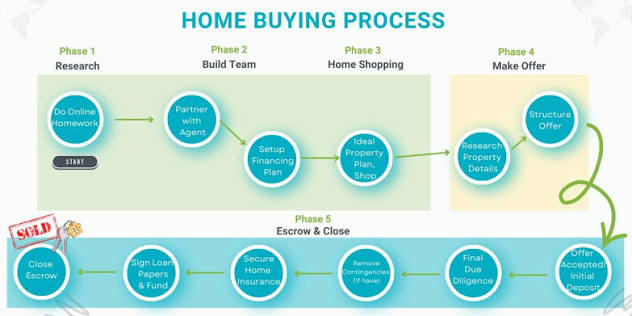
    Phase 1: Pre-Purchase Preparation (2–3 Months Before)

    Before you even start browsing listings, you need to get your financial house in order. This phase is all about building a strong foundation.

    Check Your Credit Report

    Your credit score directly impacts your mortgage rate and loan approval. Pull your credit report from all three bureaus (Equifax, Experian, TransUnion) and review for errors. Dispute any inaccuracies—this can boost your score. For FHA loans, a minimum score of 580 is typically required (with a 3.5% down payment), while conventional loans usually need at least 620. Higher scores unlock better rates, so if your score is below 700, consider spending a few months improving it.

    Save for Down Payment and Closing Costs

    Conventional loans typically require 3–20% down, but FHA allows as low as 3.5%, and VA/USDA loans can go as low as 0%. Don’t forget closing costs—they typically run 2–5% of the purchase price, covering appraisal, title search, attorney fees, loan origination, and prepaid taxes/insurance. Aim to have both saved before you start house hunting.

    Get Pre-Approved

    A pre-approval letter from a lender shows sellers you’re serious and tells you exactly how much you can borrow. You’ll need to provide photo ID, pay stubs (last 30 days), W-2s (last 2 years), bank statements (last 2–3 months), tax returns, and proof of assets. This step also helps you set a realistic budget—remember, your debt-to-income (DTI) ratio should ideally be below 43–50%.

    Define Your Must-Haves vs. Nice-to-Haves

    Make a list of non-negotiables (e.g., number of bedrooms, location, school district) and nice-to-haves (e.g., a pool, updated kitchen). This will keep you focused during house hunting and prevent you from falling in love with a house that doesn’t meet your core needs.

    Phase 2: House Hunting (1–3 Months)

    Now the fun part—but stay disciplined. Use your checklist to evaluate each property objectively.

    Research Neighborhoods

    Don’t just look at the house; look at the block. Check commute times, walkability, proximity to family, and future development plans. If you have kids, verify school ratings—even if you don’t, good schools boost resale value. Visit at different times of day to gauge noise and traffic.

    Attend Open Houses and Private Showings

    Take photos, notes, and measurements. Compare each home against your must-have list. Don’t be swayed by staging—look past the decor to the bones of the house.

    Review HOA Rules

    If the home is in a homeowners association (HOA), get a copy of the covenants, conditions, and restrictions (CC&Rs) before making an offer. HOA fees can add hundreds to your monthly costs, and rules may restrict everything from paint colors to parking.

    Phase 3: Making an Offer and Negotiating (1–2 Weeks)

    Once you find the right home, it’s time to act—but with a clear strategy.

    Compare Comps

    Your real estate agent can pull comparable sales (comps) to help you decide a fair offer price. In a hot market with bidding wars, you may need to offer over asking; in a slow market, you might negotiate below. Know your walk-away number in advance—don’t get caught in a bidding frenzy.

    Include Contingencies

    Protect yourself with contingencies: inspection, financing, and appraisal. These allow you to back out without losing your earnest money if something goes wrong.

    Review Seller Disclosures

    Sellers are required to disclose known issues. Read these carefully—they can reveal problems like roof leaks, foundation cracks, or past pest infestations.

    Phase 4: Home Inspection and Appraisal (2–4 Weeks)

    This is where you uncover hidden problems and confirm the home’s value.

    Hire a Licensed Inspector

    You hire and pay the inspector (typically $300–$500). Attend the inspection—it’s a learning opportunity. The inspector will check structural integrity, roof, HVAC, plumbing, electrical, and more. If issues arise, you can request repairs or credits, or walk away if they’re deal-breakers.

    Appraisal

    Your lender orders an appraisal to ensure the home is worth the loan amount. If the appraisal comes in low, you may need to renegotiate the price or bring more cash to closing.

    Phase 5: Final Loan Approval and Closing (2–4 Weeks)

    You’re almost there—but don’t let your guard down.

    Lock Your Interest Rate

    Rates can fluctuate, so lock in your rate when you’re comfortable. Your lender will guide you through final loan terms.

    Review the Closing Disclosure

    Three days before closing, you’ll receive a Closing Disclosure detailing all final costs. Review it carefully against your loan estimate—any discrepancies should be addressed immediately.

    Final Walkthrough

    Do a final walkthrough 24 hours before closing to ensure the home is in the agreed-upon condition and any requested repairs were made.

    Closing Day

    Bring certified funds (cashier’s check or wire transfer) for your down payment and closing costs. You’ll sign a mountain of paperwork, but your agent and title company will guide you. After signing, you’ll receive the keys—congratulations, you’re a homeowner!

    Hidden Costs to Budget For

    Beyond the purchase price, plan for:
    Property taxes and insurance (often escrowed into your monthly payment)
    Maintenance: 1–3% of home value annually
    Utilities (may be higher than renting)
    HOA fees (if applicable)
    Moving expenses and immediate repairs or furnishings

    Avoid being “house poor”—spend no more than 30% of your gross income on housing. A checklist isn’t just about the steps; it’s about staying financially healthy for the long haul.

    Buying a home is a marathon, not a sprint. With the right checklist, you can navigate each phase with confidence—from pre-approval to closing day. Remember, the goal isn’t just to buy a house; it’s to find a home that fits your life and your budget. Use this guide as your roadmap, and you’ll be well-prepared to make one of the biggest investments of your life.

    Summary

    • Start with financial prep: Check your credit, save for down payment and closing costs, and get pre-approved.
    • Define your must-haves before house hunting to stay focused.
    • Always include contingencies (inspection, financing, appraisal) in your offer.
    • Budget for hidden costs like maintenance, taxes, and HOA fees.
    • Review the Closing Disclosure and do a final walkthrough before signing.

    FAQ

    Q: How long does the home buying process take?
    A: Typically 3–6 months from start to finish. Cash buyers can close in as little as 2–3 weeks, but financed purchases take longer due to appraisal and underwriting.

    Q: What credit score do I need to buy a home?
    A: For FHA loans, a minimum of 580 (with 3.5% down) is typical. Conventional loans usually require at least 620. Higher scores get better rates.

    Q: How much should I save for closing costs?
    A: Closing costs typically run 2–5% of the purchase price, covering appraisal, title search, attorney fees, loan origination, and prepaid taxes/insurance.

    Q: What is a debt-to-income ratio and why does it matter?
    A: DTI is your monthly debt payments divided by your gross monthly income. Most lenders cap DTI at 43–50%, with housing costs alone ideally under 28–31%.

    Q: Can I skip the home inspection to save money?
    A: No. An inspection (typically $300–$500) can uncover costly issues like structural problems or roof damage. It’s a small price for peace of mind and negotiating power.

  • 6 Secrets Real Estate Agents Don’t Tell Buyers (But You Need to Know)

    8 Things Your Real Estate Agent Probably Won't Tell You - The Mashore Group

    Buying a home is one of the biggest financial decisions you’ll ever make, yet most buyers walk into the process with a dangerous blind spot: they assume their real estate agent is working purely in their best interest. The truth is, the industry is structured in ways that can quietly work against you—unless you know what to look for.

    From hidden commission negotiations to off-market listings, there are several things agents rarely volunteer to buyers. Some of these are legal gray areas, others are just industry norms that favor the seller. But all of them can cost you money or leave you with a home that isn’t what you expected.

    Here are six secrets that real estate agents often keep from buyers—and how you can use this knowledge to your advantage.

    1. Your Agent’s Commission Is Negotiable—and You Can Ask for a Rebate

    Most buyers assume the commission their agent earns is a fixed, non-negotiable fee. In reality, buyer’s agents typically earn 2.5–3% of the purchase price, but this is not set by law. In traditional transactions, the seller pays the commission (split between the listing agent and the buyer’s agent), but that doesn’t mean you have no say.

    In many states, you can negotiate a lower commission with your agent before you sign a representation agreement. You can also ask for a rebate—a portion of the commission returned to you at closing. Rebates are legal in most states (though some prohibit them), and they can save you thousands of dollars.

    What to do: When interviewing agents, ask about their commission structure upfront. Don’t be afraid to negotiate or ask for a rebate. If an agent refuses, consider working with a discount brokerage or flat-fee service.

    2. The MLS Isn’t the Whole Market—Pocket Listings Exist

    The Multiple Listing Service (MLS) is the database agents use to share listings, but it’s not the only place homes are sold. An estimated 10–20% of homes in some markets are sold off-market or as pocket listings—never appearing on the MLS.

    Sellers choose pocket listings for various reasons: they want privacy, they’re testing the market, or they want to avoid the hassle of public showings. For buyers, this means you might miss out on the perfect home if your agent doesn’t have access to these off-market networks.

    What to do: Ask your agent if they have access to pocket listings or off-market properties. Some agents have exclusive relationships with sellers who prefer privacy. If your agent says no, consider working with a well-connected agent who has a strong network.

    3. Dual Agency: One Agent, Two Masters—and a Conflict of Interest

    In many states, a single agent can represent both the buyer and the seller in the same transaction. This is called dual agency, and it creates an inherent conflict of interest. The agent owes fiduciary duties—loyalty, confidentiality, and full disclosure—to both parties simultaneously, which is impossible to do fully.

    For example, if you tell the agent your maximum budget is $500,000, they are legally obligated to keep that confidential from the seller. But as a dual agent, they also have a duty to get the best price for the seller. This puts them in an impossible position, and it’s often the buyer who loses out.

    What to do: Ask your agent if they are willing to act as a dual agent. If they say yes, be cautious. In some states, dual agency is prohibited entirely, but in others, it’s allowed with written consent. If you’re uncomfortable, insist on working with an agent who represents only you.

    4. Home Inspections Are Not Pass/Fail—Everything Is Negotiable

    Many buyers treat the home inspection report as a checklist of deal-breakers. But the truth is, an inspection report lists defects, and almost everything is negotiable. Sellers routinely refuse to fix minor issues, and buyers often overestimate what is “unacceptable.”

    For example, a cracked window or a worn-out water heater might seem like major issues, but they’re often easy to fix or can be negotiated into a lower price. On the other hand, major structural problems—like foundation issues or a leaking roof—might be deal-breakers, but even those can be negotiated with a price reduction or seller credit.

    What to do: Don’t walk away from a home just because the inspection report has a long list of issues. Instead, prioritize the items: separate deal-breakers from minor repairs. Use the report as a negotiating tool to ask for a price reduction or repairs.

    5. List Price Is a Marketing Tool, Not a Valuation

    Sellers (with their agent’s guidance) often price homes strategically—not based on what the home is worth, but based on what will attract buyers. Some price below market value to spark a bidding war, while others price above market value to leave room for negotiation. The list price has no legal or appraisal significance.

    This means you shouldn’t assume a home priced below market is a bargain, or that one priced above market is overpriced. Instead, look at comparable sales (comps) to determine the home’s true value.

    What to do: Ask your agent for a comparative market analysis (CMA) before making an offer. Look at recent sales of similar homes in the area to get a sense of fair market value. Don’t be swayed by the list price alone.

    6. Appraisals Can Be Challenged—Don’t Take a Low Appraisal as Final

    If the home you’re buying appraises for less than your offer price, you might think you’re stuck. But that’s not true. Appraisals are not infallible, and you can challenge a low appraisal by requesting a reconsideration of value (ROV).

    An ROV is a formal request to the appraiser to review additional comparable sales data that might support a higher value. Your agent can help you gather comps and submit an ROV. If the appraiser agrees, the value can be adjusted, saving your deal.

    What to do: If your appraisal comes in low, don’t panic. Ask your agent to help you prepare an ROV with recent comparable sales that were not considered. This can be a powerful tool to keep your purchase on track.

    The real estate industry is full of nuances that can work against buyers who aren’t in the know. But with these six secrets, you’re now equipped to ask the right questions, negotiate better, and avoid costly mistakes. Remember, your agent works for you—but only if you make them accountable. So go in prepared, and you’ll be one step ahead in the game of buying a home.

    Summary

    • Commission is negotiable: You can ask for a lower fee or a rebate in many states.
    • Pocket listings exist: 10–20% of homes are sold off-market, so ask your agent about them.
    • Dual agency creates conflicts: One agent representing both sides can’t fully protect your interests.
    • Inspection issues are negotiable: Not every defect is a deal-breaker; use the report to negotiate.
    • List price is a strategy: It’s not a true valuation, so rely on comps instead.
    • Low appraisals can be challenged: An ROV can help you get a fair value.

    FAQ

    Q: Can I really negotiate my buyer’s agent’s commission?
    A: Yes, in most cases. The commission is not set by law, and you can discuss it with your agent before signing a representation agreement. Some agents may be willing to lower their fee or offer a rebate to win your business.

    Q: What is a pocket listing, and how can I access them?
    A: A pocket listing is a home that is sold without being listed on the MLS. They are often marketed through private networks. Ask your agent if they have access to off-market properties, or consider working with an agent who specializes in exclusive listings.

    Q: Is dual agency legal?
    A: It depends on the state. Some states prohibit it, while others allow it with written consent from both parties. Even where legal, it creates a conflict of interest, so it’s best to avoid it if possible.

    Q: What should I do if the inspection report shows major issues?
    A: Don’t automatically walk away. Use the report to negotiate a lower price or request repairs. For major issues, you can also ask for a credit at closing to cover the cost of repairs.

    Q: How can I challenge a low appraisal?
    A: You can request a reconsideration of value (ROV) by providing the appraiser with additional comparable sales that support a higher value. Your agent can help you gather this data and submit the request.