Tag: Hollywood history

  • When the Stars Picked Up Signs: The 1960 Actors’ Strike That Quietly Rewired Hollywood

    When the Stars Picked Up Signs: The 1960 Actors’ Strike That Quietly Rewired Hollywood

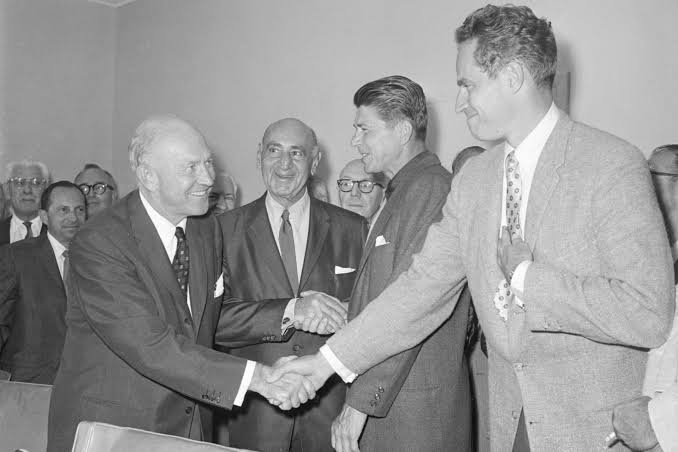
    In January 1960, Hollywood’s biggest stars traded their tuxedos for picket signs. Charlton Heston marched outside studio gates, John Wayne voiced his support, and Ronald Reagan then president of the Screen Actors Guild was on the front lines of a labor dispute that would define how actors get paid for decades.

    The strike was about something most people had never heard of: residual payments for movies shown on television. At the time, films made before 1948 were being sold to TV networks for millions, and actors received nothing. That fight, which lasted 11 weeks, didn’t just settle a contract — it built the financial foundation for every actor working today, from streaming stars to background extras.

    The 1960 Strike: A Quick Overview

    From January 19 to April 6, 1960, roughly 14,000 to 17,000 members of the Screen Actors Guild (SAG) shut down most film and television production in Hollywood. The strike was called against the Association of Motion Picture and Television Producers (AMPTP) and the major studios. The core demand: a share of the revenue from films licensed to television.

    At the time, studios were making a fortune by selling their film libraries to TV networks. But actors saw none of it. The average working actor in 1960 earned about $2,000 to $5,000 a year — barely a living wage. Residuals weren’t a luxury; they were survival.

    The strike ended on April 6 with a settlement that created a residual system: studios would pay about 6% of gross TV revenue from post-1948 films into a union-controlled fund. It also secured modest increases in pension and health contributions. But there was no general wage increase, and many rank-and-file members felt the deal sold them short.

    Why This Strike Was Different

    The 1960 strike was one of the first major labor actions to address new technology directly. Television had been around for a decade, but the old studio system was still adjusting to its impact. The 1948 Paramount Decree had already forced studios to sell off their theaters, breaking their vertical monopoly. TV was now the new frontier, and the fight over residuals was about who would control the revenue from this new distribution channel.

    It was also a remarkably civil strike. There was no violence, no mass scabbing, and public sympathy largely sided with the actors. The stars themselves made the difference. When John Wayne — a conservative who rarely backed labor actions — publicly supported the strike, it sent a message that this was an industry-wide issue, not a fringe movement.

    The Man in the Middle: Ronald Reagan

    Ronald Reagan’s role as SAG president during the strike is often cited as a turning point in his political evolution. At the time, Reagan was still a New Deal Democrat, but the strike pushed him toward a more conservative view of labor relations. He framed the strike as “responsible unionism” — a business negotiation, not a radical rebellion.

    Reagan’s approach was pragmatic: he kept the strike focused on residuals, avoided violence, and settled for what was achievable. But that pragmatism angered some hardliners in the union who wanted strike benefits and a longer fight. Reagan later said the strike taught him that unions could be “a force for good” when they operated within the system — a view that would shape his political philosophy for years to come.

    The Settlement: What Actors Actually Won

    The residual formula was complex. It applied only to films made after 1948, and it funneled money into a union fund that would then be distributed to actors. For stars, this could mean significant income. For extras and day players, the share was negligible.

    That disparity created lasting tension. Many actors felt the leadership had sold out the rank-and-file. The lack of a wage increase was a particular sore point, especially for those who had sacrificed weeks of work on the picket line.

    But the residual framework was a historic achievement. It established the principle that actors should be compensated when their work is reused. That principle now extends to streaming, cable, and every new distribution channel that has emerged since.

    The Shadows of the Blacklist and the Rise of Independent Production

    The strike happened during a period when labor activism was still tainted by the Hollywood blacklist. Many actors were cautious about being seen as “troublemakers.” The strike’s civility was partly a strategy to avoid that stigma.

    It also accelerated a trend toward independent production. If residuals were now contractual, the old studio model — where actors were salaried employees — made even less financial sense. Independent producers, who had less overhead, could navigate the new rules more easily. The strike therefore contributed to the decline of the studio system and the rise of the modern talent-driven industry.

    The Legacy: From 1960 to the Streaming Wars

    The 1960 strike is often overshadowed by the 2007–08 Writers Guild strike and the 2023 WGA/SAG-AFTRA strikes, but it was the first to establish a residual framework for new technology. When actors went on strike in 2023 over streaming residuals, they were building on the same principle that Reagan and his colleagues fought for in 1960.

    The strike also demonstrated the power of celebrity in labor activism. When stars like Charlton Heston and John Wayne hit the picket lines, they brought public attention and legitimacy to the cause. That strategy has been used by every major Hollywood strike since.

    The 1960 actors’ strike may not have been the longest or most dramatic labor battle in Hollywood history, but its impact is still felt today. It taught actors that they could leverage their collective power to secure a share of new revenue streams — a lesson that has been passed down through generations. And it showed that even the biggest stars are, at their core, workers who need a fair deal. The next time you stream a classic film, remember that the actor on screen might be earning a residual check because of a strike that happened over sixty years ago.

    Summary

    • The 1960 SAG strike ran from January 19 to April 6, involving about 14,000–17,000 actors.
    • The central issue was residual payments for movies shown on TV, which actors received none of.
    • Ronald Reagan led SAG during the strike, and the settlement established a 6% residual fund for post-1948 films.
    • The strike was notable for its civility and the public support of stars like Charlton Heston and John Wayne.
    • It set the precedent for how Hollywood unions handle new technology, from TV to streaming.

    FAQ

    Q: What was the 1960 actors’ strike about?
    A: The strike was primarily about residual payments for theatrical films shown on television. Actors wanted a share of the revenue studios were making by licensing movies to TV networks, which had become a major new income stream.

    Q: How long did the strike last?
    A: The strike lasted from January 19 to April 6, 1960, approximately 11 weeks (or 78 days).

    Q: Who led the Screen Actors Guild during the strike?
    A: Ronald Reagan was president of SAG at the time, with Jack Dales as executive secretary. Reagan played a central role in the negotiations.

    Q: Did the strike succeed?
    A: Yes, in establishing residuals. The settlement created a fund that received about 6% of gross TV revenue from post-1948 films. But there was no general wage increase, and extras and day players gained little.

    Q: Why is the 1960 strike still relevant today?
    A: It established the principle of residuals for reused work, which is the foundation for how actors are compensated for TV reruns, streaming, and other new distribution channels. Modern strikes, like the 2023 SAG-AFTRA strike, build on that same principle.
  • The Women Who Cut Classic Hollywood: Five Editors Behind the Scenes

    The Women Who Cut Classic Hollywood: Five Editors Behind the Scenes

    When you watch a classic film like Gone with the Wind or Singin’ in the Rain, you might think of the director, the stars, or the sweeping score. But the person who decided exactly when to cut from Scarlett’s face to the burning of Atlanta, or how to time Gene Kelly’s dance steps to the music, was often a woman. In the first decades of Hollywood, editing was considered “women’s work” — meticulous, detail-oriented, akin to sewing. That gendered assumption gave women an entry into a craft that would shape the very language of cinema. They were called “cutters,” and at times they made up a third of working editors in the industry.

    Yet today, most of these women are forgotten. Their names rarely appear in film history books, and their contributions are often absorbed into the director’s vision. This is the story of five editors who defined the look and feel of classic Hollywood: Margaret Booth, Barbara McLean, Anne Bauchens, Adrienne Fazan, and Viola Lawrence. They didn’t just assemble footage; they built performances, controlled emotions, and created the invisible art that makes movies feel effortless.

    The Invisible Art of Editing

    Editing is sometimes called “the invisible art” because when it’s done well, you don’t notice it. A seamless cut, a perfectly timed reaction shot, a rhythm that builds tension — these are choices made by an editor. In the silent era, editing was even more basic. Early “cutters” were often women who physically spliced film reels, cutting and gluing strips of celluloid. It was painstaking work, and it was low-paid. Studios hired women because they were considered more dexterous and were willing to work for less than men.

    But as filmmaking became more sophisticated, so did editing. The transition to sound in the late 1920s made the job more technical, but women remained. By the 1930s, a significant portion of Hollywood’s editors were women — estimates range from 20 to 40 percent. They were concentrated at certain studios: MGM had Margaret Booth, Adrienne Fazan, and Blanche Sewell; Fox had Barbara McLean; Columbia had Viola Lawrence; and Paramount had Anne Bauchens.

    Margaret Booth: The MGM Maestro

    Margaret Booth started as a negative cutter at MGM in the 1920s and worked her way up to become the studio’s supervising editor — a rare executive role for a woman. She was known for shaping the “invisible” MGM house style, where editing was so smooth that the audience never noticed the cuts. She worked on some of the most beloved films of the era, including Mutiny on the Bounty (1935) and Camille (1936).

    Booth’s influence was so great that she was called “the first lady of editing.” She was also fiercely protective of her craft. When a director would complain about a cut, she’d famously respond, “If you want to direct, go make your own film.” She worked at MGM for over four decades, and in 1978, she received an Honorary Academy Award for her contributions to film editing — the first editor, male or female, to be so honored.

    Barbara McLean: The Oscars’ First Woman Winner

    Barbara McLean worked at 20th Century Fox for over 40 years, editing many of Darryl F. Zanuck’s prestige pictures, including The Grapes of Wrath (1940) and All About Eve (1950). But her biggest milestone came in 1944, when she became the first woman to win the Academy Award for Best Film Editing, for Wilson. That film, a biography of President Woodrow Wilson, is now largely forgotten, but her win was historic.

    What made McLean’s editing distinctive was her ability to shape performances. In All About Eve, the film’s famous overlapping dialogue and sharp cuts between characters create a sense of wit and tension that is purely editorial. She was nominated for three Oscars in her career, and her work helped define the Fox “house style” — polished, economical, and emotionally direct.

    Anne Bauchens: The DeMille Collaborator

    Anne Bauchens worked with director Cecil B. DeMille for over 40 years, a partnership that began in the silent era and lasted until the 1950s. She edited both versions of The Ten Commandments (1923 and 1956), as well as The Greatest Show on Earth (1952). Her editing was often epic in scale — handling massive crowd scenes and intricate special effects — but she also knew how to make a personal moment land.

    In 1940, Bauchens won the Academy Award for Best Film Editing for Northwest Mounted Police, a DeMille western. She was one of the few editors of her time to work with a single director for so long, and her collaboration with DeMille was a model of trust and mutual respect. Yet, when we talk about DeMille’s films, we rarely mention Bauchens. She remains an invisible partner.

    Adrienne Fazan: The MGM Musical Maven

    Adrienne Fazan was MGM’s go-to editor for musicals, working closely with director Vincente Minnelli on some of the most iconic films of the 1950s: An American in Paris (1951), Singin’ in the Rain (1952), and Gigi (1958). Editing a musical requires a different kind of precision — the cuts must match the music, the dance, and the emotion. Fazan was a master of this, earning three Oscar nominations.

    Her work on Singin’ in the Rain is a masterclass in comedic timing. The film’s famous “Make ‘Em Laugh” sequence, where Donald O’Connor performs a physically demanding routine, is edited with a rhythm that makes the gags land perfectly. Fazan’s cuts seem effortless, but they are the result of meticulous planning and an intuitive sense of performance.

    Viola Lawrence: The Columbia Workhorse

    Viola Lawrence was a pioneering editor at Columbia Pictures, working from the silent era into the 1960s. She was known for her speed and versatility — she could edit a drama, a comedy, or a musical with equal skill. Her credits include The Jolson Story (1946) and Pal Joey (1957), both of which required careful handling of musical numbers.

    Lawrence was also one of the few women to edit films in a variety of genres, which was unusual in an era when editors were often pigeonholed. She worked on over 70 films, and her career spanned the transition from silent to sound to color. Despite this longevity, she is barely remembered today.

    Why Were Women Pushed Out?

    The golden age of female editors didn’t last. After World War II, returning veterans displaced women in many industries, including film. As editing became more professionalized and unionized, it gained prestige — and men took over. The percentage of female editors dropped sharply, and by the 1970s, it was below 20%.

    Another factor was the rise of the “auteur” theory, which placed the director as the sole creative force behind a film. This cultural shift further erased editors’ contributions. If a film was good, it was because of the director; if it was bad, it was often the editor’s fault. This narrative, championed by French critics and later American film schools, made it even harder for women to claim credit for their work.

    The Legacy and the Recovery

    For decades, these female editors were forgotten. But in recent years, film historians have worked to recover their stories. Projects like the Women Film Editors database and academic studies by scholars like Karen Pearlman have shed new light on their contributions. The Academy of Motion Picture Arts and Sciences has also hosted exhibitions highlighting women’s roles in early cinema.

    Still, much work remains. Margaret Booth, Barbara McLean, Anne Bauchens, Adrienne Fazan, and Viola Lawrence were not just assistants to great directors — they were artists who shaped the films we still watch today. They understood pacing, performance, and emotion, and they used the cutting room as their canvas.

    The next time you watch a classic movie, pay attention to the editing. Notice how a cut makes you feel, how a reaction shot changes the meaning of a scene. That’s the work of an editor — and in Hollywood’s golden age, that work was often done by women.

    The forgotten female editors of classic Hollywood were not a footnote; they were a foundation. Their craft made movies feel inevitable, as if the story could not have been told any other way. By recovering their names, we don’t just correct history — we understand that cinema has always been a collaborative art, and that women were central to its language. Their legacy is in every smooth cut and every perfectly timed laugh.

    Summary

    • Women made up an estimated 20–40% of film editors in Hollywood’s early decades, but their numbers dropped drastically after World War II.
    • Margaret Booth shaped MGM’s “invisible” house style and became the first editor to receive an Honorary Academy Award.
    • Barbara McLean was the first woman to win an Oscar for Best Film Editing, for Wilson (1944).
    • Anne Bauchens worked with Cecil B. DeMille for over 40 years, editing both versions of The Ten Commandments.
    • Adrienne Fazan’s precise editing defined musicals like Singin’ in the Rain and Gigi.
    • The rise of the auteur theory and post-war professionalization contributed to the erasure of women editors from film history.

    FAQ

    Q: Why were women initially hired as film editors?
    A: In the early 20th century, editing was seen as meticulous, detail-oriented work, similar to sewing or secretarial tasks. Studios hired women because they were considered more dexterous and were willing to work for lower wages.

    Q: Who was the first woman to win an Oscar for Best Film Editing?
    A: Barbara McLean won the Academy Award for Best Film Editing in 1944 for Wilson.

    Q: Did any of these editors work on famous musicals?
    A: Yes, Adrienne Fazan edited An American in Paris, Singin’ in the Rain, and Gigi. Viola Lawrence also edited musicals like The Jolson Story and Pal Joey.

    Q: Why did the number of female editors decline?
    A: After World War II, returning veterans took over many jobs, including editing. Also, as editing became more professionalized and prestigious, it became more male-dominated. The auteur theory further minimized the editor’s role.

    Q: Are there any efforts to rediscover these women today?
    A: Yes, film historians like Karen Pearlman have written about them, and projects like the Women Film Editors database aim to document their work. The Academy has also hosted exhibitions on women in early cinema.

  • The Golden Age of Hollywood: How the Studio System Shaped Modern Cinema

    The Golden Age of Hollywood: How the Studio System Shaped Modern Cinema

    When we think of Hollywood’s Golden Age, we picture glamorous stars, sweeping epics, and timeless classics like Casablanca and Singin’ in the Rain. But behind the silver screen was a powerful machine: the studio system. This vertically integrated model—where a single company controlled production, distribution, and exhibition—didn’t just create movies; it invented modern cinema as we know it.

    From the late 1920s to the early 1960s, the Big Five studios (MGM, Paramount, Warner Bros., 20th Century Fox, and RKO) operated like factories, churning out films with assembly-line precision. They built stars from scratch, enforced strict moral codes, and shaped the way stories were told. While the system eventually crumbled under antitrust laws and the rise of television, its DNA remains embedded in today’s blockbuster culture, franchise filmmaking, and even the way we talk about directors and actors.

    In this article, we’ll explore how the studio system worked, why it fell, and how its legacy continues to influence the movies we watch today.

    The Birth of the Studio System

    The studio system didn’t emerge overnight. In the early 1900s, cinema was a chaotic free-for-all, with independent producers, exhibitors, and distributors battling for control. Thomas Edison’s Motion Picture Patents Company (MPPC) tried to monopolize the industry with patents, but it collapsed by 1918. The void was filled by ambitious entrepreneurs who saw the potential in vertical integration—owning every step of the movie-making process.

    By the 1920s and 1930s, the Big Five had consolidated their power. They bought up theater chains, locked talent into long-term contracts, and built massive studio lots in Hollywood. This wasn’t just about making movies; it was about controlling the entire pipeline. A film would be conceived, written, shot, edited, and distributed—all under one roof. The studios even owned the theaters where the films played, guaranteeing an audience and a steady revenue stream.

    The Assembly Line of Dreams

    Inside the studio walls, movies were produced like cars on an assembly line. Scripts were developed in-house, sets were reused across productions, and genres were standardized to maximize efficiency. MGM became known for its glamorous musicals, Warner Bros. for gritty crime dramas, and Universal for horror. This specialization gave each studio a distinct identity, a “house style” that audiences came to recognize.

    The star system was the engine of this machine. Actors were signed to seven-year contracts with options, giving studios complete control over their careers. Publicity departments manufactured their images, dictating everything from their hairstyles to their personal lives. Stars like Humphrey Bogart, Katharine Hepburn, and Marilyn Monroe were not just performers—they were products, carefully packaged and marketed to the public. The system could be brutal: actors were overworked, underpaid, and often trapped in roles that typecast them for life. Judy Garland’s struggles with pills and Bette Davis’s legal battles with Warner Bros. are stark reminders of the human cost.

    The Hays Code: Censorship and Creativity

    From 1934 to 1968, the Hays Code (officially the Motion Picture Production Code) dictated what could and couldn’t be shown on screen. Enforced by Joseph Breen, the code banned explicit violence, sexual content, and any depiction of “immorality.” Crime couldn’t pay, couples had to sleep in separate beds, and villains always got their comeuppance.

    While the code was restrictive, it also forced filmmakers to be creative. Directors like Alfred Hitchcock and Billy Wilder used innuendo and suggestion to imply what they couldn’t show, creating a sophisticated language of subtext. The code also shaped narrative conventions: the classic three-act structure, with its clear moral resolution, became the standard. When the code finally loosened in the late 1960s, it paved the way for a new era of cinematic freedom—but its influence on storytelling persists.

    The Paramount Decree and the Fall

    The studio system’s downfall began with the Paramount Decree of 1948. The U.S. Supreme Court ruled that the majors’ vertical integration violated antitrust laws, forcing them to sell their theater chains. Without guaranteed exhibition, the economic foundation crumbled. At the same time, television was stealing audiences, and the Hollywood blacklist (from the HUAC hearings) was silencing creative voices.

    By the early 1960s, the Golden Age was over. Studios shifted to financing independent productions and selling off their backlots. But the legacy of the system was far from dead. The studios adapted, and their influence can still be felt in every corner of modern cinema.

    The Legacy: How the Studio System Lives On

    Today, the studio system has evolved into the franchise era. The Big Five (now including Disney, Universal, Warner Bros., Sony, and Paramount) still dominate, but instead of owning theaters, they own intellectual property. The assembly-line approach is now applied to superhero movies and sequels, with interconnected universes and formulaic structures. The star system has been replaced by the influencer economy, but studios still carefully craft public images for their actors.

    Even the auteur theory—the idea that the director is the author of a film—was born as a reaction to the studio system. French critics in the 1950s championed directors like Hitchcock and Ford, arguing that their personal vision shone through despite the constraints of the system. This debate continues today: are blockbusters the work of a single visionary or a corporate committee?

    The Hays Code’s legacy is visible in the ratings system (G, PG, PG-13, R) that replaced it, and in the ongoing culture wars over representation and censorship. And the studio system’s emphasis on genre and spectacle still shapes what gets greenlit. When you watch a Marvel movie or a Netflix original, you’re seeing the ghost of the Golden Age—a system that, for all its flaws, created the language of modern cinema.

    The Golden Age of Hollywood was a paradox: a factory that produced art, a machine that created magic. The studio system was exploitative, censorious, and monopolistic, yet it gave us some of the most beloved films of all time. Its collapse didn’t erase its influence; it merely transformed it. Today’s studios, streaming platforms, and filmmakers still operate in the shadow of that era, using its techniques, conventions, and star-making machinery. Understanding the studio system isn’t just a history lesson—it’s a key to understanding how movies are made, marketed, and remembered.

    Summary

    • The studio system (1920s–1960s) was a vertically integrated model where studios controlled production, distribution, and exhibition.
    • The Big Five (MGM, Paramount, Warner Bros., 20th Century Fox, RKO) dominated, creating assembly-line films and manufactured stars.
    • The Hays Code (1934–1968) imposed strict moral censorship, shaping narrative conventions and forcing creative subtext.
    • The 1948 Paramount Decree broke up the system by forcing studios to sell their theaters, leading to its decline.
    • The system’s legacy persists in franchise filmmaking, the star system, genre conventions, and the ongoing debate over authorship.

    FAQ

    Q: What was the studio system?
    A: The studio system was a business model in Hollywood from the 1920s to the 1960s where a few major studios controlled every aspect of a film’s life—production, distribution, and exhibition (theaters). This vertical integration allowed them to dominate the industry and produce films efficiently.

    Q: Why did the studio system end?
    A: The system ended primarily due to the 1948 Paramount Decree, a Supreme Court ruling that declared the studios’ ownership of theaters a violation of antitrust laws. Combined with the rise of television and the Hollywood blacklist, this dismantled the economic foundation of the system.

    Q: What was the Hays Code?
    A: The Hays Code was a set of moral guidelines enforced from 1934 to 1968 that dictated what could be shown in films. It banned explicit violence, sex, and “immorality,” and required that crime be punished and marriage respected. It shaped the content and storytelling of Golden Age films.

    Q: How did the studio system affect actors?
    A: Actors were signed to long-term contracts (often seven years) that gave studios control over their roles, public image, and even personal lives. While this created stars, it also led to exploitation, typecasting, and personal struggles for many performers.

    Q: Does the studio system still exist today?
    A: Not in its original form, but its legacy lives on. Modern studios still dominate the industry, but they focus on owning intellectual property (like franchises) rather than theaters. The star system, genre conventions, and corporate control of filmmaking all trace back to the Golden Age.

  • How the Studio System Forged Modern Cinema: Lessons from Hollywood’s Golden Age

    How the Studio System Forged Modern Cinema: Lessons from Hollywood’s Golden Age

    When you settle into a movie theater today, you’re experiencing a legacy shaped by an era when Hollywood operated like a dream factory—literally. From the late 1920s to 1960, a handful of studios controlled nearly every aspect of filmmaking, from the scripts to the stars to the theaters where audiences watched. This vertical integration, known as the studio system, produced an astonishing volume of films and defined genres, visual styles, and storytelling norms that still underpin modern cinema.

    But the Golden Age wasn’t just about business efficiency. It was a cultural phenomenon that turned actors into icons, perfected genres like film noir and the musical, and created a visual language that became the global standard. Understanding this era isn’t just a history lesson—it’s a key to decoding why movies look and feel the way they do today. In this article, we’ll explore how the studio system’s innovations, constraints, and eventual collapse left an indelible mark on filmmaking, from the assembly-line production model to the rise of the blockbuster.

    The Machinery of the Dream Factory

    At its peak, the studio system operated like a well-oiled machine. The Big Five—MGM, Warner Bros., Paramount, 20th Century-Fox, and RKO—owned production studios, distribution networks, and theater chains. This vertical integration meant a film made in Hollywood was guaranteed a nationwide release, creating a captive audience. The Little Three—Universal, Columbia, and United Artists—operated on a smaller scale but still thrived within the system.

    This assembly-line approach allowed studios to churn out 400–500 films per year combined. Weekly attendance hit 90 million Americans in 1946, roughly 65% of the population. To keep up with demand, studios employed in-house writers, directors, technicians, and actors under exclusive contracts. Stars like Judy Garland and Humphrey Bogart were groomed for specific roles, their public images meticulously managed by studio publicity departments. The system was efficient, but it also stifled creative freedom—actors often had little say in their projects, and directors worked within strict genre conventions.

    Genre Codification: Templates That Endure

    One of the most enduring legacies of the Golden Age is the codification of genres. Studios perfected the western, the musical, the screwball comedy, and film noir, establishing narrative formulas that remain templates today. For instance, the western’s classic structure—the lone hero, the frontier setting, the moral showdown—was refined in films like Stagecoach (1939) and The Searchers (1956). Musicals like Singin’ in the Rain (1952) set the standard for integrating song and dance into storytelling, a formula still used in modern hits like La La Land.

    Film noir, with its shadowy visuals and cynical protagonists, emerged in the 1940s as a distinct genre, influenced by German Expressionism and hardboiled fiction. Its visual style—low-key lighting, skewed camera angles—was a direct result of studio constraints, where directors had to work with limited sets and artificial lighting. This aesthetic, born of necessity, has been revived countless times in neo-noir films like Chinatown (1974) and Blade Runner (1982).

    The Invisible Style: How Classical Hollywood Shaped Storytelling

    The Golden Age also established the “invisible style” of filmmaking—a set of conventions designed to make the audience forget they’re watching a movie. Continuity editing, which ensures smooth, logical transitions between shots, became the norm. Cause-and-effect plotting, motivated lighting, and seamless sound design all worked together to create a immersive, realistic experience. This classical Hollywood narrative became the global default, influencing filmmakers from Japan to Italy to India.

    Directors like Orson Welles pushed the boundaries of this style with deep-focus cinematography in Citizen Kane (1941), allowing multiple planes of action to remain in sharp focus. This technique, along with innovative sound and editing, demonstrated that the studio system could foster artistic experimentation, even within its constraints.

    The Hays Code: Censorship and Creativity

    The Production Code, enforced from 1934 to 1968, imposed strict moral guidelines on content. No nudity, no “sympathetic” criminals, and a mandate for “compensating moral values” meant that films had to uphold a certain ethical standard. This censorship was a response to scandals like the Fatty Arbuckle trial and was designed to avoid government regulation.

    While the Code restricted subject matter, it also forced filmmakers to be creative. Directors used innuendo, visual metaphor, and clever dialogue to suggest what couldn’t be shown. For example, the famous “cigarette scene” in Now, Voyager (1942) conveys a sexual relationship through a shared smoke. This indirect approach gave Golden Age films a sophistication that modern audiences still admire.

    The Decline: What Broke the System?

    The studio system began to unravel with the Paramount Decree of 1948, when the Supreme Court ruled that vertical integration violated antitrust laws. Studios were forced to sell their theater chains, breaking the guaranteed distribution model. This, combined with the rise of television—by 1955, over half of American homes had a TV—eroded the industry’s dominance.

    Studios responded with spectacle: widescreen formats like CinemaScope, Technicolor, and epic productions like Ben-Hur (1959) to lure audiences away from the small screen. But the contract system was already crumbling. Stars and directors began forming independent production companies, seeking creative control and a share of profits. By 1960, the Golden Age was over, replaced by a more fragmented, risk-averse industry that would eventually give rise to the blockbuster era.

    Lasting Legacy: From Golden Age to Modern Cinema

    Despite its decline, the studio system’s influence is everywhere. The genres it codified—from the superhero movie (a modern-day western) to the romantic comedy (a descendant of the screwball)—still dominate box offices. The invisible style remains the default for mainstream filmmaking, even as auteurs like Christopher Nolan and Quentin Tarantino play with its conventions.

    The star system, too, has evolved but persists. Today’s actors are brands, managed by PR teams and social media, much like the contract players of old. And the studio model, while no longer vertically integrated, has seen a resurgence in the form of conglomerates like Disney, which own production, distribution, and streaming platforms—a modern echo of the Big Five.

    Conclusion

    The Golden Age of Hollywood was more than a nostalgic era; it was a crucible that forged the language of cinema. The studio system’s assembly-line efficiency, genre codification, and visual innovations created a foundation that filmmakers still build upon. While the system’s constraints were often criticized, they also bred creativity, and its collapse paved the way for new voices and independent visions. Understanding this history helps us appreciate the movies we watch today—and the invisible hand of the dream factory that still shapes them.

    The Golden Age of Hollywood wasn’t just a period of glitz and glamour—it was a transformative era that established the very grammar of filmmaking. From the assembly-line production model to the codification of genres and the invisible style, the studio system’s innovations continue to influence how stories are told on screen. As we watch modern blockbusters and indie gems alike, we’re seeing the echoes of a system that, despite its flaws, created an enduring legacy. The dream factory may have closed its doors, but its dreams still play on.

    Summary

    • The studio system (1927–1960) was a vertically integrated model where studios controlled production, distribution, and exhibition, enabling a high volume of films and a captive audience.
    • Genres like film noir, the musical, and the screwball comedy were codified during this era, providing templates that modern films still follow.
    • The “invisible style” of classical Hollywood—continuity editing, cause-and-effect plotting, and seamless sound—became the global standard for narrative filmmaking.
    • The Hays Code imposed strict moral censorship, but it also forced filmmakers to use innuendo and metaphor, adding sophistication to Golden Age films.
    • The Paramount Decree (1948) and the rise of television led to the system’s decline, but its legacy persists in modern studio conglomerates, star branding, and genre conventions.

    FAQ

    Q: What exactly was the studio system?
    A: The studio system was a business model where a few major studios (MGM, Warner Bros., Paramount, 20th Century-Fox, RKO) controlled every stage of filmmaking—production, distribution, and exhibition—through vertical integration. This allowed them to produce films efficiently and guarantee their release in theaters they owned.

    Q: How did the Hays Code affect filmmaking?
    A: The Hays Code, enforced from 1934 to 1968, imposed strict moral guidelines, banning nudity, sympathetic criminals, and requiring “compensating moral values.” This censorship forced filmmakers to use innuendo and visual metaphor, which often added a layer of sophistication to films.

    Q: Why did the Golden Age end?
    A: The Golden Age ended due to a combination of factors: the Paramount Decree (1948) forced studios to sell their theater chains, breaking their monopoly; the rise of television in the 1950s reduced movie attendance; and the contract system collapsed as stars and directors sought independence.

    Q: What are some enduring innovations from this era?
    A: Key innovations include genre codification (westerns, musicals, noir), the invisible style of editing and narrative, Technicolor and widescreen formats, and the star system, which evolved into modern celebrity branding.

    Q: How does the studio system influence today’s movies?
    A: Modern studios like Disney use a similar model of vertical integration, owning production, distribution, and streaming platforms. Genres and storytelling conventions from the Golden Age remain the foundation of mainstream cinema, and the star system persists in the form of actor branding and franchise casting.