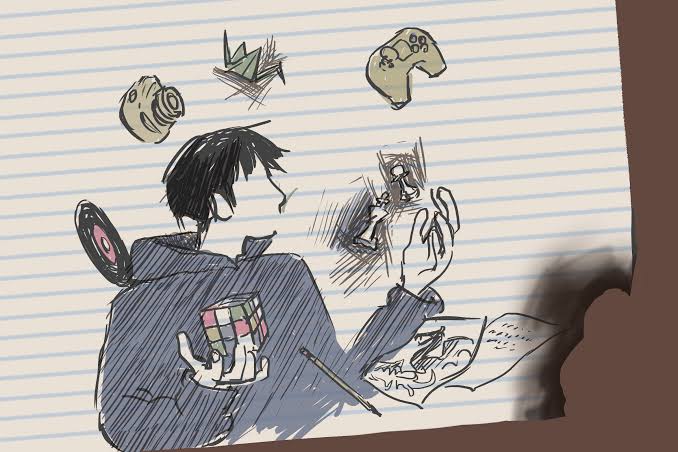
Imagine clearing your schedule of everything except one thing: the skill you want to master. No guitar in the corner, no weekend hiking trips, no casual sketching. Just relentless, focused practice on a single craft. This is the lifehack that sounds like a punishment, yet it’s gaining traction among productivity optimizers and career climbers. But is it wise?
The advice to quit hobbies flies in the face of the popular ‘have more hobbies’ mantra for mental health and the celebration of polymaths like Leonardo da Vinci. It’s a strategic sacrifice that asks you to surrender parts of your identity. Before you toss your paintbrushes or delete your chess app, let’s examine the evidence for and against this radical focus.
The Case for Quitting: Mastery Demands Sacrifice
Anders Ericsson’s research on deliberate practice, popularized by Malcolm Gladwell’s ‘10,000-hour rule,’ reveals a uncomfortable truth: top performers in any field accumulate thousands of hours of focused, effortful practice. That’s time not spent on other pursuits. If you’re aiming for elite status as a programmer, surgeon, or violinist, every hour on a hobby is an hour stolen from your primary craft. In competitive arenas, marginal gains compound—an hour a day adds up to 365 hours a year.
Beyond time, there’s the issue of cognitive load. Juggling multiple hobbies fragments your attention and drains working memory. Quitting frees mental bandwidth, allowing you to immerse yourself more deeply. Identity consolidation also plays a role: telling yourself ‘I am a writer’ is more motivating and clearer to employers than ‘I dabble in writing, photography, and salsa dancing.’
But the advice isn’t all-or-nothing. Many proponents suggest a ‘T-shaped’ compromise: keep one complementary hobby, like a physical activity for a desk job, to maintain balance without diluting focus.
The Case Against: Range and Adaptability
David Epstein’s book Range (2019) argues that in complex, unpredictable fields, generalists outshine specialists. His evidence is compelling: Nobel laureates are far more likely to have artistic hobbies than typical scientists, and Roger Federer’s diverse early sports background may have contributed to his tennis genius. In a world where problems are increasingly interdisciplinary, a broad knowledge base can be a secret weapon.
Scott Adams, creator of Dilbert, takes a middle path with ‘skill stacking’: instead of being top 1% in one skill, aim to be top 25% in two or three. This combination is often rarer and more valuable than singular excellence. A programmer who can also write clearly and understand business is a unicorn.
Moreover, the modern economy is shifting. Automation and AI are threatening narrow, repetitive skills, while adaptable generalists are better positioned to pivot. The ‘Renaissance ideal’—embodied by da Vinci, Franklin, and Jefferson—still captivates us for good reason.
The Psychology of Hobbies: Sunk Costs and Identity
Why is this advice so unpopular? Because hobbies are tangled up with our sense of self. You’re not just a person who runs; you’re a runner. Quitting feels like a small death. Behavioral economists point to the sunk cost fallacy: we cling to hobbies because of the money and time we’ve invested, not because they still bring joy. The advice to quit forces us to confront this irrational attachment.
But there’s a darker side to the ‘quit your hobbies’ movement. It arrives wrapped in hustle culture, where every moment must be optimized for productivity. In this frame, hobbies like binge-watching or gaming are seen as wasteful. Yet the research on deliberate practice shows even elite performers only sustain about four hours of deep work per day. That leaves plenty of room for restorative leisure—if it’s truly restorative and not just passive consumption.
Making the Call: A Practical Framework
If you’re considering this lifehack, start by auditing your hobbies. Ask yourself: Does this hobby support my primary skill or my well-being in a meaningful way? Or is it a mindless time-filler? Try a 30-day experiment: drop one non-essential hobby and channel that time into your main skill. Track your progress and your mood. You might find that the extra focus boosts your growth, or you might discover that the hobby was a vital pressure valve.
A more nuanced approach is to distinguish between consumptive hobbies (scrolling, streaming) and productive ones (playing an instrument, woodworking). The former are easy to quit without loss; the latter may be worth keeping, even if they slow your mastery, because they enrich your life and might even feed your primary skill in unexpected ways.
The Verdict: Balance, Not Extremes
The research doesn’t support a blanket ‘quit all hobbies’ mandate. It supports the value of deep, deliberate practice—and it also supports the value of range. The wisest path is probably a hybrid: go deep on one primary skill, but allow yourself one or two hobbies that genuinely recharge you or broaden your perspective. That might be the most unpopular lifehack of all: moderation.
Quitting your hobbies to focus on one skill is a powerful idea, but it’s not a one-size-fits-all solution. The evidence suggests that deep focus is essential for mastery, yet range is invaluable for adaptation. Before you make a dramatic cut, consider your field, your goals, and your mental health. Maybe the real hack is to quit the hobbies that drain you, keep the ones that sustain you, and pour your freed-up energy into the skill that will define your future.
Summary
- The 10,000-hour rule is really about deliberate practice, not just any practice, and it requires time that hobbies consume.
- David Epstein’s research shows that generalists often outperform specialists in complex fields, citing Nobel laureates’ artistic hobbies and Federer’s varied sports background.
- Scott Adams suggests ‘skill stacking’—being top 25% in two or three skills—as a more realistic and valuable alternative to singular excellence.
- Hobbies are tied to identity, making quitting emotionally difficult, but the sunk cost fallacy can keep us stuck in unfulfilling activities.
- A balanced approach: quit consumptive hobbies, keep productive ones, and focus your best hours on deliberate practice.
FAQ
Q: Does the 10,000-hour rule mean I need to quit all hobbies to master a skill?nA: No. Ericsson’s research emphasizes deliberate practice—focused, feedback-driven effort—not just accumulated hours. Quitting hobbies can free up time, but the quality of practice matters more than the sheer quantity of hours.
Q: Aren’t generalists more successful in the modern economy?nA: David Epstein’s Range argues that in unpredictable fields, generalists have an edge. However, in stable, specialized roles, deep expertise can command higher pay. It depends on your industry and goals.
Q: How do I know which hobbies to quit?nA: Evaluate whether a hobby is ‘consumptive’ (passive, like scrolling) or ‘productive’ (active, like playing an instrument). Also consider if it supports your mental health or primary skill. A 30-day trial can help you assess the impact.
Q: What if I enjoy my hobbies and don’t want to quit?nA: You don’t have to. The advice is a strategic option, not a mandate. You can still achieve mastery with a few hobbies, especially if they’re complementary or provide necessary rest.
Q: Is the ‘one skill’ approach better for career success?nA: It can be, in competitive fields with clear skill ceilings. But Scott Adams’ ‘skill stacking’ suggests that combining skills can be even rarer and more valuable. Consider what sets you apart.