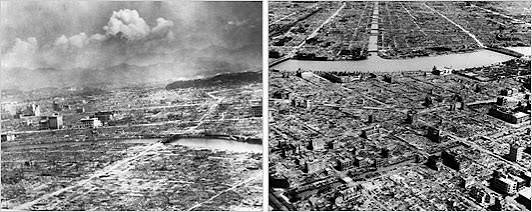
At 8:15 on the morning of August 6, 1945, the city of Hiroshima disappeared behind a fireball that reached temperatures hotter than the surface of the sun. The bomb, nicknamed ‘Little Boy,’ had fallen from the Enola Gay, a B-29 Superfortress, and exploded 1,900 feet above the city. In the seconds that followed, an estimated 70,000 to 80,000 people were killed outright. By the end of the year, radiation sickness would push that number to roughly 140,000.
The decision to drop that bomb and the one that followed three days later on Nagasaki has never stopped being argued. Was it a necessary act that saved millions of lives by ending World War II quickly? Or was it an atrocity that killed civilians on a scale that no military necessity could justify? The facts of those August days are not in dispute. The meaning of those facts remains as contentious as the radioactive fallout itself.
The Weight of the Pacific War
To understand Hiroshima, you have to understand the war that preceded it. By the summer of 1945, the United States had been fighting Japan for nearly four years. The battles were brutal and the casualty counts staggering. At Iwo Jima, roughly 26,000 Americans were killed or wounded. At Okinawa, the numbers were worse: about 50,000 American casualties and an estimated 150,000 Okinawan civilians died. The Japanese fought with a ferocity that suggested they would never surrender.
Japan still had about 2 million troops in the home islands. They had organized a civilian militia that was training with bamboo spears. Their military doctrine was to fight to the death. Kamikaze attacks were intensifying, and the U.S. military was planning Operation Downfall, an invasion of the Japanese home islands set for November 1945. The projected American casualties ranged from 250,000 to 1 million. Japanese deaths would have been in the millions.
President Harry Truman, who had learned about the Manhattan Project only after Franklin Roosevelt’s death in April 1945, saw the atomic bomb as a way to avoid that bloodbath. In his memoirs, he would later write that he authorized the bomb to save half a million American lives. Secretary of War Henry Stimson put the number at 1 million. The estimates were rough, but the fear was real.
The Bomb’s Genesis
The Manhattan Project was a $2 billion gamble—roughly $30 billion in today’s dollars—run by physicist J. Robert Oppenheimer and General Leslie Groves. It employed over 100,000 people across secret sites, from Los Alamos, New Mexico, to Oak Ridge, Tennessee. On July 16, 1945, at the Trinity test site in New Mexico, the first atomic bomb was detonated. Oppenheimer later recalled a line from the Bhagavad Gita: “Now I am become Death, the destroyer of worlds.” But at the time, the mood among the scientists and military leaders was more pragmatic than philosophical. The weapon worked. Now they had to decide what to do with it.
The Debate Among Scientists
Not everyone inside the project agreed on how the bomb should be used. In July 1945, a group of scientists led by James Franck submitted a petition—known as the Franck Report—urging that the bomb be demonstrated in an uninhabited area rather than used on a city. They warned that using it without warning would trigger a nuclear arms race with the Soviet Union.
The Scientific Advisory Panel, which included Oppenheimer, Enrico Fermi, Ernest Lawrence, and Arthur Compton, considered the idea. They rejected it. A demonstration, they argued, was too risky. The bomb might be a dud. The Japanese might move Allied prisoners of war to the target area. And even if the demonstration succeeded, the Japanese government might not believe it—or might not be impressed enough to surrender. The panel recommended military use, without warning.
The Interim Committee, a group established in May 1945 to advise on atomic policy, came to the same conclusion. On June 1, they recommended that the bomb be used against Japan as soon as possible, without prior warning. The target, they said, should be a military installation surrounded by houses—which, in practice, meant a city.
The Ultimatum and the Silence
On July 26, 1945, the Allies issued the Potsdam Declaration, an ultimatum demanding Japan’s unconditional surrender. It threatened “prompt and utter destruction” if Japan refused. The Japanese government did not formally respond. Prime Minister Kantaro Suzuki used the word “mokusatsu,” which can be translated as “to ignore” or “to treat with silent contempt.” The Allies took this as a rejection.
Historians still debate whether Japan was close to surrender before the bombs fell. Japan’s core condition was preservation of the emperor. The U.S. State Department had discussed this, but the decision to allow the emperor to remain was not communicated clearly to Japan before Hiroshima. The Japanese government was also deeply divided. The “peace party” favored a negotiated surrender, but the military hardliners were determined to fight on, hoping to inflict enough casualties to force a more favorable settlement.
The Soviet Union was scheduled to declare war on Japan in August 1945, as agreed at Yalta. The U.S. was eager to end the war before the Soviets could gain territory in Asia. Some historians argue that the bomb was used at least in part to send a message to Stalin.
August 6, 1945
At 8:15 a.m., the Enola Gay dropped Little Boy over Hiroshima. The bomb exploded with the force of about 15,000 tons of TNT. The city was flattened. Of the estimated 350,000 people in the city, 70,000 to 80,000 died immediately. Many were incinerated. Others were trapped under collapsed buildings. In the days and weeks that followed, radiation sickness began to claim more lives. By the end of 1945, the death toll had reached about 140,000.
Truman received the news aboard the USS Augusta, returning from the Potsdam Conference. He announced, “This is the greatest thing in history.” The president framed the bomb as a military weapon, used to end the war quickly and save American lives. He did not lose sleep, by his own account.
Three days later, on August 9, the U.S. dropped a second bomb, “Fat Man,” on Nagasaki. The immediate death toll was 40,000 to 75,000. By the end of the year, it was 70,000 to 80,000. On August 15, Emperor Hirohito announced Japan’s surrender. The formal surrender was signed on September 2 aboard the USS Missouri.
The Justification and Its Critics
The traditional justification for the bomb rests on three pillars. First, it saved lives—American lives, and potentially Japanese lives too, by ending the war before the invasion. Second, it shortened the war, preventing the continued slaughter of Allied prisoners and civilians in occupied territories. Third, it demonstrated American power, which some argue helped deter Soviet expansion in the postwar era.
Revisionist historians challenge each of these points. They argue that Japan was already defeated by August 1945. The U.S. Navy had blockaded the home islands, and the strategic bombing campaign had devastated Japanese cities. The Japanese economy was in ruins. The Soviet declaration of war, which came on August 8, was arguably the decisive blow that convinced the Japanese leadership to surrender—not the atomic bombs.
They also point out that the U.S. had other options. A demonstration over an uninhabited area might have shocked the Japanese into surrender. Or the U.S. could have clarified its position on the emperor, which it eventually did anyway. The atomic bombings, they argue, were not necessary to end the war. They were acts of terror designed to intimidate the Soviet Union.
The Human Cost
The numbers are so large that they risk becoming abstract. But the human cost was not abstract. The survivors, known as hibakusha, suffered from radiation sickness, burns, and cancers. They faced discrimination in Japanese society, which feared contamination. Many were left without families, homes, or livelihoods. The psychological trauma persisted for decades.
The bomb also changed the world forever. It introduced the possibility of nuclear annihilation, and it set the stage for the Cold War arms race that the Franck Report had warned about. Within a few years, the Soviet Union had its own bomb, and the world entered a standoff that lasted for half a century.
The Question That Won’t Go Away
Was Hiroshima justified? The answer depends on how you weigh the lives saved against the lives taken. If you believe that the invasion of Japan would have cost millions of lives—American and Japanese—then the bomb can be seen as the lesser evil. If you believe that Japan was on the verge of surrender and that the bomb was dropped for political reasons, then it looks like a war crime.
The historical record supports neither side completely. The casualty estimates for the invasion were speculative, but they were based on the ferocious fighting of the Pacific War. The Japanese government was divided, but the hardliners were still in control. The Soviet entry helped, but it came after Hiroshima. The truth is that we will never know what would have happened if the bombs had not been dropped.
What we do know is that the decision was made by men who were exhausted by four years of war and who had a weapon that they believed could end it. They were not monsters, but they made a choice that killed more than 200,000 people in the span of a week. The question of whether that choice was justified is not just a historical debate. It is a moral question that continues to haunt us.
The atomic bombings of Hiroshima and Nagasaki remain a singular event in human history—the only time nuclear weapons have been used in war. The debate over their justification will never be settled because it is not simply a matter of facts. It is a matter of values. How much weight do we give to the lives of soldiers who might have died in an invasion? How much weight do we give to the lives of civilians who actually died under the bomb? These are not academic questions. They are the questions that define what it means to be human in the nuclear age.
Summary
- The atomic bombings of Hiroshima (August 6, 1945) and Nagasaki (August 9, 1945) resulted in an estimated 140,000 and 70,000–80,000 deaths by the end of 1945, respectively.
- The U.S. decision to use the bomb was based on the belief that it would end the war quickly and save hundreds of thousands of American lives that would be lost in an invasion.
- The Manhattan Project’s scientists were divided, with the Franck Report urging a non-combat demonstration, but the Scientific Advisory Panel and Interim Committee recommended military use without warning.
- Revisionist historians argue that Japan was already near surrender and that the bombs were dropped primarily to intimidate the Soviet Union.
- Japan’s surrender on August 15, 1945, came after the bombings and the Soviet declaration of war, but the relative importance of each factor remains debated.
FAQ
Q: How many people died in the Hiroshima bombing?
A: The immediate death toll was estimated at 70,000–80,000. By the end of 1945, radiation-related illnesses brought the total to approximately 140,000.
Q: Why did the U.S. choose Hiroshima as a target?
A: Hiroshima was a military and industrial center with a population of about 350,000. The Interim Committee selected it as a target because it had not been heavily bombed, which would allow for a clear assessment of the bomb’s destructive power.
Q: What was the Potsdam Declaration?
A: It was an ultimatum issued on July 26, 1945, demanding Japan’s unconditional surrender and threatening “prompt and utter destruction” if refused. Japan did not formally respond, which the Allies interpreted as rejection.
Q: Did the bombings lead directly to Japan’s surrender?
A: The bombings contributed to Japan’s surrender, but the Soviet Union’s declaration of war on August 8, 1945, also played a significant role. The relative importance of each factor is still debated by historians.
Q: Were there alternatives to dropping the bomb?
A: Some scientists proposed a demonstration over an uninhabited area. The idea was rejected due to concerns about a dud, potential capture of the weapon, and the possibility that Japan would not be impressed enough to surrender.