Tag: Hidden Figures

  • The Human Computers Who Fueled America’s Space Race


    Before NASA had supercomputers, it had a team of brilliant women with pencils, paper, and an unerring ability to calculate the path to orbit. Their job title was ‘computer’—a human one. From the segregated West Area Computing pool at Langley to the rocket trajectory teams at JPL, these women performed the complex math that made early spaceflight possible, yet their stories remained largely untold for decades.

    Their work wasn’t just about number-crunching. It was about accuracy when failure meant disaster. In 1962, astronaut John Glenn reportedly refused to fly unless Katherine Johnson, a Black mathematician, personally verified the orbital equations that a new IBM computer had produced—he didn’t trust the machine. Her handwritten calculations were the final check before he became the first American to orbit Earth.

    This article uncovers who these women were, why they were hired, the obstacles they faced, and how their contributions shaped the space race—and the field of STEM itself.

    The ‘Computer’ Was a Person

    Today, ‘computer’ means a machine. But from the 1940s through the 1960s, it was a job title. At NACA (the National Advisory Committee for Aeronautics, NASA’s predecessor) and later at NASA, women with mathematics degrees were hired to perform complex calculations by hand. They computed trajectory equations, orbital mechanics, and aerodynamic data—the mathematical backbone of early spaceflight.

    This practice wasn’t new. In the late 1800s, astronomers at Harvard employed women like Henrietta Swan Leavitt to catalog stars—they were called ‘Pickering’s Harem.’ The space race was the final chapter of this tradition, as electronic computers gradually took over.

    But why women? During World War II, men were deployed overseas, creating a labor shortage. NACA and military labs turned to women with math degrees. The work was considered detail-oriented and clerical, and thus ‘women’s work,’ even though it required advanced mathematical skill. It was also cheap: women were paid roughly half what men earned for comparable roles. Cost efficiency, not altruism, drove the hiring.

    The West Area Computers: Breaking Barriers at Langley

    At Langley, Virginia, a group of Black women mathematicians formed a segregated pool known as the West Area Computers. They were housed separately, used separate restrooms and dining facilities, and were initially excluded from projects assigned to white women. Despite this, their brilliance couldn’t be contained.

    Dorothy Vaughan joined Langley in 1943 and became NACA’s first Black supervisor in 1949, managing the West Area Computers. She was a forward-thinker: when IBM mainframes arrived in the early 1960s, she taught herself and her team FORTRAN, the programming language of the new machines. This proactive move saved many of their jobs when electronic computing replaced manual calculation.

    Mary Jackson, another West Area Computer, aspired to be an engineer. But to take graduate courses in engineering, she needed permission to attend classes at a whites-only school in Hampton, Virginia. She petitioned the city and won, becoming NASA’s first Black female engineer in 1961.

    And then there was Katherine Johnson. Her trajectory calculations were critical to John Glenn’s 1962 Friendship 7 mission, and she later helped calculate the trajectory for Apollo 11’s lunar landing in 1969. Her story, along with Vaughan’s and Jackson’s, was brought to mainstream attention by the 2016 film Hidden Figures, based on Margot Lee Shetterly’s book. In 2019, Johnson received the Congressional Gold Medal.

    The JPL Women: Calculating Paths to the Planets

    While the West Area Computers worked on aeronautics and Earth orbit, women at the Jet Propulsion Laboratory (JPL) in Pasadena, California, tackled the even more complex mathematics of deep-space navigation. They calculated rocket trajectories for missions to the Moon, Mars, and beyond.

    Barbara Paulson, Helen Ling, and Sue Finley were among the key figures. Finley would become one of the longest-serving JPL employees, working there for over 60 years. These women didn’t just compute; they developed methods for navigating spacecraft across millions of miles, methods that are still used today.

    At its peak in the 1960s, NASA employed hundreds of female computers across multiple centers. They were a critical workforce, yet they were paid less than male mathematicians and had restricted promotion paths. Their contributions were often invisible, subsumed under the names of their male supervisors.

    The Unreliable Machine: Why Human Verification Mattered

    By the early 1960s, IBM mainframes were faster than any human. But they were also unreliable. Early computers were prone to errors, and a single mistake could mean a rocket veering off course. Engineers knew this, which is why they still trusted human verification.

    John Glenn’s request for Katherine Johnson to check the IBM’s numbers was not an anomaly. It was standard practice to have a human computer double-check the machine’s work. Johnson’s calculations were not just a formality; she was checking the very equations that would determine whether Glenn would return safely from orbit.

    This trust in human computers was a testament to their skill—and a practical necessity. Until machines could be fully trusted, human minds were the final safety net.

    The End of an Era: Transition to Electronic Computing

    The arrival of electronic computers spelled the end of the human computer era. But it didn’t happen overnight. The transition was gradual, and many female computers were retrained as programmers. Dorothy Vaughan’s foresight in learning FORTRAN ensured that her team was ready for the change.

    Others were not so fortunate. Some were laid off as machines took over. But the legacy of these women endures. They proved that women could handle the most demanding mathematical work, breaking down gender and racial barriers in the process.

    Why This History Matters

    The story of the female computers intersects with two major struggles of mid-20th-century America: gender discrimination and racial segregation. These women were often doubly marginalized, yet they contributed to some of the greatest achievements in human history.

    Their story is part of a broader hidden history of women in STEM, alongside figures like Rosalind Franklin and the ENIAC programmers. The Cold War urgency of the space race created unusual opportunities for marginalized groups—not out of a sense of fairness, but out of necessity. The nation needed the best minds it could get, and it found them in women like Johnson, Vaughan, Jackson, and Finley.

    Today, their names are finally being recognized. But there were hundreds of others, nameless calculators who helped put humans on the Moon. Their work, done by hand, laid the foundation for the digital age we live in now.

    The human computers of the space race were not just assistants; they were essential contributors to some of the most complex engineering feats in history. They faced discrimination based on both their gender and their race, yet they persevered, driven by a love of mathematics and a sense of duty to their country. As we look back on the Apollo missions and the early days of space exploration, we should remember that behind every successful launch was a room full of women, pencils in hand, calculating the way to the stars.

    Summary

    • From the 1940s to the 1960s, women employed as ‘computers’ performed complex math by hand for NACA and NASA, including trajectory and orbital calculations.
    • The West Area Computers at Langley were a segregated pool of Black women mathematicians, including Katherine Johnson, Dorothy Vaughan, and Mary Jackson.
    • JPL women like Sue Finley calculated deep-space trajectories, contributing to planetary missions.
    • Human computers were often used to verify the calculations of early electronic computers, which were prone to errors.
    • The transition to electronic computing led to the end of the human computer role, but many women were retrained as programmers.
    • Their stories highlight the intersection of gender and racial discrimination in STEM, and their contributions were finally brought to light by the 2016 film Hidden Figures.

    FAQ

    Q: What exactly did a ‘human computer’ do?
    A: A human computer performed mathematical calculations by hand, often for engineering and scientific projects. In the context of the space race, they calculated things like rocket trajectories, orbital mechanics, and aerodynamic data. This was a job title, not a reference to a machine.

    Q: Why were women hired as computers?
    A: During World War II, many men were deployed, creating a labor shortage. NACA and military labs hired women with math degrees to fill the gap. It was also cost-effective, as women were paid less than men. The work was seen as detail-oriented and clerical, fitting the era’s gender stereotypes, even though it required advanced math.

    Q: Who were the ‘Hidden Figures’?
    A: The term refers to a group of Black women mathematicians at NASA’s Langley Research Center, including Katherine Johnson, Dorothy Vaughan, and Mary Jackson. They worked as ‘computers’ and faced both racial segregation and gender discrimination. Their story was popularized by the 2016 film Hidden Figures.

    Q: Why did John Glenn insist on Katherine Johnson checking the calculations?
    A: John Glenn trusted Katherine Johnson’s mathematical abilities. Early electronic computers were prone to errors, and Glenn didn’t want to risk his life on a machine’s output without human verification. Johnson’s calculations confirmed the IBM’s numbers, and he flew successfully.

    Q: What happened to the human computers when electronic computers came?
    A: The transition was gradual. Some human computers were retrained as programmers, like Dorothy Vaughan who learned FORTRAN and taught her team. Others were laid off as machines became more reliable. By the late 1960s, the role of the human computer had largely disappeared.
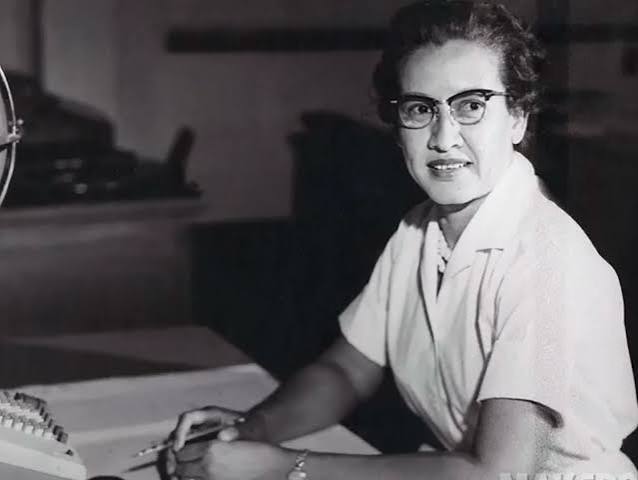
  • The Hidden Computers: How Women Calculated the Path to Space

    The Hidden Computers: How Women Calculated the Path to Space

    Before there were sleek control rooms and touchscreens, spaceflight was a pencil-and-paper endeavor. And behind the scenes, a cadre of brilliant women many of them African American were the ones doing the math that put humans into orbit. Their stories, long buried in archives, are now coming to light thanks to the book and film Hidden Figures. This article explores the critical roles these women played, from the early days of human computers to the Apollo missions, and why their contributions matter for our understanding of both space history and the fight for equality.

    The Human Computers: A Labor Force of Brilliance

    In the 1930s, the National Advisory Committee for Aeronautics (NACA), NASA’s predecessor, began hiring women to perform complex mathematical calculations by hand. These “human computers” were essential to the research that would eventually power the space race. The work was tedious and demanding but the women were exceptionally skilled.

    At Langley Research Center in Virginia, the computing pool was divided by race. The East Area Computing unit was made up of white women, while the West Area Computing unit, formed in 1943, was exclusively Black. The Black women faced the dual burden of racism and sexism. They worked in segregated offices, used separate bathrooms and cafeterias, and were often paid less than their white counterparts, even when they held the same or higher qualifications.

    Despite these obstacles, their output was phenomenal. The West Area Computers were responsible for critical data that influenced aircraft design and, later, missile trajectories. But their roles were often classified as “sub-professional,” a label that denied them the title of mathematician or engineer, even when they performed the same duties.

    Katherine Johnson: The Math Behind the Orbits

    Perhaps the most famous of the hidden figures is Katherine Johnson. A mathematical prodigy, Johnson started at NACA in 1953. Her ability to calculate complex trajectories with precision quickly made her indispensable.

    In 1961, she calculated the trajectory for Alan Shepard’s suborbital flight — the first American in space. Then, in 1962, she was called upon for John Glenn’s orbital mission. The newly installed electronic computers had produced numbers, but Glenn was wary. He famously insisted that Katherine Johnson verify the calculations by hand before he would board the capsule. “If she says they’re good,” he said, “then I’m ready to go.”

    Johnson’s work extended to the Apollo program. She helped calculate the trajectory for the lunar landing, and her contributions were critical to the safe return of the Apollo 13 crew after an oxygen tank explosion. She also worked on the Space Shuttle program before retiring in 1986. In 2015, she received the Presidential Medal of Freedom from President Obama.

    Mary Jackson and Dorothy Vaughan: Breaking Barriers

    Mary Jackson was another trailblazer. She began as a human computer in 1951 but aspired to become an engineer. The problem: her graduate courses were at the segregated University of Virginia, and she needed special permission from the city of Hampton to attend. She fought for that permission, won, and in 1958 became NASA’s first African American female engineer.

    Mary’s engineering work focused on the behavior of airflows around aircraft. But she later realized that her role was limited by the glass ceiling. So she took a demotion to become Langley’s Federal Women’s Program Manager, where she spent the rest of her career advocating for the hiring and promotion of women across the agency.

    Dorothy Vaughan, meanwhile, was the first African American supervisor at NACA. She led the West Area Computing unit for a decade. When electronic computers began to replace human ones, Vaughan saw the writing on the wall. She taught herself FORTRAN, the programming language of the IBM machines, and then taught her team. This foresight allowed her and many of her colleagues to transition to new roles as programmers, ensuring their survival in a changing technological landscape.

    Beyond Langley: Women Across the Space Program

    The contributions of women were not limited to Langley. Mary Golda Ross, a Cherokee, became the first Native American female engineer. She worked at Lockheed on the Agena rocket, which was used in early satellite and space missions. Her work on ballistic missiles and orbital mechanics was classified, so much of her legacy remained unknown until recently.

    Margaret Hamilton led the MIT team that developed the onboard flight software for the Apollo missions. She coined the term “software engineering” at a time when the field was not even recognized. Her error-detection software was so robust that during the Apollo 11 lunar descent, it prevented an abort that could have ended the mission. Hamilton’s work was later honored with the Presidential Medal of Freedom in 2016.

    Frances “Poppy” Northcutt was the first woman to work as an engineer in NASA’s Mission Control. She joined the Apollo program in 1968, calculating return-to-Earth trajectories for Apollo 8. Her work was critical for ensuring the safe re-entry of the spacecraft. After leaving NASA, she became a women’s rights attorney, fighting for equality in a different arena.

    The International Angle: The Soviet Union’s First Woman in Space

    While American women were fighting for recognition, the Soviet Union achieved a major first. On June 16, 1963, Valentina Tereshkova became the first woman in space, orbiting Earth 48 times in Vostok 6. Her flight was a major propaganda victory for the USSR in the Cold War space race. However, it would be nearly two decades before another Soviet woman, Svetlana Savitskaya, flew in 1982. The Soviets, like the Americans, were slow to integrate women into their astronaut corps.

    The United States did not send its first woman into space until 1983, when Sally Ride flew on the Space Shuttle Challenger. Ride was a physicist who had been selected as an astronaut in 1978. After her historic flight, she dedicated her life to encouraging girls to pursue STEM careers through her educational initiatives.

    The Legacy and the Turning Point

    The term “hidden figures” became part of the cultural lexicon in 2016 with the publication of Margot Lee Shetterly’s book and the subsequent Oscar-nominated film. The stories of Johnson, Jackson, Vaughan, and their colleagues resonated deeply because they exposed a long-buried truth: the space program was not just a triumph of white male engineers, but a collective achievement that included women and people of color.

    Why were these contributions hidden for so long? The answer lies in the cultural norms of the mid-20th century. Engineering was considered “men’s work,” and women were often forced to resign upon marriage. Even when they were allowed to work, they were systematically denied promotions and titles. The glass ceiling was real, and it was reinforced by both sexism and racism.

    The story of these women is not just a historical curiosity; it is a reminder of the costs of discrimination. By excluding talented individuals, the space program delayed its own progress. The Soviet Union’s early lead in space was partly due to its willingness to use women in technical roles, even if it was only for propaganda purposes.

    Today, NASA and other space agencies have made strides in diversity, but the journey is far from over. The hidden figures serve as both inspiration and a call to action. Their legacy is not just in the trajectory calculations or the software code, but in the doors they opened for future generations.

    Conclusion

    The women of early space exploration were not merely helpers; they were essential architects of humanity’s journey beyond Earth. From Katherine Johnson’s hand-calculated flight paths to Margaret Hamilton’s pioneering software, their work made the impossible possible. Their stories, once hidden, now shine a light on the diverse contributions that have always been part of scientific progress. As we look to the stars, we must remember that the path was paved by many hands, many minds, and many hearts — and that the future of exploration depends on ensuring no one is left behind.

    The history of space exploration is incomplete without the stories of the women who calculated, coded, and engineered their way into the cosmos. Their legacy is a reminder that brilliance knows no gender or race, and that true progress requires the contributions of all. As we celebrate the anniversaries of Apollo and look toward Mars, we honor these hidden figures by ensuring that the next generation of explorers reflects the full diversity of humanity.

    Summary

    • Women were employed as “human computers” at NACA/NASA from the 1930s to the 1960s, performing complex calculations by hand.
    • Katherine Johnson calculated trajectories for Alan Shepard and John Glenn, and her work was critical for Apollo 11 and Apollo 13.
    • Mary Jackson became NASA’s first African American female engineer, and Dorothy Vaughan led the West Area Computing unit and taught FORTRAN to her team.
    • Margaret Hamilton coined “software engineering” and led the team that developed Apollo’s flight software.
    • Valentina Tereshkova was the first woman in space in 1963; Sally Ride was the first American woman in space in 1983.

    FAQ

    Q: Who were the “human computers”?nA: They were women employed by NACA and NASA to perform mathematical calculations by hand, essential for aeronautical and space research. They worked in segregated units, with the West Area Computing unit for Black women and the East Area Computing unit for white women.nnQ: What was Katherine Johnson’s most famous contribution?nA: She calculated the trajectory for John Glenn’s orbital flight in 1962, and Glenn refused to fly unless she verified the computer’s calculations by hand. She also worked on Apollo 11 and the Space Shuttle.nnQ: How did Dorothy Vaughan adapt to the transition to electronic computers?nA: Vaughan taught herself FORTRAN and then taught her team, ensuring they could transition from human computing to programming roles.nnQ: Why were women excluded from visible roles in the space program?nA: Cultural norms, marriage bars, and a glass ceiling limited women’s opportunities. Engineering was seen as men’s work, and even qualified women were often not promoted.nnQ: What was the significance of the 2016 book and film Hidden Figures?nA: They brought the contributions of these women to mainstream attention, correcting a historical oversight and inspiring a new generation to pursue STEM careers.