In the winter of 1936, a secluded mansion in Steinhöring, Bavaria, opened its doors to a new kind of patient: unmarried pregnant women who had passed a rigorous racial examination. The home, run by the SS, offered these women luxurious care, anonymity, and a promise their children would be raised as the future elite of the Third Reich. This was Lebensborn, the ‘Fount of Life,’ a program conceived by Heinrich Himmler to reverse Germany’s declining birth rate by breeding a ‘racially pure’ Aryan generation.
Lebensborn was the positive face of Nazi eugenics, a counterpart to the forced sterilizations and Nuremberg Laws that sought to eliminate ‘undesirable’ genes. While the numbers of children born in these homes remained small perhaps 20,000 across all of Europe the program’s chilling ambition revealed the depths of Nazi ideology: a bureaucratic machinery designed to treat human reproduction as a state-controlled enterprise. This is the story of that machinery, the women who entered it, and the children who bore its legacy long after the war ended.
The Architecture of a Racial Utopia
Heinrich Himmler, the Reichsführer-SS, was obsessed with demography. He believed that Germany’s finest blood the Nordic stock that he saw as the backbone of the nation was being wasted. Unmarried mothers faced social stigma, often resorting to abortion or giving up their children, while the birth rate among the ‘racially valuable’ was declining. Lebensborn, founded on December 12, 1935, was his answer: a state-sponsored network of maternity homes where ‘genetically healthy’ women could give birth in secret, supported by the SS.
The program was meticulously designed. Women, married or not, had to prove their racial purity through genealogical records dating back to 1800. They underwent medical and psychological examinations, and their physical features were assessed for ‘Nordic’ traits. The father, too, had to be approved by the SS. Once accepted, the mothers were housed in comfortable facilities well-nourished, medically supervised, and shielded from the shame that society heaped on unwed mothers. For many vulnerable women, the offer was a lifeline; for the SS, it was a way to harvest ‘valuable’ children.
Inside the Homes
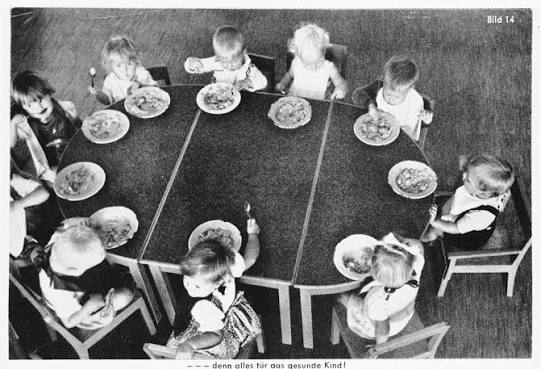
The first home opened in Steinhöring, and by the late 1930s, more followed across Germany. The atmosphere inside was a curious blend of clinical efficiency and maternal care. Nurses monitored the mothers’ health rigorously, and the children, once born, were registered with the SS and often placed for adoption into ‘worthy’ families typically SS officers’ households. The program’s business manager, Max Sollmann, and medical director, Gregor Ebner, ensured that every detail aligned with Nazi racial doctrine. Even the naming of children was a bureaucratic process: each birth was logged in special registers, with the mother’s racial score recorded alongside the child’s physical measurements.
But Lebensborn was not confined to Germany. As the war expanded, so did the program. Norway, with its large contingent of German soldiers, became a key site: nine or ten homes operated there, exploiting the relationships between occupiers and local women. Similar facilities were established in Poland, France, Belgium, Luxembourg, Denmark, and the Netherlands. The scale remained modest—the war’s chaos and the SS’s obsession with secrecy limited expansion—but the intent was clear: to populate Europe with Aryan progeny, one birth at a time.
The Darkest Extension: Kidnapping
The program’s most sinister facet emerged in occupied Eastern Europe. In Poland and other territories, SS units conducted ‘racial assessments’ of children, particularly those in orphanages or foster care. Those judged ‘racially valuable’—blond hair, blue eyes, ‘Nordic’ skull measurements—were forcibly taken from their families, given German names, and placed in Lebensborn homes or with German families. The numbers are staggering: estimates range from tens of thousands to over 100,000 abducted children, though the exact figure remains unknown. Many were never returned after the war, and the trauma of these abductions continues to haunt Polish families to this day.
This was the logical endpoint of Himmler’s ideology: human beings treated as genetic material, selected and relocated like livestock. The bureaucracy was chilling—forms, medical exams, racial scoring—all applied to children torn from their mothers’ arms.
The Norwegian Aftermath
In Norway, the legacy of Lebensborn was particularly bitter. Norwegian women who had relationships with German soldiers were ostracized after the war; many were arrested, interned, or lost their jobs. Their children, known as ‘tyskerbarn’ (German children), faced discrimination and abuse. Some were placed in psychiatric institutions, where they were mistreated, and many were denied education and social advancement. It wasn’t until 2018 that Norway’s prime minister formally apologized for this treatment, acknowledging the state’s role in perpetuating the stigma.
For the women who entered Lebensborn homes, the experience was ambiguous. Some were grateful for the care and anonymity; others felt coerced, used by a regime that valued them only for their wombs. The children, now in their eighties, have spoken out in recent years, sharing stories of identity crises, silent shame, and, in some cases, the discovery of their origins only in adulthood. Their voices are a crucial counterpoint to the clinical records that survive.
The End and the Unfinished Reckoning
When Allied forces overran Germany in 1945, they found the Lebensborn homes abandoned, their records partially destroyed by the SS. The organization was formally dissolved in the 1950s, but the legal and moral questions it raised have never fully resolved. In Germany, the children were largely ignored for decades, with no official recognition of their suffering. In Norway, a 2004 report documented abuses, but compensation was initially denied and only partially granted. In Poland, the abducted children remain a painful wound—many never learned their true identities, and the search for families continues even today.
The numbers are small compared to the millions who died in the Holocaust, but the significance of Lebensborn lies in its ambition. It was a state attempting to control human reproduction with the same precision as a breeding program for animals. The program’s failure to produce a ‘master race’ was inevitable, but its legacy of human suffering is a reminder of what happens when ideology overrides basic humanity.
Lebensborn was not a footnote in Nazi history; it was a core expression of the regime’s racial ideology. The program’s homes, births, and abductions were all part of a larger plan to reshape humanity, and its consequences echo in the lives of the children and mothers who survived. As the last survivors age, their stories serve as a testament to the resilience of the human spirit against the coldest bureaucracies of the state.
Summary
- Founded by Heinrich Himmler on December 12, 1935, as an SS program to increase births of ‘racially pure’ Aryan children.
- Provided maternity homes and financial support to women who met strict racial criteria, with around 20,000 children born across Germany and occupied territories.
- Expanded into kidnapping ‘racially valuable’ children in Eastern Europe, with estimates of abducted children ranging from tens of thousands to over 100,000.
- Norway was the most significant site outside Germany, with 9–10 homes; postwar children faced severe discrimination, leading to a formal apology in 2018.
- The program was shut down in 1945, but legal and reparations issues remain unresolved, especially for Polish abductees.
FAQ
Q: What does ‘Lebensborn’ mean?
A: It translates to ‘Fount of Life’ or ‘Spring of Life,’ reflecting the program’s goal to increase the birth rate of ‘racially pure’ Aryan children.
Q: How many children were born in Lebensborn homes?
A: Estimates suggest around 8,000–10,000 in Germany and 8,000–12,000 in Norway, totaling perhaps 20,000 or fewer across all territories.
Q: Were all Lebensborn children born to unmarried mothers?
A: No. While the program aimed to help unmarried mothers avoid social stigma, married women were also eligible if they and their husbands met the racial criteria.
Q: Did the program operate outside Germany?
A: Yes, it expanded into occupied territories, especially Norway, but also Poland, France, Belgium, Luxembourg, Denmark, and the Netherlands.
Q: What happened to the children after the war?
A: Many faced discrimination and stigma, particularly in Norway, where they were called ‘tyskerbarn.’ Some were placed in psychiatric institutions and abused. In Germany, they were largely ignored for decades. The abducted Polish children often never learned their true identities.