Tag: Goldstone

  • NASA’s New Goldstone Antenna: A 34-Meter Giant Joins the Deep Space Network


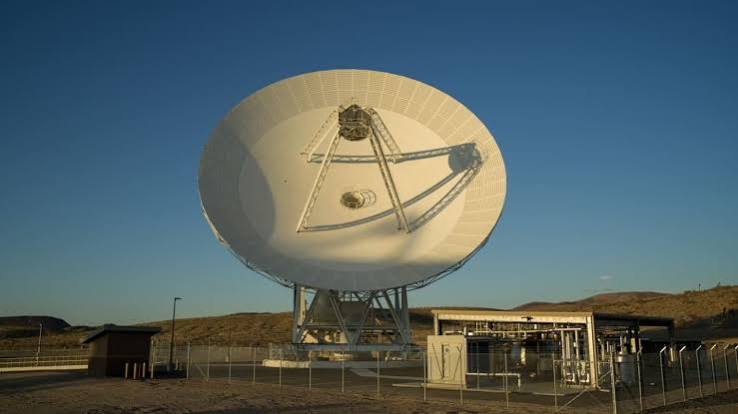
    In the vast silence of California’s Mojave Desert, a new dish has risen. Deep Space Station 23 (DSS-23), a 34-meter (114-foot) antenna, has just come online at NASA’s Goldstone Deep Space Communications Complex. It’s not just another piece of hardware; it’s a critical upgrade to the network that connects Earth to the farthest reaches of our solar system. As missions like Artemis and Europa Clipper demand more data than ever, this new antenna is a direct answer to a growing cosmic traffic jam.

    To understand why DSS-23 matters, you need to know about the Deep Space Network (DSN). It’s NASA’s global array of giant radio antennas, with three sites spaced about 120 degrees apart around the world: Goldstone in California, Madrid in Spain, and Canberra in Australia. This spacing ensures that as Earth rotates, at least one complex is always facing any given spacecraft. The DSN is the only way we can talk to missions beyond Earth orbit—from the Voyager probes hurtling toward interstellar space to the Perseverance rover on Mars. But this essential service is stretched thin.

    A Network Under Pressure

    The DSN is oversubscribed. Missions like the Artemis program, Mars Sample Return, Europa Clipper, and Dragonfly are all competing for antenna time. Older antennas, some dating back to the 1960s, are showing their age, requiring more maintenance and offering lower performance. At the same time, modern spacecraft generate vast amounts of science data—high-resolution images, video, and complex spectroscopy—that need to be transmitted back to Earth. The result is a bottleneck: scientists often have to wait longer than they’d like to receive their data, and mission operators must carefully schedule every communication session.

    DSS-23 is part of a modernization push to relieve this pressure. It joins new antennas at other DSN sites—DSS-53 in Spain and DSS-56 in Australia—all built in the 2020s. Together, they represent a fresh wave of capacity designed to support the next decades of exploration. But DSS-23 isn’t just a copy of its siblings; it’s the latest in a line of 34-meter beam-waveguide (BWG) antennas that are changing how the DSN does its job.

    The Magic of Beam-Waveguide Design

    Traditional radio antennas, like the iconic 70-meter dishes, are “front-fed.” That means the receiver sits at the focal point, high above the dish, where it collects the radio waves reflected by the surface. Getting to that receiver for maintenance often requires a treacherous ride in a service elevator or a climb up the dish’s structure—not ideal when you’re in the middle of a desert.

    DSS-23 uses a different approach: beam-waveguide design. Instead of bouncing signals directly to a receiver above, the dish reflects them down through a series of mirrors into a subterranean room below. There, the electronics remain stationary and accessible. This design offers several advantages: maintenance is safer and easier, the sensitive equipment is protected from weather, and multiple frequency receivers can be installed simultaneously. Crucially, it also performs better at high frequencies like Ka-band, which is essential for high-data-rate communications.

    Think of it like a periscope on a submarine, but inverted. The dish acts as the top mirror, catching signals from space and steering them down a tube to a clean, quiet room where engineers can work on the machinery without a crane.

    Building a Desert Giant

    Constructing DSS-23 was no small feat. The antenna’s surface must be precision-shaped to within a fraction of a millimeter to accurately focus radio waves, especially at shorter wavelengths like Ka-band. The 34-meter dish itself is a marvel of engineering: a steel structure weighing hundreds of tons, yet capable of moving with incredible precision to track spacecraft moving at thousands of miles per hour. The servo control systems that point the dish must compensate for wind, thermal expansion, and the Earth’s rotation.

    The project involved significant coordination between NASA’s Jet Propulsion Laboratory (JPL), which manages the DSN, and private contractors. While NASA doesn’t publicly disclose exact costs for such antennas, they typically run in the tens of millions of dollars. The work also created jobs in the local aerospace industry and at the Goldstone site itself, which is already a major employer in the remote high desert.

    What This Means for Science

    For scientists, DSS-23 is a new door to their data. With more antennas available, the DSN can allocate more time to each mission, and that translates directly into more science return. For instance, a mission like the Perseverance rover, which sends back high-definition images and audio from Mars, can transmit more data per day, allowing researchers to analyze the Martian environment faster and in greater detail.

    The new antenna also enhances the DSN’s “arraying” capability. By combining signals from multiple antennas, the network can achieve the sensitivity of a larger dish. DSS-23, working in concert with other 34-meter and 70-meter antennas, can effectively create a virtual giant ear, listening to faint signals from far-off probes like Voyager 1, which is over 15 billion miles away.

    Looking Ahead

    The arrival of DSS-23 is a clear signal that NASA is investing in the infrastructure needed for the next era of space exploration. As we plan to return humans to the Moon, send robots to Mars, and explore the icy moons of Jupiter and Saturn, the DSN will be our lifeline. DSS-23 is not just a new antenna; it’s a promise that we’ll be able to hear the whispers from the cosmos, no matter how faint, for years to come.

    In the vast Mojave, a new sentinel has taken its place. DSS-23 is a technical marvel, but its true significance lies in what it enables: the continued flow of knowledge from the edge of human reach. As we push deeper into space, our ability to listen will be just as important as our ability to send. With DSS-23 online, the Deep Space Network is ready to keep the conversation going.

    Summary

    • DSS-23 is a new 34-meter antenna at NASA’s Goldstone complex, designed to boost Deep Space Network capacity.
    • It uses a beam-waveguide design, which routes signals to ground-level electronics for easier maintenance and better high-frequency performance.
    • The DSN is oversubscribed, and new antennas are needed to support missions like Artemis, Europa Clipper, and Mars Sample Return.
    • DSS-23 joins other new antennas in Spain and Australia as part of a modernization effort.
    • The antenna enhances data return and arraying capabilities, vital for future deep space exploration.

    FAQ

    Q: What is the Deep Space Network (DSN)?
    A: The DSN is NASA’s global array of giant radio antennas at three sites (California, Spain, Australia) that communicates with spacecraft beyond Earth orbit. It supports missions, radio astronomy, and radar observations.

    Q: How does DSS-23 improve over older antennas?
    A: DSS-23 uses a beam-waveguide design, which places electronics in a subterranean room, making maintenance easier and protecting equipment. It also supports higher frequencies like Ka-band, enabling faster data rates.

    Q: Why are new antennas needed if the DSN already has several?
    A: The DSN is oversubscribed—many missions compete for limited time. Older antennas are aging, and modern missions generate more data, so new antennas like DSS-23 add needed capacity and reliability.

    Q: Where is Goldstone, and why is it in the desert?
    A: Goldstone is in the Mojave Desert near Barstow, California. Its remote location minimizes radio interference and provides a clear view of the sky, ideal for deep space communications.

    Q: Will DSS-23 replace the 70-meter antennas?
    A: No, the 70-meter antennas remain the most sensitive, but new 34-meter antennas can be arrayed together to achieve similar sensitivity, offering flexibility and redundancy.
  • NASA’s New 34-Meter Dish: A Quiet Upgrade with Big Implications for Deep Space Exploration

    NASA’s New 34-Meter Dish: A Quiet Upgrade with Big Implications for Deep Space Exploration

    In the high desert of California, a new 34-meter (114-foot) radio antenna has joined NASA’s Deep Space Network (DSN). It’s not the biggest dish on the block the network still relies on 70-meter giants for the most distant probes but this next-generation antenna is engineered to be more efficient and capable than its predecessors. As missions to the Moon, Mars, and beyond multiply, this dish represents a critical upgrade to the backbone of deep space communication.

    But what does a new antenna actually mean for science? It’s not just about receiving signals. This dish will transmit commands, track spacecraft positions, and help gather data that could reshape our understanding of the solar system. It’s a workhorse addition to a network that has been quietly enabling every major NASA mission for over six decades.

    The Deep Space Network: Earth’s Interplanetary Phone System

    Imagine trying to call a friend on Mars with a walkie-talkie. The signal would be impossibly weak, and the planet’s rotation would cut you off. That’s why NASA built the Deep Space Network: a trio of radio antenna facilities strategically placed around the globe—Goldstone in California, Madrid in Spain, and Canberra in Australia. Each site is roughly 120 degrees apart, so as Earth spins, at least one facility can always point its dishes toward a given spacecraft.

    This network handles far more than casual chatter. For over 40 missions—from Mars rovers to interstellar Voyagers—the DSN sends commands, receives scientific data, and performs radio science, which is a fancy way of saying it measures the spacecraft’s velocity and position to a hair’s breadth. That’s how we know the exact trajectories of orbiters and landers, and how scientists map the gravity fields of distant moons.

    The new dish at Goldstone is a 34-meter antenna, the same size as many of the network’s workhorses. But “next-gen” doesn’t mean bigger—it means smarter. The key difference is likely beam waveguide technology. In older 34-meter dishes, the sensitive receivers are mounted up at the focus, exposed to weather and needing constant maintenance. In a beam waveguide design, the signal is reflected down a tube into a stationary room below the dish. This keeps the equipment stable, reduces noise, and allows operators to switch frequencies in minutes instead of hours.

    Why a New Dish Now? The Growing Demand for Deep Space Bandwidth

    The DSN is facing a traffic jam. NASA’s Artemis program is gearing up to return humans to the Moon, Mars rovers like Perseverance are beaming back high-resolution images, and upcoming missions like Europa Clipper and Psyche will add their own demands. Meanwhile, the existing antennas are aging—some have been in service for decades. The new dish at Goldstone is part of a strategy to replace and augment the fleet to meet this surge.

    The addition is not just about capacity; it’s about capability. Newer antennas can support higher frequency bands like Ka-band, which allows for much higher data rates. Think of it like upgrading from dial-up to fiber optic. With more bandwidth, a rover can send back more detailed photos, and scientists can receive more data in a single pass. This is especially critical for missions that generate massive amounts of information, like the Perseverance rover, which sends back images and audio from the Martian surface.

    The New Dish in Action: More Than Just Listening

    One common misconception is that these dishes are only for receiving signals. In reality, the DSN is a two-way communication system. The new antenna can transmit commands to spacecraft, which is how engineers tell a rover to take a sample or a spacecraft to adjust its course. It also plays a role in radio science—by tracking a spacecraft’s Doppler shift, scientists can detect tiny variations in its velocity, which can reveal the presence of a hidden ocean under a moon’s icy crust or map the gravity field of an asteroid.

    The antenna’s location at Goldstone is steeped in history. This is where the first images from the Moon were received during the Surveyor missions, and where Voyager 1 sent its iconic “Pale Blue Dot” image. The new dish now stands alongside these legacy antennas, ready to support the next generation of exploration.

    A Network of Global Importance

    While the new dish is in California, its impact is global. The DSN is an international resource. NASA’s partners, including the European Space Agency (ESA) and the Indian Space Research Organisation (ISRO), rely on the network to communicate with their deep space missions. A new antenna at Goldstone doesn’t just help NASA—it helps the entire world’s deep space exploration efforts.

    Of course, the DSN is not unlimited. Each spacecraft must be scheduled for time, and with more missions than ever, the network is stretched thin. But every new antenna adds capacity and flexibility, easing the bottleneck and ensuring that data keeps flowing from the farthest reaches of the solar system.

    The Future: Toward Optical Communications

    The new dish is part of a broader evolution. NASA is also developing optical (laser) communications, which could dramatically increase data rates. But radio waves remain the backbone, and new dishes like this one will be essential for years to come. They are the reliable, proven technology that ensures we can still reach our spacecraft even as we push the boundaries of what’s possible.

    So the next time you see an image from Mars or hear about a new discovery from a distant asteroid, remember the quiet work of the Deep Space Network—and the new 34-meter dish in Goldstone that’s helping make it happen.

    The new 34-meter antenna at Goldstone is more than just a piece of hardware. It’s a symbol of NASA’s commitment to maintaining and upgrading its critical infrastructure in the face of growing demand. While it may not grab headlines like a Mars landing, it plays an indispensable role in every mission that relies on deep space communication. As we reach further into the cosmos, this dish will be there, helping us listen and speak to our robotic explorers.

    Summary

    • NASA added a new 34-meter radio antenna to its Deep Space Network at Goldstone, California.
    • The antenna uses next-gen technology, likely beam waveguide, for better performance and easier maintenance.
    • It supports over 40 missions, including Artemis, Mars rovers, and deep space probes.
    • The addition helps address the growing demand for DSN time from lunar, Mars, and deep space missions.
    • The DSN is a global network with sites in California, Spain, and Australia, ensuring continuous coverage.

    FAQ

    Q: Is the new antenna bigger than the existing 70-meter dishes?
    A: No, it’s 34 meters in diameter, the same size as many other DSN workhorse antennas. “Next-gen” refers to its advanced technology, not its size.

    Q: Does the DSN only receive signals from spacecraft?
    A: No, it also transmits commands and performs radio science, such as tracking spacecraft position and velocity.

    Q: Why is the network spread across three sites?
    A: The three sites are spaced about 120 degrees apart, so at least one can always see a given spacecraft as Earth rotates.

    Q: Will this new dish be used for commercial satellites?
    A: The DSN primarily supports NASA and its partners’ deep space missions, not commercial Earth-orbiting satellites, which use other networks.

    Q: How does the new antenna improve data rates?
    A: It likely supports higher frequency bands like Ka-band, which allow for faster data transmission, similar to upgrading from dial-up to fiber optic internet.