In the spring of 1945, Germany was a landscape of rubble and silence. Cities lay in ruins, and the moral fabric of the nation was in tatters. As the Allies began the work of denazification and the Nuremberg Trials brought Nazi leaders to justice, a quieter, more profound struggle was unfolding in the hearts and minds of ordinary Germans. This was not just a political reconstruction but a psychological one, where the twin forces of shame and guilt would shape the nation’s identity for decades to come.
This article explores how Germany confronted or avoided its Nazi past, tracing the evolution from denial and silence to a culture of remembrance. It examines the distinction between guilt and shame, the role of key thinkers, and the generational conflicts that forced a reckoning. The story is not a simple arc of progress but a complex, contested process that continues to resonate today.
The Weight of Silence: 1945–1949
When the war ended, Germany was physically and morally devastated. Millions of refugees moved through the rubble, and the Allies imposed denazification—a program to purge former Nazis from public life. But the effort was uneven and often perceived as “victor’s justice.” Many Germans saw themselves not as perpetrators but as victims: of bombing, expulsion, and occupation. They had lost everything, and the last thing they wanted was to confront the horrors committed in their name.
The Nuremberg Trials (1945–46) established individual criminal responsibility, but they also offered a convenient escape hatch. The focus on a handful of leaders allowed ordinary Germans to claim they were merely following orders or unaware of the crimes. A 1946 survey found that a majority of Germans believed Nazism was a good idea badly implemented. The initial response was not guilt but denial and a sense of victimhood.
The Inability to Mourn: The 1950s and the Adenauer Era
The 1950s brought the economic miracle, the Wirtschaftswunder. Chancellor Konrad Adenauer prioritized stability and reconstruction, and the Holocaust was largely unspoken in public. The philosopher Karl Jaspers had already, in 1946, distinguished four types of guilt—criminal, political, moral, and metaphysical—urging Germans to accept moral and political responsibility. But his call went largely unheeded.
In 1967, psychoanalysts Alexander and Margarete Mitscherlich published The Inability to Mourn, a searing critique of German emotional repression. They argued that Germans had not mourned the loss of Hitler as a narcissistic object. Instead, they channeled their energy into rebuilding, avoiding genuine emotional confrontation with the past. The result was an emotional coldness and a collective amnesia that allowed the country to function but at a great psychological cost.
Silence pervaded families. Fathers did not speak about the war; children learned not to ask. The past was a locked room, and the key was hidden.
The Generational Reckoning: 1960s–1970s
The 1960s shattered that silence. The Frankfurt Auschwitz Trials (1963–65) brought perpetrators back into the public eye, forcing Germans to confront the specifics of the crimes. Then came the student movement of 1968. The children of the Nazi generation accused their parents of complicity and silence. They demanded answers: What did you do? What did you know? The conflict was explosive, tearing families apart and reshaping the political landscape.
Theodor Adorno, the philosopher, had already argued that the goal of education after Auschwitz must be that Auschwitz never happens again. The student movement took up that call, insisting that the past could not be buried. It was a painful, necessary confrontation.
The Institutionalization of Memory: 1979–2005
A turning point came in 1979 with the broadcast of the American TV miniseries Holocaust. Millions of Germans watched, and the nation was gripped by a collective catharsis. The series triggered mass public engagement and opened a new chapter in Vergangenheitsbewältigung—coming to terms with the past.
The 1980s saw the Historikerstreit, a bitter intellectual dispute among historians about the uniqueness of the Holocaust. Some argued it was comparable to other genocides, while others insisted it was singular. The controversy underscored how contested the past remained.
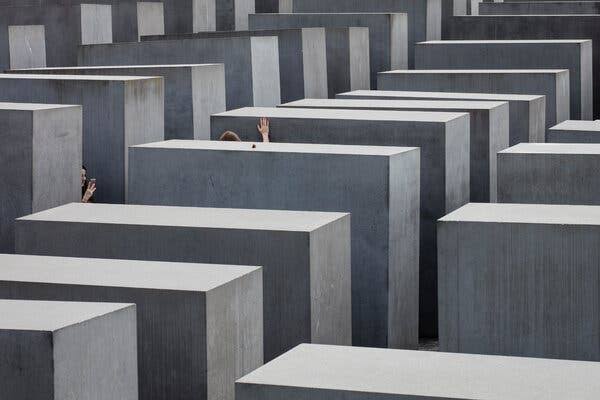
But remembrance was becoming institutionalized. The Memorial to the Murdered Jews of Europe, completed in Berlin in 2005, became a central symbol. The Wehrmacht exhibitions (1995–99) shattered the myth of a “clean” military, showing that ordinary soldiers had participated in war crimes. A culture of remembrance, Erinnerungskultur, emerged as a core element of German identity—what some have called a “negative founding myth.”
East and West: Two Paths to the Past
The division of Germany created two distinct approaches. East Germany, the GDR, officially framed itself as an anti-fascist state, and therefore guilt-free. It claimed that Nazism was a capitalist phenomenon that had been eradicated by socialism. West Germany, the FRG, engaged in legal prosecution and restitution, such as the Luxembourg Agreement of 1952 with Israel. But it was a selective engagement, often driven by Cold War politics.
Reunification in 1990 raised new questions. How would East Germans, raised on anti-fascist ideology, integrate into the West’s guilt-based memory culture? The answer was slow and uneven, but eventually, a unified Germany embraced the culture of remembrance, albeit with ongoing tensions.
The Legacy: A Nation Defined by Its Past
Today, Germany’s engagement with the Holocaust is often seen as a model. But it was not inevitable. It was the result of decades of conflict, debate, and confrontation. The distinction between guilt and shame remains crucial: guilt is about what one did, shame is about what one is. Germany has accepted guilt for the crimes, but the shame of the Nazi past remains a powerful force in its collective psyche.
The process is ongoing. New generations ask new questions, and the past is continually reinterpreted. The long shadow of shame and guilt is not a burden to be shed but a constant reminder of the fragility of civilization and the imperative to remember.
The story of post-war Germany is not a simple tale of redemption but a complex, contested process of confronting an unbearable past. From the silence of the 1950s to the institutionalized remembrance of today, Germans have wrestled with guilt and shame, eventually transforming them into a foundation for a new national identity. The result is a culture that, while imperfect, serves as a powerful reminder that the past cannot be escaped—only faced.
Summary
- Guilt vs. Shame: Guilt (Schuld) relates to specific actions, while shame (Scham) concerns identity and collective self-image. Both shaped German responses to the Nazi past.
- Early Denial: In the immediate post-war era, many Germans saw themselves as victims, not perpetrators, leading to silence and denial.
- The Inability to Mourn: The Mitscherlichs’ 1967 book argued that Germans repressed guilt and shame, focusing instead on economic reconstruction.
- Generational Conflict: The 1968 student movement forced a confrontation with the past, accusing the parent generation of complicity.
- Institutionalized Remembrance: From the 1980s onward, a culture of remembrance (Erinnerungskultur) emerged, with memorials and public engagement, making the Holocaust a central element of German identity.
FAQ
Q: What is the difference between guilt and shame in the German context?
A: Guilt (Schuld) is a legal and moral concept tied to specific actions—what one did or failed to do. Shame (Scham) is an emotional state tied to identity and collective self-image—what one is or belongs to. In post-war Germany, guilt was often acknowledged for the crimes, but shame was a deeper, more pervasive feeling of humiliation before the world.
Q: What was the Mitscherlichs’ ‘The Inability to Mourn’ about?
A: Published in 1967, this psychoanalytic work argued that Germans had not mourned the loss of Hitler as a narcissistic object, and instead repressed guilt and shame, channeling energy into reconstruction. This led to emotional coldness and a collective avoidance of the past.
Q: How did the 1968 student movement change Germany’s approach to the past?
A: The student movement accused the parent generation of silence and complicity, demanding answers about the Nazi era. This generational conflict broke the silence that had pervaded families and public life, forcing a more open confrontation with the past.
Q: What is Vergangenheitsbewältigung?
A: Literally “coming to terms with the past,” it refers to the ongoing process of confronting, processing, and atoning for Nazi-era crimes. It has evolved from denial and silence to a robust culture of remembrance.
Q: How did East Germany differ from West Germany in dealing with the Nazi past?
A: East Germany officially framed itself as an anti-fascist state, claiming to have eradicated Nazism, and therefore rejected any collective guilt. West Germany engaged in legal prosecution and restitution, though often selectively. Reunification in 1990 required integrating these two approaches.