Tag: geopolitics

  • The Rise and Fall of the Ottoman Empire: How Its Legacy Shapes Modern Turkey and the Middle East

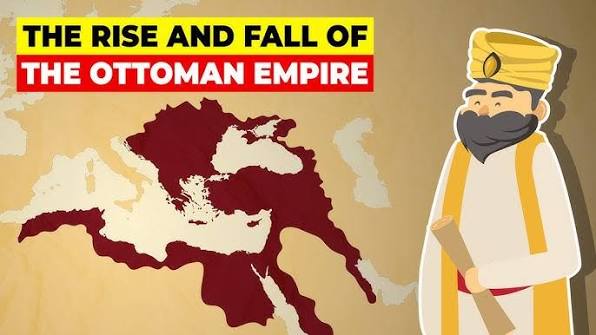
    The Rise and Fall of The Ottoman Empire - Animated History

    For over six centuries, the Ottoman Empire stood as a bridge between East and West, a sprawling superpower that at its zenith ruled vast swaths of Europe, Asia, and Africa. Its rise was swift, its fall protracted, and its aftermath continues to reverberate in the geopolitics of today. From the bustling streets of Istanbul to the contested borders of the Middle East, the empire’s imprint is unmistakable.

    Understanding the Ottoman legacy is not merely an academic exercise; it is key to deciphering the complex identities, conflicts, and alliances that define modern Turkey and the Middle East. This article explores the empire’s trajectory, the reasons for its collapse, and how its ghost still haunts contemporary politics.

    The Rise: From a Small Principality to a World Power

    The Ottoman state began around 1299 as a small beylik in northwestern Anatolia, founded by Osman I. Its location on the borderlands of the weakening Byzantine Empire proved advantageous. The Ottomans capitalized on their geographic position, controlling key trade routes between Europe and Asia. They embraced military innovation, adopting gunpowder weapons and forming the elite Janissary corps—soldiers recruited from Christian boys who were converted to Islam and trained to be fiercely loyal to the sultan.

    Their governance was pragmatic. Rather than imposing uniformity, the Ottomans tolerated local customs and elites, integrating diverse populations through a system known as the millet system. This allowed religious communities—Muslims, Greek Orthodox, Armenians, Jews—to manage their own personal status laws, education, and religious affairs. This flexibility facilitated rapid expansion, as conquered peoples often found Ottoman rule preferable to the fragmentation and infighting of their previous rulers.

    The capture of Constantinople in 1453 by Mehmed the Conqueror was a turning point, ending the Byzantine Empire and establishing the Ottomans as a major power. Under Suleiman the Magnificent (r. 1520–1566), the empire reached its peak, controlling about 5.2 million square kilometers and a population of 30–35 million. It spanned three continents, from the Balkans to North Africa, and its capital, Constantinople (later Istanbul), became a vibrant cosmopolitan hub.

    The Fall: Stagnation, Reform, and Dissolution

    The seeds of decline were sown even during the empire’s zenith. European maritime exploration after 1492 shifted trade away from the Mediterranean, undermining Ottoman economic dominance. The empire failed to industrialize at the same pace as Western Europe, and its military became obsolete. The Janissaries, once an elite force, grew into a conservative political power that resisted reform, blocking modernization efforts.

    The 19th century brought the ‘Eastern Question’—how European powers would manage the empire’s decline. Nationalism, inspired by the French Revolution, sparked uprisings among subject peoples: the Serbs in 1804, the Greeks in 1821, the Bulgarians in 1876. Each rebellion chipped away at Ottoman territory. Tsar Nicholas I famously dubbed the empire the ‘Sick Man of Europe’ in 1853, reflecting its perceived fragility.

    The Tanzimat reforms (1839–1876) attempted to modernize law, administration, and the military, but they were too little, too late. The empire’s decision to ally with Germany and Austria-Hungary in World War I proved catastrophic. Defeat led to Allied occupation and the partitioning of Ottoman lands. The 1916 Sykes-Picot Agreement, a secret Anglo-French plan, drew borders that still define the modern Middle East. The 1920 Treaty of Sèvres, though never ratified, proposed severe dismemberment.

    The Turkish War of Independence (1919–1923), led by Mustafa Kemal (later Atatürk), resulted in the abolition of the sultanate in 1922 and the caliphate in 1924. In 1923, the Republic of Turkey was proclaimed, and the Treaty of Lausanne established its current borders, including a population exchange of about 1.5 million Greeks and 500,000 Turks.

    The Legacy: Competing Narratives in Modern Turkey

    The Ottoman legacy is contested in Turkey. The official Republican narrative, established by Atatürk, framed the empire as a period of backwardness and decline, from which the new secular republic was a radical break. Atatürk’s reforms—adopting the Latin alphabet, Western legal codes, secularism, and women’s suffrage—were seen as liberation from Ottoman conservatism.

    However, in recent decades, this narrative has softened. Under President Recep Tayyip Erdoğan and the AKP (in power since 2002), a ‘Neo-Ottomanist’ perspective has emerged. This revival celebrates Ottoman heritage, restoring monuments and commemorating the 1453 conquest. It also reasserts Turkish influence in former Ottoman territories, from Libya and Syria to the Balkans. This shift reflects a desire to reclaim a glorious past and assert Turkey as a regional power, but it also stirs debate about national identity and secularism.

    The Legacy: The Middle East’s Contested Borders

    The Ottoman Empire’s dissolution directly shaped the modern Middle East. The borders drawn by European powers in the Sykes-Picot Agreement and subsequent treaties ignored ethnic and sectarian realities, creating states that often lacked internal cohesion. The legacy of Ottoman rule—centuries of administration, trade, and cultural exchange—was replaced by a patchwork of nation-states, each with its own challenges.

    Today, the Ottoman past is invoked in regional conflicts. The Kurdish issue, for example, stems from the division of Ottoman territories among Turkey, Iraq, Syria, and Iran. The Arab-Israeli conflict is rooted in the Balfour Declaration and the British mandate over Palestine, former Ottoman lands. The rise of ISIS and other extremist groups has been partly attributed to the failure of the post-Ottoman state system to provide legitimate governance.

    The Enduring Influence

    The Ottoman Empire’s legacy is not just political; it is cultural and social. The Turkish language, cuisine, architecture, and music bear Ottoman influences. The millet system’s concept of religious autonomy has echoes in modern debates about minority rights. The empire’s legal and administrative traditions influenced the development of modern Turkish law.

    In the Middle East, the Ottoman past is a source of both nostalgia and resentment. Some view the empire as a period of stability and religious tolerance, while others remember it as a time of foreign domination. This ambivalence complicates efforts to build a shared regional identity.

    As Turkey and the Middle East navigate the 21st century, the Ottoman Empire remains a powerful reference point. Whether as a model for regional leadership or a cautionary tale of decline, its legacy continues to shape political discourse and national identities.

    The Ottoman Empire’s rise and fall is a story of ambition, innovation, and eventual decline. Its legacy is a double-edged sword: a source of pride and a reminder of lost power. For modern Turkey, it is a contested heritage, used to legitimize different visions of the nation. For the Middle East, it is the backdrop against which current borders and conflicts unfold. Understanding this legacy is essential for anyone seeking to grasp the complexities of the region today.

    Summary

    • The Ottoman Empire rose due to strategic location, military innovation, and pragmatic governance, reaching its peak in the 16th century.
    • Decline was driven by economic stagnation, military obsolescence, nationalist uprisings, and the fatal decision to join the Central Powers in WWI.
    • The empire’s dissolution led to the creation of modern Turkey and the borders of the Middle East, largely drawn by European powers.
    • In Turkey, the Ottoman legacy is contested between the secular Republican narrative and the Neo-Ottomanist revival under Erdoğan.
    • The Ottoman past continues to influence regional conflicts, national identities, and cultural heritage across the Middle East.

    FAQ

    Q: What was the millet system?
    A: The millet system was an Ottoman legal framework that granted religious communities (Muslims, Greek Orthodox, Armenians, Jews) autonomy over personal status law, education, and religious affairs. It allowed diverse populations to coexist under Ottoman rule, though non-Muslims had second-class status.

    Q: Why is the Ottoman Empire called the ‘Sick Man of Europe’?
    A: The term was popularized by Tsar Nicholas I of Russia around 1853, reflecting European perceptions of the Ottoman Empire’s decline. It highlighted the empire’s military weakness, economic stagnation, and inability to prevent nationalist uprisings, leading European powers to intervene in its affairs.

    Q: How did the Ottoman Empire’s fall shape the modern Middle East?
    A: The empire’s defeat in WWI led to the Sykes-Picot Agreement and the Treaty of Sèvres, which drew borders that ignored ethnic and sectarian realities. These borders created states like Iraq, Syria, and Lebanon, which have struggled with internal cohesion and continue to be sources of conflict.

    Q: What is Neo-Ottomanism?
    A: Neo-Ottomanism is a political perspective, associated with Turkey’s AKP government, that seeks to revive Ottoman heritage and assert Turkish influence in former Ottoman territories. It contrasts with the early Republican narrative that viewed the Ottoman past as backward.

    Q: What was the population exchange after the Turkish War of Independence?
    A: The 1923 Treaty of Lausanne included a population exchange between Greece and Turkey, involving about 1.5 million Greeks and 500,000 Turks. This aimed to create ethnically homogeneous nation-states but caused immense human suffering.

  • The Gulf’s Hormuz Workaround Now Runs Through a War Zone

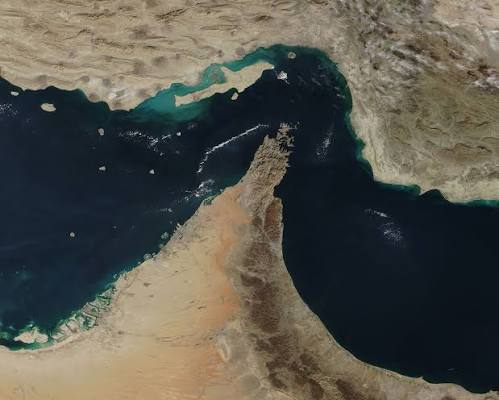
    Strait of Hormuz - Wikipedia

    For decades, Saudi Arabia and the UAE have built pipelines to bypass the Strait of Hormuz, the world’s most critical oil chokepoint. These routes were their insurance policy against Iranian threats to close the strait. But that insurance is now failing: the Houthi attacks on Red Sea shipping have turned the very exit points of these pipelines into a new front line. The result is a widening maritime crisis that threatens to ensnare Gulf oil exports in a conflict they never signed up for.

    The Chokepoint Insurance That Isn’t

    The Strait of Hormuz is a narrow waterway through which roughly 20 million barrels of oil pass daily—about 20% of global consumption. For decades, Iran has threatened to close it, and Gulf states have responded with a classic hedge: build pipelines that bypass the strait entirely. Saudi Arabia’s East-West Pipeline, or Petroline, can move up to 5 million barrels per day to the Red Sea port of Yanbu. The UAE’s Habshan–Fujairah pipeline, which came online in 2012, carries up to 1.8 million barrels per day to the Gulf of Oman, outside Hormuz. These pipelines were designed as insurance policies, not full replacements, but they provided a critical buffer.

    That buffer now has a hole in it. The Red Sea route—through the Bab el-Mandeb Strait and Suez Canal—is the natural westward outlet for the Saudi and UAE bypass volumes. But since late 2023, Houthi forces in Yemen have launched drone and missile attacks on commercial shipping in the Red Sea, forcing major carriers to reroute around the Cape of Good Hope, adding 10 to 14 days to voyages and spiking insurance premiums. The Houthis have targeted vessels linked to Israel, the U.S., and the U.K., and have expanded their attacks to include U.S. Navy assets. The U.S.-led Operation Prosperity Guardian and subsequent strikes have not restored safe transit.

    The New Houthi Front: A Second Chokepoint Under Fire

    The Houthi attacks have effectively created a second chokepoint crisis. While Hormuz is the eastern gate, Bab el-Mandeb is the western gate, and both are now under threat. Iran, which has supplied the Houthis with advanced anti-ship missiles, cruise missiles, and uncrewed surface vessels, appears to be pursuing a strategy of asymmetric escalation. Rather than closing Hormuz outright—which would invite overwhelming retaliation and alienate China—Iran is weaponizing chokepoints incrementally. It harasses shipping in the Gulf, seizes tankers, and arms proxies to attack Red Sea traffic. This means Gulf states face a nightmare scenario: their Hormuz bypass pipelines now lead directly into a war zone.

    For Saudi Arabia and the UAE, this is a strategic bind. They have sought de-escalation with Iran—Saudi Arabia and Iran restored diplomatic relations in March 2023, brokered by China—while also cooperating with U.S. security frameworks. But the Houthi attacks threaten their Red Sea ports, including Yanbu and Jeddah, and the UAE’s westward exports via the Red Sea are also affected. Their oil exports are becoming collateral damage in a conflict they did not initiate. The pipelines that were supposed to be their insurance are now a liability.

    The Widening Shipping Risk

    The impact on global shipping is already severe. Major lines like Maersk, Hapag-Lloyd, MSC, and CMA CGM have diverted via the Cape of Good Hope, adding significant time and cost. War-risk insurance premiums for Red Sea transits have risen from about 0.1% of hull value to as high as 1.0% in some cases. But the risk is not just to oil tankers. Container ships, bulk carriers, and other vessels are also being targeted. The Houthis have stated they will continue attacks until a ceasefire in Gaza, and they have threatened to target vessels heading to Israeli ports, as well as U.S. and U.K. vessels in retaliation for strikes.

    This is not just a regional problem. The Red Sea route handles about 12% of global trade, including not just oil but also consumer goods, food, and manufactured products. The rerouting is causing delays and cost increases that ripple through global supply chains. And if the Houthi attacks expand to include the Gulf of Oman or the Arabian Sea, the UAE’s Fujairah port—the very outlet of its bypass pipeline—could come under threat. That would close the loop on the Gulf’s workaround strategy.

    The Iran Factor: A Deliberate Strategy

    Iran’s role is central. It has been engaged in a shadow war with Israel and the U.S., including direct missile and drone exchanges in April 2024 and again in 2025. It has used its naval forces and the Islamic Revolutionary Guard Corps to seize commercial tankers in the Gulf and Strait of Hormuz, such as the Advantage Sweet in April 2023 and the St Nikolas in January 2024. By arming the Houthis with advanced weapons and targeting intelligence, Iran can threaten both entrances to the Arabian Peninsula’s maritime lifelines simultaneously. This is a deliberate strategy of asymmetric escalation, designed to raise the cost of any conflict without triggering a full-scale war.

    For the Gulf states, the challenge is to protect their exports without being drawn into a wider conflict. They are walking a tightrope, trying to maintain diplomatic ties with Iran while also relying on U.S. security guarantees. But the Houthi attacks show that the threat is not just from state actors; non-state proxies can also disrupt global trade. The Gulf’s workaround was designed for a world where the only chokepoint was Hormuz. Now, the Red Sea is equally dangerous, and the insurance policy is no longer sufficient.

    The Gulf states’ pipelines were a smart hedge against a single chokepoint, but they now face a two-front maritime threat. The Houthi attacks on Red Sea shipping have turned the exit points of those pipelines into a war zone, and Iran’s support for the Houthis means the risk is likely to persist. The result is a widening shipping crisis that threatens not just Gulf oil exports but global trade. The insurance policy has failed, and the Gulf states—and the world—must now find a new way to navigate these dangerous waters.

    Summary

    • The Strait of Hormuz handles ~20 million barrels of oil per day, and Gulf states built bypass pipelines (Saudi’s Petroline, UAE’s ADCOP) to reduce reliance on it.
    • These bypass routes exit into the Red Sea and Gulf of Oman, but the Red Sea is now under attack by Houthi forces, making the workaround hazardous.
    • Iran is arming the Houthis with advanced weapons, creating a two-front threat: Hormuz in the east and Bab el-Mandeb in the west.
    • Shipping lines are rerouting around the Cape of Good Hope, adding 10-14 days and spiking insurance premiums.
    • The Gulf states are caught in a bind, trying to de-escalate with Iran while relying on U.S. security, but their oil exports are becoming collateral damage.

    FAQ

    Q: What is the Strait of Hormuz, and why is it important?
    A: The Strait of Hormuz is a narrow waterway between the Persian Gulf and the Gulf of Oman, through which about 20 million barrels of oil pass daily—roughly 20% of global consumption. It is the world’s most critical oil chokepoint.

    Q: How do Saudi Arabia and the UAE bypass Hormuz?
    A: Saudi Arabia uses the East-West Pipeline (Petroline) to move up to 5 million barrels per day to the Red Sea port of Yanbu. The UAE uses the Habshan–Fujairah pipeline (ADCOP) to move up to 1.8 million barrels per day to the Gulf of Oman port of Fujairah.

    Q: Why are Houthi attacks a threat to these bypass routes?
    A: The bypass routes exit into the Red Sea and the Gulf of Oman. The Houthis have been attacking shipping in the Red Sea since late 2023, making it hazardous for tankers to transit through the Bab el-Mandeb Strait, which is the only way to reach Western markets from Yanbu.

    Q: What is Iran’s role in the Houthi attacks?
    A: Iran has supplied the Houthis with advanced anti-ship ballistic missiles, cruise missiles, and uncrewed surface vessels, as well as targeting intelligence. This allows Iran to threaten both Hormuz and Bab el-Mandeb simultaneously, without closing Hormuz outright.

    Q: What are the broader impacts of the shipping disruptions?
    A: Major shipping lines have diverted around the Cape of Good Hope, adding 10-14 days to voyages and raising costs. Insurance premiums for Red Sea transits have spiked, and the disruptions affect not just oil but also container ships and other cargo, impacting global supply chains.