
Tag: generative AI

  • AI Search in Consumer Electronics: The Quiet Revolution in Your Living Room

    AI Search in Consumer Electronics: The Quiet Revolution in Your Living Room

    When you ask your smart speaker to play “something upbeat for a workout,” and it instantly queues a playlist that matches your pace and mood, you’re experiencing the new wave of AI search. This isn’t the keyword-matching search of old it’s a conversational, context-aware system that understands your intent and acts on it. Consumer electronics are becoming the unlikely frontier for AI search, and the numbers are staggering: voice assistant queries on smart speakers grew about 30% year-over-year in 2024, and smart TV voice search usage jumped 40% after generative AI upgrades. This isn’t a gimmick; it’s a fundamental shift in how we interact with our devices.

    But what exactly is AI search in consumer electronics? It’s the integration of generative AI and large language models into the search functions of everyday devices—smartphones, smart TVs, speakers, wearables, and even refrigerators. Unlike traditional search that matches keywords, AI search understands natural language, remembers preferences, and can execute multi-step tasks like “find my photos from last summer with my dog” or “turn off the lights and play some jazz.” This article unpacks the technology, its growth, and what it means for consumers and the industry.

    From Remote Controls to Conversational AI: The Evolution of Device Search

    To appreciate the current revolution, it helps to see how far we’ve come. The first phase was remote/keyword search: you typed or scrolled through channel listings on your TV. Then came voice assistants like Siri and Alexa (2015-2020), which could recognize limited commands but often faltered with context. The third phase, which we’re in now, is generative AI-powered conversational search. This isn’t just about recognizing words—it’s about understanding meaning. When you say, “Show me action movies from the 90s I haven’t seen,” the AI doesn’t just look for those keywords; it filters, recommends, and even remembers your viewing history.

    The catalyst? Edge AI chips like Apple’s Neural Engine, Qualcomm’s Snapdragon AI, and Google’s Tensor. These processors make on-device AI search fast and private, addressing two of the biggest hurdles: latency and privacy. Plus, the post-ChatGPT wave pushed giants to embed LLMs into existing devices via software updates, so you don’t need new hardware to get these features. It’s a “software upgrade” model that accelerates adoption without requiring new purchases.

    Why Now? The Market and Growth Signals

    The global AI search market was valued at roughly $5-7 billion in 2023 and is projected to grow at a CAGR of 20-25% through 2030. Consumer electronics is a major driver. Why? Because it’s where the volume is—billions of devices are already in homes. And the growth signals are concrete: smart speaker voice queries up 30% YoY, smart TV voice search up 40% after AI upgrades. These aren’t marginal gains; they indicate that users are finding genuine value in conversational search.

    Take smart TVs: with AI recommendations, viewing time has increased 15-20%. That’s not a novelty effect; it’s because the AI learns your tastes and suggests content you actually want to watch. The same applies to smartphones—Google’s Gemini on Pixel and Apple’s on-device LLM in Siri are making search more proactive. For instance, your phone might suggest a route home based on traffic patterns and your calendar, without you asking.

    The Core Capabilities: More Than Just Voice

    One common misconception is that AI search is just voice search. Voice is one input, but AI search also includes text, image, and even gesture-based queries. For example, you can point your phone camera at a plant and ask, “What is this and how do I care for it?” That’s multimodal search. Another capability is cross-app search: “Find my photos from last summer with my dog” pulls from your photo library, location data, and calendar. Then there’s real-time device control: “Turn off the lights and play jazz” coordinates smart home devices. And finally, proactive recommendations—the AI suggests actions based on your habits, like playing a podcast when you start your morning coffee.

    These capabilities are powered by hybrid AI models. Many devices run small on-device models for privacy and speed, while complex queries go to the cloud. This hybrid approach means your data isn’t always sent to servers, which is a privacy plus. But it’s also a source of confusion—users may think all processing is cloud-based, leading to incorrect privacy assumptions.

    Ecosystem Lock-In: The Competitive Frontier

    AI search is becoming a major differentiator for brand ecosystems. Apple, Google, Samsung, and Amazon are all leveraging AI to deepen ecosystem lock-in. For example, Apple’s ecosystem search can find content across your iPhone, iPad, Mac, and Apple TV seamlessly. Google’s Android integrates Gemini across devices, and Samsung’s SmartThings connects TVs, phones, and appliances. This cross-device continuity is a powerful reason to stay within one brand family.

    From a manufacturer’s perspective, AI search is a revenue driver. Samsung offers premium tiers of Galaxy AI, and Apple is exploring Apple Intelligence subscriptions. Smart TVs are also starting to show ads within search results, creating new ad revenue streams. This isn’t just about selling devices; it’s about monetizing the search experience itself.

    The Developer’s Dilemma: AI Search vs. App Stores

    AI search is disrupting app discovery. Instead of browsing an app store, users might ask their device, “Find me a meditation app that works offline.” This bypasses traditional app store SEO and changes the economics for developers. Apps that aren’t optimized for AI search may lose visibility. This is a significant shift, though AI search often orchestrates apps rather than replacing them—it’s a new interface layer, not a wholesale replacement.

    Privacy and Regulation: The Balancing Act

    Privacy is a double-edged sword. On-device AI search is praised for reducing cloud exposure, but concerns remain about voice data retention, biometric inference, and third-party AI training. Regulations like GDPR, CCPA, and the EU AI Act are shaping how on-device vs. cloud search is designed, pushing more local processing. For consumers, this means more control over their data, but it also means less personalization if you opt out of cloud processing.

    The Human Side: Who’s Adopting and Who’s Left Out?

    Adoption is highest among younger demographics (18-34) and tech-savvy households. But AI search is also a boon for accessibility—voice and multimodal interfaces help elderly and disabled users navigate devices more easily. This is a growing market segment, and AI search can be a life-changer for those who struggle with traditional interfaces.

    Misunderstandings to Clear Up

    • “AI search is just voice search.” No, it’s multimodal—text, image, gesture, and proactive suggestions.
    • “It’s the same as Google search on a phone.” Actually, it’s device-centric and action-oriented, not web-index-centric.
    • “All processing is in the cloud.” Many devices use hybrid models—on-device for speed/privacy, cloud for complex queries.
    • “It’s a gimmick.” Data shows measurable engagement increases, like 15-20% more TV viewing time.
    • “It will replace apps.” Not entirely—it changes the interface but often orchestrates apps underneath.
    • “Growth is uniform across categories.” Smart speakers and TVs lead; white goods like fridges lag due to lower use-case frequency.

    The Road Ahead: Fragmentation and Consolidation

    The market is growing fast, but it’s fragmented—no dominant standard yet. Watch for consolidation: Amazon invested in Anthropic, Apple partnered with OpenAI. These moves will shape the landscape. For consumers, the future is ambient intelligence, where your devices anticipate your needs. For the industry, it’s a race to own the search experience in every room of your home.

    AI search in consumer electronics is not a futuristic concept; it’s happening now, in your living room, kitchen, and pocket. The growth is real, the technology is maturing, and the implications are profound. Whether it’s the convenience of conversational commands or the privacy trade-offs, this revolution is reshaping how we interact with our devices. As the market consolidates and standards emerge, one thing is clear: the way we search for content and control our world is changing, and it’s only going to get more intelligent.

    Summary

    • AI search in consumer electronics goes beyond voice search, including text, image, and proactive suggestions.
    • The market is growing at 20-25% CAGR, with smart speakers and TVs leading adoption.
    • Key capabilities include cross-app search, real-time device control, and personalized recommendations.
    • Hybrid on-device/cloud models balance privacy and performance.
    • AI search is a competitive differentiator for ecosystems like Apple, Google, and Samsung, driving revenue through subscriptions and ads.

    FAQ

    Q: What is AI search in consumer electronics?
    A: It’s the integration of generative AI and large language models into search functions on devices like smartphones, smart TVs, and speakers, enabling conversational and multimodal search beyond keyword matching.

    Q: How is AI search different from traditional search?
    A: Traditional search matches keywords, while AI search understands natural language, remembers context, and can execute multi-step tasks like controlling devices or providing personalized recommendations.

    Q: Is AI search the same as voice search?
    A: No, voice is just one input. AI search also includes text, image, and gesture queries, plus proactive suggestions without explicit queries.

    Q: Are my privacy concerns justified?
    A: Many devices use hybrid models with on-device processing for privacy, but data may still be sent to the cloud for complex queries. Regulations are pushing for more local processing.

    Q: Will AI search replace apps?
    A: Not entirely. It often orchestrates apps rather than replacing them, but it changes the user interface layer and app discovery dynamics.
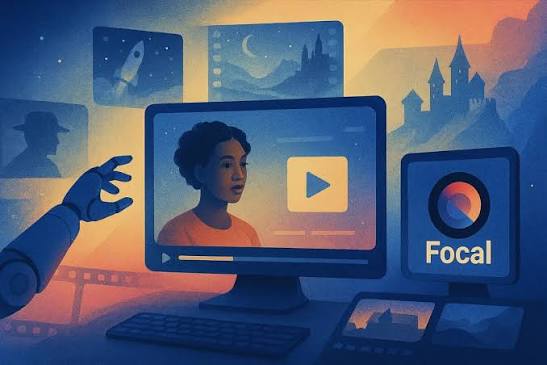
  • Can AI Make a Video for Me? A Practical Guide to Generative Video Tools in 2025

    Can AI Make a Video for Me? A Practical Guide to Generative Video Tools in 2025

    You’ve probably seen staggering AI-generated clips on social media: a dog flying a fighter jet, a cityscape melting into a river of neon. These aren’t magic they’re the output of generative video AI, a technology that creates new video from text prompts, images, or other clips. As of early 2025, this technology has moved from lab demos to tools you can actually use, but it’s not as simple as typing a sentence and waiting for a masterpiece.

    This guide cuts through the hype. You’ll learn what these tools can do, their limits, and how to pick the right one for your project—whether you’re a marketer, educator, or curious hobbyist. By the end, you’ll know if AI can make your video, and if so, how to get the best results.

    What Exactly Is Generative Video AI?

    Generative video AI uses machine learning models to create new video content from scratch. Unlike traditional editing software that assembles existing clips, these models generate novel footage. They learn patterns from massive datasets of videos, then use that knowledge to produce new sequences based on your input.

    Think of it like a chef who has tasted thousands of dishes. When you ask for a “spicy Thai curry,” they don’t look up a recipe—they improvise a new dish based on their experience. Similarly, a text-to-video model takes your prompt and generates a unique clip, frame by frame.

    There are several types of generative video AI:

    • Text-to-video: You type a description, and the model creates a video matching it.
    • Image-to-video: You provide a still image, and the model animates it.
    • Video-to-video: You input a video, and the model transforms it (e.g., changing the style or adding effects).
    • Video extension: The model continues a clip beyond its original length, maintaining consistency.

    The Current State of the Art (2025)

    As of early 2025, generative video AI is in its early-to-mid commercial maturity. Most tools can generate clips ranging from 2 to 30 seconds per try. Some allow longer videos by chaining clips or using extension features.

    Here are the leading tools:

    | Tool | Developer | Notable Features |
    |——|———–|——————|
    | Sora | OpenAI | High fidelity, long coherence (up to 60s), impressive physics simulation; limited public access |
    | Runway Gen-3 | Runway ML | Widely available, strong cinematic style, motion brush controls |
    | Pika Labs | Pika | Consumer-friendly, fast generation, “Pikaffects” for surreal transformations |
    | Luma Dream Machine | Luma AI | High-quality motion realism, free tier available |
    | Kling AI | Kuaishou (China) | Competitive quality, strong character consistency |
    | Veo 2 | Google DeepMind | Advanced physics and prompt adherence; limited rollout |
    | Hailuo (MiniMax) | MiniMax | Good for character-driven narratives |

    Pricing varies. Most tools offer free tiers with watermarks (5-10 clips per month). Paid plans range from $10 to $30 per month for hobbyists, with commercial, watermark-free access costing $100 or more monthly. Enterprise API access is negotiated per project.

    What AI Video Can Do Today

    Here’s what you can realistically expect:

    • Short clips: Generate a 5-10 second clip that matches your prompt, with decent quality.
    • Style transfer: Turn a real video into an animated or painted version.
    • Concept visualization: Filmmakers use AI to create storyboards or visualize scenes before shooting.
    • Background plates: Generate realistic backgrounds for VFX or virtual sets.
    • Social media content: Create quick, eye-catching videos for TikTok or Instagram Reels.

    For example, a small business owner could generate a 10-second product demo without hiring a videographer. An educator could create an animated explainer on a historical event. A musician could make a surreal music video for a single.

    Where It Falls Short

    Despite the hype, there are significant limitations:

    • Duration: Most generations are under 15 seconds. Longer videos require chaining, which can lead to inconsistencies.
    • Resolution: Common outputs are 720p to 1080p. 4K is emerging but slow and expensive.
    • Audio: Most tools generate silent video. You must add dialogue, sound effects, and music separately using audio AI tools like ElevenLabs or Suno, or a traditional editor.
    • Consistency: Maintaining a character’s identity across cuts is difficult. Objects may morph or disappear between frames. Spatial coherence—keeping the environment stable—is a major challenge.

    These limits mean AI video isn’t ready for a feature film or a polished commercial without significant human intervention.

    The Technology Behind the Magic

    Most current tools use latent diffusion models, an extension of the technology behind image generators like DALL-E and Stable Diffusion. These models learn to denoise random noise into coherent images, but applied to temporal data, they generate frames over time.

    More advanced models like Sora and Veo 2 use Diffusion Transformers (DiT). They treat video as a sequence of “spacetime patches”—small 3D blocks of pixels that vary over time. This allows the model to understand both spatial and temporal relationships, leading to better long-range coherence and physics simulation.

    Training these models requires enormous computing power. Generating a single 10-second 1080p clip can take minutes to hours of GPU time, which is why you often wait in a queue rather than getting real-time results.

    How to Choose the Right Tool

    Your choice depends on your needs:

    • For high fidelity and long clips: Try Sora (if you have access) or Runway Gen-3.
    • For ease of use and speed: Pika Labs is consumer-friendly and fast.
    • For free tier and realism: Luma Dream Machine offers a free tier with good motion quality.
    • For character consistency: Kling AI excels at keeping characters stable across scenes.
    • For advanced physics: Veo 2 is impressive, but limited rollout.
    • For character-driven stories: Hailuo (MiniMax) is a solid choice.

    Consider the learning curve. Some tools have a gentler onboarding, while others require more prompt engineering skill.

    Tips for Getting Better Results

    • Write detailed prompts: Instead of “a cat,” try “a fluffy orange cat sitting on a windowsill, looking out at a rainy city street, cinematic lighting, shallow depth of field.”
    • Use negative prompts: Specify what you don’t want, like “blurry, distorted, extra limbs.”
    • Iterate: Don’t expect perfection on the first try. Generate multiple versions and pick the best.
    • Leverage image-to-video: If you have a specific character or scene, generate an image first, then animate it. This gives you more control.
    • Add audio in post: Use tools like ElevenLabs for voiceovers or Suno for music to make your video feel complete.
    • Keep clips short: Focus on 5-10 second shots that convey a single action or idea.

    Real-World Use Cases

    • Marketing: A brand can generate product demos or lifestyle videos for social ads, personalized to different audiences.
    • Education: Teachers can create animated explainers for complex concepts, making learning more engaging.
    • Entertainment: Independent filmmakers can visualize scenes, create concept art, or generate background plates for VFX.
    • Personal projects: Hobbyists can bring their creative ideas to life without needing a film crew.

    For instance, a yoga instructor could generate a serene background video for their online classes. A local restaurant could make a mouth-watering video of a dish without a professional camera.

    The Future Outlook

    Generative video AI is evolving rapidly. By late 2025, we can expect longer clips, better audio integration, and improved consistency. The gap between “demo” and “production-ready” is closing, but human creativity and editing skills remain essential.

    As the technology matures, it will likely become a standard tool in every creator’s kit—not replacing human creators, but augmenting their abilities.

    So, can AI make a video for you? Yes, but with caveats. It can create short, impressive clips that serve many purposes, but it’s not yet a one-button solution for polished, long-form content. By understanding the strengths and limitations of current tools, you can harness AI to boost your creativity and productivity. Start with a free tier, experiment, and see what’s possible. The future of video creation is here, and it’s in your hands.

    Summary

    • Generative video AI creates new videos from text, images, or other clips using machine learning models.
    • As of early 2025, most tools generate clips under 30 seconds, with 720p-1080p resolution and no audio.
    • Leading tools include Sora, Runway Gen-3, Pika Labs, Luma Dream Machine, Kling AI, Veo 2, and Hailuo.
    • Pricing ranges from free tiers with watermarks to $100+/month for commercial use.
    • Limitations include short duration, inconsistency, and lack of audio, so human post-production is often needed.

    FAQ

    Q: Can AI generate a video with sound?
    A: Most generative video tools produce silent video. You’ll need to add audio separately using tools like ElevenLabs for voiceovers or Suno for music, or use a traditional video editor.

    Q: How long can an AI-generated video be?
    A: Typically 2 to 30 seconds per generation. Some tools allow longer videos by extending or chaining clips, but consistency may suffer.

    Q: Do I need a powerful computer to use AI video tools?
    A: No, most tools run in the cloud. You only need a web browser or mobile app. The heavy computation happens on the provider’s servers.

    Q: Is AI-generated video copyrighted?
    A: Copyright laws are still evolving. In many jurisdictions, AI-generated content may not be copyrightable, but terms vary by platform and use case. Check each tool’s terms of service.

    Q: What’s the best AI video tool for beginners?
    A: Pika Labs is known for its user-friendly interface and fast generation. Luma Dream Machine offers a free tier with good quality. Start there to get a feel for the technology.