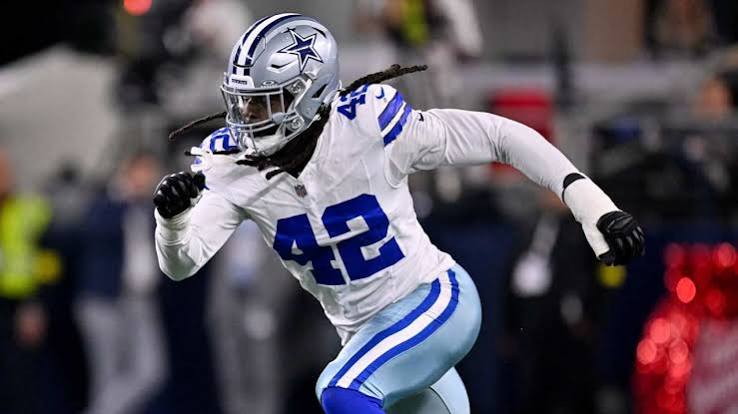
Tag: free agency

  • Jadeveon Clowney Returns to Houston: A Homecoming with Real Football Value

    Jadeveon Clowney Returns to Houston: A Homecoming with Real Football Value

    When Jadeveon Clowney announced he was signing with the Houston Texans, it felt like a blast from the past. The former No. 1 overall pick, who spent five seasons in Houston before a messy trade in 2019, is coming back to the team that drafted him. But this isn’t just a nostalgia trip. At 32, Clowney is returning to a Texans squad with playoff aspirations and a clear need for veteran depth on the defensive line.

    The move raises questions: Can Clowney still contribute at a high level? Is this a low-risk gamble or a meaningful addition? And what does it say about the Texans’ ambitions in a wide-open AFC South? Let’s break down the context, the stakes, and what Clowney’s return really means for Houston.

    The Original Tenure: Promise, Pain, and Pro Bowls

    Clowney’s first stint in Houston was a rollercoaster. Drafted first overall in 2014 out of South Carolina, he was hailed as a generational talent. But injuries—a torn meniscus in his rookie year, a sports hernia in 2016—slowed his early development. When healthy, though, he was a force. He earned Pro Bowl nods in 2016, 2017, and 2018, and his 2017 season (9.5 sacks, 21 QB hits, 2 forced fumbles) remains his career best.

    His most iconic moment as a Texan came in the 2018 playoffs, when he delivered a bone-jarring hit on Colts quarterback Andrew Luck that forced a fumble and set the tone for a wild-card win. That play epitomized Clowney’s game: disruptive, violent, and game-changing—even if the sack numbers didn’t always reflect it.

    But by 2019, the relationship had soured. The Texans franchise-tagged him, but Clowney held out, unhappy with his contract and the team’s direction. The front office, strapped for cap space, traded him to Seattle for a third-round pick and linebacker Jacob Martin. It was an ugly divorce, and Clowney later admitted he regretted how it went down.

    The Wandering Years: Productive but Not Elite

    Since leaving Houston, Clowney has been a journeyman with flashes of brilliance. He spent 2019 in Seattle, then two years in Tennessee, where he made the Pro Bowl in 2020—despite just 4 sacks—thanks to his elite run defense. In Cleveland (2022–2023), he rebounded with 9 sacks in 2023, his best total since 2017. But 2024 was a disaster: signed by Carolina, he managed zero sacks in seven games before being released in November.

    That release left Clowney in free-agent limbo for months. Now, at 32, he’s returning to the scene of his greatest success. But is he the same player? The short answer: no. He’s no longer a dominant edge rusher, but he’s still a high-motor, versatile defender who can stuff the run and pressure the quarterback in spurts.

    Why Houston? The Football Fit

    The Texans aren’t signing Clowney for sentimental reasons. They’re a contender in a weak division, led by young quarterback C.J. Stroud. Their pass rush has been inconsistent, and while Will Anderson Jr. is a budding star, the team lacks veteran depth behind him. Clowney fills that role perfectly: a rotational edge defender who can play on early downs, set the edge against the run, and provide leadership to a young locker room.

    Head coach DeMeco Ryans, a former Texans linebacker, was Clowney’s teammate in 2014–2015. That connection matters. Ryans knows what Clowney brings—and what he doesn’t. This isn’t a move to sell jerseys; it’s a calculated bet that Clowney can be a productive piece in a defense that needs reliable bodies.

    The Stakes: Low Risk, Potential Reward

    Contract terms haven’t been disclosed, but expect a one-year, low-guarantee deal with incentives. That’s the smart play for Houston. If Clowney stays healthy and contributes, great. If not, they cut him with minimal cap damage. It’s a low-risk, potentially high-reward signing for a team with playoff aspirations.

    But there are pitfalls. Clowney has never had a 10-sack season, and at 32, his best pass-rushing days are behind him. He’s not a savior; he’s a complementary piece. The Texans need him to be a steady veteran, not a star. If fans expect the 2017 version, they’ll be disappointed. If they expect a solid rotational player who can help win games, they’ll be thrilled.

    The Narrative: A Redemption Arc

    There’s an undeniable emotional layer to this return. Clowney left Houston under a cloud, and now he’s back, older and wiser. He’s said in interviews that he wishes things had ended differently. This is his chance to write a better final chapter. For fans, it’s a chance to remember the highlight plays—the Luck hit, the strip-sacks, the sheer athleticism—rather than the holdout.

    But the narrative only works if Clowney produces. Houston’s defense needs him to be a reliable presence, not a ghost. If he can stay healthy and contribute 5–7 sacks with solid run defense, this will be seen as a savvy move. If he fades, it’ll be a footnote in a disappointing season.

    The Bigger Picture: What This Means for the Texans

    The signing signals that Houston is all-in on winning now. The AFC South is wide open, and the Texans have the pieces—Stroud, Anderson, a solid secondary—to make a run. Adding a veteran like Clowney, even in a rotational role, shows they’re serious about shoring up weaknesses.

    It also sends a message to the locker room: the front office is willing to bring back familiar faces to build a winning culture. Clowney may not be the player he once was, but he knows what it means to be a Texan. That intangibles factor shouldn’t be underestimated.

    Jadeveon Clowney’s return to Houston is more than a feel-good story—it’s a calculated move by a team with playoff ambitions. He won’t be the dominant force he was in 2017, but he doesn’t need to be. If he can provide solid run defense, occasional pressure, and veteran leadership, this signing will be a win for both sides. For Clowney, it’s a chance at redemption. For the Texans, it’s a low-risk bet on a familiar face. The real test comes on the field, where Clowney will have to prove he still has something left in the tank.

    Summary

    • Jadeveon Clowney is returning to the Houston Texans, the team that drafted him No. 1 overall in 2014.
    • He played in Houston from 2014–2018, making three Pro Bowls, before a messy trade to Seattle in 2019.
    • At 32, Clowney is no longer an elite pass-rusher but offers run-stopping ability and veteran depth.
    • The Texans are a contender in the AFC South, and this is a low-risk, high-reward signing.
    • Clowney’s best season was 2017 (9.5 sacks); he had 9 sacks with Cleveland in 2023 but 0 with Carolina in 2024.

    FAQ

    Q: Why did Clowney leave Houston in 2019?
    A: He was franchise-tagged but held out due to contract dissatisfaction. The Texans traded him to Seattle for a third-round pick and linebacker Jacob Martin.

    Q: What can Clowney still bring to the Texans?
    A: He’s a solid run defender and situational pass-rusher. He won’t be a sack machine, but he can provide leadership and depth on the defensive line.

    Q: Is Clowney a starter or a rotational player?
    A: He’ll likely rotate with Will Anderson Jr. and other edge rushers. At this stage in his career, he’s best used in a situational role.

    Q: What are the contract terms?
    A: Terms haven’t been disclosed yet, but it’s expected to be a one-year, low-guarantee deal with incentives.

    Q: How did Clowney perform in 2024?
    A: He had zero sacks in seven games with Carolina before being released in November 2024. He was a free agent until now.
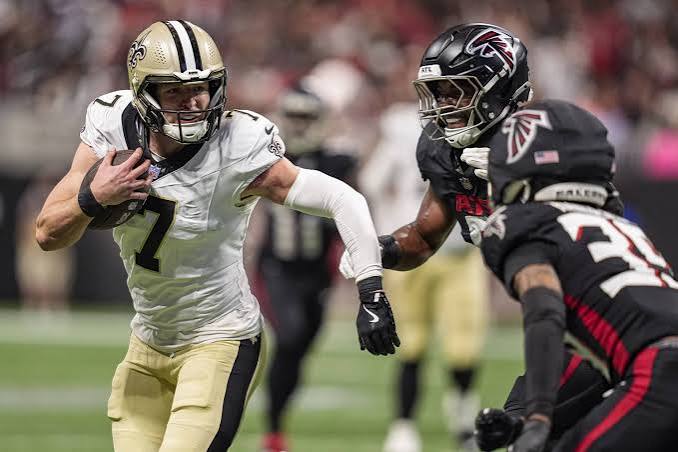
  • Taysom Hill to Broncos? Why Sean Payton’s ‘Swiss Army Knife’ Reunion Makes Sense

    Taysom Hill to Broncos? Why Sean Payton’s ‘Swiss Army Knife’ Reunion Makes Sense

    When Taysom Hill hit free agency this offseason, the NFL world didn’t gasp. At 34, with a medical chart thicker than a New Orleans cookbook, the former Saints gadget star seemed destined for a quiet retirement or a cheap, forgettable deal. But there’s a wrinkle: his old coach, Sean Payton, is now running the Denver Broncos, and Payton has never met a versatile toy he didn’t want to play with.

    This isn’t just a nostalgic reunion story. It’s a chess move that could solve a specific problem for a Broncos team that made the playoffs in 2024 but stumbled in the red zone and lacked a true ‘joker’ weapon. Payton’s history with Hill is deep — he signed him as an undrafted free agent in 2017, molded him into a multi-positional nightmare, and once called him a ‘Swiss Army knife.’ Now, with Denver holding $30–40 million in cap space and a clear need for short-yardage punch, the fit is more logical than sentimental.

    The Payton–Hill Connection: A Decade in the Making

    Sean Payton doesn’t just coach players; he collects them. And few players have ever fit his offensive philosophy like Taysom Hill. Drafted out of BYU as a quarterback, Hill was raw but athletically freakish — a 6’2″, 220-pound missile with sub-4.5 speed and a quarterback’s brain. Payton saw something others didn’t: a weapon that could be deployed anywhere on the field, creating mismatches that defensive coordinators couldn’t scheme against.

    From 2017 to 2021, Hill was Payton’s pet project. He lined up at quarterback in wildcat formations, split out wide, took handoffs out of the backfield, and even covered kicks. Payton’s playbook became a choose-your-own-adventure, and Hill was the protagonist. The results were often spectacular — like the 2020 season when Hill threw for 4 touchdowns, ran for 8, and caught a score, all while playing less than 50% of offensive snaps.

    That relationship ended when Payton retired (briefly) in 2022, and Hill’s role under new Saints coaches diminished. But the bond never broke. Payton has always spoken of Hill with a coach’s pride, calling him ‘one of the most unique players I’ve ever been around.’ Now, with Payton entrenched in Denver, the reunion writes itself.

    Why the Broncos Need a ‘Joker’ Weapon

    The 2024 Broncos were a pleasant surprise, riding rookie quarterback Bo Nix to a 10–7 record and a playoff berth. But the offense was far from complete. They averaged 22.3 points per game — respectable but not elite — and struggled in the red zone, where they converted just 54% of trips into touchdowns (bottom-third in the league). Short-yardage situations were particularly painful; too often, the offense relied on predictable runs up the middle or fade routes that fell incomplete.

    Payton has always craved a ‘joker’ — a player who can line up at tight end, running back, or slot receiver and force defenses to guess. In New Orleans, that was Hill. In Denver, no one has filled that role. The tight end room is thin, and the running back depth is unproven. Hill, even at 34, offers a proven solution: in 2024, he scored 6 rushing touchdowns on just 68 carries, a rate that would have led the league if extrapolated over a full season. He’s still a goal-line vulture, a wildcat threat, and a special teams ace — all areas where Denver ranked in the bottom half of the league.

    The Skeptics’ Case: Age, Injuries, and Opportunity Cost

    Of course, there are reasons to pump the brakes. Hill has missed 20+ games over the last four seasons, including a torn ACL in 2017 and multiple concussions. At 34, his burst is declining, and every hit carries more risk. The Broncos have other needs — inside linebacker, defensive line, offensive line — and spending even $3 million on a gadget player could be seen as a luxury they can’t afford.

    Critics also point to Payton’s tendency to overvalue familiar faces. He’s brought in several former Saints players to Denver, and some have worked (like tackle Mike McGlinchey), but others have been questionable. The fear is that Payton will force Hill into the lineup at the expense of younger, more traditional weapons who could help Bo Nix develop. Nix needs a reliable tight end or a third receiver, not a 34-year-old who might steal snaps in practice and games.

    The Middle Ground: A Situational Weapon at a Bargain Price

    The smartest approach is a compromise. Hill doesn’t need to be a starter; he needs to be a situational weapon. Sign him to a one-year, $2–4 million deal with incentives tied to games played and performance. Use him 15–20 snaps per game in specific packages: wildcat on third-and-short, red-zone jump balls, and kick returns. This limits his exposure to injury while maximizing his impact where it matters most.

    Payton knows exactly how to deploy Hill because he’s done it before. There’s no learning curve — Hill already knows the terminology, the audibles, and the expectations. That’s invaluable for a team that wants to win now. And in the locker room, Hill’s veteran presence and familiarity with Payton’s culture could help bridge the gap between the coach and a young roster.

    The Bottom Line: Low Risk, High Reward

    In a league where offenses are constantly searching for mismatches, Taysom Hill remains a unicorn. He’s not a quarterback anymore — that ship has sailed — but he’s a hybrid tight end/running back/returner who can change a game in a single play. The Broncos have the cap space, the need, and the coach who knows how to use him. The only question is whether Payton will pull the trigger.

    If he does, don’t be surprised to see Hill in Broncos orange, lining up in the backfield on fourth-and-goal, or sprinting downfield on a kickoff. It’s a reunion that makes sense on every level — football, financial, and emotional. And for a coach who loves his toys, Taysom Hill is the ultimate plaything.

    Taysom Hill to Denver isn’t just a feel-good story; it’s a strategic fit that addresses real roster needs. With Payton’s playbook already in Hill’s head, a modest contract, and a defined role, the Broncos could add a proven difference-maker without breaking the bank. The risk is real, but the reward is a weapon that can tilt the field in tight games. Expect Payton to at least make the call.

    Summary

    • Taysom Hill is a free agent after 9 seasons with the Saints, and Sean Payton — his former coach — now leads the Broncos.
    • Hill’s versatility (QB, TE, RB, WR, returner) and red-zone production (6 rushing TDs in 2024) fill a specific need for Denver.
    • The Broncos have $30–40M in cap space and struggled in short-yardage and red-zone situations in 2024.
    • Concerns about age (34) and injury history are valid, but a low-cost, incentive-laden deal mitigates risk.
    • A reunion would be low-risk, high-reward, with Hill used as a situational weapon rather than a starter.

    FAQ

    Q: Is Taysom Hill still a quarterback?
    A: No. While he played QB in college and early in his Saints career, he hasn’t been a full-time passer since 2021. He’s now a hybrid tight end/running back/returner.

    Q: What would Taysom Hill’s role be in Denver?
    A: Likely a situational weapon — 15–20 snaps per game in wildcat, short-yardage, red-zone, and special teams packages.

    Q: How much would Taysom Hill cost?
    A: Given his age and injury history, a one-year deal worth $2–4 million with performance bonuses is plausible.

    Q: Why did the Saints let him go?
    A: The Saints declined to bring him back in 2025, likely due to his age, injury history, and a desire to get younger at the position.

    Q: Could Taysom Hill help Bo Nix’s development?
    A: Indirectly, yes. By providing a reliable short-yardage and red-zone threat, Hill could take pressure off Nix in critical situations, but he won’t be a primary target.