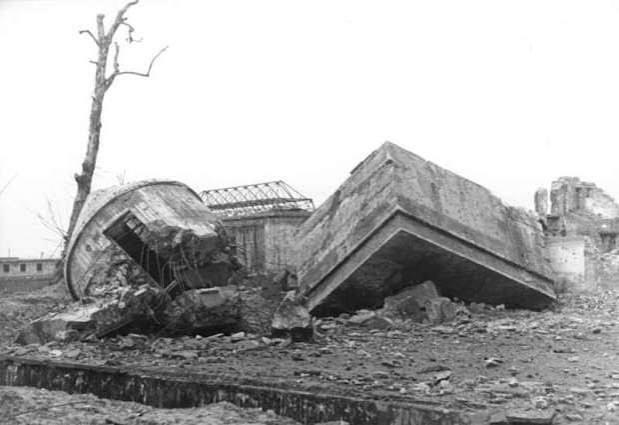
On April 30, 1945, as Soviet artillery shells pounded central Berlin, a single gunshot echoed through the concrete corridors of the Führerbunker. The man who had plunged the world into war was dead or so the story goes. For eight decades, that story has been picked apart, questioned, and spun into conspiracy theories that refuse to die.
The official record is clear: Adolf Hitler shot himself in the right temple, his wife Eva Braun died beside him from cyanide, and their bodies were burned in the Chancellery garden. But the mystery persists because the physical evidence has been locked away in Moscow, the Soviet Union played games with the truth, and no body was ever put on public display. What do we actually know, and what remains uncertain?
The Final Days: A Dictator Trapped Underground
By late April 1945, the Third Reich was collapsing in on itself. The Soviet Red Army had encircled Berlin on April 25, and the Battle of Berlin was entering its final, brutal phase. Hitler had retreated to the Führerbunker on January 16, 1945, and rarely emerged. From a labyrinth of reinforced concrete rooms beneath the Reich Chancellery, he directed armies that no longer existed, issuing orders to units that had been destroyed days earlier.
On April 29, Hitler dictated his last will and political testament. In it, he blamed international Jewry for the war and appointed Admiral Karl Dönitz as his successor. He also married Eva Braun, his long-time companion, in a brief civil ceremony. The next day, April 30, after a lunch of spaghetti and a final meeting with his staff, Hitler and Braun retired to their private suite. A single shot was heard in the corridor. When the door was opened, Hitler was slumped on a sofa, dead from a gunshot wound to the right temple. A Walther PPK 7.65mm pistol lay nearby. Eva Braun was dead beside him, her lips blue from cyanide.
The bodies were carried upstairs, placed in a bomb crater in the Chancellery garden, doused with petrol, and set alight. The burning was incomplete Soviet forces arriving days later found charred remains that were impossible to fully identify on sight.
The Soviet Evidence: A Jawbone and a Skull Fragment
Soviet intelligence, specifically the SMERSH counterintelligence unit, recovered the remains on May 4–5, 1945. They conducted a forensic examination, but the results were classified and hidden for decades. The key evidence was a jawbone and a dental bridge. Hitler’s dental assistants, Käthe Heusermann and Fritz Echtmann, were captured by the Soviets and forced to identify the teeth. They confirmed that the bridge matched Hitler’s dental records and X-rays taken in 1944. This dental match remains the strongest forensic evidence that Hitler died in the bunker.
A fragment of skull, with a bullet hole on the left side, was also recovered and attributed to Hitler. But in 2009, a U.S. researcher named Nick Bellantoni analyzed the skull fragment and found that it was from a female skull. This cast doubt on the skull fragment, but not on the jawbone. The jawbone remains the authenticating artifact, and it is held in Russian state archives in Moscow, along with the skull fragment.
The Cold War Fog: Stalin’s Disinformation and Secrecy
Why did the mystery persist? The Soviet Union held the physical evidence and forensic reports under strict secrecy for decades. Stalin himself told Western leaders that Hitler had escaped, a deliberate disinformation tactic to sow distrust among the Allies. This fed the rumor mill. If the Soviet Union wouldn’t show the body, the reasoning went, maybe there was something to hide.
Unlike Mussolini, who was hung upside down in a Milan square, Hitler’s body was never publicly exhibited. The Soviets buried and reburied the remains multiple times. In 1970, KGB chief Yuri Andropov ordered the remains exhumed, cremated, and scattered into the Biederitz River in East Germany, to prevent the site from becoming a neo-Nazi shrine. This effectively destroyed any chance of independent verification.
The Conspiracy Theories: Escape to Argentina and Beyond
Without a public body, conspiracy theories flourished. The most famous is the “escape to Argentina” narrative, popularized by the 2011 book Grey Wolf: The Escape of Adolf Hitler by Gerrard Williams and Simon Dunstan. The book claims that Hitler and Eva Braun fled to Argentina via submarine, lived on a ranch, and died in the 1960s. Proponents point to FBI and CIA files on Hitler sightings in South America as evidence of ongoing investigations.
But these files are exactly what they appear to be: investigations of unsubstantiated rumors. The FBI and CIA chased leads that went nowhere. No credible evidence of Hitler’s survival has ever emerged. The consensus among mainstream historians—Ian Kershaw, Antony Beevor, Richard J. Evans—is that Hitler died by his own hand in the bunker. They point to the dental evidence, eyewitness testimony, and the overwhelming logic of a cornered dictator choosing suicide over capture, especially after Mussolini’s corpse was displayed in public.
What the Evidence Actually Supports
Let’s separate what we know from what we don’t.
What we know:
– Hitler died on April 30, 1945, in the Führerbunker.
– The cause of death was a self-inflicted gunshot wound, likely combined with cyanide.
– His jawbone, recovered by Soviet forces, matches dental records.
– Multiple bunker staff, including Otto Günsche, Heinz Linge, and Rochus Misch, gave consistent accounts of the suicide and burning.
What we don’t know:
– The exact sequence of events in the final moments (did he shoot himself before or after biting the cyanide capsule? Was the skull fragment actually Hitler’s?)
– The final disposition of all remains—the Soviets destroyed most of them in 1970.
The skull fragment controversy is real, but it doesn’t overturn the dental evidence. The jawbone is the key artifact, and it has never been disputed by credible experts. The mystery of Hitler’s death is not about whether he died in the bunker—it’s about why people continue to doubt it.
The mystery of Hitler’s death is less about the historical record and more about the human appetite for conspiracy. The evidence—dental records, eyewitness testimony, and the logic of history—points overwhelmingly to one conclusion: Hitler died in the bunker on April 30, 1945. The Soviet secrecy and the destruction of remains created a vacuum, but it was filled with rumor, not fact. The jawbone in Moscow is the final word, and it says what the history books have always said.
Summary
- Hitler died by suicide on April 30, 1945, in the Führerbunker, with a gunshot to the right temple and cyanide.
- The strongest evidence is a jawbone and dental bridge recovered by Soviet forces, matched by Hitler’s dental assistants.
- Soviet secrecy and the destruction of remains in 1970 fueled conspiracy theories, but no credible evidence of escape has emerged.
- A 2009 study cast doubt on a skull fragment, but not the jawbone, which remains authentic.
- Mainstream historians universally accept the suicide account, citing dental evidence and eyewitness testimony.
FAQ
Q: Did Hitler really die in the bunker?
A: Yes. The consensus of historians, based on dental records, eyewitness accounts, and Soviet forensic reports, is that Hitler died by suicide on April 30, 1945.
Q: Why do some people believe Hitler escaped to Argentina?
A: The theory, popularized by books like Grey Wolf, relies on unsubstantiated sightings and Cold War-era rumors. FBI and CIA files show investigations but no credible evidence.
Q: What is the skull fragment controversy?
A: A 2009 DNA study found that a skull fragment attributed to Hitler was from a female. However, this does not affect the jawbone, which is the key authenticating evidence.
Q: Where are Hitler’s remains now?
A: Most were destroyed by Soviet intelligence in 1970. The only surviving official remains are a skull fragment and jawbone held in Russian state archives in Moscow.
Q: Why did Stalin spread rumors that Hitler escaped?
A: Stalin used disinformation to sow distrust among Western Allies. It was a Cold War tactic, not a reflection of actual evidence.