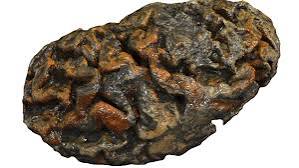
When archaeologists cracked open a 2,600-year-old skull from a Yorkshire waterlogged pit, they expected to find nothing but dirt and bone. Instead, they found a yellow, spongy mass: a preserved human brain. The Waterloo Brain, as it’s now known, is one of over 4,400 documented cases of ancient brains surviving long after all other soft tissues have vanished. For years, these finds were dismissed as freak accidents of mummification, freezing, or bog chemistry. But a landmark study published in Proceedings of the Royal Society B in March 2025 suggests something far more surprising: brains may have an intrinsic, molecular ability to resist decay—one that doesn’t depend on the environment at all.
Led by forensic anthropologist Alexandra Morton-Hayward at the University of Oxford, the research team analyzed 4,405 preserved brains from 213 sources, spanning every continent and climate type. They found brains preserved in arid deserts, tropical jungles, and even ordinary graves—places where no other soft tissue remained. The key, they argue, lies in a novel mechanism: protein and lipid molecules in the brain can cross-link to form a stable ‘molecular cage’ that resists enzymes and microbes. If confirmed, this discovery doesn’t just rewrite our understanding of taphonomy—it opens a window into the deep past, potentially preserving ancient DNA, proteins, and even traces of neurological disease.
This isn’t just a curiosity for archaeologists. It challenges forensic assumptions about how long a body has been dead, hints at a macabre link between neurodegenerative disease and preservation, and raises the possibility that some ancient brains were deliberately treated. Here’s what we know—and what this breakthrough means for science.
The Brain: The First to Go, Except When It’s Not
The brain is about 80% water, packed with lipids and enzymes that begin digesting it from within within minutes of death. Autolysis kicks in, then putrefaction, then microbial colonization—usually reducing the organ to mush in days or weeks. That’s why the brain is typically one of the first organs to disappear, not the last.
Yet hundreds of exceptions have been documented. The Windover Bog People in Florida, buried 7,000–8,000 years ago, yielded brains in peat bogs. Victims of the Herculaneum eruption in 79 CE had their brains vitrified—turned to glass—by volcanic heat. A medieval Norwegian church site produced a ‘brain in a jar.’ And in the Waterloo Brain case, the organ was the only soft tissue left in the skull, surviving while skin, muscle, and even the brain’s own membranes decomposed.
Historically, each find was explained by its environment: bogs preserve through low oxygen and acidity, deserts desiccate, freezing halts decay. But as the Oxford team’s survey shows, those explanations fall short. Brains have been found in normal graves, in tropical climates, in conditions where no other soft tissue survived. The brain was the only organ left—and that demands a different explanation.
The Molecular Cage: How Proteins and Lipids Team Up
Morton-Hayward and colleagues propose a mechanism that operates at the molecular level, independent of external conditions. In certain chemical environments—perhaps influenced by the brain’s own composition—proteins and lipids can cross-link, forming a dense, stable matrix. This ‘molecular cage’ resists enzymatic breakdown and microbial attack, effectively fixing the tissue in place.
The process is analogous to what happens when food browns during cooking (Maillard reactions) or when formaldehyde fixes tissue for pathology. Molecules bind together, creating a new material that’s no longer susceptible to normal decay. In the brain, this might occur spontaneously under the right conditions, perhaps triggered by the breakdown of cell membranes and the release of reactive molecules.
Crucially, the team found that these preserved brains often retain their original structure at the microscopic level—neurons and blood vessels can still be seen. That means not just the gross shape, but the molecular architecture, is preserved. This isn’t mummification in the traditional sense; it’s a chemical transformation that could happen anywhere.
What This Means for Archaeology and Forensics
For archaeologists, the discovery is a potential goldmine. If brains can survive for millennia, they may contain intact DNA, proteins, and even neurotransmitters—a direct record of the past. The Waterloo Brain, for example, yielded proteins that might indicate ancient diseases, including prion proteins. This could allow scientists to trace the history of neurological disorders like Alzheimer’s or Parkinson’s across human evolution.
For forensic scientists, the implications are more immediate. A preserved brain is no longer a reliable indicator that a body is recent—it could be centuries old. Post-mortem interval estimates may need to be revised. And the finding raises questions about burial practices: Were some brains deliberately treated to preserve them, perhaps with resins or other substances? Or is it purely chemical chance? The evidence so far suggests both may be at play.
A Macabre Link to Neurodegenerative Disease
One of the most intriguing hypotheses to emerge from this research is that individuals with pre-existing protein aggregates—like those seen in Alzheimer’s or Parkinson’s—might have brains that preserve better. The same cross-linking that drives disease pathology might also drive preservation. If true, ancient brains could serve as a natural archive of neurological disease history, showing how these conditions have evolved over time.
This is a testable idea, and the Oxford team is already exploring it. They’re analyzing preserved brains for signs of amyloid plaques and Lewy bodies, comparing them to modern cases. The results could reveal whether Alzheimer’s is a modern epidemic or an ancient companion.
The Brain as the Last Organ: Why the Brain?
Why does the brain, of all organs, survive? Its high lipid content and low water activity in certain states may make it uniquely suited to cross-linking. But there’s also a deeper, almost philosophical resonance: the brain as the seat of consciousness, refusing to vanish. Ancient Egyptians weighed the heart, not the brain, in their judgment rituals—but perhaps they missed the true vessel of the soul.
For modern science, the brain’s persistence is a rebellion against the expected order of decay. It’s a reminder that even in death, the body holds surprises—and that the organ we associate with thought might have a second life as a time capsule.
The discovery that brains can preserve themselves through a molecular mechanism—independent of environment—is a paradigm shift. It turns a forensic oddity into a systematic phenomenon, with implications for archaeology, forensics, and medicine. As researchers analyze these ancient brains, they may uncover not just the history of disease, but also the chemical pathways that could one day help us preserve human tissue—or understand why it degrades. The brain, it seems, is determined to have the last word.
Summary
- Over 4,400 preserved ancient human brains have been documented worldwide, often as the only surviving soft tissue.
- A 2025 Oxford study identified a novel molecular mechanism: protein-lipid cross-linking creates a stable ‘molecular cage’ that resists decay.
- Preservation occurs in all climates, not just mummifying or freezing conditions.
- Preserved brains may contain intact DNA, proteins, and disease markers, offering a window into ancient neurology.
- The discovery challenges forensic post-mortem interval estimates and raises the possibility of deliberate ancient brain preservation.
FAQ
Q: How common are preserved ancient brains?
A: More than 4,400 cases have been documented, according to the 2025 study, but many more may exist undiscovered.
Q: What is the new preservation mechanism?
A: Proteins and lipids in the brain can cross-link to form a stable molecular matrix that resists enzymes and microbes, similar to Maillard reactions in cooking or formaldehyde fixation.
Q: Can a preserved brain provide DNA?
A: Yes, some preserved brains, like the Waterloo Brain, have yielded intact proteins and potentially DNA, making them valuable for paleogenomics.
Q: Does this mean brains don’t decompose in normal conditions?
A: No, brains usually decompose quickly. But under certain chemical conditions, the cross-linking mechanism can occur in any environment, preserving the brain even when other tissues are gone.
Q: Could this discovery help with Alzheimer’s research?
A: The cross-linking mechanism is similar to amyloid plaque formation, and ancient brains might preserve evidence of neurodegenerative diseases, helping trace their history and evolution.