
Tag: Football Transfer

  • Ollie Watkins to Al-Hilal: A £60m Bet on Age, Goals, and Saudi Ambition

    Ollie Watkins to Al-Hilal: A £60m Bet on Age, Goals, and Saudi Ambition

    On a damp January afternoon, Aston Villa’s all-time Premier League top scorer packed his bags for Riyadh. Ollie Watkins, 29, is joining Al-Hilal in a deal reported to be worth £55–60 million—making him the second-most expensive signing of a player aged 30 or over in football history. The move raises eyebrows not just for its timing (mid-season, during Villa’s Champions League campaign) but for what it signals about the shifting economics of European football and the Saudi Pro League’s relentless shopping spree.

    For Villa, it’s a pragmatic sale under Profit and Sustainability Rules. For Al-Hilal, it’s a ‘win-now’ acquisition aimed at domestic supremacy and Asian glory. For Watkins, it’s a lucrative final chapter—but one that may cost him his England place. This transfer is a microcosm of modern football: financial prudence clashing with sporting ambition, and age becoming a mere number when the offer is right.

    The Record Context: Who’s Above Watkins?

    To understand the significance of Watkins’ fee, look at the list he’s just entered. The most expensive signing of a player aged 30 or over remains Neymar’s €90 million move to Al-Hilal in 2023, when the Brazilian was 31. Watkins, at 29 (he turns 30 in December 2025), slots in second with a reported £55–60 million. Interestingly, Cristiano Ronaldo’s 2018 move to Juventus (€100m+) also involved a player over 30, but that fee was eclipsed by Neymar’s later transfer—so the benchmark for ’30+’ signings is now firmly set by these Saudi-driven deals.

    Al-Hilal are no strangers to breaking records. They’ve already spent big on Neymar, Aleksandar Mitrović, and Rúben Neves. But Watkins isn’t a galactico in the traditional sense—he’s a proven Premier League goalscorer, not a global brand. This suggests a shift in Saudi recruitment: away from fading superstars and toward functional, high-output players in their prime.

    Villa’s Financial Squeeze and Sporting Gamble

    Aston Villa’s decision to sell their all-time Premier League top scorer (74 goals) isn’t just about the fee—it’s about PSR headroom. The club have already sold Jhon Durán to Al-Nassr for £64 million in January 2025, and Douglas Luiz left for Juventus in the summer. These sales are strategic, balancing books after a spending spree that included a £50m move for Moussa Diaby and Champions League qualification.

    But the sporting cost is real. Villa are in the middle of their first Champions League campaign since 1982–83, sitting in the Premier League’s top four. Losing Watkins—their pressing fulcrum and leading scorer—leaves Unai Emery with a gaping hole up front. The club’s response? Links to strikers like Jonathan David or Victor Osimhen suggest they’re already looking, but January replacements are notoriously overpriced. This is a gamble: financial stability now could mean European mediocrity later.

    Al-Hilal’s ‘Win-Now’ Strategy

    For Al-Hilal, Watkins is a statement. The club is locked in a title race with Al-Ittihad, led by Karim Benzema, and have AFC Champions League ambitions. Watkins’ pace, pressing, and intelligent runs fit perfectly into the high-tempo style favored by coach Jorge Jesus. He’s not a long-term project—at 29, he’s in his prime, and the fee reflects a desire for immediate impact.

    There’s also the Neymar factor. The Brazilian’s contract expires in June 2025, and his injury-plagued tenure has been a disappointment. Watkins represents a more reliable, less injury-prone option to lead the line. In a league where foreign player quotas are strict, Al-Hilal are choosing substance over stardom—a calculated bet that paid off with Mitrović, who has been prolific since joining.

    What Does This Mean for Watkins and England?

    Watkins’ move raises questions about his international future. England manager Thomas Tuchel has consistently picked players from top European leagues, but the precedent of Jordan Henderson and others suggests Saudi-based players can still be selected—if they perform. At 29, Watkins has a career-best 20+ caps, and his goalscoring record (including that famous Euro 2024 semi-final winner) makes him a valuable squad asset. But the level of competition in the Saudi Pro League is a step down from the Premier League, and Tuchel may favor players testing themselves at the highest level.

    Financially, though, the deal is life-changing. Reports suggest wages of £300k+ per week, tax-free—a sum Villa couldn’t match. For a player who started at Exeter City and spent time on loan at Weston-super-Mare, this is the culmination of a remarkable rise. But it’s also a career crossroads: leave the global stage for riches, or stay and fight for trophies in England’s top flight? He chose the former.

    The Bigger Picture: Saudi Arabia’s Football Revolution

    The Watkins transfer is another data point in Saudi Arabia’s PIF-backed project. With 75% ownership of Al-Hilal, the fund has spent billions on foreign talent, from Ronaldo to Benzema to Neymar. The strategy is twofold: bolster the domestic league’s quality and project soft power globally. Critics call it sportswashing—using football to distract from human rights abuses. Supporters argue it’s simply investment, similar to Qatar’s PSG or Abu Dhabi’s Man City.

    Regardless of the moral calculus, the financial reality is clear: Saudi clubs can outbid European giants for players in their prime. Watkins is 29, not 34—this isn’t a retirement home move. It’s a sign that the league is attracting players who still have elite-level years ahead. If the project succeeds, expect more transfers like this. If it fails, Watkins will be remembered as one of the pioneers of a new footballing order.

    Ollie Watkins’ move to Al-Hilal is more than a transfer—it’s a barometer of football’s changing tides. For Villa, it’s a painful but necessary sale. For Al-Hilal, it’s a statement of intent. For Watkins, it’s a life-changing deal that could define his legacy. As the Saudi Pro League continues to flex its financial muscle, this signing may be remembered as the moment when age became irrelevant and ambition found a new home.

    Summary

    • Watkins joins Al-Hilal for £55–60m, making him the second-most expensive 30+ signing ever, behind Neymar.
    • Aston Villa sell their all-time Premier League top scorer mid-season, balancing PSR books but risking Champions League progress.
    • Al-Hilal acquire a ‘win-now’ striker to fuel their title race and AFC Champions League campaign, replacing Neymar’s output.
    • Watkins’ England future is uncertain, but his performances in Saudi could still earn him a spot under Tuchel.
    • The transfer underscores Saudi Arabia’s PIF-backed football revolution, attracting players in their prime, not just fading stars.

    FAQ

    Q: How much did Al-Hilal pay for Ollie Watkins?
    A: The reported fee is around £55–60 million, making it the second-largest sum ever paid for a player aged 30 or over, behind Neymar’s €90m move to the same club in 2023.

    Q: Why did Aston Villa sell Watkins mid-season?
    A: Villa needed to comply with Profit and Sustainability Rules (PSR). Selling high-value players like Watkins (and Jhon Durán earlier in January) generates significant profit and helps balance the books after heavy spending.

    Q: Can Watkins still play for England while in Saudi Arabia?
    A: Yes, there is no rule preventing it. Jordan Henderson was selected while playing in Saudi, but competition for places is fierce, and Thomas Tuchel may prefer players in top European leagues.

    Q: What does this mean for Al-Hilal’s Neymar?
    A: Neymar’s contract expires in June 2025, and his injury problems have limited his impact. Watkins is seen as a more reliable, younger replacement to lead the line.

    Q: Who will replace Watkins at Aston Villa?
    A: Villa are linked with strikers like Jonathan David and Victor Osimhen, but no deal had been confirmed at the time of writing. They may also promote from within or adjust their formation.

  • Julián Álvarez’s Transfer Maze: Barcelona Dream, Arsenal Caution, and City’s Firm Stance

    Julián Álvarez’s Transfer Maze: Barcelona Dream, Arsenal Caution, and City’s Firm Stance

    Julián Álvarez is 24, a World Cup and Copa América winner, and the reigning treble-winning forward at Manchester City. Yet after a season where he scored 19 goals and assisted 13 more, he started fewer than half of City’s Premier League matches. Erling Haaland stands in his way, and Álvarez wants out.

    The chase for his signature has exposed a fascinating split among Europe’s elite. Atlético Madrid have bid, Arsenal admire him but won’t bite, and Barcelona reportedly Álvarez’s dream destination are trapped by financial reality. This is not your typical transfer saga; it’s a collision of ambition, squad dynamics, and cold economic logic.

    The Player: Too Good to Sit, Too Valuable to Let Go Cheaply

    Álvarez arrived at City from River Plate in January 2022 for around £14 million. Two and a half years later, his market value has soared to €80–90 million. He’s a pressing machine, a clever runner, and a clinical finisher — qualities that made him integral to City’s treble run and Argentina’s recent Copa América triumph.

    But Haaland is the undisputed No. 9 at the Etihad. Álvarez has filled in as a second striker or wide forward, yet when the Champions League knockouts roll around, he’s often watching from the bench. At 24, with the 2026 World Cup on the horizon, he needs guaranteed starts. His agent, Hernán Boccanegra, has made that demand public, escalating tensions with City’s hierarchy.

    City’s stance is pragmatic. Guardiola wants him to stay, but the club won’t block a sale if the price is right — and “right” means north of €80 million. With his amortized cost low, any fee in that range would be pure profit, easing Financial Fair Play concerns. They’ve done this before: Gabriel Jesus and Oleksandr Zinchenko left for Arsenal when they wanted more minutes.

    Arsenal: Admiration Without Action

    The Gunners are the perfect case study in strategic restraint. They’ve been linked with Álvarez repeatedly, and on paper, he fits Mikel Arteta’s pressing system. Arsenal need more goals from open play, and Álvarez’s versatility — he can play as a 9, a 10, or on the wing — seems like a dream.

    But look closer. Arsenal already have Kai Havertz, who finished last season in red-hot form as a false 9, and Gabriel Jesus, returning to fitness. Both are proven in Arteta’s setup. Signing Álvarez would mean displacing one of them or asking a player desperate for minutes to accept a rotational role — a contradiction.

    Then there’s the fee. City would demand €80M+, and Arsenal’s budget is already committed to Riccardo Calafiori and likely a midfielder (Mikel Merino) and a wide forward. Their priority is a right-sided attacker to support Bukayo Saka, not another central striker. So Arsenal admire Álvarez from a distance, but they’re not calling City.

    Barcelona: The Dream That Finance Defers

    Spanish outlets have repeatedly reported that Álvarez’s camp has told Barcelona he wants to join. Camp Nou, the Blaugrana shirt, the chance to lead the line — it’s the stuff of childhood fantasies for many Argentine players. But Barcelona’s financial reality is a bucket of cold water.

    La Liga’s spending limits and Barça’s wage bill mean they cannot register a player of Álvarez’s caliber without first selling someone significant — Raphinha, Ferran Torres, or Frenkie de Jong, perhaps. Even then, the transfer fee would likely exceed €80M, a sum Barça can’t easily conjure.

    Barça’s public stance is cautious. They’ve also been linked with Nico Williams and Dani Olmo, suggesting Álvarez isn’t even their top attacking target this window. A move in January or summer 2025 seems more plausible, once their financial calendar resets.

    Atlético Madrid: The Most Concrete Suitor

    Diego Simeone’s Atlético have made Álvarez their priority. They lost Memphis Depay, and Antoine Griezmann isn’t getting younger. Álvarez’s work rate and movement would thrive under Simeone’s demanding system.

    Atlético have reportedly bid €70–80M, but City have rejected it as insufficient. The gap might be bridgeable — maybe €85M plus add-ons — but Atlético’s history of big spending is limited. They’re the most serious buyer, yet they might not meet City’s valuation.

    The Verdict: A Summer of Stalemate

    Álvarez’s situation is a classic logjam. He wants to leave, City want to keep him or sell for a premium, Barça can’t afford him, Arsenal won’t pay for a profile they don’t need, and Atlético can’t reach the asking price. Something has to give — either a club blinks with a massive offer, or Álvarez stays for another season and revisits this in 2025.

    One thing is certain: at 24, with his trophy cabinet already full, Álvarez won’t accept another year on the bench. The question is whether any club can turn that frustration into a transfer.

    The Julián Álvarez saga is a microcosm of modern football’s transfer market — where player ambition meets financial fair play, and where a club’s dream target can be blocked by its own balance sheet. For now, Manchester City hold the cards, but the pressure is mounting. Whether he stays or goes, Álvarez’s next move will define the next chapter of his career.

    Summary

    • Julián Álvarez wants more playing time, having started fewer than half of City’s Premier League matches in 2023-24 despite 19 goals and 13 assists.
    • Manchester City are not actively selling but would listen to offers above €80M, with a sale representing pure profit for FFP.
    • Arsenal admire Álvarez but have not made a formal approach due to their priority on a wide forward and existing options like Havertz and Jesus.
    • Barcelona is Álvarez’s reported dream destination, but their financial constraints make a move unlikely without major sales first.
    • Atlético Madrid have made the most concrete bid (€70-80M), which City have rejected, leaving the transfer in a stalemate.

    FAQ

    Q: Why does Julián Álvarez want to leave Manchester City?
    A: He wants more guaranteed playing time, especially in key matches, as he is often benched behind Erling Haaland. At 24, with the 2026 World Cup approaching, he needs consistent starts to secure his place in Argentina’s squad.

    Q: What is Manchester City’s stance on selling Álvarez?
    A: City want to keep him, but they are open to offers above €80M. Since his amortized cost is low, a sale would be pure profit and help with Financial Fair Play. They have let unhappy players leave before for fair fees.

    Q: Why haven’t Arsenal made a move for Álvarez?
    A: Arsenal admire him but have other priorities, like a wide forward and a midfielder. They already have Kai Havertz and Gabriel Jesus for the striker role, and they’re not willing to pay City’s valuation for a player who wants guaranteed starts.

    Q: Is Barcelona close to signing Álvarez?
    A: No. Barcelona are his dream destination, but financial fair play constraints mean they must sell players first to afford the fee and wages. A move in 2025 is more plausible than this summer.

    Q: What is Atlético Madrid’s offer?
    A: Atlético have reportedly bid €70-80M, but City have rejected it as insufficient. They remain the most concrete suitor but may need to raise their offer to seal a deal.

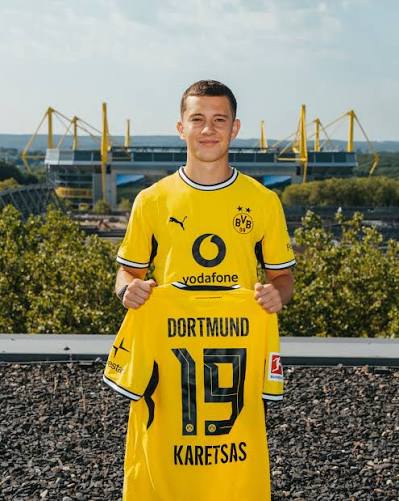
  • Konstantinos Karetsas to Borussia Dortmund: The €30m Bet on a Teenage Playmaker

    Konstantinos Karetsas to Borussia Dortmund: The €30m Bet on a Teenage Playmaker

    When Borussia Dortmund commit €30 million to a teenager, the football world takes notice. The Bundesliga club, renowned for turning raw potential into world-class assets, has secured the signature of Konstantinos Karetsas from KRC Genk, beating out Premier League heavyweights Arsenal and Manchester United in the process. At just 17 years old, Karetsas represents the latest in a long line of Belgian Pro League prodigies destined for greatness—or at least, for a lucrative move to a bigger club in three years’ time.

    This transfer is more than a simple purchase; it’s a statement of intent from Dortmund, a calculated gamble on a player whose technical brilliance has already drawn comparisons to some of Belgium’s finest. For Arsenal and Manchester United, it’s a missed opportunity that raises uncomfortable questions about their recruitment strategies. And for Karetsas himself, it’s the ultimate test: can he navigate the leap from the Jupiler Pro League to the Bundesliga, and eventually fulfill the promise that has made him one of Europe’s most sought-after teenagers?

    The Belgian Pro League: A Finishing School for Elite Talent

    The Jupiler Pro League has long been Europe’s most reliable talent factory. Clubs like Genk, Anderlecht, and Club Brugge operate as finishing schools, polishing young gems before selling them at a premium to the continent’s elite. The list of alumni reads like a who’s who of modern football: Kevin De Bruyne, Romelu Lukaku, Thibaut Courtois, Youri Tielemans, and more recently, Jeremy Doku and Charles De Ketelaere.

    KRC Genk, in particular, has carved out a niche as a development powerhouse. Their academy produced De Bruyne and Courtois, and now they’ve added Karetsas to that lineage. The club’s model is simple: identify exceptional talent, give them first-team minutes, and sell at the optimal moment. With Karetsas, they’ve done exactly that, banking a €30m fee for a player who cost them nothing but time and trust.

    Karetsas’ Meteoric Rise

    Karetsas’ trajectory has been nothing short of remarkable. He made his senior debut for Genk at 16, a testament to his maturity and technical readiness. His playing style—close control, vision, and an uncanny ability to find space between the lines—immediately drew attention. In his breakout season, he contributed goals and assists in the Belgian Pro League and European competitions, putting Europe’s biggest clubs on high alert.

    His dual eligibility (Belgian and Greek) adds another layer of intrigue. While he’s represented Belgium at youth level, Greece has also courted him, hoping to secure his international future. This subplot could become a major storyline in the coming years, especially if he develops into a star at Dortmund.

    Dortmund’s Development Machine

    Borussia Dortmund have perfected the art of buying young, developing, and selling at a premium. The evidence is overwhelming: Jadon Sancho (sold to Man United for €85m), Erling Haaland (sold to Man City for €60m), and Jude Bellingham (sold to Real Madrid for €103m). This model isn’t just about profit; it’s about creating an environment where young players can thrive.

    Dortmund’s pitch to Karetsas would have been compelling: guaranteed first-team minutes, a clear development pathway, and a track record of launching careers. The club’s reputation as a springboard to the absolute elite is unmatched. For a 17-year-old with ambitions of playing at the highest level, Dortmund offers the perfect balance of challenge and opportunity.

    But there’s a catch. Dortmund’s midfield is already crowded. Julian Brandt, Felix Nmecha, Marcel Sabitzer, and potentially Giovanni Reyna all compete for similar roles. Karetsas will need to fight for his place, and there’s a real possibility he’ll be eased in gradually, perhaps even loaned out for a season to gain experience. The question is whether he can adapt quickly enough to make an immediate impact.

    The Premier League Missed Opportunity

    Arsenal and Manchester United were both linked with Karetsas, but ultimately failed to secure his signature. For Arsenal, this is a curious case. Under Mikel Arteta, they’ve shown a willingness to invest in high-potential teenagers—Ethan Nwaneri and Myles Lewis-Skelly are recent examples. Yet they hesitated on Karetsas, perhaps prioritizing other positions like striker or defensive midfield. The €30m fee is significant, but for a club of Arsenal’s financial muscle, it’s hardly prohibitive. Their loss could be Dortmund’s gain.

    Manchester United’s situation is more complicated. The club is in a state of flux, with INEOS restructuring the sporting department. This instability likely hampered their ability to move quickly and decisively. United’s recruitment has been erratic in recent years, and missing out on Karetsas is another example of their struggles to compete with more agile clubs. The question is whether this pattern will continue under the new regime.

    The Belgian League to Bundesliga Adjustment

    The jump from the Belgian Pro League to the Bundesliga is significant. The pace is faster, the physicality is greater, and the tactical demands are higher. Some Belgian stars struggle initially—Leandro Trossard took time to adapt at Brighton, and Charles De Ketelaere floundered at Milan before reviving at Atalanta. Others, like De Bruyne and Doku, transitioned seamlessly.

    Karetsas’ technical profile suggests he could adapt quickly. His close control and vision are tailor-made for the Bundesliga’s open, attacking style. But he’ll need to add physical strength and learn to cope with the relentless pressure of German football. Dortmund’s coaching staff will be crucial in this process, and their track record with young players is reassuring.

    The International Eligibility Subplot

    Karetsas’ dual nationality adds a fascinating dimension to his career. Belgium’s attacking midfield pool is crowded—De Bruyne, Doku, De Ketelaere, and Johan Bakayoko are all ahead of him. Greece, on the other hand, would welcome him with open arms, offering a faster path to senior international football. His decision could shape his international career for years to come, and it’s a decision he’ll need to make carefully.

    For now, he’s focused on Dortmund, but the international question will loom large. If he breaks into the Belgian senior team, he’ll be following in the footsteps of his idols. If he chooses Greece, he could become a national hero. Either way, his choice will be closely watched.

    Konstantinos Karetsas’ move to Borussia Dortmund is a classic example of the modern football ecosystem: a talented teenager, a selling league, and a club built on development. For Dortmund, it’s a calculated bet on a player who could become their next big sale. For Karetsas, it’s the opportunity of a lifetime. The Bundesliga will be a test, but if his rise at Genk is any indication, he’s ready for the challenge. The only question is whether Arsenal and Manchester United will live to regret letting him slip away.

    Summary

    • Borussia Dortmund have signed Konstantinos Karetsas from KRC Genk for €30m, beating Arsenal and Manchester United to his signature.
    • Karetsas, a 17-year-old attacking midfielder, is the latest product of the Belgian Pro League’s talent pipeline, following in the footsteps of De Bruyne, Courtois, and Doku.
    • Dortmund’s development model—buy young, develop, sell at a premium—makes them an ideal destination for Karetsas, but he’ll face stiff competition for minutes in a crowded midfield.
    • Arsenal and United’s failure to secure the deal raises questions about their recruitment strategies, with United’s ongoing structural instability a likely factor.
    • The jump from the Belgian league to the Bundesliga is significant, but Karetsas’ technical ability suggests he could adapt quickly.

    FAQ

    Q: Who is Konstantinos Karetsas?
    A: Konstantinos Karetsas is a 17-year-old Belgian attacking midfielder of Greek descent, who recently transferred from KRC Genk to Borussia Dortmund for €30 million. He’s known for his close control, vision, and composure beyond his years.

    Q: Why did Karetsas choose Borussia Dortmund over Arsenal and Manchester United?
    A: Dortmund’s track record of developing young players and providing first-team opportunities was likely a key factor. The club’s history of selling players for massive profits (e.g., Bellingham, Haaland) also makes it an attractive stepping stone for ambitious teenagers.

    Q: What position does Karetsas play?
    A: He primarily operates as an attacking midfielder (No. 10) or on the right wing, where he can cut inside and create chances.

    Q: Will Karetsas be eligible for Belgium or Greece at the senior level?
    A: He’s eligible for both. He’s represented Belgium at youth level, but Greece has also courted him. His international future remains undecided.

    Q: What are the risks of this transfer for Dortmund?
    A: The main risk is the adjustment from the Belgian Pro League to the Bundesliga, which is faster and more physical. Additionally, Dortmund’s midfield is crowded, so Karetsas may need time to break into the starting lineup.