
Tag: football finance

  • The £500m Window: How Manchester City, Newcastle, and Aston Villa Are Chasing Chelsea’s Transfer Record

    The £500m Window: How Manchester City, Newcastle, and Aston Villa Are Chasing Chelsea’s Transfer Record

    Highest transfer sales in a single window: Manchester City, Newcastle & Aston Villa chase record | Transfermarkt

    In the summer of 2023, Chelsea spent approximately £435 million in a single transfer window, shattering every previous record for gross expenditure by a Premier League club. That figure, fueled by Todd Boehly’s aggressive recruitment strategy, stood as a landmark of financial audacity. Now, just two years later, three clubs — Manchester City, Newcastle United, and Aston Villa — are positioning themselves to challenge that benchmark, each with distinct motivations and constraints.

    The pursuit of a record-breaking window is more than a vanity project. For City, it’s about refreshing an aging squad while maintaining domestic dominance. For Newcastle, it’s a declaration of intent under Saudi ownership, tempered by strict financial regulations. For Aston Villa, it’s a strategic push to solidify Champions League status. But the path to a £500m summer is fraught with regulatory hurdles, squad-balancing complexities, and the ever-present risk of overreach.

    The Record and Its Context

    Chelsea’s summer 2023 spend of £435 million — with net spend exceeding £300 million — remains the highest gross outlay by a single club in one window. The global record, too, belongs to the Blues, dwarfing Real Madrid’s £300 million splurge in 2019 and Barcelona’s £350 million post-Neymar spree in 2017. Manchester City’s previous club record of £250 million in 2017 now seems modest by comparison.

    But records are made to be broken, and this summer’s market dynamics have created a perfect storm. The new Champions League format offers unprecedented financial rewards, with top-four finishes worth over £100 million in prize money and broadcast revenue. Meanwhile, stricter UEFA Financial Sustainability Regulations (FSR) and Premier League Profit and Sustainability Rules (PSR) have forced clubs to innovate — selling academy products as “pure profit” to fund acquisitions. The clubs chasing the record are doing so not just for glory, but for competitive survival.

    Manchester City: The Calculated Evolution

    City’s approach has long been “net spend lite” — buy few, high-impact players, sell well. Under Pep Guardiola, they’ve consistently operated within a sustainable model, relying on a revenue stream exceeding £700 million annually. That financial muscle gives them immense PSR headroom, but it also raises expectations.

    The current squad is aging. Kevin De Bruyne’s departure, along with the advancing years of İlkay Gündoğan and Kyle Walker, signals an imminent rebuild. City have been linked with high-value midfield reinforcements and a potential marquee striker. Their record spend of £250 million in 2017 — which brought Kyle Walker, Bernardo Silva, and Ederson — could be eclipsed if they commit to a full-scale refresh.

    Yet City’s spending is rarely reckless. They’ve mastered the art of selling fringe players for inflated fees, and their commercial partnerships have grown exponentially. A £400 million window isn’t out of the question, but it would require a strategic rationale — perhaps a response to Arsenal’s resurgence or Liverpool’s rebuild under Arne Slot.

    Newcastle United: Ambition vs. Regulation

    Newcastle’s rise under Saudi Arabia’s Public Investment Fund (PIF) has been meteoric but measured. In 2022, they spent £120 million; in 2023, £150 million. Now, they’re reportedly ready to “go big” to break into the top four consistently. The club’s owners have unlimited wealth, but PSR caps their spending to a fraction of that.

    Newcastle have been forced to sell players like Allan Saint-Maximin and Chris Wood to balance the books. Their challenge is converting commercial growth — including lucrative sponsorship deals with Saudi-linked entities — into PSR headroom. The Premier League’s associated party transaction (APT) rules have tightened, but Newcastle have navigated them so far.

    A record-breaking window would signal a shift in the Premier League’s power structure. But it’s a double-edged sword: overspend and face points deductions like Everton and Nottingham Forest did in 2023–24. Newcastle’s strategy will likely involve selling high-value assets (e.g., Bruno Guimarães or Alexander Isak) to fund a £300 million+ splurge, though that would complicate the “record” narrative.

    Aston Villa: The Strategic Leap

    Aston Villa’s transformation under Unai Emery has been remarkable. Champions League qualification for 2024–25 unlocked a revenue stream that justified a £150 million summer spend last year. Now, they’re planning an even bigger window to compete on multiple fronts — domestically, in Europe, and in the new 36-team Champions League format.

    Villa’s owner, Nassef Sawiris, has deep pockets but has been disciplined. Unlike Newcastle, Villa haven’t needed to sell star players to fund purchases. Their commercial revenues have grown, and their squad is young and hungry. A £200 million+ window is plausible, especially if they can offload squad players for decent fees.

    The club’s ambition is clear: they don’t want to be a one-season wonder in the Champions League. They need depth to survive the grueling schedule. Whether they can reach Chelsea’s £435 million mark is doubtful, but a £250 million window would still be a club record and a statement of intent.

    The Regulatory Tightrope

    All three clubs must navigate a complex web of regulations. UEFA’s FSR limits spending to a certain percentage of revenue, while the Premier League’s PSR allows losses of £105 million over three years. The “PSR arbitrage” — selling academy players for pure profit — has become a vital tool. Chelsea themselves exploited this by selling Mason Mount and others in 2023.

    The risk of breaching these rules is real. Points deductions have already been handed out, and the threat of transfer bans looms. A record-breaking window requires either massive revenue or a well-executed sell-off. For City, revenue is abundant; for Newcastle and Villa, it’s a delicate balance.

    The Verdict: What Would It Take?

    To break Chelsea’s record, a club would need to spend over £435 million in gross fees. That’s roughly the GDP of a small nation. It would require signing four or five players at £80-100 million each, or a dozen at £30-40 million. No club has ever come close to that scale without a financial windfall like Neymar’s sale.

    Manchester City have the revenue to do it, but they’d need to justify it strategically. Newcastle could, if they sell well, but PSR constraints make it nearly impossible. Aston Villa are the dark horses — their revenue growth is steep, and Sawiris could inject equity, but the rules limit that too.

    More likely, we’ll see a “net spend record” rather than gross. City’s net spend has been historically low; a £200 million net spend would be a departure. Newcastle’s net spend could reach £150 million if they sell well. Villa might hit £120 million. Any of these would be club records, but none would eclipse Chelsea’s £300 million net spend.

    The real question isn’t whether the record falls, but how these clubs evolve. A failed overspend could set a club back years. A well-executed window, even at £300 million, could define a decade. The stakes are enormous, and the pressure is mounting.

    The pursuit of Chelsea’s transfer record is a high-stakes gamble. For Manchester City, it’s about sustaining greatness; for Newcastle, it’s about breaking the elite; for Aston Villa, it’s about staying there. But the record itself may remain untouched — the regulatory landscape and financial realities make a £435 million gross spend unlikely. What matters more is how these clubs balance ambition with sustainability. The window isn’t just about spending; it’s about building a future that survives the scrutiny of FFP and the test of time.

    Summary

    • Chelsea’s summer 2023 spend of £435 million is the highest gross outlay in a single window by any club, with net spend exceeding £300 million.
    • Manchester City, Newcastle, and Aston Villa are all positioned to challenge that record, but face distinct regulatory and financial constraints.
    • The new Champions League format and stricter PSR rules have created a two-tier market: clubs that can sell to buy, and those that cannot.
    • City’s revenue gives them headroom, but they must rebuild an aging squad; Newcastle must balance PIF wealth with PSR limits; Villa are spending to consolidate Champions League status.
    • Breaking the record is unlikely, but a club-record window for each is plausible, with net spend more realistic than gross.

    FAQ

    Q: What is the current Premier League record for gross spend in a single window?
    A: Chelsea’s summer 2023 window, approximately £435 million, is the highest gross spend by a Premier League club in one transfer window.

    Q: Why is net spend often more important than gross spend?
    A: Net spend (spending minus player sales) reflects a club’s actual financial outlay and is a key metric for compliance with Financial Fair Play (FFP) and Profit and Sustainability Rules (PSR).

    Q: How are clubs like Newcastle able to spend so much despite FFP?
    A: Newcastle’s wealth is tied to PIF, but they must still comply with PSR, which allows losses of £105 million over three years. They generate revenue through sponsorships and player sales to fund transfers.

    Q: Could a club actually break Chelsea’s £435 million record?
    A: It’s unlikely given current regulations, but a club with massive revenue (like Manchester City) could theoretically do it if they sold players aggressively and had a strategic need.

    Q: What are the risks of a record-breaking window?
    A: The main risks are breaching FFP/PSR, leading to points deductions or transfer bans, and destabilizing the squad with too many new players.
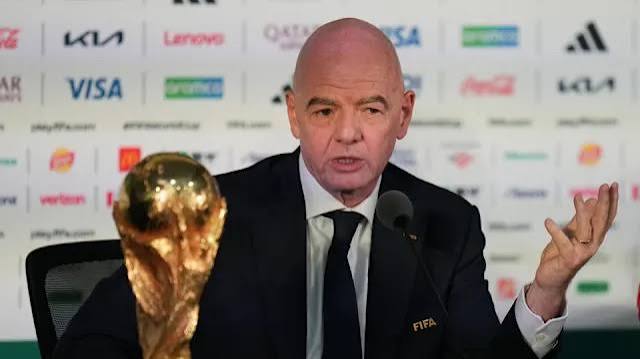
  • Why FIFA’s Private Money Plan Collapsed: Wenger’s ‘Absolutely Necessary’ Call and What It Means for Football

    Why FIFA’s Private Money Plan Collapsed: Wenger’s ‘Absolutely Necessary’ Call and What It Means for Football

    In a move that sent ripples through the football world, FIFA has quietly abandoned a controversial plan to bring private investment into its competitions. Arsène Wenger, FIFA’s Chief of Global Football Development, called the scrapping ‘absolutely necessary,’ framing it as a victory for the sport’s integrity over financialization. But beneath the surface, this decision reveals a deeper struggle over the future of the global game—one that pits commercial ambition against tradition, and governance against growth.

    The plan, which would have seen private equity firms inject billions into an expanded Club World Cup and potentially a new global league, faced a wall of opposition from clubs, leagues, and players. European powerhouses and domestic leagues saw it as a threat to their very existence, while player unions warned of burnout. Now that it’s dead, the question is: what happens next? Wenger’s endorsement of the decision is surprising, given his history as a reformer, and it signals a potential shift in FIFA’s strategy. This is not just a story about money—it’s about who controls the beautiful game and at what cost.

    The Plan That Was: Private Money and the Club World Cup

    At the heart of the controversy was FIFA’s ambition to supercharge its club competitions. The centerpiece was the expanded Club World Cup, set to debut in the summer of 2025 with 32 teams in the United States. FIFA saw this as its answer to the UEFA Champions League’s dominance—a global tournament that could rival Europe’s premier club competition in revenue and prestige. To fund this vision, FIFA reportedly courted private equity firms, offering them a share of future revenues in exchange for upfront billions. The deal was structured as a partnership, with investors gaining co-ownership or revenue-sharing rights over the tournament and potentially a new global league.

    This wasn’t a fringe idea. Private investment has been reshaping football for years. CVC Capital Partners struck deals with La Liga and Ligue 1, Silver Lake took a stake in City Football Group, and even rugby’s Six Nations got in on the act. FIFA’s plan was the logical next step—an attempt to tap into the same vein of capital that was already flowing through the sport. But it was also a step too far for many stakeholders.

    The Backlash: Why It Failed

    The opposition was swift and fierce. European clubs and domestic leagues, led by UEFA, saw the plan as an existential threat. Their concerns were multifaceted:

    • Fixture congestion: The expanded Club World Cup would add more matches to an already overloaded calendar. Player welfare groups like FIFPRO warned of burnout, pointing to the physical toll on athletes who already play 60+ games a season.
    • Erosion of domestic leagues: If FIFA launched a global league or expanded the Club World Cup, it could devalue domestic competitions. Why would fans care about a league title if the real prize was a global tournament? This was a direct challenge to the traditional football pyramid.
    • Loss of control: Private investors would have a say in how competitions were run, potentially prioritizing profit over the sport’s integrity. Governance and accountability became rallying cries for opponents.
    • Lack of consultation: Many felt FIFA had cooked up the plan behind closed doors, without proper input from the very stakeholders it would affect. This lack of transparency fueled distrust.

    Wenger, who had earlier been a vocal advocate for calendar reform, including a biennial World Cup, now found himself defending the decision to scrap the private investment plan. In his comments, he stressed that the move was ‘absolutely necessary’ to protect the sport. It was a notable pivot, suggesting that even the most reform-minded figures within FIFA recognized the limits of financialization.

    Wenger’s Pivot: A Pragmatic Reformer?

    Wenger’s endorsement of the scrapping is significant for several reasons. As FIFA’s Chief of Global Football Development, he has been a driving force behind efforts to modernize the game. His support for a biennial World Cup and expanded club competitions made him a natural ally of the private investment plan. Yet, his about-face indicates a pragmatic recognition that the plan was untenable. Perhaps he saw the writing on the wall: the opposition was too strong, and pushing forward would have damaged FIFA’s credibility further.

    But Wenger’s statement also carries a subtle message: FIFA is not retreating from its global ambitions. The Club World Cup is still happening, and FIFA still controls its commercial rights. The scrapping of private investment doesn’t mean FIFA is giving up on growth—it means it will have to find other ways to fund it. This could mean more sponsorship deals, higher hosting fees, or even a revised format that is more palatable to stakeholders. Wenger’s ‘absolutely necessary’ was not a surrender; it was a strategic retreat.

    The Winners and Losers

    So who comes out ahead? On the surface, UEFA and the European leagues have won a major victory. They successfully defended the existing football pyramid against a perceived threat from FIFA’s commercial ambitions. The Champions League, with its new 36-team Swiss model starting in 2024-25, remains the gold standard for club competition. For now, the status quo holds.

    Players’ unions also have reason to celebrate, but with caveats. The scrapping of private investment doesn’t solve the calendar congestion problem. The 2025 Club World Cup will still add fixtures, and players will still be stretched thin. FIFPRO has welcomed the decision but remains wary of what comes next.

    Investors, on the other hand, are likely frustrated. FIFA’s governance instability and the backlash have made it a less attractive partner. This could push private equity toward club-level or league-level deals instead, which are already thriving. The failure of the FIFA plan might actually accelerate investment in other areas of the sport.

    What This Means for Football’s Future

    The scrapping of the private money plan is a defining moment for football governance. It highlights the tension between commercial growth and the sport’s traditional structures. FIFA’s ambition to compete with UEFA on a global scale is understandable, but the backlash shows that stakeholders are unwilling to sacrifice the game’s integrity for a quick cash infusion.

    Wenger’s role in this saga is a reminder that even the most visionary reformers must navigate political realities. His endorsement of the scrapping suggests that FIFA is listening—at least for now. But the underlying pressures remain. FIFA needs revenue to fund its projects, and the Club World Cup is a costly endeavor. Without private investment, it will have to find alternative funding sources, which could lead to more aggressive commercial deals or increased pressure on host nations.

    The bigger question is whether this marks a turning point in football’s relationship with private capital. The trend toward financialization is unlikely to reverse—money is too deeply embedded in the sport. But the FIFA episode sets a precedent: there are limits to what stakeholders will accept. It’s a delicate balance, and one that will define the sport’s trajectory for years to come.

    FIFA’s decision to scrap the private investment plan, endorsed by Wenger, is a landmark moment in football governance. It’s a victory for those who prioritize the sport’s integrity over financialization, but it’s not the end of the story. FIFA still needs money to fund its global ambitions, and the Club World Cup will go ahead. The challenge now is to find a model that satisfies all stakeholders—players, clubs, leagues, and investors. Wenger’s ‘absolutely necessary’ call may have averted a crisis, but the underlying tensions remain. Football is at a crossroads, and the path forward is anything but clear.

    Summary

    • FIFA abandoned a plan to bring private investment into its competitions, including the expanded Club World Cup, after fierce opposition from clubs, leagues, and players.
    • Arsène Wenger, FIFA’s Chief of Global Football Development, called the scrapping ‘absolutely necessary,’ signaling a strategic retreat from financialization.
    • The opposition was driven by concerns over fixture congestion, erosion of domestic leagues, loss of control, and lack of consultation.
    • The scrapping is a win for UEFA and European leagues, but FIFA still controls the Club World Cup and will need alternative funding sources.
    • The decision sets a precedent for the limits of private capital in football, but the trend toward financialization is likely to continue in other areas.

    FAQ

    Q: Was the entire Club World Cup scrapped?
    A: No. The expanded 32-team Club World Cup in 2025 is still happening. Only the private investment/funding structure was abandoned.

    Q: Why did FIFA want private investment in the first place?
    A: FIFA sought to fund an expanded Club World Cup and potentially a new global league to compete with the UEFA Champions League in revenue and global appeal. Private equity offered billions in upfront funding in exchange for a share of future revenues.

    Q: Who opposed the plan and why?
    A: UEFA, domestic leagues (like the Premier League and La Liga), and players’ unions (FIFPRO) opposed it. They cited fixture congestion, player welfare concerns, erosion of domestic league value, lack of consultation, and governance issues with private investors.

    Q: What does Wenger’s endorsement of the scrapping mean?
    A: Wenger’s support is significant because he was a vocal advocate for reform. His endorsement suggests a pragmatic recognition that the plan was untenable and that FIFA must find other ways to fund its ambitions.

    Q: Will this affect future private investment in football?
    A: The trend toward private investment in football is likely to continue, but the FIFA episode sets a precedent that there are limits. Investors may now focus on club-level or league-level deals rather than FIFA competitions.