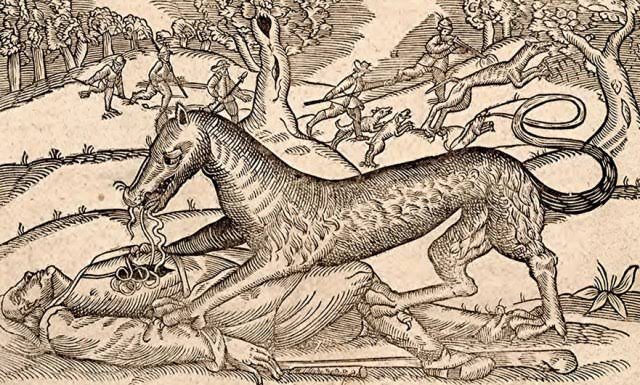
Tag: folklore

  • The Werewolf Myth: How Cultures Around the World Shaped the Legend

    The Werewolf Myth: How Cultures Around the World Shaped the Legend

    The werewolf is one of the most enduring monsters in human storytelling. Today, we imagine a person transforming under a full moon, howling at the night, vulnerable only to silver bullets. But that version is a recent invention, polished by Hollywood. The real history of the werewolf is far stranger and more varied, spanning thousands of years and every continent. From ancient Mesopotamian gods to Navajo witches, from French noblemen cursed for sins to Argentine seventh sons, the werewolf myth has been shaped by local fears, beliefs, and environments. Understanding these different versions reveals not just how cultures imagine monsters, but what they value, fear, and punish.

    The Ancient Roots: Gods and Kings

    The earliest known werewolf story comes from the Epic of Gilgamesh, written around 2100 BCE. In it, the goddess Ishtar transforms a shepherd who spurns her advances into a wolf his own dogs turn on him, and he is doomed to roam the wild. This is not a curse of the full moon; it’s divine punishment, a theme that recurs in Greek mythology.

    King Lycaon of Arcadia served human flesh to Zeus to test his divinity. Zeus, disgusted, turned him into a wolf. This myth gave us the word “lycanthropy” and set a pattern: werewolves as symbols of divine retribution or moral corruption. The Greek historian Herodotus later wrote of the Neuri, a tribe who supposedly became wolves for a few days each year a claim that blends geography with folklore.

    The Romans added their own layer. They associated wolves with Mars, the god of war, and with the founding myth of Romulus and Remus, who were suckled by a she-wolf. But rural Romans also feared the versipellis the “skin-turner,” a person who could change form at will. Pliny the Elder and Petronius both recorded werewolf tales, cementing the motif in classical literature.

    Medieval Europe: From Curse to Conspiracy

    In Norse mythology, the ulfhednar were warriors who wore wolf pelts and fought with berserker fury, believing they channeled wolf spirits. The Völsunga saga tells of a father and son who don enchanted wolf skins and become wolves for ten days. Here, transformation is voluntary and tied to clothing a far cry from the modern involuntary victim.

    With the spread of Christianity, the werewolf’s meaning shifted. The Church reframed these shapeshifters as servants of the Devil, linking them to witchcraft and heresy. This was not just a theological debate; it had deadly consequences. In the 16th and 17th centuries, werewolf trials swept Europe, often alongside witch trials. In France, Gilles Garnier was burned alive in 1573 for allegedly attacking children as a wolf. Peter Stumpp, the “Werewolf of Bedburg,” was executed in 1589 for similar crimes, along with his family. Estimates suggest hundreds of executions across the continent.

    Why this sudden hysteria? Crop failures, livestock losses to real wolves, and social upheaval created a climate of fear. Confessions were often extracted under torture, and accused “werewolves” described using salves, belts, or ointments to transform. Some of these substances—like belladonna or henbane—contain hallucinogenic compounds that could induce the sensation of becoming an animal. In this way, the myth became self-perpetuating: people believed they were wolves, confessed to it, and the belief spread.

    But not all European werewolves were demonic. In France, the loup-garou was often seen as a penitential curse. A person might be doomed to roam as a wolf for seven to ten years before being released. In Slavic regions, the vukodlak blurred the line between werewolf and vampire—a corpse that rises to harm the living, needing decapitation or a stake. These regional variations show how local folklore absorbed the werewolf into pre-existing beliefs about the dead, the soul, and the supernatural.

    The Global Werewolf: Skin-Walkers, Werehyenas, and Weretigers

    While Europe developed its own werewolf traditions, similar figures exist worldwide, often with distinct mechanics. In Navajo culture, the yee naaldlooshii—or skin-walker—is an evil witch who can shapeshift into any animal, not just a wolf. Unlike European werewolves, skin-walkers are not victims of a curse; they are malevolent practitioners who choose their power.

    In West Africa, particularly Ethiopia, the bouda is a werehyena. Hyenas are scavengers associated with sorcery, so the creature mirrors the werewolf but reflects local ecology and symbolism. In South Asia, the rakshasa and vetal are shapeshifting demons, while Bengal has a weretiger tradition. East Asia, meanwhile, favored foxes: China’s huli jing and Japan’s kitsune are shapeshifters, but they transform into foxes, not wolves—a reminder that the animal of choice depends on which predators loom largest in the cultural imagination.

    South America offers a striking variant: the lobisón. This creature is said to be the seventh son in a family, cursed to become a wolf-like beast. The belief was so strong that Argentine law once required the president to serve as godfather to seventh sons, a symbolic act meant to break the curse. Here, the werewolf is not a random victim or a sinner, but a specific birth order—a twist that shows how deeply the myth can be woven into social structures.

    Hollywood and the Modern Werewolf

    The werewolf we know today—full-moon transformation, silver bullets, contagion through bites—is largely a cinematic invention. The Wolf Man (1941) codified the tragic, involuntary werewolf, while An American Werewolf in London (1981) added graphic horror and dark humor. These films distilled centuries of folklore into a single, marketable archetype. The full moon, for instance, was rarely central to older myths; it became a plot device in the 20th century.

    This modern version has also been shaped by medicine. Clinical lycanthropy is a rare psychiatric delusion in which patients believe they are transforming into an animal. Hypertrichosis, a condition of excessive body hair, has been retroactively suggested as a possible origin for some historical accusations. These scientific perspectives offer a rational lens, but they don’t diminish the myth’s power—they simply add another layer.

    Gender and the Werewolf

    One striking pattern in European lore is the werewolf’s overwhelming maleness. Female werewolves are rare; Marie de France’s 12th-century lai Bisclavret features a nobleman who becomes a wolf, but women are more often victims or witnesses than shapeshifters. This gender imbalance may reflect cultural anxieties about male aggression and the beast within, or it may mirror the male-dominated world of medieval law and folklore. In contrast, some non-European shapeshifters, like the fox spirits of East Asia, are frequently female. The gender of the monster, it seems, says as much about the culture as the monster itself.

    The werewolf is not a single myth but a family of stories, each shaped by its environment. From divine punishment in Mesopotamia to demonic servants in medieval Europe, from skin-walkers in the American Southwest to weretigers in Bengal, the werewolf adapts to local fears and beliefs. The Hollywood version is just the latest iteration—a simplification that hides a rich, global tapestry. By exploring these variations, we see that the werewolf is less a monster than a mirror, reflecting what different cultures dread, desire, and seek to control.

    Summary

    • The werewolf myth dates back to ancient Mesopotamia and Greece, where it was often a divine punishment, not a lunar curse.
    • Medieval Europe transformed werewolves into devil-worshippers, leading to hundreds of executions during the 16th–17th centuries.
    • Non-European cultures have their own shapeshifters, like Navajo skin-walkers, Ethiopian werehyenas, and Argentine lobisón, each reflecting local ecology and beliefs.
    • Hollywood’s werewolf—full-moon transformations and silver bullets—is a modern invention, not rooted in ancient folklore.
    • The werewolf myth has been used to explain mental illness, social fears, and even posthumous threats, showing its adaptability across time and place.

    FAQ

    Q: When was the first werewolf story recorded?
    A: The earliest known reference is in the Epic of Gilgamesh (c. 2100 BCE), where Ishtar transforms a shepherd into a wolf.

    Q: Why did medieval Europeans accuse people of being werewolves?
    A: Werewolf trials often occurred during periods of social stress, and confessions were frequently extracted under torture. The Church linked werewolves to witchcraft, making them heretics.

    Q: Are there werewolf myths outside Europe?
    A: Yes, many cultures have shapeshifters, but they often involve different animals, like hyenas in Africa or tigers in India, and have different rules (e.g., skin-walkers are evil witches, not cursed victims).

    Q: How did the full moon become associated with werewolves?
    A: The full moon connection is largely a Hollywood invention, first popularized in the 1941 film The Wolf Man.

    Q: Is there a medical explanation for werewolf beliefs?
    A: Clinical lycanthropy is a rare psychiatric delusion where patients believe they are transforming into animals. Hypertrichosis (excessive hair growth) may have also contributed to historical accusations.

  • The Myth of the Dragon: From Serpent Deities to Fire-Breathing Villains – A Cross-Cultural Journey

    Dragon - Wikipedia

    In the beginning, the dragon was a snake. It slithered out of the primordial ooze of human imagination, shedding its skin and gaining wings, fire, and cosmic significance. From the benevolent lung of China to the demonic drakon of Revelation, dragons have haunted every culture on Earth. But why does this creature—part reptile, part nightmare—appear in myths separated by oceans and millennia? The answer lies in the serpent’s shadow, a universal symbol of death and rebirth, and in the very different stories each civilization told about it.

    This is not a simple tale of good versus evil. The dragon is a mirror, reflecting a culture’s deepest fears and highest hopes. In the East, it is a bringer of rain and a symbol of imperial power. In the West, it is a hoarder of gold and a stand-in for Satan. Yet both traditions spring from the same reptilian root, a creature that has evolved to embody everything from chaos to wisdom. Let’s trace that evolution, from the salt-water goddess Tiamat to the fire-breathing Smaug, and see why the dragon still captivates us.

    The Serpent’s Shadow: Why It All Starts with Snakes

    Dragons are, at their core, super-serpents. Snakes have been slithering through human consciousness since before we had language. They shed their skin, appearing to be reborn; they vanish into the earth and water, realms of mystery and the dead; and their venom can kill in an instant. Small wonder they inspired both awe and terror.

    The English word “dragon” itself comes from the Greek drakon, meaning “serpent” or “giant sea fish,” which in turn derives from derkomai—”to see clearly” or “to flash.” That etymology links dragons to sharp vision and watchfulness, traits that would later make them perfect guardians of treasure. But in the beginning, they were simply snakes, writ large.

    Every major dragon tradition carries this serpentine DNA. The Chinese lóng is a composite of nine animals—deer horns, camel head, rabbit eyes, snake neck, clam belly, carp scales, eagle claws, tiger paws, cow ears—but the snake neck is central. The Indian nāga are literally cobra-hooded serpents. The Mesoamerican Quetzalcoatl is a feathered serpent. Even the fire-breathing dragons of Europe often coil like serpents, as with the Norse Níðhöggr, who gnaws at the roots of the world tree Yggdrasil.

    The East-West Divide: Benevolent Gods vs. Demonic Foes

    Here is the great fork in the dragon’s road. In East Asia, dragons are largely benevolent. They control rain, rivers, and storms, and their wisdom is legendary. The Chinese dragon is a symbol of yang energy, good fortune, and cosmic harmony. The Emperor of China claimed the five-clawed dragon as his personal emblem, and even today, dragons appear in festivals to bring luck.

    Contrast that with the Western dragon, which is almost uniformly malevolent. It hoards gold, abducts maidens, and breathes fire—a literal catastrophe waiting to happen. The hero’s job is to slay it. This divergence is largely the work of Christianity. The serpent of Genesis, the Leviathan of Job, and the dragon of Revelation are all conflated into a single demonic figure, the embodiment of Satan himself.

    The dragon-slayer motif is central to Western myth: St. George, Beowulf, Sigurd, Apollo, Marduk—all prove their worth by killing a dragon. This act symbolizes the triumph of order over chaos, good over evil, civilization over wilderness. In the East, there is no such motif because there is no such villain.

    But the Indian nāga tradition offers a middle path. These semi-divine serpents are guardians of treasures and wisdom, associated with water and fertility. They are not wholly good or evil but powerful, ambivalent forces. The Buddha himself was sheltered from a storm by the nāga king Mucalinda. This nuanced view suggests that the dragon’s moral character is not fixed but culturally constructed.

    Monsters of the Ancient World: From Tiamat to Typhon

    Long before the Christian dragon, the ancient Near East and Mediterranean were crawling with dragon-like monsters. The Mesopotamian Enuma Elish (c. 18th century BCE) features Tiamat, a primordial salt-water dragon-goddess, who is slain by the hero-god Marduk. Her body is split to create the heavens and the earth—a cosmic act of dragon-slaying.

    In Greece, Hesiod’s Theogony (c. 700 BCE) describes Typhon, a monstrous storm giant with a hundred dragon heads, who challenged Zeus for supremacy. Apollo slew the Python at Delphi, and Heracles fought the multi-headed Hydra. These battles were not just heroics; they were foundational myths that established the order of the cosmos.

    Even the Bible contains such monsters. Leviathan, described in Job 41 as a fire-breathing sea serpent, is a chaos creature that only God can tame. In Revelation 12, a “great red dragon” with seven heads appears, identified with Satan. These texts cemented the dragon’s role as the ultimate adversary in Western consciousness.

    The Feathered Serpent: Quetzalcoatl and the New World

    Across the Atlantic, the Maya and Aztecs worshipped a very different kind of dragon. Quetzalcoatl (Aztec) and Kukulkan (Maya) are feathered serpents, combining the earthly serpent with the celestial bird. They represent wind, knowledge, creation, and the union of opposites.

    Quetzalcoatl is not a monster to be slain but a god to be revered. He brings civilization, arts, and agriculture. His mythology is complex, involving exile and a prophesied return, but he is never a villain. This tradition shows that the serpent-dragon morphology can encode entirely different values—cosmic harmony rather than chaos.

    The Modern Dragon Renaissance: From Smaug to Toothless

    For centuries, the Western dragon was stuck in a villainous rut. Then came the 20th century, and the dragon began to change. J.R.R. Tolkien’s Smaug in The Hobbit (1937) is still a classic treasure-hoarding villain, but he is also intelligent, vain, and strangely compelling. Ursula K. Le Guin’s Earthsea dragons are ancient, wise, and not inherently evil. Anne McCaffrey’s Pern dragons are genetically engineered protectors of humanity.

    George R.R. Martin’s A Song of Ice and Fire made dragons morally ambiguous—weapons of conquest, yes, but also objects of awe and wonder. And How to Train Your Dragon turned the dragon-slayer paradigm on its head, making a boy and his dragon the heroes. Even Dungeons & Dragons, the tabletop game that has shaped modern fantasy since 1974, presents dragons as intelligent beings with their own alignments, from lawful good to chaotic evil.

    This rehabilitation reflects a broader cultural shift. We are no longer content with simple good-versus-evil tales. We want our monsters to have depth, to be more than just obstacles for heroes to overcome. The dragon, once the ultimate villain, has become a canvas for exploring complexity.

    Why Dragons Endure: Psychology and Anthropology

    Why do dragons appear in every culture? Carl Jung would say they are archetypes of the shadow—the chaotic, unconscious forces that heroes must confront and integrate. The dragon’s hoard represents hidden psychic treasure, and slaying it is a metaphor for self-realization.

    Joseph Campbell saw dragon-slaying as a universal stage in the hero’s journey—the threshold guardian that the hero must overcome to enter the adventure. Claude Lévi-Strauss, the structuralist anthropologist, might parse dragons as a way to mediate binary oppositions: good and evil, chaos and order, earth and sky.

    These explanations are not mutually exclusive. The dragon’s persistence suggests it taps into something fundamental about the human psyche. We need monsters to define ourselves against, but we also need them to embody our own potential for wisdom and power. The dragon does both.

    The dragon is not a single creature but a shape-shifting idea, as fluid as the water it often guards. It can be a god or a demon, a friend or a foe, a symbol of chaos or of cosmic order. As our cultures evolve, so does the dragon, adapting to reflect our changing fears and aspirations. Whether it soars over the battlefields of Westeros or coils around a treasure hoard in a fantasy novel, the dragon remains the most versatile myth in our collective imagination. And that is no myth—it’s a fact.

    Summary

    • The word “dragon” comes from Greek drakon, meaning “serpent,” and dragons are essentially amplified snakes, inheriting their symbolic associations with rebirth, death, and the unknown.
    • East Asian dragons are benevolent, water-controlling symbols of imperial power and good fortune, while Western dragons are malevolent, fire-breathing villains—a divergence largely due to Christianity’s conflation of serpent and Satan.
    • Ancient texts like the Enuma Elish and Hesiod’s Theogony feature dragon-like monsters as embodiments of primordial chaos, slain by gods and heroes to establish order.
    • The Indian nāga and Mesoamerican feathered serpents (Quetzalcoatl) offer alternative, more ambivalent or positive views of serpent deities.
    • Modern fantasy, from Tolkien to How to Train Your Dragon, has rehabilitated the Western dragon, making it complex, sympathetic, and morally ambiguous, ensuring its enduring popularity.

    FAQ

    Q: Are dragons real?
    A: No, dragons are mythical creatures. However, their ubiquity across cultures may be inspired by real animals like snakes, crocodiles, or large monitor lizards, or by human encounters with dinosaur fossils in ancient times.

    Q: What is the difference between a dragon and a serpent?
    A: A dragon is essentially a super-serpent—an amplified, often mythological version of a snake, with additional features like wings, legs, breath weapons, or multiple heads. All dragons are serpents in origin, but not all serpents are dragons.

    Q: Why are Chinese dragons considered lucky while Western dragons are evil?
    A: This difference stems from cultural and religious history. In China, dragons are associated with water, rain, and cosmic harmony, and were symbols of imperial authority. In the West, Christianity conflated the serpent of Genesis, the Leviathan, and the dragon of Revelation into a demonic figure, making dragons the embodiment of Satan and chaos.

    Q: What is the oldest dragon myth?
    A: The oldest known dragon myth is likely the Mesopotamian Enuma Elish (c. 18th century BCE), which features Tiamat, a primordial dragon-goddess of salt water. However, serpent worship and symbolism go back even further, possibly to the Stone Age.

    Q: Why are dragons so popular in modern fantasy?
    A: Dragons are versatile symbols that can be used to explore themes of power, chaos, wisdom, and redemption. Modern fantasy has moved away from simple good-vs-evil portrayals, allowing dragons to be complex characters, from Smaug’s intellect to Toothless’s friendship.