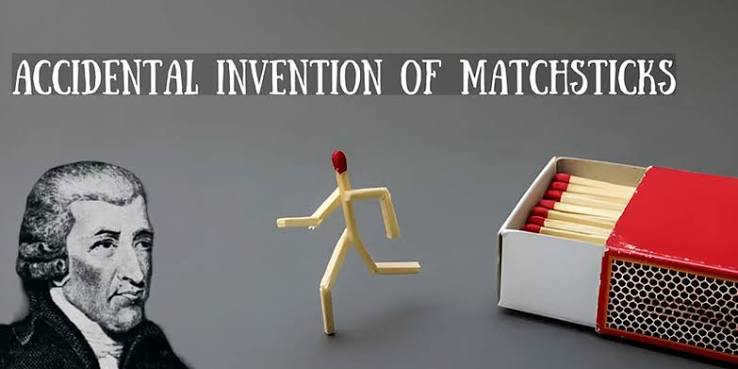
In 1826, a chemist in northern England accidentally scraped a stick coated with a strange paste against his hearthstone. The stick burst into flame. That moment gave the world the friction match the first fire that anyone could start instantly, without skill, without waiting, and without a smoldering ember. John Walker’s discovery was accidental, but it was no stroke of luck; it was the result of careful observation and a deep understanding of reactive chemicals.
Before Matches: Fire Was a Chore
Imagine needing a fire to cook dinner, heat your home, or light a candle. Before the match, that required either keeping a fire constantly burning or mastering a laborious skill. The common method was flint and steel: striking a piece of steel against a flint to create sparks, which you then had to catch on specially prepared tinder—usually charred cloth or dried fungus. It took practice, good materials, and dry conditions. In damp weather, you might fail for hours. Other methods were even more demanding. The fire drill—spinning a stick against a wooden base—required stamina and technique. A solar lens worked only on sunny days. For most people, fire was maintained, not created. You banked your hearth fire overnight, hoping it would still be glowing in the morning. If it went out, you might have to borrow a hot coal from a neighbor.
In the early 1800s, chemists began experimenting with ways to ignite fire chemically. They had discovered phosphorus (1669) and potassium chlorate (1786), both highly reactive. By 1805, a French chemist named Jean Chancel had made a match that ignited when you dipped it in a small bottle of sulfuric acid—but that was dangerous and cumbersome. What people needed was a simple, safe, and reliable way to start a fire with one hand, in any weather.
The Accidental Spark: John Walker’s Discovery
John Walker was a chemist and druggist in Stockton-on-Tees, a port town in northeast England. He was not a famous professor but a practical shopkeeper who mixed remedies and experimented with chemicals. In 1826, he was stirring a pot of a paste made of antimony sulfide, potassium chlorate, gum arabic, and starch. These were common ingredients in his experiments with explosives. When he wiped the stirring stick on his hearthstone to clean it, the dried paste scraped off and ignited, producing a flame.
Walker recognized what he had seen. The friction had generated enough heat to trigger a chemical reaction between the potassium chlorate (which supplies oxygen) and the antimony sulfide (a fuel). He refined the mixture, shaped it into small sticks, and began selling them as “Congreves,” named after Sir William Congreve, a British rocket pioneer. Each box of 50 cost one shilling—about a day’s wage for a laborer, but still affordable for many households.
Walker’s matches were not the first chemical matches, but they were the first to use friction to ignite. This was a crucial innovation. Earlier matches required dipping in acid or breaking a glass vial. Walker’s matches could be lit by scraping them against any rough surface—a brick, a piece of sandpaper, or a hearthstone. They were portable, simple, and worked on demand.
A Missed Fortune: Why Walker Never Patented His Invention
Walker never patented his invention. Why? Historians speculate that he was not commercially aggressive, or that he was content with his shop. He sold his matches locally, and they were popular. But without a patent, anyone could copy the idea. Within a few years, other chemists and entrepreneurs began producing their own friction matches, often improving on Walker’s formula. Walker did not pursue legal protection, and he died in 1859 without significant wealth from his discovery. His name is remembered in history books but not in the fortune he might have earned.
The failure to patent had a silver lining: it allowed the match to spread rapidly. By the 1830s, friction matches were being manufactured across Europe and the United States. The principle was out in the open, and inventors could refine it.
The Dark Side: White Phosphorus and ‘Phossy Jaw’
Walker’s formula used antimony sulfide, which was relatively safe. But in 1830, a French chemist named Charles Sauria added white phosphorus to the match head. White phosphorus is extremely flammable—it can ignite from the heat of your pocket—but it is also highly toxic. It made matches easier to light, and a new industry grew around the “strike-anywhere” match.
The cost was horrific. Factory workers who dipped matchsticks into the white phosphorus paste developed a disfiguring and often fatal condition called “phossy jaw”—necrosis of the jawbone. The phosphorus fumes caused the bone to decay, leading to abscesses, loss of teeth, and eventually death. Thousands of workers, many of them young women and children, suffered this fate. White phosphorus was also used in suicides and murders because it was readily available and lethal if ingested.
The public health crisis eventually forced change. In 1906, the Berne Convention banned the use of white phosphorus in matches. The United States followed in 1912, largely due to the Diamond Match Company, which patented a safe alternative using phosphorus sesquisulfide (P₄S₃) and then donated the patent to the public. This non-toxic compound allowed strike-anywhere matches to remain convenient without the lethal side effects.
Safety Matches: A Swedish Improvement
Meanwhile, in Sweden, Gustaf Erik Pasch had introduced a better idea in 1844: separate the chemicals. He placed red phosphorus on the striking surface of the matchbox, not on the match head. The match head contained antimony sulfide and potassium chlorate. Only when you scrape the head against the red phosphorus strip does the reaction occur. This meant the matches were safer—they wouldn’t ignite accidentally on just any surface. However, Pasch’s design was not commercially successful until Johan Edvard Lundström perfected it in 1855. Lundström’s safety matches were a hit, and Sweden became a major match producer. The safety match reduced accidental fires and eliminated the toxic white phosphorus from the match head.
Today, both safety matches and strike-anywhere matches exist, but the safety match is the standard in most countries due to its lower risk.
The Matchstick’s Legacy: Fire for the Masses
The matchstick changed daily life in profound ways. It made fire available to anyone, anytime, without skill or prior preparation. This had ripple effects:
- Cigarettes became popular: Before matches, smoking a pipe required a lit ember from a fire. With matches, you could light a cigarette anywhere, anytime. This helped drive the rise of cigarette smoking in the late 19th century.
- Household labor eased: No longer did families have to keep a fire burning all night or labor with flint and steel. A match could light a stove or lamp in seconds.
- Industry grew: Match factories became major employers, though often under terrible conditions. The industry also drove innovation in industrial chemistry and manufacturing processes.
The matchstick also illustrates a powerful lesson about innovation: a stroke of luck is only useful if you recognize it. John Walker’s accidental discovery was not a random event. He knew enough chemistry to understand what had happened and to develop it into a marketable product. His failure to patent, however, shows that a good invention is not enough—you need business acumen or a system that protects inventors. The match’s history is a mix of brilliance, tragedy, and eventual regulation, showing how technology can both empower and endanger, and how society eventually steps in to mitigate harm.
John Walker’s accidental match was a spark that lit a revolution in fire-making. From that moment in 1826, fire became a tool accessible to everyone. But the story doesn’t end with the spark—it continues through the dark chapter of white phosphorus, the regulatory triumph of the Berne Convention, and the Swedish safety match that made fire-making safer for all. The matchstick is a tiny artifact, but it holds a large lesson: innovation can arise from a mishap, but its true value is shaped by human choices—about patents, safety, and responsibility.
Summary
- In 1826, John Walker accidentally discovered that a stick coated with a chemical paste ignited when scraped against a rough surface, leading to the first friction match.
- Walker did not patent his invention, allowing others to copy and improve it, but he gained little financial reward.
- The addition of white phosphorus in 1830 made matches easier to light but caused ‘phossy jaw’ and poisoning deaths among workers and consumers.
- The Berne Convention (1906) and later Diamond Match Company’s donation of a safe formula (1911) led to the end of white phosphorus in matches.
- Safety matches, invented by Gustaf Erik Pasch and perfected by Johan Edvard Lundström in Sweden (1855), separated chemicals and made matches safer.
FAQ
Q: Who invented the matchstick?
A: The modern friction match was invented by John Walker, an English chemist, in 1826. He discovered it accidentally when a stick coated with a chemical paste ignited upon friction.
Q: Why didn’t John Walker patent his invention?
A: Historians are not entirely sure, but Walker likely did not see the commercial potential or was not aggressive in business. He sold his matches locally but never secured a patent.
Q: What was ‘phossy jaw’?
A: ‘Phossy jaw’ was a painful and often fatal condition caused by exposure to white phosphorus in match factories. It led to necrosis of the jawbone and was common among workers who dipped matches.
Q: What is the difference between safety matches and strike-anywhere matches?
A: Safety matches have the phosphorus (red phosphorus) on the striking surface, so they only ignite when struck on that surface. Strike-anywhere matches have phosphorus sesquisulfide in the head, allowing them to ignite on any rough surface.
Q: When did the use of white phosphorus in matches end?
A: The Berne Convention in 1906 banned white phosphorus, and the United States followed in 1912. The Diamond Match Company helped by patenting a safe alternative and donating the patent to the public.