Tag: finance

  • The Freelancer’s Guide to Free Invoice Templates: What to Look For and How to Use Them

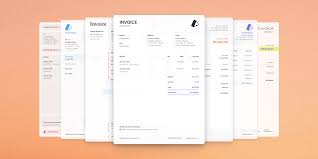
    Invoice Templates | Figma

    As a freelancer, your invoice is more than just a request for payment—it’s a legal record, a tax document, and a reflection of your professionalism. Yet many freelancers rely on hastily thrown-together invoices that miss critical details, leading to delayed payments, tax headaches, and even disputes.

    The good news? You don’t need expensive software to create polished, compliant invoices. Free templates are abundant, but not all are created equal. In this guide, we’ll break down what makes a great invoice, where to find free templates, and how to customize them to protect your income and your brand.

    Why Invoices Matter More Than You Think

    Invoices are the backbone of your freelance business. They serve as formal requests for payment, but they also double as legal documents that track your income for tax purposes. Without a proper invoice, you risk underreporting earnings, failing to enforce payment terms, or even invalidating a tax deduction.

    Moreover, a clear, itemized invoice speeds up payment. Clients appreciate invoices that are easy to process through their own accounting systems—frictionless billing means faster cash flow for you.

    Anatomy of a Professional Invoice

    A professional invoice should include the following elements:

    • Invoice number: A unique, sequential identifier (e.g., INV-001, INV-002). This helps you track payments and satisfies tax authorities.
    • Invoice date and due date: Clearly state when the invoice was issued and when payment is expected (e.g., Net 15, Net 30, or due on receipt).
    • Your details: Full name, business name (if applicable), contact information, and tax ID (VAT, GST, or sales tax ID as required).
    • Client details: Name and billing address.
    • Itemized line items: Description of each service or product, quantity/hours, rate, and subtotal.
    • Taxes and discounts: Any applicable taxes (e.g., VAT, sales tax) or discounts, clearly calculated.
    • Total amount due: The grand total, prominently displayed.
    • Payment terms: Accepted payment methods (bank transfer, PayPal, etc.) and any late payment policy.
    • A thank-you note: A small touch that reinforces professionalism and goodwill.

    Where to Find Free Templates

    You don’t need to pay for invoicing software to get started. Here are some reliable sources for free templates:

    • Microsoft Office: Offers a range of invoice templates for Word and Excel. These are customizable and familiar to most users.
    • Google Docs/Sheets: The template gallery includes simple invoice templates that are easy to edit and share online.
    • Canva: Provides visually appealing invoice templates that you can brand with your logo and colors.
    • Adobe Express: Similar to Canva, with a focus on design flexibility.
    • Freelancer platforms: Tools like Wave, Zoho Invoice, and FreshBooks offer free templates even if their full software is paid. These often come with built-in calculators and tax fields.

    Choosing the Right Template for Your Needs

    Consider your workflow and branding:

    • The minimalist freelancer: If you want speed and simplicity, a clean one-page template with no frills is ideal. Focus on clarity and ease of use.
    • The brand-conscious freelancer: Use invoices as a marketing touchpoint. Add your logo, brand colors, and a professional tone to reinforce credibility.
    • The tax-compliant freelancer: Prioritize templates that include all required tax fields for your country. For example, EU freelancers need VAT numbers, while US freelancers may need sales tax IDs.
    • The tech-savvy freelancer: Look for templates that integrate with accounting software (e.g., QuickBooks, Xero) or that can be generated via apps like Wave for automation.
    • The international freelancer: Ensure the template handles multiple currencies, VAT/GST variations, and multilingual client communication.

    Common Pitfalls to Avoid

    • Assuming ‘free’ means ‘compliant’: A generic template may not include country-specific tax fields. Always customize for local regulations.
    • Confusing invoices with receipts or quotes: A quote is a pre-work estimate; an invoice is a request for payment; a receipt is proof of payment. Mixing them up causes confusion.
    • Inconsistent invoice numbering: Skipping numbers or using non-sequential numbering can raise red flags with tax authorities.
    • Vague payment terms: Terms like ‘payment due soon’ are unenforceable. Specify exact due dates and late fees.
    • Missing tax IDs: Omitting a tax ID or business registration number can invalidate an invoice for tax purposes.
    • Manual calculation errors: Spreadsheet templates with formulas are safer than static PDFs to avoid arithmetic mistakes.
    • Not saving a copy: Always keep a copy for your records. Some templates prompt you to save or auto-archive.

    How to Customize Your Template

    Once you’ve chosen a template, customize it to fit your business:

    1. Add your branding: Insert your logo and use your brand colors.
    2. Set up your payment terms: Clearly state due dates, late fees, and accepted payment methods.
    3. Include your tax information: Add your tax ID and any required legal disclaimers.
    4. Test the calculations: If using a spreadsheet, double-check formulas to ensure totals are correct.
    5. Save a master copy: Keep a blank master template for future use, and save each invoice as a separate file with a clear naming convention (e.g., ClientName_InvoiceNumber_Date).

    Real-World Example: A Simple Invoice in Action

    Imagine you’re a freelance graphic designer. You’ve just completed a logo design for a client. Your invoice might look like this:

    • Invoice #: INV-2025-014
    • Date: March 1, 2025
    • Due: March 15, 2025 (Net 14)
    • From: Jane Doe, Jane Doe Design, jane@janedoedesign.com
    • To: Acme Corp, 123 Business Rd.
    • Line items:
    • Logo design (1 project) – $500.00
    • Revisions (2 hours) – $50.00/hour – $100.00
    • Subtotal: $600.00
    • Sales tax (8%): $48.00
    • Total: $648.00
    • Payment: Bank transfer to account #…, or PayPal: jane@janedoedesign.com
    • Late fee: 1.5% per month after due date

    This invoice is clear, itemized, and leaves no room for ambiguity.

    A well-crafted invoice is a cornerstone of your freelance business. By using a free template and customizing it to meet your needs, you can ensure timely payments, stay tax-compliant, and present a professional image to your clients. Take the time to set up a template that works for you—it’s an investment that pays off with every invoice you send.

    Summary

    • Invoices are legal records for tax filing and payment tracking, not just payment requests.
    • A professional invoice includes invoice number, dates, contact details, itemized services, taxes, and payment terms.
    • Free templates are available from Microsoft Office, Google Docs, Canva, Adobe Express, and platforms like Wave and Zoho.
    • Choose a template that fits your branding, tax requirements, and workflow—whether minimalist, brand-conscious, or tech-savvy.
    • Avoid common pitfalls like vague payment terms, missing tax IDs, and manual calculation errors.

    FAQ

    Q: What is the difference between an invoice, a receipt, and a quote?
    A: A quote is a pre-work estimate of costs; an invoice is a formal request for payment after work is done; a receipt is proof of payment. They serve different purposes and should not be confused.

    Q: Do I need to include a tax ID on my invoice?
    A: In many jurisdictions, yes. For example, EU freelancers must include a VAT number, and US freelancers may need a sales tax ID. Check your local tax authority requirements.

    Q: Can I use a free template for international clients?
    A: Yes, but ensure the template supports multiple currencies and includes fields for VAT/GST if applicable. You may need to customize it for each client’s country.

    Q: How do I avoid late payments?
    A: Clearly state your payment terms, including the due date and any late fees. Send invoices promptly and follow up politely if payment is overdue.

    Q: Should I use a spreadsheet or a PDF template?
    A: Spreadsheets with formulas reduce calculation errors and are easier to update. PDFs are more polished for sending but require manual calculations unless generated by software.

  • AI’s Debt Binge: The $1.65 Trillion Hidden Borrowing That Can’t Last

    AI's debt binge draws European telco parallels

    The artificial intelligence boom has sparked an unprecedented spending spree. Tech giants are pouring hundreds of billions of dollars into data centers, GPUs, and the energy to power them, all in the hope that AI will revolutionize the world and generate massive returns. But there’s a catch: much of this spending is financed by debt that’s not showing up on corporate balance sheets. In fact, hidden borrowing has reached an estimated $1.65 trillion, and it’s creating a ticking time bomb that could threaten the entire AI ecosystem.

    This isn’t just a story about numbers on a spreadsheet. It’s about how the world’s most valuable companies are using financial engineering to mask the true cost of their AI ambitions. By keeping debt off their books, they’re able to maintain high credit ratings and keep investors happy, but they’re also building a mountain of obligations that will eventually come due. As interest rates rise and the economy tightens, the question isn’t whether this debt will become a problem—it’s when.

    The AI Capex Supercycle

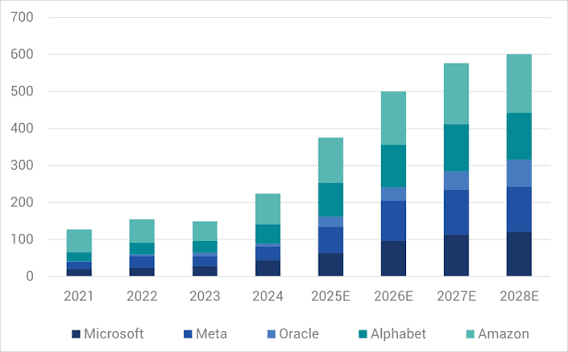
    Since ChatGPT burst onto the scene in late 2022, the world’s largest tech companies—Microsoft, Amazon, Google, Meta, and others—have been locked in a race to build AI infrastructure. They’re buying millions of Nvidia GPUs, constructing massive data centers, and securing power supplies to run them. The annual capital expenditure (capex) for these ‘hyperscalers’ has surged past $300–400 billion combined, and it’s still climbing.

    The logic is simple: AI is the future, and whoever builds the most powerful infrastructure will dominate the market. But this spending spree is based on a huge assumption—that AI demand will grow exponentially and eventually generate enough revenue to justify the investment. So far, that revenue hasn’t materialized at the scale needed, and the gap is being filled with debt.

    The Hidden Debt Machine

    When we think of corporate debt, we usually imagine bonds or bank loans that appear on a company’s balance sheet. But the AI industry has found ways to borrow money without making it visible to investors and regulators. This is done through a variety of financial structures:

    • Special Purpose Vehicles (SPVs): Companies create separate legal entities to own data centers. These SPVs take on debt to build the facilities, and the parent company signs long-term leases to use them. The debt stays on the SPV’s books, not the parent’s.
    • Sale-Leasebacks: A company sells its data centers to an investor or real estate investment trust (REIT) and then leases them back. This converts a capital expense into an operating expense, freeing up cash and keeping debt off the balance sheet.
    • Vendor Financing: Chipmakers like Nvidia extend credit to their customers, allowing them to buy GPUs now and pay later. This is essentially a loan from the supplier, but it’s not recorded as debt by the buyer.
    • Project Finance: Lenders provide non-recourse debt secured against a specific asset, like a data center, rather than the parent company’s overall balance sheet. If the project fails, the lender can seize the asset, but the parent company isn’t on the hook.

    These techniques are legal and have been used for decades in industries like airlines and real estate. But in the AI world, they’ve been deployed on a massive scale, and the cumulative hidden debt has reached an estimated $1.65 trillion.

    Why Hide the Debt?

    The motivation is simple: to keep reported leverage ratios low and protect credit ratings. If these companies showed all their debt on their balance sheets, their credit ratings would likely be downgraded, making borrowing more expensive and spooking equity investors who are already nervous about AI’s return on investment.

    By keeping debt hidden, companies can present a healthier financial picture than reality. This allows them to continue borrowing at favorable rates and maintain their stock prices. But it also means that the true risk is invisible to the market, creating a dangerous situation.

    The Math Doesn’t Add Up

    Let’s do some simple math. If the hidden debt is $1.65 trillion and interest rates are around 5–7%, the annual interest expense would be $80–115 billion. But what is the revenue generated by AI infrastructure? While cloud services like Azure AI and AWS Bedrock are growing rapidly, the total revenue from AI-specific infrastructure is still far below that interest burden.

    This means that companies are borrowing money to build infrastructure that isn’t yet generating enough income to cover the interest payments. They’re essentially betting that future revenue will catch up, but if it doesn’t, they’ll face a crisis.

    The Circular Financing Problem

    One of the most concerning aspects is the role of vendor financing, particularly from Nvidia. Nvidia is the dominant supplier of GPUs, and it has been extending generous credit terms to its customers, including AI startups. This allows Nvidia to book revenue now, even if the customer might not be able to pay later.

    This creates a circular situation: Nvidia’s earnings look great, and the AI ecosystem appears healthy, but the risk is hidden. If a major customer defaults, Nvidia would take a hit, and the ripple effects could be felt throughout the industry.

    The Maturity Wall

    Another problem is the ‘maturity wall.’ Much of this hidden debt is structured with maturities in the 2027–2029 period. When that debt comes due, companies will need to refinance it. But if interest rates remain high or credit conditions tighten, refinancing could be expensive or even impossible.

    If a company can’t refinance, it faces a choice: default on the debt, issue new equity (diluting existing shareholders), or sell assets at fire-sale prices. Any of these options would be painful and could trigger a broader crisis.

    The Bull Case: It’s Not All Doom and Gloom

    Of course, there’s another side to the story. AI optimists argue that the infrastructure being built is an asset, not a liability. Data centers and GPUs have residual value—they can be repurposed for other uses if AI doesn’t pan out as expected. And similar fears were raised about fiber-optic overbuilding in the late 1990s and cloud capex in the 2010s, both of which eventually paid off, though with some casualties along the way.

    Moreover, off-balance-sheet financing is a standard practice in many industries. It’s not inherently fraudulent, and as long as it’s disclosed in footnotes, it’s legal. The key is whether the underlying projects generate enough cash flow to service the debt.

    The Bear Case: A Ticking Time Bomb

    But the skeptics have a point. The scale of the hidden debt is unprecedented, and the revenue projections may be overly optimistic. If AI doesn’t deliver the promised returns, the consequences could be severe. A single major default could trigger contagion, affecting not just the tech sector but the entire financial system.

    Regulators and credit rating agencies are starting to pay attention. They’re ‘pulling back the curtain’ on these off-balance-sheet structures, and increased scrutiny could make it harder for companies to hide their debt. This could lead to a sudden repricing of risk, with devastating effects.

    What This Means for You

    If you’re an investor, this is a warning sign. The AI boom has been a major driver of stock market gains, but if the debt bubble bursts, it could take the whole market down with it. If you’re a consumer, you might not feel the impact directly, but a financial crisis would affect everyone.

    For policymakers, this is a call to action. They need to ensure that off-balance-sheet financing is properly disclosed and that the risks are understood. The last thing we need is another Enron-style scandal, but on a much larger scale.

    The AI revolution is real, and the infrastructure being built today could transform the world. But the way it’s being financed is unsustainable. The $1.65 trillion in hidden debt is a ticking time bomb that could explode if AI revenue doesn’t materialize as expected. It’s time for companies, investors, and regulators to face the truth: you can’t build the future on a foundation of hidden debt.

    Summary

    • The AI industry has accumulated an estimated $1.65 trillion in hidden, off-balance-sheet debt to finance its capital expenditure boom.
    • This debt is hidden through SPVs, sale-leasebacks, vendor financing, and project finance structures.
    • The interest expense on this debt ($80–115 billion annually) far exceeds current AI infrastructure revenue.
    • A maturity wall in 2027–2029 poses a significant refinancing risk, especially if interest rates remain high.
    • The situation is unsustainable and could lead to a financial crisis if AI revenue doesn’t catch up.

    FAQ

    Q: What is off-balance-sheet debt?
    A: Off-balance-sheet debt is borrowing that a company does not report on its main balance sheet. It’s often done through special purpose vehicles or other structures, allowing the company to keep its reported debt levels low.

    Q: Why do companies hide debt?
    A: Companies hide debt to maintain high credit ratings, keep borrowing costs low, and avoid spooking investors who might be concerned about high leverage. It’s a legal but controversial practice.

    Q: How does vendor financing work?
    A: Vendor financing occurs when a supplier, like Nvidia, extends credit to a customer to buy its products. The customer gets the goods now and pays later, effectively borrowing from the supplier.

    Q: What is a maturity wall?
    A: A maturity wall is a period when a large amount of debt comes due at the same time. If a company can’t refinance or repay, it may default, causing financial distress.

    Q: Could this hidden debt cause a financial crisis?
    A: It’s possible. If AI revenue doesn’t grow as expected, companies may struggle to service their debt, leading to defaults that could spread through the financial system, similar to the 2008 crisis.

  • How to Start Investing in Stocks: A Beginner’s Roadmap

    What are Stocks, Shares and Equities + How do they Work? | IG AU

    Investing in stocks is one of the most powerful ways to build long-term wealth, yet it can feel intimidating for beginners. With thousands of companies to choose from, complex jargon, and the constant buzz of market news, it’s easy to get overwhelmed. But here’s the good news: you don’t need to be a Wall Street expert to get started. In fact, the basics are simpler than you might think, and the tools available today make it easier than ever to begin.

    This guide will walk you through the fundamentals—what stocks are, how you make money, key metrics to understand, and the different strategies you can adopt. Whether you’re looking to grow your savings, plan for retirement, or simply make your money work harder, this roadmap will give you the confidence to take your first steps into the stock market.

    What Exactly Is a Stock?

    A stock, also known as a share, represents partial ownership in a publicly traded company. When you buy a share, you own a tiny fraction of that company’s assets and earnings. For example, if you own shares of Apple, you’re a part-owner of Apple, entitled to a slice of its profits and growth.

    Stocks are bought and sold on exchanges like the New York Stock Exchange (NYSE) and NASDAQ, through brokerage accounts. There are two main types of stocks:

    • Common stock: Gives you voting rights at shareholder meetings and may pay dividends, but dividends are not guaranteed.
    • Preferred stock: Typically doesn’t give voting rights, but pays fixed dividends and has a higher claim on assets if the company goes bankrupt.

    How Investors Make Money

    There are two primary ways to make money from stocks:

    1. Capital appreciation: Buying shares at a lower price and selling them at a higher price. This is the most common goal for growth investors.
    2. Dividends: Periodic cash payments made from a company’s profits. Not all companies pay dividends—many reinvest profits back into the business. Dividend-paying stocks are often mature, stable companies.

    Key Metrics Every Beginner Should Know

    Understanding a few basic metrics will help you evaluate stocks and make informed decisions:

    • Market cap: The total value of a company’s shares. Large-cap companies are over $10 billion, mid-cap between $2–10 billion, and small-cap under $2 billion. Generally, larger companies are more stable, while smaller ones offer higher growth potential but more risk.
    • P/E ratio (price-to-earnings): The price per share divided by earnings per share. It’s a rough measure of how expensive a stock is relative to its earnings. A high P/E might mean the stock is overvalued or expected to grow rapidly; a low P/E could indicate a bargain or a struggling company.
    • EPS (earnings per share): Company profit divided by the number of shares outstanding. It’s a direct indicator of profitability.
    • Dividend yield: Annual dividend per share divided by the stock price, expressed as a percentage. For example, a stock priced at $100 that pays $3 annually has a 3% yield.

    Basic Order Types

    When you’re ready to buy or sell, you’ll use different order types:

    • Market order: Executes immediately at the current market price. Simple, but you might get a slightly different price than expected in fast-moving markets.
    • Limit order: Sets a specific price at which you’re willing to buy or sell. The trade only executes if the price reaches your limit. This gives you control but might not fill if the price doesn’t move.
    • Stop-loss order: Automatically sells a stock if it drops to a certain price, helping you limit losses. It’s a risk-management tool.

    The Costs of Investing

    Gone are the days of high commissions. Most major online brokers—like Fidelity, Vanguard, Charles Schwab, and Robinhood—now offer $0 commission trades. However, you should still be aware of other costs:

    • Expense ratios: If you invest in mutual funds or ETFs, they charge an annual fee, typically 0.03% to 1% or more. Lower is better.
    • Spread: The difference between the bid (what buyers are willing to pay) and ask (what sellers are asking) price. This is a hidden cost that can eat into your returns, especially for less liquid stocks.

    Historical Context: Why Stocks Over the Long Run?

    The stock market has historically delivered strong returns. The S&P 500, a benchmark of 500 large U.S. companies, has averaged about 7–10% annually (nominal), or around 6–7% after inflation. While past performance doesn’t guarantee future results, stocks have outpaced inflation and other asset classes over long periods.

    Importantly, the market has recovered from every major downturn, from the Great Depression to the 2008 financial crisis to the COVID-19 crash. However, individual stocks can go to zero, so diversification is key.

    Why People Invest in Stocks

    • Inflation hedge: Cash loses purchasing power over time. Stocks have historically grown faster than inflation, preserving and increasing your wealth.
    • Compound growth: When you reinvest dividends and let your gains grow, your returns start earning returns. Over decades, this compounding effect can turn modest contributions into substantial sums.
    • Retirement planning: Most retirement accounts, like 401(k)s and IRAs, rely on stock market growth to fund your future.

    How the Market Works (Simplified)

    Stock prices move based on supply and demand, driven by company earnings, economic data, news, and investor sentiment. When prices rise over a prolonged period, it’s called a bull market; when they fall by 20% or more, it’s a bear market. Volatility—daily price fluctuations—is normal. The key is to focus on the long-term trend, not short-term noise.

    The Evolution of Investing for Beginners

    Investing used to require a broker, high fees, and paper certificates. Today, app-based trading, fractional shares, zero commissions, and robo-advisors have democratized access. Fractional shares, for instance, allow you to buy a slice of an expensive stock like Amazon with just $100. This accessibility shift means anyone can start investing with small amounts.

    Regulatory Protections

    Your investments are protected by several layers of regulation:

    • SEC (Securities and Exchange Commission) oversees the markets to ensure fairness.
    • SIPC protects brokerage accounts up to $500,000 in securities if your broker fails (not against market losses).
    • FINRA regulates broker-dealers to ensure they follow ethical practices.

    Different Investment Strategies

    The “Buy and Hold” / Passive Approach

    This is the most recommended strategy for beginners. Invest in low-cost index funds, like S&P 500 ETFs (VOO, SPY) or total market funds. The idea is simple: time in the market beats timing the market. You make regular contributions (dollar-cost averaging) and hold for decades. Minimal research required, and historically, this approach has outperformed most active managers.

    Active Stock Picking

    If you enjoy research, you might pick individual stocks. This involves analyzing financial statements, competitive advantages, and management. The potential returns are higher, but so is the risk and time commitment. It requires understanding valuation and industry trends, plus the discipline to avoid emotional decisions.

    Dividend Investing

    Focus on companies with consistent dividend payments, like utilities or consumer staples. The goal is to build a passive income stream. Reinvesting dividends accelerates compounding. This strategy is popular among income-oriented investors and retirees.

    Growth vs. Value Investing

    • Growth investing: Targets companies with high expected future earnings, like tech or biotech. These often don’t pay dividends and have higher volatility.
    • Value investing: Looks for undervalued stocks relative to fundamentals—low P/E, strong assets. The idea is to “buy on sale.” Both styles have periods of outperformance; neither is universally superior.

    Risk-Tolerance Spectrum

    Your risk tolerance should guide your asset allocation:

    • Conservative: Blue-chip stocks, dividend payers, and bonds.
    • Moderate: A diversified mix of large/mid-cap stocks plus some bonds.
    • Aggressive: Small-caps, emerging markets, sector bets, even crypto-adjacent plays.

    Ethical / ESG Investing

    Some investors screen for environmental, social, and governance (ESG) factors. This aligns your portfolio with your values. The performance impact is debated—some studies show it can reduce returns, others suggest it reduces risk. It’s a personal choice.

    Getting Started: Your First Steps

    1. Open a brokerage account: Choose a reputable broker with $0 commissions and a user-friendly app.
    2. Set a budget: Decide how much you can invest regularly. Even $50 a month is fine.
    3. Start with an index fund: For most beginners, a low-cost S&P 500 ETF is the safest bet.
    4. Automate contributions: Set up recurring transfers to build the habit.
    5. Stay the course: Ignore short-term fluctuations and keep your long-term goals in mind.

    Investing in stocks is a journey, not a sprint. By understanding the basics, choosing a strategy that fits your goals and risk tolerance, and staying disciplined, you can harness the power of the stock market to build lasting wealth. Start small, stay consistent, and let time and compounding do the heavy lifting.

    Summary

    • Stocks represent partial ownership in a company, and you make money through capital appreciation and dividends.
    • Key metrics like market cap, P/E ratio, EPS, and dividend yield help evaluate stocks.
    • Use market, limit, and stop-loss orders to control your trades.
    • Most brokers now offer $0 commissions, but watch out for expense ratios and spreads.
    • For beginners, low-cost index funds and a buy-and-hold strategy are often the best approach.

    FAQ

    Q: How much money do I need to start investing in stocks?
    A: You can start with as little as $1 using fractional shares. Many brokers have no minimum deposit, so you can begin with any amount you’re comfortable with.

    Q: What’s the difference between a stock and an ETF?
    A: A stock is a single company’s share, while an ETF (exchange-traded fund) is a basket of many stocks (or other assets) that you can buy like a stock. ETFs provide instant diversification.

    Q: Is investing in stocks risky?
    A: Yes, stocks carry risk, including the possibility of losing your entire investment in a single company. However, diversification and a long-term horizon can mitigate risk.

    Q: How often should I check my portfolio?
    A: For long-term investors, checking too frequently can lead to emotional decisions. A monthly or quarterly review is usually sufficient.

    Q: What is dollar-cost averaging?
    A: It’s investing a fixed amount at regular intervals, regardless of the stock price. This strategy reduces the impact of volatility and avoids trying to time the market.