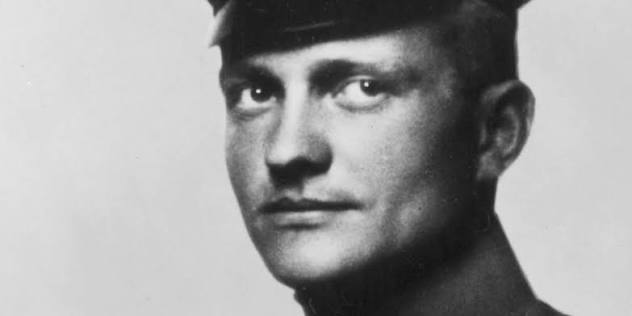
On April 21, 1918, a single bullet ended the life of the most feared pilot of World War I. Manfred von Richthofen, the ‘Red Baron,’ had just claimed his 80th aerial victory, a record that still stands. His death, shrouded in controversy, marked the end of an era of chivalrous air combat.
But who was the man behind the red Fokker triplane? Born into Prussian aristocracy, Richthofen was less a daredevil and more a cold, calculating hunter. His story is one of adaptation, from cavalry to cockpit, and of a legend that grew far beyond the facts of his life.
From Cavalry to Cockpit
Manfred Albrecht Freiherr von Richthofen entered the world on May 2, 1892, in Kleinburg, then part of the German Empire. His family was aristocratic, with a father who served as a cavalry officer. Following tradition, young Manfred joined the Uhlan regiment in 1911, eager to prove himself on horseback.
But the Great War shattered that romantic vision. By 1915, trench warfare had made cavalry charges obsolete. Horses were mowed down by machine guns; glory was found in the mud. Richthofen, seeking a new way to fight, transferred to the Imperial German Army Air Service. He started as an observer, learning the war from above, before earning his pilot’s wings.
His first confirmed kill came on September 17, 1916, when he downed a British FE.2b. It was the beginning of a meteoric rise. By January 1917, he commanded Jasta 11, a squadron that would become legendary under his leadership.
The Birth of the Red Baron
The red paint was a practical choice. In the chaotic swirl of dogfights, Richthofen wanted to be instantly recognizable to his own pilots—and to strike fear in his enemies. He began painting his Albatros D.III red in early 1917, and later switched to the iconic Fokker Dr.I triplane, also painted a vivid crimson.
The British and French press dubbed him the ‘Red Baron’ (der Rote Baron in German), while the French called him ‘Le Petit Rouge.’ His unit, Jagdgeschwader 1, formed in June 1917, became known as the ‘Flying Circus’—not just for the bright colors of its aircraft, but for its mobile, tent-based operations that moved across the front like a traveling show.
The Hunter’s Ethos
Richthofen was not a flamboyant ace. Contemporaries described him as cold, methodical, and calculating. He approached aerial combat like a hunter, not a sportsman. In his memoir, Der rote Kampfflieger (‘The Red Battle Flyer’), he wrote clinically about his kills, often comparing them to game hunting.
He collected trophies from his victims—serial numbers, machine guns, even a table that he had made from the wreckage of a British plane. Yet, there were moments of strange chivalry. He reportedly once refused to shoot a downed enemy pilot who was struggling in the water. Such contradictions made him both admired and feared.
The Deadliest Month: Bloody April
April 1917 was Richthofen’s apex. During ‘Bloody April,’ he shot down 22 British aircraft, a staggering feat that cemented his reputation. The German air force enjoyed a period of superiority, and the Red Baron was its undisputed master.
But the war was changing. The Allies were producing more planes, and new tactics were emerging. Richthofen, ever the strategist, adapted. Yet, after a severe head wound in July 1917, some historians argue his judgment began to falter. He became more reckless in 1918, pushing into danger with a bravado that was uncharacteristic.
The Final Flight
On April 21, 1918, Richthofen took to the skies near the Somme River. He was pursuing a Canadian pilot, Wilfrid ‘Wop’ May, when a single bullet tore through his chest. He managed to land his red triplane in a field, but he was dead by the time Allied soldiers reached him.
The question of who fired the fatal shot has fueled debate for over a century. The Royal Air Force officially credited Captain Arthur Roy Brown, a Canadian ace who attacked Richthofen from behind and above. But many historians believe the bullet came from Australian ground fire—specifically from machine gunners like Sergeant Cedric Popkin or Gunner Robert Buie.
Modern forensic analysis of the bullet trajectory (entering from the right and exiting left) suggests the shot came from the ground, not from Brown’s position. Yet, the debate persists, with no definitive answer.
The Legacy
Richthofen was buried with full military honors by the Allies at Bertangles, France—a mark of respect for a worthy adversary. His remains were later moved to Wiesbaden, Germany, where they rest today. He had 80 confirmed victories, the highest of any ace in World War I, and his legend only grew after his death.
The Red Baron became a symbol of a bygone era of air combat, where knights of the sky dueled above the trenches. But the reality was brutal, and Richthofen was a product of that brutality. His death, just seven months before the Armistice, was a turning point—not just for the German air force, but for the mythology of the war itself.
Manfred von Richthofen was more than a pilot; he was a phenomenon. His life and death encapsulate the contradictions of World War I: the chivalry and the carnage, the skill and the luck. The Red Baron remains a haunting figure, a reminder that even the most skilled hunter can become the hunted.
Summary
- Manfred von Richthofen was a German aristocrat who became WWI’s top ace with 80 confirmed victories.
- He painted his aircraft red for recognition and fear, earning the nickname ‘Red Baron.’
- His unit, the ‘Flying Circus,’ was famous for its mobile operations and colorful planes.
- Richthofen was killed on April 21, 1918, and the identity of his killer remains disputed.
- He was buried with honors by the Allies, and his legacy endures as a symbol of WWI aviation.
FAQ
Q: How many planes did the Red Baron shoot down?
A: Manfred von Richthofen had 80 confirmed aerial victories, the highest of any ace in World War I.
Q: Why was his plane red?
A: He painted his aircraft red for easy recognition in combat and to intimidate enemies. The color became his trademark.
Q: Who shot down the Red Baron?
A: The official credit went to Canadian Captain Roy Brown, but many historians believe he was killed by Australian ground fire. The exact shooter remains a subject of debate.
Q: What was the ‘Flying Circus’?
A: It was the nickname for Jagdgeschwader 1, Richthofen’s unit, known for its brightly colored aircraft and mobile, tent-based operations.
Q: Where is the Red Baron buried?
A: He was initially buried in France, then moved to Wiesbaden, Germany, where he rests in the Südfriedhof cemetery.