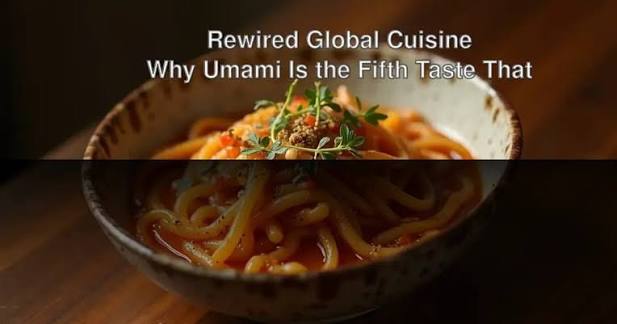
Tag: fifth taste

  • The Fifth Taste: How Umami Was Discovered and Rewired Global Cuisine

    The Fifth Taste: How Umami Was Discovered and Rewired Global Cuisine

    In 1908, a Japanese chemist named Kikunae Ikeda sat down to a bowl of kombu broth and noticed something that didn’t fit the four accepted tastes of sweet, sour, salty, and bitter. He called it umami roughly ‘deliciousness’ and spent the next year isolating the compound responsible. But it took nearly a century for the rest of the world to catch up.

    Today, umami is recognized as the fifth basic taste, with dedicated receptors on our tongues and a chemistry that explains why a sprinkle of Parmesan transforms a tomato sauce or why mushrooms and meat taste so good together. The story of umami is a tale of scientific stubbornness, cultural bias, and a flavor synergy that chefs had exploited for centuries without knowing why.

    A Taste That Was Always There

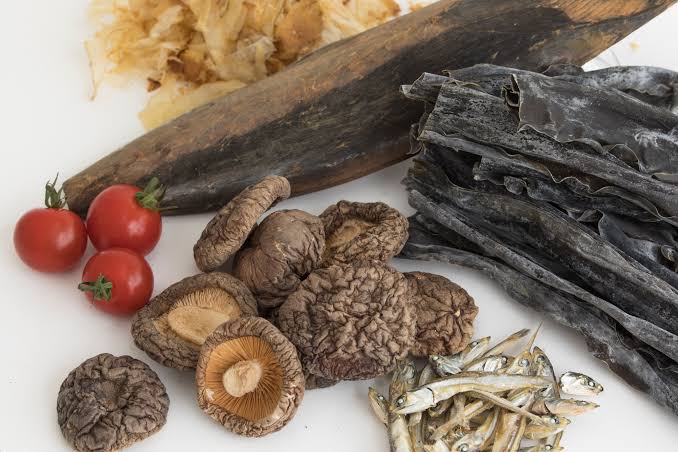
    Long before Ikeda named it, cooks across the globe were layering umami-rich ingredients without a scientific label. Japanese cuisine paired kombu and dried bonito flakes to make dashi, the foundational broth. Italian kitchens relied on tomatoes, anchovies, and aged Parmesan—think Caesar dressing or puttanesca sauce—to create deep savoriness. Fermented soybean pastes in China and Korea, dried mushrooms in Mexico, and fermented locust beans in West Africa all delivered the same underlying sensation.

    What these foods share is a high concentration of glutamate, an amino acid that exists in both protein-bound and free forms. When foods are aged, fermented, or cooked, some proteins break down, freeing glutamate and making it available to our taste buds. Tomatoes, Parmesan, soy sauce, and seaweed are all glutamate powerhouses.

    But glutamate alone doesn’t explain the intensity of many traditional combinations. There’s a second layer: certain nucleotides—inosinate in meat and fish, guanylate in mushrooms—amplify the glutamate signal several-fold. This is why a dish with both tomato (glutamate) and anchovy (inosinate) tastes more savory than either ingredient alone. The effect is so pronounced that food scientists call it the synergy of umami compounds.

    The Scientist Who Defied the Four-Taste Orthodoxy

    Kikunae Ikeda was a physical chemist at Tokyo Imperial University who wasn’t satisfied with the taste vocabulary of his time. He suspected that the flavor of kombu broth couldn’t be explained by the four basic tastes alone. In 1908, he extracted glutamate from kelp and proved that its taste was distinct from sweet, sour, salty, and bitter. He named the sensation umami, from the Japanese word umai, meaning ‘delicious’.

    His 1909 paper, ‘New Seasonings,’ laid out the evidence. By 1909, he had patented a method to produce monosodium glutamate (MSG), and the company Ajinomoto was soon manufacturing it. Ikeda’s student Shintaro Kodama added inosinate from dried bonito flakes in 1913, and in 1957, Akira Kuninaka identified guanylate in shiitake mushrooms—completing the trio of major umami compounds.

    Why the West Resisted for Decades

    Despite this solid chemical foundation, Western science largely dismissed umami. The four-taste model, rooted in Aristotle and formalized by 19th-century physiologists, was deeply entrenched. Skeptics argued that umami was just a combination of saltiness and sweetness, or a mere flavor enhancer rather than a fundamental taste.

    Cultural bias played a role. The concept emerged from Japanese cuisine, which wasn’t widely studied in Western food science until much later. But the biggest obstacle was the lack of a dedicated receptor. Without a physical receptor, skeptics could claim umami had no biological basis—it was just a learned preference, not a true taste.

    This scientific stalemate persisted into the late 20th century. The term ‘umami’ was formally accepted at the first Umami International Symposium in Hawaii in 1985, but it wasn’t until 2000 that Charles Zuker’s team at UC San Diego and a Japanese group independently identified the T1R1 + T1R3 receptor, a heterodimer that specifically responds to glutamate. Nirupa Chaudhari at the University of Miami also identified a variant of the mGluR4 receptor as an additional pathway. With the receptor in hand, umami was impossible to deny.

    The MSG Stigma and Its Legacy

    Umami’s association with monosodium glutamate became a double-edged sword. MSG was embraced in Asia as a convenient way to add savory flavor, but in the late 1960s, a letter to the New England Journal of Medicine coined the term ‘Chinese Restaurant Syndrome,’ blaming MSG for a range of symptoms. Subsequent studies have largely failed to confirm these effects in controlled trials, but the stigma persisted for decades, tainting public perception of umami itself.

    This stigma also slowed Western acceptance of umami as a legitimate taste. Even today, many people associate MSG with headaches or other discomforts, despite the FDA classifying it as generally recognized as safe. Modern research suggests that most people can consume MSG without issue, and the compound occurs naturally in many foods we eat daily.

    Umami Across Global Cuisines

    Once Western chefs and scientists embraced umami, they realized they’d been cooking with it all along. Italian cuisine is a masterclass in umami pairing: tomatoes, Parmesan, and anchovies create a synergistic burst that’s hard to replicate with any single ingredient. In Japanese cooking, dashi made from kombu and katsuobushi is the backbone of miso soup and countless other dishes—a perfect example of glutamate and inosinate working together.

    Other cultures have their own umami staples. Korea’s doenjang and gochujang are fermented soybean pastes rich in glutamate. West African iru or dawadawa—fermented locust beans—add an intense savory note to stews. Mexican moles combine dried chilies and tomatoes, both high in free glutamate. Even the humble combination of a beef burger with a slice of cheddar cheese exploits umami synergy, as beef provides inosinate and cheese provides glutamate.

    The Science of Synergy: Why It Works

    When you eat a food containing glutamate, it binds to the T1R1 + T1R3 receptors on your tongue. But when inosinate or guanylate is also present, it binds to a different site on the same receptor, causing a conformational change that makes the receptor more sensitive to glutamate. The result is a dramatic amplification of the umami signal—some studies suggest a synergistic increase of up to eight times the response to glutamate alone.

    This synergy is why a pinch of MSG in a meat dish works so well, and why tomatoes and mushrooms—both glutamate-rich—benefit from the addition of meat or fish. It also explains why many umami-rich foods are aged or fermented: the breakdown of proteins over time releases free glutamate and nucleotides that are ready to trigger the receptor.

    Umami’s Impact on Modern Cuisine

    Recognition of umami has transformed how chefs approach flavor. The term ‘umami bomb’ entered the culinary lexicon, describing dishes that pile on ingredients like soy sauce, miso, Parmesan, mushrooms, and cured meats to create intense savoriness. In fine dining, chefs use umami to enhance flavor without adding salt or fat, aligning with health trends.

    Food manufacturers have also capitalized on umami. Reduced-sodium products often add MSG or yeast extract to compensate for lost saltiness, because glutamate enhances the perception of saltiness. This makes umami a key player in efforts to reduce sodium intake without sacrificing taste.

    A Paradigm Shift in Taste Science

    Umami’s journey from a Japanese chemist’s intuition to a globally accepted fifth taste is a case study in how science advances—slowly, with resistance, and often against cultural biases. It took nearly a century for the receptor to be found, but once it was, the evidence became undeniable. The next time you savor a bowl of dashi, a slice of aged Parmesan, or a spoonful of miso soup, you’re experiencing a taste that was always there, waiting to be named.

    Umami’s story is a reminder that our senses are more complex than the models we build to describe them. What began as one chemist’s curiosity about a broth became a scientific revolution that changed how we understand flavor and how chefs around the world compose their dishes. The fifth taste wasn’t discovered so much as recognized—it had been on our plates all along.

    Summary

    • Umami is the fifth basic taste, triggered by free glutamate and enhanced by nucleotides inosinate and guanylate.
    • Kikunae Ikeda isolated MSG from kelp in 1908, naming the taste umami, but Western science rejected it for decades.
    • Cultural bias and lack of a receptor delayed acceptance until 2000, when T1R1 + T1R3 was identified.
    • Umami synergy is real: combining glutamate and inosinate or guanylate amplifies savory flavor several-fold.
    • Traditional cuisines worldwide—Italian, Japanese, Chinese, African, and more—had used umami pairings for centuries before science caught up.

    FAQ

    Q: What exactly is umami?
    A: Umami is the fifth basic taste, described as savory, meaty, or brothy. It is primarily triggered by free glutamate, an amino acid, and enhanced by nucleotides like inosinate and guanylate.

    Q: Why was umami not recognized as a taste until recently?
    A: Western science held a four-taste model for centuries, and umami lacked a clear receptor until 2000. Cultural bias and the MSG stigma also contributed to its rejection.

    Q: Is MSG the same as umami?
    A: No, MSG (monosodium glutamate) is a salt form of glutamate that provides umami flavor. Umami is the taste itself, while MSG is one way to add it to food.

    Q: How does umami synergy work?
    A: When glutamate and inosinate (or guanylate) are present together, they bind to different sites on the umami receptor, amplifying the signal several-fold. This is why combining foods like tomatoes and anchovies creates a stronger savory flavor.

    Q: Are there natural sources of umami?
    A: Yes, many foods are naturally rich in umami, including tomatoes, Parmesan cheese, mushrooms, soy sauce, seaweed, and fermented fish products like anchovies and fish sauce.
  • Umami: How a Japanese Chemist Discovered the Fifth Taste and Changed Global Cuisine

    Umami: How a Japanese Chemist Discovered the Fifth Taste and Changed Global Cuisine

    Imagine biting into a ripe tomato or savoring a spoonful of Parmesan cheese. There’s a deep, savory richness that lingers something beyond sweet, sour, salty, or bitter. For centuries, Western science recognized only those four tastes. But in 1908, a Japanese chemist named Kikunae Ikeda identified a fifth taste, which he called umami. This discovery not only reshaped culinary science but also sparked a global flavor revolution.

    Ikeda’s breakthrough came from a simple observation: why did kombu broth taste so uniquely satisfying? He isolated glutamate, an amino acid, as the key compound, and soon after, monosodium glutamate (MSG) was born. Yet, it took nearly a century for umami to gain acceptance in the West, with the discovery of specific taste receptors in 2000 finally cementing its status. Today, umami is a cornerstone of modern cooking, from fine dining to fast food, and understanding its science can transform how you cook and eat.

    The Discovery: A Chemist’s Curiosity

    Kikunae Ikeda was a professor at Tokyo Imperial University with a deep appreciation for Japanese cuisine. He was particularly intrigued by dashi, a broth made from kombu (kelp) and bonito flakes, which is fundamental to many Japanese dishes. Ikeda noticed that dashi had a taste that couldn’t be classified as sweet, sour, salty, or bitter it was savory and mouth-filling, almost meaty. He set out to identify the source of this sensation.

    In 1908, Ikeda successfully isolated glutamate from kombu and demonstrated that it produced this unique taste. He named it umami, from the Japanese word umai, meaning “delicious.” His discovery was published in a Japanese journal, but it remained largely unknown outside Japan for decades.

    Ikeda’s work wasn’t just academic. He partnered with businessman Saburosuke Suzuki to commercialize monosodium glutamate (MSG) as a seasoning, launching the brand Aji-no-moto (“essence of taste”) in 1909. This product made umami accessible to home cooks, and it quickly became a staple in Asian kitchens.

    The Science of Umami: Glutamate and Synergy

    Umami is triggered primarily by glutamate, an amino acid that occurs naturally in many foods. But glutamate doesn’t work alone. Two other compounds—inosinate, found in fish and meat, and guanylate, found in mushrooms—also elicit umami. What’s fascinating is their synergy: when glutamate and inosinate are combined, the umami intensity can be up to eight times greater than either alone.

    This synergy explains classic culinary pairings. For example, a tomato sauce (rich in glutamate) becomes profoundly more savory when you add anchovies (rich in inosinate) or a splash of fish sauce. Similarly, the Japanese combination of kombu and bonito flakes in dashi harnesses the same effect. This is why a pinch of MSG can boost a dish’s flavor without adding a distinct taste.

    For decades, scientists debated whether umami was truly a basic taste or just a combination of the other four. The turning point came in 2000, when researchers at the University of Miami identified specific taste receptors—T1R1 and T1R3—on the tongue that respond to glutamate. These are G-protein-coupled receptors that bind to glutamate and send signals to the brain, confirming umami as a distinct taste. Since then, research has also found umami receptors in the gut, where they play a role in digestion and satiety.

    Umami in Traditional Foods Around the World

    While Ikeda’s discovery was rooted in Japanese cuisine, umami-rich ingredients have been used for centuries across cultures. The Romans fermented fish into garum, a sauce that added savory depth to their dishes. In China, soy sauce and fermented bean pastes have been staples for millennia. Italian cuisine relies on aged cheeses like Parmesan, which are packed with glutamate, as well as cured meats and sun-ripened tomatoes. Mexican mole sauces combine chocolate and chilies, both of which contain compounds that amplify umami.

    These ingredients share a common thread: they’re often fermented, aged, or otherwise processed in ways that break down proteins into free amino acids, making glutamate more available. This is why a ripe tomato tastes more savory than a green one—the ripening process increases its free glutamate content.

    Human breast milk is also rich in glutamate, suggesting that our preference for umami is hardwired from birth. This may be an evolutionary adaptation, guiding us toward protein-rich foods essential for growth and survival.

    Why Umami Took So Long to Catch On in the West

    The four-taste model, rooted in Aristotle’s writings and later refined by European chemists, held sway in Western science for centuries. It wasn’t until Ikeda’s discovery that a fifth taste was proposed, but it faced skepticism. Some dismissed umami as merely a flavor enhancer rather than a basic taste, while others attributed its savory quality to salt or other known tastes.

    Cultural bias played a role too. French culinary tradition, which dominated Western gastronomy, emphasized the four tastes and didn’t have a prominent concept for “savory” until much later. As a result, umami remained a niche interest in the West for decades.

    The tide began to turn in the late 20th century. In the 1980s, sensory scientists started publishing studies on umami, and the 2000 receptor discovery put it on solid scientific footing. Since then, umami has become a buzzword in the culinary world, from fine dining menus to fast-food marketing.

    Umami in Modern Cooking: Chefs and Umami Bombs

    Today, chefs like Heston Blumenthal and David Chang use umami as a tool for flavor layering. Blumenthal is known for his scientific approach to cooking, pairing ingredients based on their umami content to create “umami bombs”—dishes that pack an intense savory punch. Chang’s Momofuku restaurants have popularized techniques like using fish sauce and miso to add depth to Western dishes.

    The food industry has also embraced umami. Products labeled “umami seasoning” or “umami burgers” are now common, and many processed foods use MSG or other umami-rich ingredients to enhance flavor. Even fast-food chains have gotten in on the trend, offering umami-flavored menu items.

    Umami can also help reduce sodium intake. Because MSG contains less sodium than table salt per unit of flavor, it can be used to season food with less total sodium. Studies suggest that replacing some salt with MSG can reduce sodium without sacrificing taste, which could have public health benefits.

    Debunking the MSG Myth

    Despite its widespread use, MSG has been the subject of controversy since the 1960s, when reports linked it to “Chinese Restaurant Syndrome”—a set of symptoms including headaches and flushing. However, extensive research, including reviews by the FDA, WHO, and EFSA, has found MSG safe for the general population. The original reports were anecdotal, and controlled studies have not consistently reproduced these symptoms. In fact, most people consume glutamate naturally in foods like tomatoes and cheese, which contain far more of it than a typical serving of MSG.

    The myth persists, but the scientific consensus is clear: MSG is safe. Understanding this can help consumers make informed choices and appreciate umami without fear.

    Umami’s journey from a Japanese chemist’s lab to a global culinary phenomenon is a story of science and culture intersecting. Ikeda’s discovery challenged a centuries-old framework and opened the door to a deeper understanding of flavor. Today, umami is not just a fifth taste; it’s a lens through which we can appreciate the complexity of food, from a simple broth to a gourmet dish. Whether you’re a home cook or a professional chef, embracing umami can elevate your cooking and enrich your palate.

    Summary

    • Umami is the fifth basic taste, identified by Japanese chemist Kikunae Ikeda in 1908.
    • The primary compound is glutamate, with inosinate and guanylate enhancing the effect synergistically.
    • Umami receptors (T1R1/T1R3) were discovered in 2000, confirming its status as a distinct taste.
    • Umami-rich foods are found across global cuisines, from soy sauce to Parmesan cheese.
    • MSG is safe and can help reduce sodium intake, debunking the myth of “Chinese Restaurant Syndrome.”

    FAQ

    Q: What exactly is umami?
    A: Umami is the fifth basic taste, described as savory, meaty, or brothy. It is primarily triggered by glutamate, an amino acid found in many foods.

    Q: How was umami discovered?
    A: Kikunae Ikeda, a Japanese chemist, isolated glutamate from kombu broth in 1908 and identified it as the source of a unique savory taste, which he named umami.

    Q: Is MSG safe to eat?
    A: Yes, MSG is safe for the general population, according to the FDA, WHO, and EFSA. The “Chinese Restaurant Syndrome” has not been consistently reproduced in controlled studies.

    Q: What are some examples of umami-rich foods?
    A: Tomatoes, Parmesan cheese, soy sauce, mushrooms, anchovies, cured ham, seaweed, and fermented products like miso and fish sauce are all rich in umami.

    Q: How can I use umami in cooking?
    A: Combine glutamate-rich foods (like tomatoes) with inosinate-rich foods (like fish or meat) to enhance savoriness. For example, add anchovies to a tomato sauce or use fish sauce in a meat marinade.