Tag: Fascism

  • Benito Mussolini: The Man Who Invented Fascism

    Benito Mussolini: The Man Who Invented Fascism

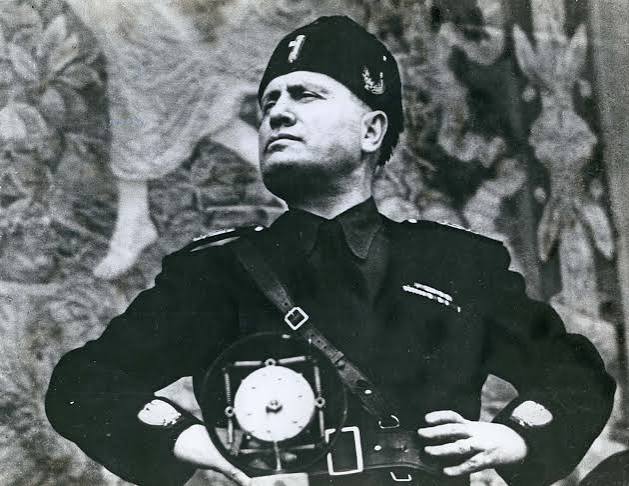
    On October 28, 1922, Benito Mussolini arrived in Rome by overnight train from Milan. He had not marched with his Blackshirts most were stuck in the rain outside the city but King Victor Emmanuel III, fearing civil war, refused to sign martial law and instead handed him the government. Mussolini was 39 years old, and within four years he would dismantle democracy and turn Italy into the world’s first fascist state.

    His rise was not a sudden coup but a slow, legal creep punctuated by violence. He called himself “Il Duce” the Leader and he gave the world a new word for a new kind of tyranny. Today, “fascism” is used loosely, but its inventor had a specific playbook: nationalism, anti-socialism, paramilitary terror, and a cult of personality built on radio and mass rallies.

    From Blacksmith’s Son to Revolutionary

    Mussolini was born in 1883 in Predappio, a small town in Italy’s Romagna region. His father Alessandro was a blacksmith and a revolutionary socialist; his mother Rosa was a schoolteacher. The household was poor but politically charged. Young Benito was named after Benito Juárez, the Mexican reformer, and Amilcare Cipriani, an Italian patriot names that signaled his parents’ radical hopes.

    He became a schoolteacher and journalist. In 1902, he fled to Switzerland to avoid military service, where he was arrested for vagrancy and spent time with exiled anarchists and socialists. Back in Italy, he rose quickly in the Socialist Party, editing its newspaper Avanti!. He was a gifted writer and a ferocious orator, but he was also impatient with party discipline.

    World War I broke his allegiance. The Socialists opposed the war; Mussolini, suddenly, demanded Italy join. Expelled from the party in 1914, he founded his own paper, Il Popolo d’Italia, funded partly by French and Italian industrialists who wanted intervention. He had found his new faith: nationalism.

    The Birth of the Fasci

    After the war, Italy was a tinderbox. Veterans returned to unemployment and inflation. The government had promised land and glory; it delivered a “mutilated victory” Italy got less than it wanted from the peace treaties. In the factories and fields, workers were striking, and many landowners and industrialists feared a Bolshevik-style revolution.

    In 1919, Mussolini gathered a small band of veterans and radicals in Milan’s Piazza San Sepolcro. They called themselves the Fasci Italiani di Combattimento the fasces being the ancient Roman symbol of bundled rods, meaning strength through unity. At first they were a fringe group, winning no seats in the 1919 election. But they had a weapon the Socialists didn’t: violence.

    The Blackshirts squadristi roamed the countryside, beating up socialists, breaking up strikes, and occupying town halls. Local authorities often looked the other way or even welcomed them. In 1921, Mussolini formalized the movement into the National Fascist Party. By 1922, the Fascists were strong enough to threaten power, and the March on Rome was launched.

    The Dictator Who Made Trains Run on Time (Sometimes)

    Once in power, Mussolini moved carefully. He formed a coalition government, but within months he demanded and got the power to rule by decree. The murder of socialist deputy Giacomo Matteotti in 1924, after he dared to denounce Fascist violence in parliament, marked the point of no return. Mussolini took responsibility, and by 1926, he had banned all other parties, censored the press, and created a secret police.

    He called his state “totalitarian” a word he embraced. “Everything within the state, nothing outside the state, nothing against the state,” he declared. He controlled schools, youth groups, sports, and even spare time. The Dopolavoro (After Work) organization ran clubs and holidays. The Opera Nazionale Balilla turned children into little soldiers, teaching them to march and to worship Il Duce.

    Was there a positive side? Yes, and it’s often exaggerated. The regime drained the Pontine Marshes and built autostrade (highways). The “Battle for Grain” increased wheat production, but it pushed Italy toward inefficient autarky. The famous “trains running on time” was a myth the trains ran on time for tourists, but the economy was increasingly rigid and corrupt. The corporate state, which claimed to mediate between workers and employers, actually just suppressed unions and set wages from above.

    The Lateran Treaty: An Unholy Alliance

    One of Mussolini’s biggest successes was with the Vatican. In 1929, he signed the Lateran Treaty, recognizing the Pope’s sovereignty over a tiny Vatican City state and paying the Church for its lost territories. In return, the Church recognized the Italian state. The agreement ended 60 years of tension and won Mussolini crucial Catholic support. For a dictator, it was a masterpiece of political theater pictures of him walking with the Pope’s emissary appeared in every newspaper.

    But the peace with the Church didn’t last. In 1938, Mussolini, now aligned with Hitler, passed antisemitic racial laws. Italian Jews were expelled from schools, professions, and public life. This was partly to please Germany, but also to create a “pure” Italian race—a concept that had no basis in history or science.

    The Road to Disaster: Ethiopia, Spain, and the Axis

    Mussolini wanted an empire. In 1935, he invaded Ethiopia, using poison gas and bombing cities. The League of Nations condemned him, but he didn’t care. He had his empire, and he called it “a place in the sun” for Italy’s surplus population.

    He then intervened in the Spanish Civil War, sending troops and planes to help General Franco. The war drained Italy’s resources, but it brought Mussolini closer to Hitler. In 1936, he announced the Rome–Berlin Axis—a pact that would eventually seal his fate.

    Hitler, at first, admired Mussolini and copied his style. But by 1940, the roles had reversed. Mussolini, watching Hitler’s blitzkrieg sweep across Europe, felt Italy must join the war to grab spoils. He declared war on France and Britain in June 1940, announcing from his balcony that Italy had “broken its chains.” It was a fatal miscalculation. The Italian army was poorly equipped, and its defeats in Greece and North Africa quickly exposed the regime’s weakness.

    Downfall and Death

    By July 1943, the Allies had landed in Sicily. The Grand Council of Fascism—the very body Mussolini had created—voted him out of power. The King had him arrested. But the Germans, still occupying Italy’s north, rescued him in a dramatic glider raid. They installed him as head of the Italian Social Republic, a puppet state in the north, based in the town of Salò. There, he returned to his early radicalism, “socializing” industry, but he was merely a figurehead. The real power was German.

    In April 1945, as the Allies advanced, Mussolini tried to flee to Switzerland disguised as a German soldier. He was caught by partisans near Lake Como, along with his mistress Clara Petacci. The next day, they were executed. Their bodies were taken to Milan and hung upside down in Piazzale Loreto—the same square where partisans had been executed by Fascists months earlier. The crowd spat and threw stones.

    The Legacy of the First Fascist

    Mussolini invented a political system that outlived him. His innovations—the cult of personality, the use of propaganda, the corporate state, the alliance of nationalism and anti-socialism—were copied by Hitler and Franco. But his regime also left Italy with a lasting scar. When the war ended, Italy had to rebuild not just its cities but its democracy, which had been so easily discarded.

    His legacy is still contested. Some Italians remember the public works and the order; others remember the fear and the millions of dead. In 2017, a far-right group called CasaPound even tried to build a memorial in his hometown, but it was blocked. History doesn’t repeat itself, but its warnings are clear.

    Benito Mussolini rose to power by exploiting fear and division, then held onto it by dismantling every institution that could check him. His rule ended in ruin, but his invention—fascism—remains a dangerous idea that has never fully disappeared. Understanding his story is not about excusing it; it’s about recognizing the patterns, so they can be resisted wherever they appear again.

    Summary

    • Mussolini was the inventor of fascism, coining the term from the Latin ‘fasces’ and building a totalitarian state in Italy from 1922 to 1943.
    • He rose to power through a combination of legal maneuvering, paramilitary violence (the Blackshirts), and the March on Rome in 1922.
    • His regime mixed public works and propaganda with severe repression, including the murder of opponents, press censorship, and, from 1938, antisemitic racial laws.
    • His foreign policy led to the invasion of Ethiopia, intervention in the Spanish Civil War, and an alliance with Hitler that drew Italy into World War II.
    • Mussolini was ousted in 1943, rescued by Germans, and finally captured and executed by Italian partisans in April 1945.

    FAQ

    Q: Was Mussolini responsible for the murder of Giacomo Matteotti?
    A: Yes. Matteotti, a socialist deputy, was kidnapped and killed in 1924 after giving a speech denouncing Fascist violence. Though the killers were hired thugs, Mussolini took responsibility in a speech, effectively acknowledging his role, and used the crisis to tighten his grip on power.

    Q: Did Mussolini really make the trains run on time?
    A: The claim is a myth. The Fascist regime did invest in railways, but the “on-time trains” were often propaganda, prioritizing high-profile routes. The broader economy suffered from inefficiency and corruption, and the “miracle” was largely a public relations invention.

    Q: What was the Lateran Treaty?
    A: The Lateran Treaty was signed in 1929 between Mussolini and the Vatican. It recognized the Pope’s sovereignty over Vatican City and made Catholicism the state religion, in exchange for the Church’s recognition of the Italian state and a financial settlement. It ended 60 years of conflict between Italy and the papacy.

    Q: Why did Mussolini pass antisemitic laws in 1938?
    A: Mussolini passed the racial laws to align Italy with Nazi Germany and to create a sense of a “pure” Italian race. The laws expelled Jews from schools, professions, and public life, and were a stark departure from Italy’s earlier record, where Jews were generally integrated.

    Q: How did Mussolini die?
    A: On April 28, 1945, Mussolini was captured by Italian partisans near Lake Como while trying to flee to Switzerland. He and his mistress Clara Petacci were executed the same day. Their bodies were then hung upside down in Milan’s Piazzale Loreto, where a crowd gathered to spit on them.
  • The Axis Leaders: Hitler, Mussolini, and Imperial Japan’s Wartime Command

    The Axis Leaders: Hitler, Mussolini, and Imperial Japan’s Wartime Command

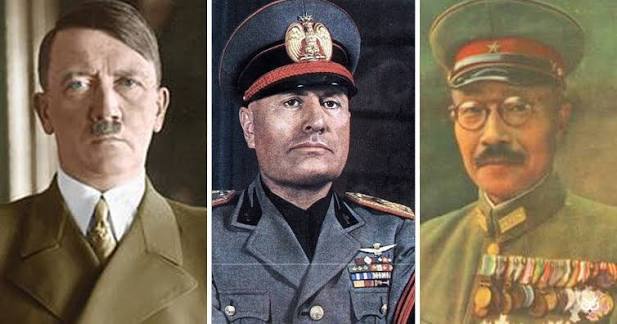
    When World War II broke out in 1939, the Axis Powers Germany, Italy, and Japan united to challenge the Allied forces. Their leaders Adolf Hitler, Benito Mussolini, and Japan’s Emperor Hirohito with Prime Minister Hideki Tojo each shaped the conflict in distinct ways. But their alliance was less a unified bloc and more a pragmatic pact of convenience, driven by divergent ambitions and ideologies. This article examines who these leaders were, how they rose to power, and why their partnership ultimately unraveled.

    The Rise of Dictators

    Adolf Hitler came to power in Germany in 1933, capitalizing on the chaos of the Weimar Republic and the humiliation of the Treaty of Versailles. His Nazi Party fused extreme nationalism, racial antisemitism, and a vision of territorial expansion to win over a desperate population. By 1934, he declared himself Führer, merging the roles of chancellor and president, and began dismantling German democracy.

    Benito Mussolini had already seized control in Italy a decade earlier. In 1922, his March on Rome pressured King Victor Emmanuel III to appoint him Prime Minister. Mussolini’s Fascist ideology emphasized authoritarian nationalism, corporatism, and imperial revival a stark contrast to Germany’s race-based Nazi doctrine. Yet both men shared a thirst for power and a disdain for the post-WWI order.

    In Japan, the path to militarism was different. The 1930s saw the military and ultranationalist factions gain dominance over civilian government, fueled by economic crisis and a desire for resource security. Emperor Hirohito viewed as a divine figure reigned as a constitutional monarch, but his exact role in wartime decisions remains contested. Hideki Tojo, a hardline general, became Prime Minister in 1941 and effectively led the nation’s war efforts, though he always acted in the Emperor’s name.

    The Axis Alliance: A Marriage of Convenience

    The term “Axis” was coined by Mussolini in 1936, referring to the Rome–Berlin line around which other European states might align. The Rome–Berlin Axis was formalized in 1939 with the Pact of Steel, a military alliance between Germany and Italy. Japan joined the following year with the Tripartite Pact, creating the Berlin-Rome-Tokyo axis.

    But this was not a united front. Germany and Italy shared a fascist kinship, yet clashed over ambitions in Austria and the Balkans. Japan was primarily anti-communist and expansionist in Asia, with little ideological affinity for European fascism. The alliance lacked a unified strategy or command each power pursued its own war aims. Hitler, for instance, declared war on the United States after Pearl Harbor, a decision that ultimately dragged Germany into a two-front war and sealed its fate.

    The Personal Dynamics

    Hitler and Mussolini’s relationship evolved from admiration to strain. Mussolini initially viewed Hitler with a mix of respect and rivalry, but Italy’s military failures in Greece and North Africa exposed its weaknesses. In 1943, Allied forces invaded Sicily, and Mussolini was deposed and arrested. Hitler, determined to rescue his ally, sent commandos to free him from the Gran Sasso mountain hotel. Mussolini was then installed as the puppet leader of the Italian Social Republic in northern Italy, but his power was hollow.

    Germany and Japan had even less coordination. They fought separate wars Germany in Europe, Japan in the Pacific with minimal strategic cooperation. The two powers were separated by vast distances and had no shared war plan.

    The Fall of the Axis Leaders

    The end of the war brought violent deaths for most of the Axis leadership. Mussolini attempted to flee to Switzerland in April 1945, but was captured by Italian partisans and executed. His body was hung upside down in Milan, displayed to a vengeful public.

    Hitler, surrounded by Soviet forces in Berlin, committed suicide on April 30, 1945, by gunshot and cyanide. His body was burned in the Chancellery garden, and his ashes were scattered a deliberate attempt to prevent any future shrine.

    Tojo attempted suicide but survived and was captured by Allied forces. He was convicted of war crimes by the International Military Tribunal for the Far East and executed by hanging in 1948.

    Hirohito escaped prosecution. The Allies, eager to maintain stability in occupied Japan, shielded him from trial, arguing that he had been a passive figure manipulated by militarists. This decision remains controversial in East Asia, where many hold him responsible for wartime atrocities.

    The Broader Axis Leadership

    Beyond the “Big Three,” the Axis included a network of lesser leaders with varied motivations. Ion Antonescu of Romania, Miklós Horthy of Hungary, and Ante Pavelić of Croatia led regimes aligned with the Axis, either out of ideological sympathy, territorial gain, or coercion. In China, Wang Jingwei headed a Japanese puppet state, and Thailand’s Plaek Phibunsongkhram collaborated with Japan to expand Thai territory.

    These leaders often had more in common with their own survival instincts than with any shared Axis ideology. Their alliances were pragmatic, shifting with the fortunes of war.

    Ideological Fault Lines

    Nazism was rooted in racial theory, culminating in the Holocaust the systematic murder of six million Jews and millions of others. Italian Fascism was less racially extreme, though Mussolini enacted antisemitic laws in 1938 to align with Germany. Japanese militarism centered on emperor worship and pan-Asianism the idea of “Asia for Asians” but was not based on a racial hierarchy in the same way as Nazism. Instead, it saw Japan as the natural leader of Asia, liberating the region from Western colonialism.

    These ideological differences contributed to the alliance’s fragility. The Axis was never a coherent force; it was a temporary alignment of convenience that collapsed under the weight of its own contradictions.

    The Legacy

    By 1945, all three principal Axis powers had been defeated. Their leaders were dead or disgraced, and their ideologies were thoroughly discredited. The post-war world was rebuilt on the principles of the Allied powers, shaping international institutions like the United Nations.

    The Axis leaders remain a stark reminder of the dangers of totalitarianism, militarism, and unchecked nationalism. Their rise and fall offer lessons about the fragility of democracy and the catastrophic consequences of aggressive expansion.

    The Axis leaders Hitler, Mussolini, and Japan’s wartime command were driven by a shared desire to overturn the existing world order, but their alliance was never more than a marriage of convenience. Their divergent ideologies and ambitions ultimately undermined their cause, leading to their complete defeat. The war they unleashed cost millions of lives and reshaped the global landscape, leaving a legacy that still informs international relations today.

    Summary

    • The Axis Powers were primarily led by Adolf Hitler (Germany), Benito Mussolini (Italy), and Japan’s Emperor Hirohito with Prime Minister Hideki Tojo.
    • The alliance was pragmatic, not ideological, with each power pursuing its own expansionist goals.
    • Personal relationships among the leaders were strained, particularly between Hitler and Italy’s failing military efforts.
    • The fall of the Axis leaders came through suicide, execution, or—in Hirohito’s case—preservation under Allied occupation.
    • The broader Axis included numerous lesser leaders with varied motivations, from ideological alignment to coercion.

    FAQ

    Q: What was the Axis alliance?
    A: The Axis was a military coalition formed by Germany, Italy, and Japan, formalized through agreements like the Pact of Steel (1939) and the Tripartite Pact (1940). It was a pragmatic alliance of convenience rather than a unified ideological bloc.

    Q: Why did Italy join the Axis?
    A: Benito Mussolini sought to revive the Roman Empire’s glory and saw an alliance with Germany as an opportunity for territorial expansion in Africa and the Mediterranean.

    Q: What was Hirohito’s role in Japan’s war effort?
    A: Emperor Hirohito was the constitutional monarch, but historians debate his actual involvement. Some argue he was a passive figurehead manipulated by militarists, while others contend he actively supported key decisions, including the attack on Pearl Harbor.

    Q: How did the Axis leaders die?
    A: Hitler committed suicide in 1945, Mussolini was executed by partisans, and Tojo was executed after a war crimes trial. Hirohito died of natural causes in 1989 after retaining his throne under Allied occupation.

    Q: Were there other Axis leaders besides the ‘Big Three’?
    A: Yes, many other countries and puppet states were part of the Axis, including Hungary (Miklós Horthy), Romania (Ion Antonescu), Croatia (Ante Pavelić), and the Japanese puppet state in China (Wang Jingwei).

  • The Mutilated Victory: How Italy’s Lost Spoils of War Fueled the Rise of Fascism

    The Mutilated Victory: How Italy’s Lost Spoils of War Fueled the Rise of Fascism

    On a cool September evening in 1919, a poet led a ragtag army of 2,500 nationalists into the disputed city of Fiume. Gabriele D’Annunzio, his face scarred by war and his rhetoric aflame, declared the city Italian by right of blood and sacrifice. The Italian government, exhausted by war and paralyzed by political crisis, did nothing to stop him. For 15 months, D’Annunzio’s self-styled ‘Regency of Carnaro’ held the city, defying the Allies and embarrassing Rome.

    This bold act was not a spontaneous outburst. It was the culmination of a deep-seated national anger—a fury born from the belief that Italy, though victorious in the Great War, had been robbed of its spoils. This ‘mutilated victory’ (vittoria mutilata) would become a rallying cry, a political weapon, and a path to power for a former socialist journalist named Benito Mussolini. The story of that discontent is not just a footnote to history; it is the crucial link between the trenches of World War I and the balconies of Fascist Italy.

    The Promise and the Price

    Italy entered World War I in May 1915, not out of loyalty to its allies, but out of calculated ambition. The secret Treaty of London, signed in April 1915, promised Italy substantial territorial gains in exchange for abandoning its neutrality: Trentino, South Tyrol, Istria, and parts of Dalmatia, along with colonial compensation. The deal was a gamble—a dangerous bet that victory would bring Italy its long-desired ‘unredeemed’ lands and elevate it to great power status.

    The cost of that gamble was staggering. By the armistice in November 1918, Italy had suffered approximately 650,000 military deaths, with another million wounded. Civilian deaths, from disease and famine, pushed the total to over a million. The economy was in shambles: war debts to Britain and the United States mounted, inflation soared, and unemployment gripped returning soldiers who found a nation that could not absorb them. The social fabric, already strained by regional divisions between the industrial North and agrarian South, began to tear.

    Yet, for many Italians, the sacrifice seemed justified—if the promises of the Treaty of London were kept. But at the Paris Peace Conference in 1919, those promises evaporated.

    The Humiliation of Paris

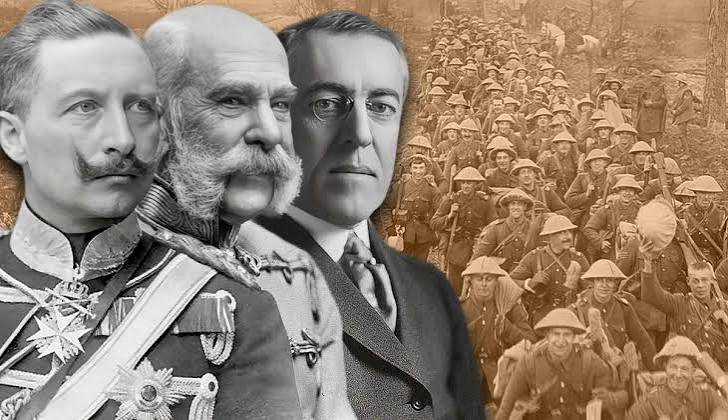
    At Versailles, Italy’s leaders—Prime Minister Vittorio Orlando and Foreign Minister Sidney Sonnino—found themselves outmaneuvered. President Woodrow Wilson’s principle of national self-determination clashed directly with the secret Treaty of London. The Allies, led by the triumvirate of Wilson, Lloyd George, and Clemenceau, had little interest in honoring a secret pact that now appeared imperialistic and outdated.

    The core dispute centered on two territories:

    • Fiume (now Rijeka): The Treaty of London had ambiguously promised the city to Croatia, but Italy demanded it based on its ethnic Italian majority.
    • Dalmatia: Italy expected large parts of this Adriatic coast, but the new Kingdom of Serbs, Croats, and Slovenes (Yugoslavia) fiercely opposed this, and Wilson supported them.

    Italy’s position was contradictory: it insisted on the full Treaty of London terms and additional claims like Fiume. This “Fiume or nothing” stance weakened its bargaining position. In a theatrical protest, Orlando walked out of the conference in April 1919. The Allies simply continued without Italy. Orlando returned, humiliated, and resigned in June 1919.

    The final treaties were a bitter pill. Italy received Trentino, South Tyrol, and Istria—but not Dalmatia, except for the small port of Zara and a few islands. Fiume was not awarded to Italy; instead, it was placed under international control. Colonial compensation in Africa and Anatolia was largely denied.

    For many Italians, this was not a peace—it was an insult. The poet Gabriele D’Annunzio, who had coined the term “mutilated victory” in a 1918 article for Mussolini’s newspaper Il Popolo d’Italia, gave voice to this fury. In a famous 1919 speech, he declared that Italy had been “tricked” and “betrayed” at the conference table.

    The Occupation of Fiume

    D’Annunzio’s seizure of Fiume on September 12, 1919, was a direct challenge to the Allied order. Leading about 2,500 nationalist irregulars—including veterans, arditi (elite assault troops), and futurists—he established the Italian Regency of Carnaro. The occupation was a grand spectacle: speeches from balconies, black-shirted legionnaires, and a constitution that blended anarchist, syndicalist, and nationalist ideas.

    For 15 months, D’Annunzio held the city, defying the Italian government and the Allies. His actions were not just a military adventure; they were a political statement that resonated deeply with a disillusioned public. The occupation became a symbol of resistance against the perceived injustices of Versailles.

    The Italian government, led by Prime Minister Francesco Saverio Nitti, was paralyzed. It could not support D’Annunzio without alienating the Allies, but it could not crush him without losing face at home. Eventually, with the Treaty of Rapallo in November 1920, Italy and Yugoslavia agreed to make Fiume a Free State. D’Annunzio refused to leave. In December 1920, the Italian army forcibly expelled him in the so-called “Bloody Christmas,” an operation that killed dozens of legionnaires.

    Though D’Annunzio’s adventure ended in failure, it left an indelible mark. It demonstrated the weakness of the liberal state, the power of nationalist rhetoric, and the willingness of paramilitary forces to challenge the established order. It also provided a template for Mussolini’s own march on Rome two years later.

    The Rise of Fascism

    The “mutilated victory” narrative did not die with D’Annunzio’s expulsion. It fed into a broader crisis of the Italian state. The “Two Red Years” (Biennio Rosso) from 1919 to 1920 saw massive labor unrest: factory occupations, strikes, and peasant uprisings. In 1921, the Italian Communist Party was founded, adding to the specter of revolution. Many middle-class Italians, frightened by socialism and humiliated by the peace settlement, looked for a strongman to restore order and national pride.

    Mussolini, a former socialist who had turned to nationalism during the war, skillfully exploited this discontent. His Fascist movement, founded in 1919 as the Fasci di Combattimento, initially struggled at the polls. But by 1921, it gained seats in parliament, and Mussolini began to cast himself as the defender of Italy’s honor and the enemy of Bolshevism.

    The “mutilated victory” was central to Fascist propaganda. Mussolini promised to rectify the injustice—to claim Italy’s rightful place in the world. The occupation of Fiume, which he had initially supported and later distanced himself from, served as a symbol of what nationalist resolve could achieve.

    In October 1922, the March on Rome brought Mussolini to power. King Victor Emmanuel III, fearing civil war, appointed him Prime Minister. Within two years, Mussolini had consolidated power and, in January 1924, he achieved what the liberals could not: the Treaty of Rome annexed Fiume to Italy. The “mutilated victory” was, in a sense, avenged—but at the cost of democracy and the rule of law.

    The Legacy

    The story of the “mutilated victory” is a cautionary tale about the dangers of nationalist resentment. Italy’s legitimate grievances at Versailles were real, but they were exploited by forces that had no interest in democratic solutions. The failure of the liberal state to address the economic and social crises of the postwar period, coupled with the humiliation of the peace settlement, created a vacuum that fascism filled.

    D’Annunzio’s occupation of Fiume was more than a theatrical stunt; it was a rehearsal for the authoritarianism that would engulf Europe in the following decades. The “mutilated victory” did not just shape Italy’s fate; it contributed to the broader instability that led to World War II.

    In the end, the victory that was mutilated was not just Italy’s territorial ambitions—it was the possibility of a peaceful, liberal, and unified nation. The wounds of 1919 were never healed; they were instead inflamed by demagogues who promised to restore Italy’s glory, but delivered only tragedy.

    The “mutilated victory” was a political myth that tapped into real pain and legitimate grievance, but it was also a tool of manipulation. The territorial losses Italy suffered at Versailles were real, but they did not justify the rise of a dictatorship. The story serves as a stark reminder of how unaddressed anger and national humiliation can be weaponized by those who promise simple solutions to complex problems. Italy’s journey from the trenches of the Isonzo to the balconies of Piazza Venezia is a lesson in the fragility of democratic institutions and the enduring appeal of strongman politics.

    Summary

    • Italy’s “mutilated victory” referred to the belief that the Allies cheated Italy out of territorial gains promised in the 1915 Treaty of London, fueling nationalist resentment.
    • Key grievances included the denial of Fiume, most of Dalmatia, and colonial compensation, despite Italy’s heavy human and economic costs in WWI.
    • Gabriele D’Annunzio’s 1919 occupation of Fiume epitomized the nationalist anger and exposed the weakness of the Italian liberal state.
    • The economic and social crises of the postwar period, including the Biennio Rosso, eroded faith in democracy and paved the way for Mussolini’s rise.
    • Mussolini exploited the “mutilated victory” narrative to gain power, ultimately annexing Fiume in 1924 and fulfilling Fascist promises at the cost of democracy.

    FAQ

    Q: What was the “mutilated victory”?
    A: A term coined by poet Gabriele D’Annunzio to describe Italy’s belief that, despite winning World War I, it was deprived of promised territories (like Fiume and Dalmatia) by the Treaty of Versailles and the Treaty of Rapallo.

    Q: Why did Italy feel cheated after WWI?
    A: Italy had been promised territorial gains in the secret Treaty of London (1915), but at the Paris Peace Conference, President Wilson’s principle of national self-determination and opposition from Yugoslavia led to a reduced settlement.

    Q: What was D’Annunzio’s role in Fiume?
    A: In September 1919, D’Annunzio led about 2,500 nationalist irregulars to seize the city of Fiume, establishing a short-lived state (the Italian Regency of Carnaro) that lasted 15 months before being expelled by the Italian army.

    Q: How did the “mutilated victory” contribute to the rise of fascism?
    A: The narrative of betrayal and national humiliation, combined with economic instability and fear of socialism, created a receptive audience for Mussolini’s promises to restore Italy’s honor. Fascism capitalized on this discontent to gain power in 1922.

    Q: Did Italy ever get Fiume?
    A: Yes, in 1924, after Mussolini came to power, the Treaty of Rome formally annexed Fiume to Italy, fulfilling a key demand of the “mutilated victory” movement.