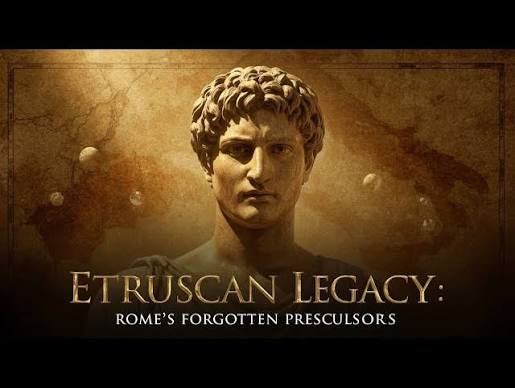
Before Rome ruled the Mediterranean, another civilization held sway over central Italy. The Etruscans, a people who called themselves Rasenna, built prosperous city-states, dominated the seas, and created art that still astonishes. Yet they vanished so completely that their language became a mystery, their history written by their conquerors.
This is the story of how Rome’s rise was built on Etruscan foundations. From the arch to the toga, from gladiators to the very rituals of state, the fingerprints of this lost civilization are all over Roman culture. In this article, we’ll unravel the enigma, exploring who the Etruscans were, how they shaped Rome, and why their legacy remains so vital.
Who Were the Etruscans?
The Etruscans flourished in central Italy from around 900 BCE to their absorption by Rome in the first century BCE. Their heartland was modern Tuscany, western Umbria, and northern Lazio—a region that still bears their name. They were not a unified empire but a loose confederation of independent city-states, traditionally twelve in number, including Veii, Tarquinia, Cerveteri, and Vulci. Each city was ruled by a king (lucumo) in early times, later by aristocratic oligarchies. They gathered annually at the sanctuary of Voltumna for religious and political purposes.
Their civilization is typically divided into periods: the Villanovan (c. 900–700 BCE), the Orientalizing (c. 700–580 BCE), the Archaic (c. 580–480 BCE), the Classical (c. 480–300 BCE), and the Hellenistic (c. 300–100 BCE), the last marking their decline.
The Mystery of Their Origins
For centuries, scholars debated where the Etruscans came from. The Greek historian Herodotus claimed they migrated from Lydia in Anatolia, led by Prince Tyrrhenus. But Dionysius of Halicarnassus, writing in the first century BCE, argued they were indigenous to Italy, noting their language and customs were unlike any other people’s.
Modern genetics has largely settled the debate. Studies from 2019 and 2021 show strong continuity with early Italian farmers, suggesting indigenous origins. The ‘mystery’ persists in popular culture, but the evidence points to a people who were homegrown, with trade contacts reaching across the Mediterranean.
The Language Puzzle
Etruscan is a language isolate, unrelated to any other known tongue. It was written using a Greek-derived alphabet, and we have about 13,000 inscriptions, mostly short funerary texts. The Pyrgi Tablets, found in 1964, are a bilingual text in Etruscan and Phoenician, offering a key, but the language remains only partially understood. The longest text, the Liber Linteus, a linen book used as mummy wrappings in Egypt, is still a puzzle. No Etruscan literature survives; we know them only through Roman and Greek accounts, often biased.
The Etruscan Legacy: How Rome Was Shaped
Rome’s most iconic institutions owe much to Etruscan innovation. The toga, the fasces (symbol of authority), and the triumphal procession all have Etruscan roots. Gladiatorial games and chariot racing came from Etruscan funeral rites. Engineering marvels like the arch, sewers, and aqueducts were built on Etruscan know-how. The Cloaca Maxima, Rome’s great drain, is traditionally attributed to Etruscan engineers.
Religion was deeply influenced. The Etruscan haruspices, priests who divined from livers, remained official Roman diviners for centuries. The Sibylline Books, Rome’s state oracles, were Etruscan-influenced. Rome’s ‘genius’ was not invention but synthesis—it absorbed and adapted, and the Etruscans were the unacknowledged architects of Roman identity.
The Decline and Fall
The traditional date of 509 BCE marks the expulsion of Rome’s last king, Lucius Tarquinius Superbus, who was of Etruscan origin. Rome then became a republic. In 396 BCE, Rome sacked Veii, the nearest major Etruscan city, after a ten-year siege—a turning point. Over the next centuries, Etruscan cities fell one by one: Tarquinia, Cerveteri, Volsinii. In 89 BCE, after the Social War, Etruscan cities received Roman citizenship. By the early Empire, the language and culture had faded, surviving only in the works of Roman writers who described them as superstitious and decadent.
The Etruscans left no histories of their own. Their records were lost when their language died out by the first century CE. Yet their legacy endures in the very structures of Roman power—and, through Rome, in Western civilization.
Why It Matters Today
The Etruscan enigma is not just a tale of a vanished people. It reminds us that civilizations are not born in isolation. Rome did not spring fully formed from the earth; it was built on the shoulders of those it conquered. The Etruscans gave Rome its symbols of authority, its urban planning, its religious rituals. Understanding the Etruscans helps us see the deep roots of our own culture. It also challenges the narrative of Roman exceptionalism—Rome’s greatness was, in part, a gift from the people it erased.
As archaeologists continue to unearth Etruscan cities and decode their language, we recover a lost voice. Each discovery adds a new chapter to the story of how a civilization, though conquered, shaped the world’s greatest empire.
The Etruscans may have been subsumed by Rome, but their influence never truly disappeared. From the arch in our buildings to the rituals of state, from the toga to the gladiator, their legacy is woven into the fabric of Western civilization. The enigma of their language and origins persists, but their impact is unmistakable. As we look at Rome’s monuments, we see the shadow of the Etruscans—a people who, though lost, still speak to us through the stones of the city they helped build.
Summary
- The Etruscans were a pre-Roman civilization in central Italy, flourishing from 900 BCE to their absorption by Rome.
- They were not a unified empire but a confederation of city-states, each with its own ruler.
- Their language is a mystery, not Indo-European, and only partially understood.
- Rome inherited many key institutions from the Etruscans, including the toga, the fasces, gladiatorial games, and engineering techniques.
- The Etruscan decline began with Rome’s sack of Veii in 396 BCE and ended with their cultural extinction by the first century CE.
FAQ
Q: Who were the Etruscans?
A: The Etruscans were a pre-Roman civilization that thrived in central Italy, in what is now Tuscany, western Umbria, and northern Lazio, from around 900 BCE until they were absorbed by Rome.
Q: Why are the Etruscans mysterious?
A: Their language is a unique isolate, not related to any other known language, and they left no literary records. Our knowledge comes from Roman and Greek sources and archaeology, which paints an incomplete picture.
Q: What did the Etruscans contribute to Rome?
A: Rome adopted many Etruscan elements, including the toga, the fasces (symbol of authority), the triumphal procession, gladiatorial games, chariot racing, the arch, and sophisticated drainage systems like the Cloaca Maxima.
Q: Where did the Etruscans come from?
A: Ancient historians debated whether they came from Lydia or were indigenous. Modern genetics suggests they were indigenous to Italy, with possible trade contacts with the eastern Mediterranean.
Q: When did the Etruscans disappear?
A: Their decline began with Rome’s conquest of Veii in 396 BCE. By 89 BCE, they received Roman citizenship, and their language and culture faded by the early Roman Empire, around the first century CE.