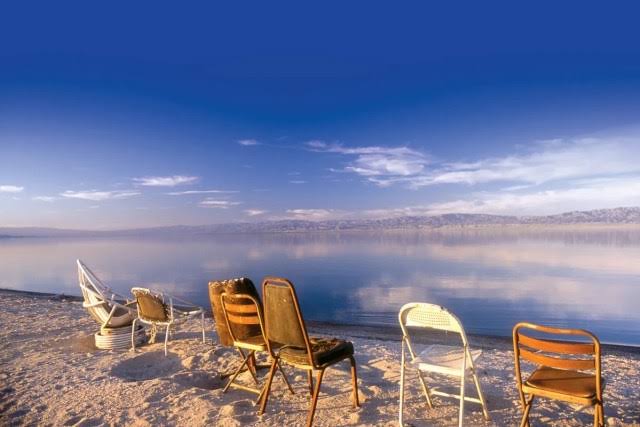
In 1905, the Colorado River burst through a poorly built irrigation canal and poured into a dry desert basin for 18 months. The result was California’s largest lake the Salton Sea a shimmering accident that became a playground for celebrities, a haven for migratory birds, and, eventually, a toxic crisis.
Today, the sea is shrinking, its water growing saltier than the ocean, and its exposed lakebed sends dust laced with arsenic and pesticides into nearby communities. This is the story of how a human error created an oasis, and how that oasis is now unraveling with lessons for water management, ecology, and the unintended consequences of engineering.
A River Gone Wild
The Salton Sea sits about 150 miles southeast of Los Angeles, in a basin that has flooded and dried for millennia. Ancient Lake Cahuilla once covered the area when the Colorado River shifted course. But the modern sea wasn’t born of geology alone—it was born of a mistake.
In 1900, the California Development Company dug canals from the Colorado River to irrigate the Imperial Valley, turning desert into farmland. The headgate controlling the flow was made of wood, and in 1905, heavy rains and snowmelt swelled the river. The gate failed, and the entire Colorado River redirected into the canal system, pouring into the Salton Sink.
For 18 months, the river ran unchecked. It flooded farmland, buried a railroad line, and created a lake where none had been. Southern Pacific Railroad finally stopped the flow in 1907 by dumping rock and gravel from trains into the breach. But the damage—or the gift—was done. The Salton Sea was here to stay.
An Accidental Playground
For decades, the accidental sea was a boon. Freshwater from irrigation runoff kept salinity tolerable, and the lake became a recreational paradise. In the 1950s, resorts and yacht clubs lined its shores. Frank Sinatra, the Beach Boys, and Jerry Lewis visited. Water skiers carved across its surface, and fishermen pulled in tilapia and corvina.
The sea also became a critical stopover on the Pacific Flyway. Over 400 bird species have been documented there, with millions of migratory birds passing through annually. Eared grebes, American white pelicans, and countless others relied on its fish and invertebrates.
The Slow Poisoning
The Salton Sea has no natural outlet. Water leaves only by evaporation, which means salts and pollutants stay behind, concentrating over time. Agricultural runoff from the Imperial, Coachella, and Mexicali valleys carried fertilizers, pesticides, and selenium into the lake. As salinity climbed, fish began to die.
By the 1980s, the sport fishery had collapsed. In the 1990s, major fish kills and botulism outbreaks became routine. Today, only tilapia—an invasive species—remain, and even they die off in summer heat. The sea is now about 50% saltier than the Pacific Ocean, with salinity around 44,000 to 50,000 parts per million.
The Water Deal That Starved the Sea
The most recent blow came in 2003, when the Imperial Irrigation District signed the Quantification Settlement Agreement (QSA), transferring water to San Diego. The deal was meant to address urban water needs, but it reduced the agricultural runoff that fed the sea. Inflow dropped, and the sea began to shrink faster.
Now, the shoreline retreats by about 6 inches to a foot each year in elevation loss. More than 50,000 acres of lakebed—the playa—have been exposed, and that dry ground is a source of toxic dust. Windblown particles contain selenium, arsenic, and pesticides. Communities in the Imperial Valley, already among the poorest in California, face some of the worst air quality in the nation, with disproportionately high asthma rates.
An Ecological and Public Health Crisis
The Salton Sea’s decline isn’t just an ecological loss; it’s a public health emergency. As the playa expands, dust storms become more frequent, carrying contaminants into nearby towns. The sea’s ecosystem has all but collapsed, yet it still supports millions of migratory birds that depend on it as a critical stopover.
Restoration efforts have been proposed, but they face enormous challenges. Some argue that the sea is beyond saving and that we should focus on managing its retreat—dampening dust and creating smaller, sustainable habitats. Others push for large-scale water imports or desalination, though the costs are astronomical.
The Salton Sea offers a stark lesson: when we alter natural systems, the consequences can ripple for decades. The sea was an accident, but its decline was inevitable once we stopped the flow. The question now is how we manage what remains—and what we learn from this accidental oasis turned cautionary tale.
The Salton Sea is a reminder that nature doesn’t forget our mistakes. What began as a broken canal headgate became a vibrant oasis, and what followed was a slow unraveling driven by salinity, pollution, and water politics. As the sea shrinks and dust rises, the people living nearby pay the price. Whether through restoration or managed retreat, the Salton Sea demands a response—not just for the birds and fish, but for the communities breathing its toxic air.
Summary
- The Salton Sea was created accidentally in 1905 when a Colorado River irrigation canal breached, flooding a desert basin for 18 months.
- It became a recreational hotspot in the 1950s and a critical habitat for over 400 bird species on the Pacific Flyway.
- Because it has no outlet, evaporation concentrates salts and pollutants from agricultural runoff, making it saltier than the ocean and toxic to fish.
- The 2003 Quantification Settlement Agreement reduced water inflow, accelerating the sea’s shrinkage and exposing toxic lakebed dust.
- The exposed playa poses a public health risk, with high rates of asthma in nearby Imperial Valley communities.
FAQ
Q: How was the Salton Sea created?
A: In 1905, a poorly built wooden headgate on a Colorado River irrigation canal failed during heavy floods, causing the entire river to flow into the Salton Sink for 18 months. Southern Pacific Railroad stopped the flow in 1907, but the sea remained.
Q: Why is the Salton Sea so salty?
A: The sea has no natural outlet. Water only escapes through evaporation, leaving behind salts and minerals from agricultural runoff, which has made it about 50% saltier than the Pacific Ocean.
Q: Is the Salton Sea still a habitat for birds?
A: Yes, it remains a critical stopover on the Pacific Flyway, supporting millions of migratory birds. However, the ecosystem is stressed, with only invasive tilapia surviving, and bird die-offs occur.
Q: What are the health risks of the drying Salton Sea?
A: As the lakebed dries, windblown dust carries selenium, arsenic, and pesticides, contributing to poor air quality and high asthma rates in nearby communities.
Q: Can the Salton Sea be restored?
A: Restoration is challenging and expensive. Some proposals include building smaller ponds to manage salinity, while others suggest letting it dry and focusing on dust suppression. No comprehensive solution is yet in place.