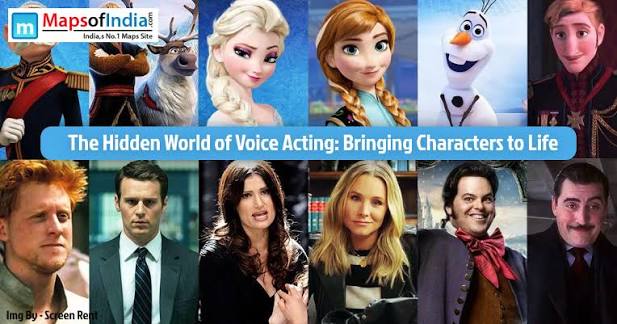
When you watch your favorite cartoon, you hear the characters come to life—but do you ever wonder who’s behind those voices? Voice actors are the invisible stars of animation, their faces unknown but their voices instantly recognizable. From the iconic tones of Tom Kenny (SpongeBob) to the versatile range of Tara Strong, these performers shape the characters we love, yet they often remain hidden in plain sight.
Voice acting is a multi-billion-dollar industry that powers animation worldwide, but the people at its core face a unique set of challenges and rewards. The job demands incredible vocal skill, emotional depth, and the ability to create entire personalities from just a script and a microphone. While some actors become household names, many dedicated voice actors work steadily without public recognition.
This article pulls back the curtain on the hidden world of voice actors—how they work, what they earn, and why their craft matters more than ever in an era of streaming and AI.
The Craft: More Than Just a Pretty Voice
Voice acting isn’t just reading lines—it’s a full physical performance. Actors often move, gesture, and contort their faces to match the emotions they’re projecting, even when no one can see them. This physicality helps deliver authentic, energetic performances.
Take Dee Bradley Baker, who voices all the clone troopers in Star Wars: The Clone Wars. He creates distinct personalities for each clone using subtle vocal shifts—pitch, pace, and attitude—all while recording solo in a booth. That kind of range requires deep understanding of character and relentless practice.
Sessions are short and intense. A typical recording session runs 1–4 hours, and a single episode might need 1–3 sessions. Actors often record alone, which means they must imagine the entire scene and react to characters who aren’t there. This isolation is a challenge, but it also allows for creative freedom.
The Economics: From $100 to Six Figures
The pay for voice work varies wildly. Union roles under SAG-AFTRA pay decently: a principal role in a half-hour animated TV show can earn $900–$1,200 per session. Non-union gigs pay far less—often $100–$300 per session—and may not include residuals.
Top-tier actors in major studio films can command six-figure paychecks per project, and franchise leads may earn residuals that add up over time. But for every star, there are dozens of working actors piecing together a living from multiple gigs. The income is inconsistent, and the audition pipeline is brutal: a single role might attract 500–1,000 auditions. Callbacks are rare, and most roles are cast from the first round.
The Gatekeepers: Casting Directors and Agents
Getting into the industry isn’t just about talent. Casting directors are the primary gatekeepers—they decide who gets an audition and who gets cast. Agents are essential for union work; most SAG-AFTRA roles require agency representation. This creates a barrier for newcomers, who often need to build a demo reel and hustle to get noticed.
Studios like Disney, Pixar, DreamWorks, and Netflix Animation rely on a mix of professional voice actors and celebrity names. Celebrities bring marketing buzz, but professionals bring reliability and consistency. The balance is delicate: studios want star power, but they also need actors who can deliver quickly and adapt to direction.
The Hidden Nature: Anonymity as a Double-Edged Sword
Voice actors are rarely recognized in public. Their faces aren’t associated with their characters, which allows them to play many roles without typecasting. But this anonymity also means lower public profile and sometimes lower pay compared to on-camera actors.
This hidden nature fuels fan curiosity. Conventions like Comic-Con have helped raise profiles, letting fans put faces to voices. Still, many actors remain invisible to the general public, even as their voices are beloved.
The Evolution: From Radio to Streaming
Voice acting has come a long way since the 1920s, when radio actors lent their voices to early animation. Walt Disney initially resisted crediting voice actors, fearing they’d demand higher pay. By the 1950s–80s, TV animation boomed, but voice work was often seen as a side gig with low pay and no residuals.
The Simpsons changed everything in the 1990s. The cast negotiated significant pay raises and residuals, proving that animation voice work could be lucrative and career-defining. This paved the way for modern stars like Tara Strong and Tom Kenny, who have built entire careers on voice work.
The 2000s–2010s saw a rise in celebrity casting, with stars like Mike Myers and Eddie Murphy voicing major film roles. This trend used star power for marketing, sometimes at the expense of professional VAs. But streaming platforms in the 2020s have increased demand for content, creating more opportunities—while also complicating residual structures.
The Threat of AI: An Existential Challenge
AI voice synthesis is now a real concern. Studios can generate voices without actors, potentially reducing demand. While AI can’t replicate the emotional nuance of a human performance, it’s a threat that’s driving unions to negotiate protections. Voice actors are advocating for consent and fair compensation for any AI use of their voices.
The Joy and the Grind
Despite the challenges, voice actors love their work. The creative freedom is unmatched—they can play a hero, a villain, a talking sponge, or a dragon. Voices age well, so careers can last decades. And with home studios, actors can work from anywhere.
But the grind is real: constant auditioning, rejection, and inconsistent income. Vocal strain is a hazard, and typecasting can limit opportunities. The isolation of solo recording can be lonely, but many actors find community in the booth and at conventions.
Voice actors are the unsung heroes of animation, their faces hidden but their voices embedded in our childhoods. They navigate a competitive industry, fight for fair pay, and adapt to technological shifts. Next time you watch a cartoon, remember the invisible performers behind the mic—they’re the reason your favorite characters feel alive.
Summary
- Voice actors perform in studios or home setups, with sessions typically 1–4 hours.
- Union roles pay $900–$1,200 per session, while non-union pays $100–$300.
- Casting directors and agents are gatekeepers; roles often get 500–1,000 auditions.
- Anonymity allows versatility but limits public recognition and sometimes pay.
- AI voice synthesis is an emerging threat, driving calls for actor protections.
FAQ
Q: How much do voice actors get paid?
A: Union rates for a half-hour animated show are about $900–$1,200 per session. Non-union work pays $100–$300 per session, and top film roles can earn six figures.
Q: Do voice actors need an agent?
A: For SAG-AFTRA work, yes—most union roles require agency representation. Casting directors often only see auditions from agents.
Q: Can one actor voice multiple characters?
A: Yes, many actors do. Dee Bradley Baker voices all clone troopers in Star Wars: The Clone Wars by creating distinct vocal personalities.
Q: Is AI a big threat to voice actors?
A: It’s a growing concern. AI can generate voices, but it lacks emotional nuance. Unions are negotiating for consent and compensation if AI is used.
Q: How do voice actors audition?
A: They submit self-taped auditions from home studios or attend in-person sessions. The competition is intense—a role may get over 1,000 auditions.