Every two weeks, somewhere in the world, a language falls silent. It might be an elder in a remote village who passes away, taking with them the last fluent words of a tongue that has been spoken for millennia. Or it might be a parent who, hoping for a better future, decides to raise their children in a more dominant language, breaking the chain of transmission that has held for generations. This is not a hypothetical scenario—linguists estimate that 30–50% of the world’s approximately 7,000 languages will be extinct by the end of this century. That’s the loss of thousands of unique systems of thought, culture, and identity.
But why does this happen? The science behind language death is complex, involving a mix of social, economic, political, and even psychological factors. It’s not simply that languages are ‘weak’ or ‘primitive’ all languages are fully complex and expressive. Rather, languages die when their speakers face overwhelming pressures to shift to another language. Understanding these mechanisms is crucial for efforts to revitalize endangered languages and, in some cases, revive those that have already disappeared.
The Scale of the Problem
To grasp the magnitude, consider this: the top 20 languages are spoken by about half of the world’s population, while the bottom 3,500+ languages are spoken by less than 0.1% of humanity. Roughly half of all languages have fewer than 10,000 speakers, and about a quarter have fewer than 1,000. This precarious distribution means that many languages are just one or two generations away from extinction.
Geographically, language diversity is not evenly spread. Melanesia, particularly Papua New Guinea, is a hotspot with around 840 languages. Sub-Saharan Africa boasts around 2,000. The Americas, especially indigenous communities in Brazil, Mexico, and the US/Canada, hold many endangered tongues. Australia has already lost about 90% of its original 250 languages. The UNESCO categories range from ‘safe’ to ‘vulnerable’ to ‘definitely endangered’ to ‘severely endangered’ to ‘critically endangered’ and finally ‘extinct.’ The most alarming statistic is that only about 10–15% of the world’s languages have adequate documentation—grammars, dictionaries, text corpora. The rest may vanish without a trace, leaving no record of their existence.
The Core Mechanisms of Language Death
Intergenerational Transmission Failure
The single most important factor in language death is simple: if parents stop speaking a language to their children, it will likely die within one or two generations. This is rarely a sudden event but a gradual process of language shift, where a community progressively abandons its heritage language in favor of another. It often starts with certain domains—like school or work—where the dominant language takes over, and then slowly seeps into the home.
Economic and Social Pressures
Economic realities often drive language shift. When minority language speakers cannot access jobs, education, or economic opportunity without the dominant language, they have a powerful incentive to switch. Urbanization compounds this: rural communities migrate to cities where the dominant language prevails, breaking up tight-knit language communities. Education systems have historically been a double-edged sword. Many governments actively suppressed minority languages in schools. For example, the US ran English-only boarding schools for Native American children, the Welsh Not in 19th-century Wales punished children for speaking Welsh, and Soviet Russification policies discouraged local languages. These policies created stigma and shame, making speakers feel their language was ‘backward’ or ‘useless.’
Political and Historical Factors
Colonialism is a major historical driver. Colonizers imposed their languages, often actively suppressing indigenous ones. Even after independence, many post-colonial states promoted a single national language to unify diverse populations—think Bahasa Indonesia, Swahili in Tanzania, or French in post-revolution France. In extreme cases, genocide and forced displacement have destroyed both a people and their language, as happened with the Tasmanian languages and many Amazonian groups.
Demographic Vulnerabilities
Languages with small speaker populations are inherently vulnerable to stochastic events—a disease outbreak, a natural disaster, a conflict—that can wipe out a significant portion of the community. Intermarriage also plays a role: when speakers of a minority language marry outside the community, the household language often shifts to the dominant one, further reducing the number of children exposed to the heritage language.
Cultural Attitudes and Prestige
The perceived prestige of a language is a powerful force. Global languages like English, Mandarin, and Spanish carry economic and social prestige, making them attractive to speakers of smaller languages. Conversely, speakers may internalize negative attitudes about their own language, viewing it as a barrier to success. This stigma can lead to what linguists call ‘semi-speakers’ and ‘rememberers’—people who have partial knowledge but do not actively use the language.
What Happens Linguistically When a Language Dies?
Language death is not just a social phenomenon; it has concrete linguistic consequences. As a language loses speakers, it often undergoes structural attrition—simplification of grammar, reduction in vocabulary, and regularization of irregular forms. Semantic erosion occurs as domains of life that are no longer discussed in the language, such as traditional ecological knowledge or ceremonial practices, lose their vocabulary. Dying languages increasingly borrow from the dominant language, sometimes becoming a mixed code that is barely recognizable as the original language.
One famous example is the Eyak language of Alaska. Its last speaker, Marie Smith Jones, died in 2008, taking the language with her. Before her death, linguists worked with her to document as much as possible, but many nuances were lost. Eyak is now considered extinct, though revitalization efforts have attempted to teach it to new learners using the documentation.
Can Languages Be Saved? The Science of Revitalization
Despite the grim statistics, there is hope. Language revitalization efforts have shown that languages can be brought back from the brink, and even from extinction. One of the most famous success stories is Hebrew, which was revived as a spoken language in the late 19th and 20th centuries after being used primarily as a liturgical language for centuries. Today, Hebrew is the native language of millions of Israelis. It is the only true ‘revival’ of a language, but other efforts have seen significant progress.
Cornish, a Celtic language that was declared extinct in the 18th century, has been successfully revived through a movement that now has hundreds of fluent speakers and is used in schools, media, and daily life. Similarly, the Wampanoag language of Massachusetts, which had no native speakers for over a century, has been revived by the Wampanoag community using historical documents and linguistic analysis. Today, a small but growing number of people are learning and using the language.
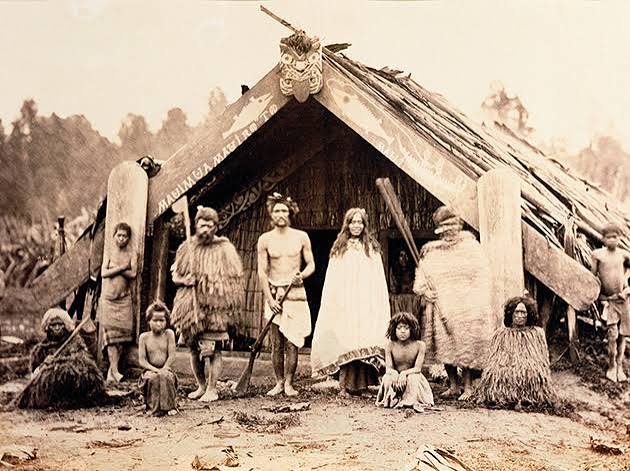
Revitalization efforts often follow a common framework. First, documentation is crucial—linguists work with the remaining speakers to record vocabulary, grammar, stories, and songs. This creates a resource for future learners. Second, community involvement is essential. Revitalization only succeeds if the community themselves are motivated and engaged, not if it is imposed from the outside. Third, education programs, including immersion schools, can create new generations of speakers. For example, the Māori language in New Zealand saw a revival through the Kōhanga Reo (language nests) movement, which established preschools where children are immersed in the language.
The Role of Technology
Technology has become a powerful ally in language preservation. Apps like Duolingo now offer courses in endangered languages like Navajo and Hawaiian. Social media and video platforms allow speakers to connect and share resources. Digital archives, like the Endangered Languages Project, provide platforms for documentation and collaboration. However, technology alone cannot save a language; it must be accompanied by real-world community building and daily use.
The Ethics of Language Loss
Some argue that language loss is a natural process, a kind of linguistic Darwinism where the fittest languages survive. But this viewpoint ignores the fact that language loss is often driven by human choices—colonialism, forced assimilation, and economic pressures—not natural selection. Moreover, languages are not just tools for communication; they are repositories of culture, identity, and knowledge. Each language encodes a unique way of viewing the world, and its loss is a loss for all of humanity. When a language dies, we lose not only words but also the stories, songs, and wisdom of an entire people, accumulated over centuries.
Conclusion
The science behind language death is a sobering reminder of the fragility of human culture. Yet, the successes of revitalization efforts show that it is possible to reverse the tide. The key is a combination of documentation, community engagement, and the political will to support linguistic diversity. As the linguist David Harrison once said, ‘When we lose a language, we lose a part of our collective human heritage.’ The question is: will we let that heritage slip away, or will we act to preserve it?
The disappearance of languages is not an inevitable fate. By understanding the mechanisms that drive language death—from economic pressures to intergenerational transmission failure—we can design better strategies to keep them alive. Revitalization efforts, supported by technology and community passion, have proven that even languages on the brink can be brought back. The challenge is immense, but the stakes are nothing less than the diversity of human thought and culture.
Summary
- Approximately 30–50% of the world’s 7,000 languages could be extinct by 2100.
- The primary cause of language death is the failure of intergenerational transmission, often driven by economic, political, and social pressures.
- Languages that are lost often undergo structural simplification and semantic erosion before disappearing.
- Revival efforts, such as those for Hebrew, Cornish, and Wampanoag, show that languages can be brought back from extinction.
- Technology, including apps and digital archives, plays a growing role in preservation and revitalization.
FAQ
Q: What is the difference between language death and language endangerment?
A: Language death occurs when a language has no living native speakers. Language endangerment is a spectrum, with UNESCO classifying languages from ‘safe’ to ‘vulnerable’ to ‘critically endangered’ based on factors like speaker numbers and intergenerational transmission.
Q: How many languages die each year?
A: Estimates vary, but linguists suggest that a language dies roughly every two weeks to every three months, depending on the methodology used.
Q: Can a dead language be revived?
A: Yes, though it is difficult. Hebrew is the most famous example, having been revived from a liturgical language to a native spoken one. Cornish and Wampanoag have also been successfully revived using historical documentation.
Q: Why should we care about language loss?
A: Languages carry unique cultural knowledge, identity, and ways of viewing the world. Their loss diminishes human diversity and can lead to the loss of traditional knowledge, such as medicinal plants or ecological practices.
Q: What can individuals do to help preserve endangered languages?
A: Individuals can support revitalization efforts by learning endangered languages, contributing to documentation projects, and advocating for policies that protect linguistic diversity. Even using an endangered language in daily life or on social media can help.