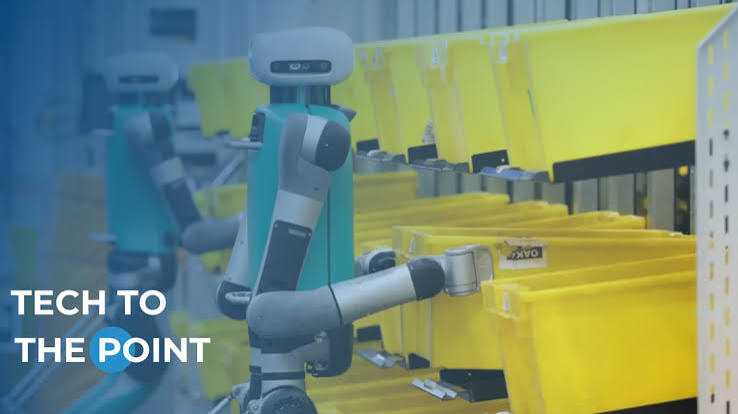
You’ve probably chatted with an AI like ChatGPT. It’s smart, but it lives in a server, with no arms to pick up a cup or legs to walk across a room. Embodied AI changes that. It’s artificial intelligence that isn’t just thinking it’s sensing, moving, and acting in the physical world. Think of a warehouse robot that grabs boxes, a humanoid that helps with chores, or a self-driving car navigating traffic. This is the frontier where AI meets reality.
This article unpacks what embodied AI is, why it’s booming now, and what’s real versus hype. We’ll look at the key players, the tech breakthroughs, and the hard problems that remain. Whether you’re a tech enthusiast or just curious about the robot future, here’s a clear guide to the machines that are learning to live in our world.
What Makes AI ‘Embodied’?
Most AI you’ve encountered like voice assistants or chatbots is disembodied. It processes text and images but has no physical presence. Embodied AI, on the other hand, is anchored in a body. That body has sensors (cameras, microphones, touch sensors) and actuators (motors, joints) that let it move and interact with the world.
But embodiment isn’t just about having a robot shell. The deep idea is that the AI’s intelligence is grounded in physical experience. A robot learns object permanence by touching objects and seeing them disappear behind others. It learns balance by falling, just like a toddler. This grounding makes its reasoning about the world more robust. For example, a robot that has physically manipulated a cup understands its weight and fragility in ways a text-only AI never could.
There are several subfields, each tackling a different challenge:
- Manipulation: Getting robots to grasp, assemble, and use tools. This is crucial for warehouses and factories.
- Locomotion: Teaching robots to walk, run, fly, or swim. Quadrupeds (like Spot) and humanoids are the showpieces here.
- Navigation & SLAM: Helping robots map unknown environments and know where they are within them. This is what lets a robot vacuum clean a room without getting lost.
- Human-Robot Interaction (HRI): Making robots socially aware understanding gestures, following gaze, and responding to speech. This is key for robots that work alongside people.
The Journey from Stiff Machines to Learning Robots
Robotics isn’t new. But today’s embodied AI is a world away from the clunky machines of the past.
The Rule-Based Era (1960s–1980s): Early robots like Shakey followed strict ‘sense-plan-act’ rules. They’d sense the world, build a plan, then act slowly and rigidly. Any unexpected change threw them off.
The Reactive Turn (1990s–2000s): Rodney Brooks and others flipped the script. Instead of central planning, they built robots with simple reactive behaviors. Each behavior responded directly to sensors, creating complex actions without a big brain. This approach powered the Mars rovers Sojourner, Spirit, and Opportunity, which navigated the Martian surface with limited computing power.
The Deep Learning Revolution (2010s): Deep neural networks transformed perception. Robots could finally recognize objects, people, and places with stunning accuracy. Reinforcement learning let them learn control policies through trial and error. But the DARPA Robotics Challenge in 2015 showed a gap: robots could see well but still struggled to act robustly in the real world.
The Foundation Model Era (2020s): Large language models (LLMs) like GPT-4 and Google’s PaLM-E became the ‘brains’ of robots. Now you can give a robot a natural language command like ‘pick up the red mug’ and it can parse that, plan a sequence of actions, and execute them. In 2024, Figure 01, a humanoid powered by OpenAI, demonstrated conversational interaction—you could talk to it, and it would respond and perform tasks. That was a taste of the ‘ChatGPT moment’ for robotics, though we’re not fully there yet.
Why Now? The Perfect Storm of Tech and Need
Embodied AI has been brewing for decades. So why is it exploding now?
Compute: Modern GPUs and TPUs can run complex neural networks in real time. A robot can process camera feeds, make decisions, and control motors within milliseconds.
Data: Massive datasets like Open X-Embodiment and Google’s RT-1/RT-2 allow robots to learn from each other’s experiences. Instead of starting from scratch, a new robot can build on the collective knowledge of thousands of robots.
Cheaper Hardware: Sensors like LiDAR and depth cameras have plummeted in price. Electric actuators are now powerful, precise, and affordable, replacing bulky hydraulic systems. Boston Dynamics’ Atlas, for example, switched to electric actuation, making it cleaner and quieter.
Economic Pressure: Countries like Japan, Germany, and China face aging populations and labor shortages. Automating tasks isn’t just convenient—it’s necessary. The global industrial robotics market is already over $50 billion and growing at about 10% annually. Humanoid robots alone could reach a market of $13.8 billion by 2030, according to Goldman Sachs. Venture capital is pouring in—over $1 billion into humanoid startups between 2023 and 2024.
The Stars of Embodied AI: From Factories to Living Rooms
Let’s meet the major players across different sectors.
Industrial Robots: The classic arms from ABB, KUKA, and FANUC have been building cars and electronics for decades. They’re fast, precise, and tireless. But they’re also fixed in one spot, so they’re being joined by newer, more mobile robots.
Logistics Robots: Amazon Robotics (formerly Kiva) uses thousands of wheeled robots to move shelves around its warehouses. Companies like GreyOrange and Locus Robotics make autonomous mobile robots that work alongside humans to pick and pack orders. These are among the most successful commercial embodiments of AI.
Humanoids: This is the flashy end. Figure AI, Tesla’s Optimus, and Boston Dynamics’ Atlas are all vying to become the general-purpose humanoid helper. In 2025, Tesla showed Optimus performing factory tasks like sorting battery cells. Boston Dynamics unveiled an all-electric Atlas that can do backflips and lift heavy objects. But these machines are still in the prototype stage, and their dexterity is limited compared to a human’s.
Service Robots: The Roomba is the most famous domestic robot—it’s essentially a low-level embodied AI that navigates and cleans. Samsung’s Ballie and Amazon’s Astro are trying to become household companions or assistants, though they’re still more gimmick than essential.
The Hard Problems That Remain
Despite the progress, embodied AI has a long way to go. The skeptics have a point.
Bipedal Locomotion: Walking on two legs is incredibly inefficient. Wheels are cheaper and more reliable. For most tasks, a wheeled robot makes more sense. Humanoids are cool, but they may be solving a problem that doesn’t exist.
Dexterity: The ‘last mile’ of manipulation is brutal. Folding laundry, handling cables, or using tools requires a level of fine motor control that robots still lack. A robot can assemble a car door, but it struggles to tie a shoelace.
Sim-to-Real Transfer: Training robots in simulation (like NVIDIA Isaac Sim) is efficient, but moving those skills to the real world often fails. The real world is messy—lighting changes, objects are unpredictable, and physics is unforgiving.
Safety and Liability: If a robot harms a person, who’s responsible? The owner, the manufacturer, or the AI’s programmer? The EU AI Act classifies robots as ‘high-risk’ systems, but the US has no federal robotics law, leaving a patchwork of state rules.
Bias and Ethics: Robots can inherit the biases of their training data. In caregiving or policing, that’s dangerous. And there’s the broader question of wealth concentration—who owns the robots that replace workers? The benefits might accrue to a few, while the job losses hit many.
The Road Ahead
Embodied AI is at an inflection point. The technology is advancing fast, but it’s not yet reliable or affordable enough for mass adoption. The next few years will be critical.
We’ll likely see more specialized robots in warehouses and factories, where environments are controlled and tasks are repetitive. Humanoids will gradually move from labs to niche roles, like performing dangerous jobs in bomb disposal or disaster response. And as the hardware gets cheaper and the AI gets smarter, we may finally see robots in our homes—folders of laundry, washers of dishes, and companions for the elderly.
But don’t expect a robot butler anytime soon. The journey from ‘impressive demo’ to ‘everyday helper’ is long, and the remaining challenges are as much about software as they are about mechanical engineering. Still, the progress is undeniable. Embodied AI is learning to live in our world, one sensor and actuator at a time.
Embodied AI is where the rubber meets the road—literally. It’s the field that takes AI out of the cloud and drops it into our messy, physical world. The progress is real, from warehouse robots that boost efficiency to humanoids that can converse and perform tasks. But the hype often outpaces reality. Dexterity, safety, and cost remain significant hurdles. As the technology matures, we’ll see a shift from flashy demos to practical applications that solve real problems. The robots are coming—but they’ll arrive task by task, not all at once.
Summary
- Embodied AI is AI that interacts with the physical world through a body, grounding its intelligence in real-world experience.
- Key subfields include manipulation, locomotion, navigation, and human-robot interaction.
- The field has evolved from rule-based systems to deep learning and now to foundation models that enable natural language control.
- Major players include industrial giants (ABB, KUKA), logistics robots (Amazon Robotics), and humanoid startups (Figure, Tesla Optimus, Boston Dynamics).
- Hard problems remain: bipedal locomotion, dexterity, sim-to-real transfer, safety, and ethics.
FAQ
Q: What is the difference between embodied AI and regular AI?
A: Regular AI (like ChatGPT) processes information but has no physical presence. Embodied AI is embedded in a robot body, allowing it to sense, move, and act in the real world. Its intelligence is grounded in physical experience, like learning to grasp objects by actually holding them.
Q: Why are humanoid robots so popular if they’re inefficient?
A: Humanoids are popular because they can theoretically operate in environments designed for humans—our homes, offices, and factories. They’re a bet that a general-purpose robot that looks like us can adapt to our world. But bipedal locomotion is indeed inefficient, and many argue that specialized wheeled robots are more practical for most tasks.
Q: What are the main challenges in embodied AI?
A: The biggest challenges are dexterity (fine motor skills like folding laundry), robust locomotion (especially on two legs), and transferring skills learned in simulation to the real world. Safety and liability are also unresolved issues.
Q: Will embodied AI take away jobs?
A: It will change jobs. Some tasks will be automated, especially repetitive ones in warehouses and factories. But new jobs will emerge in robot maintenance, fleet management, and AI training. The bigger concern is wealth concentration—who owns the robots and profits from them.
Q: When will we have robot helpers in our homes?
A: You already have simple ones like robot vacuums. More capable helpers—like humanoids that do chores—are still years away. The technology is advancing, but it needs to become cheaper, more reliable, and safer before it’s practical for everyday homes.